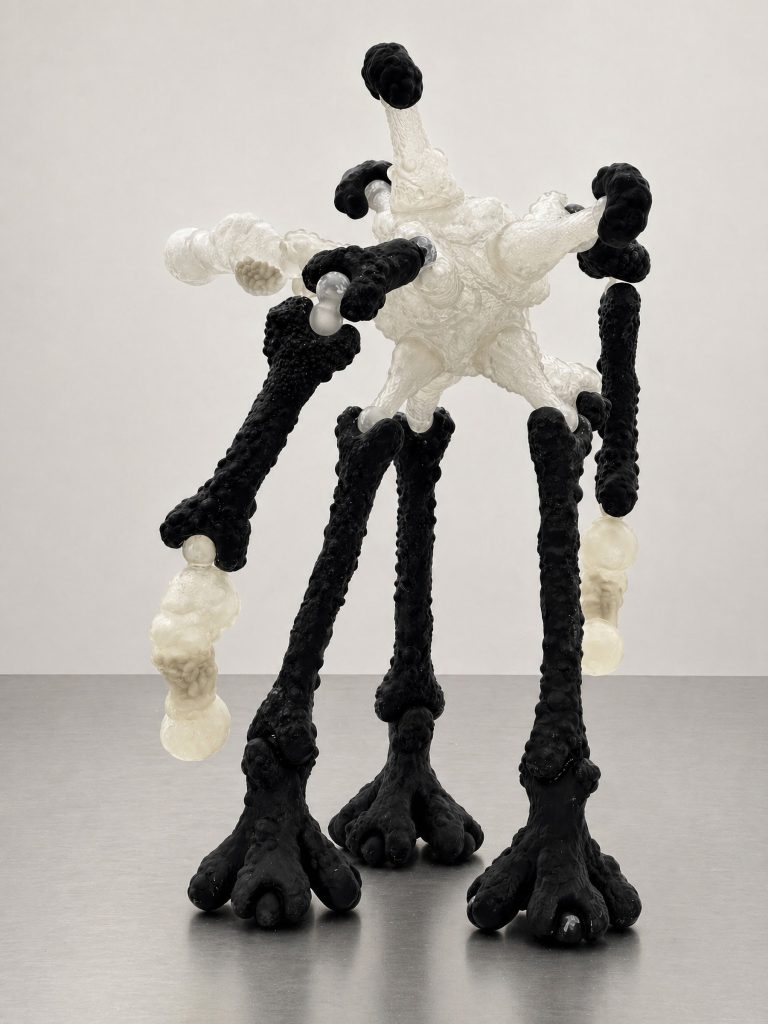
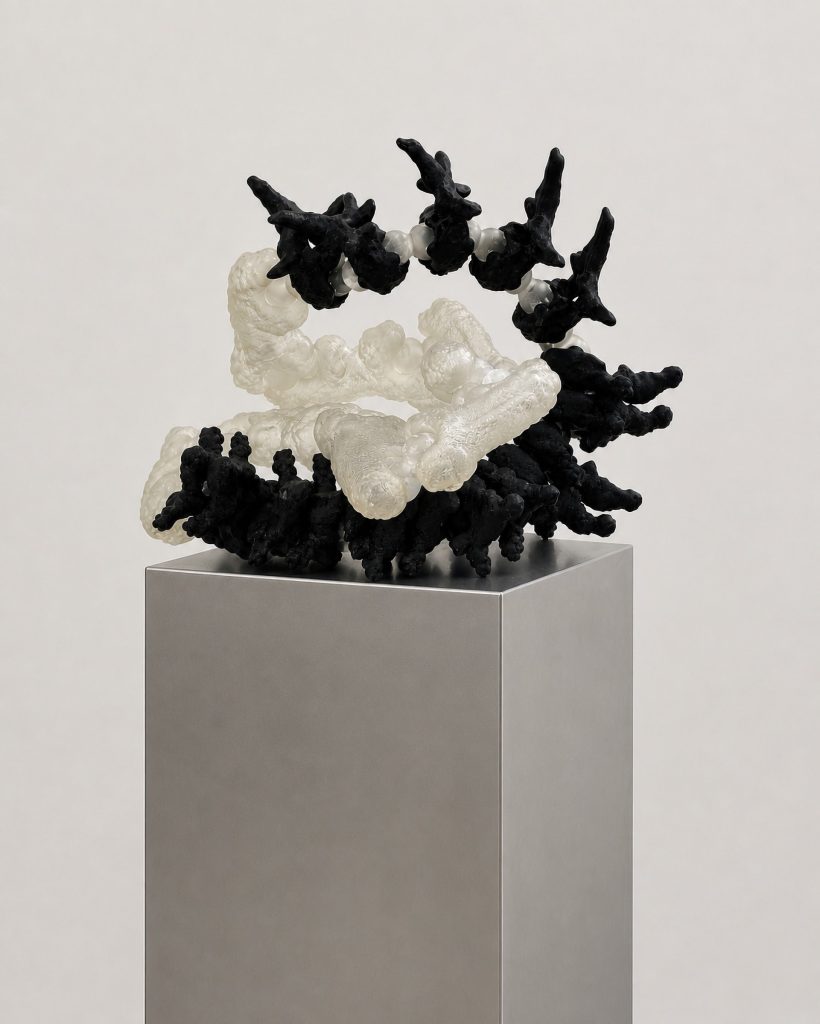
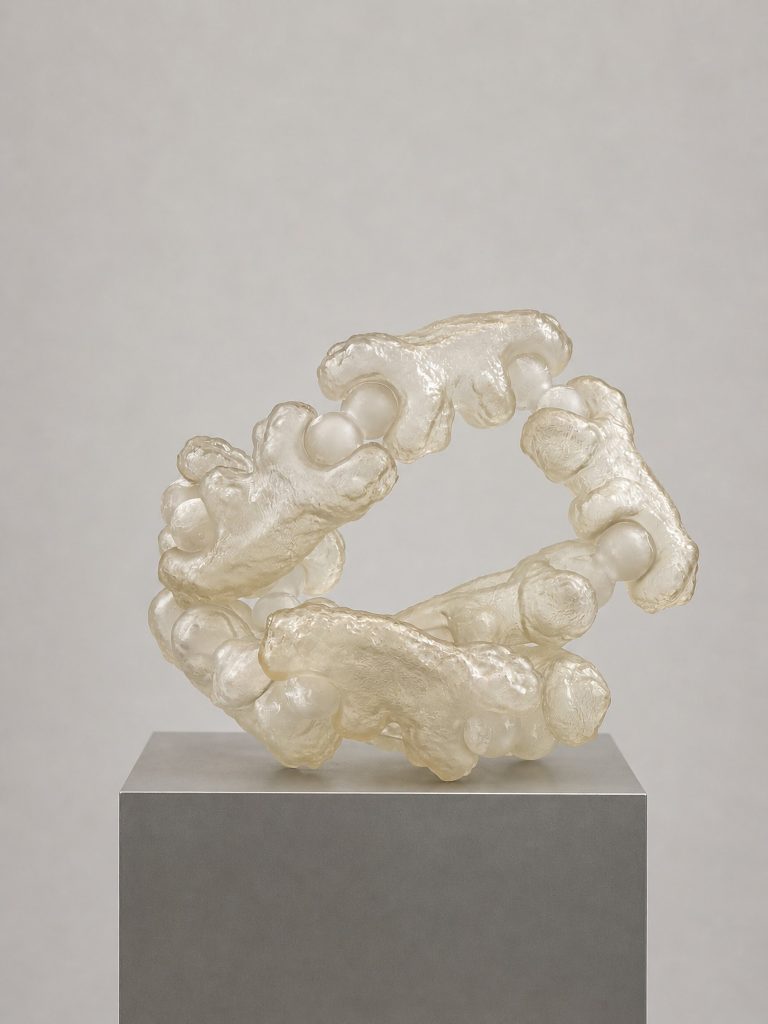
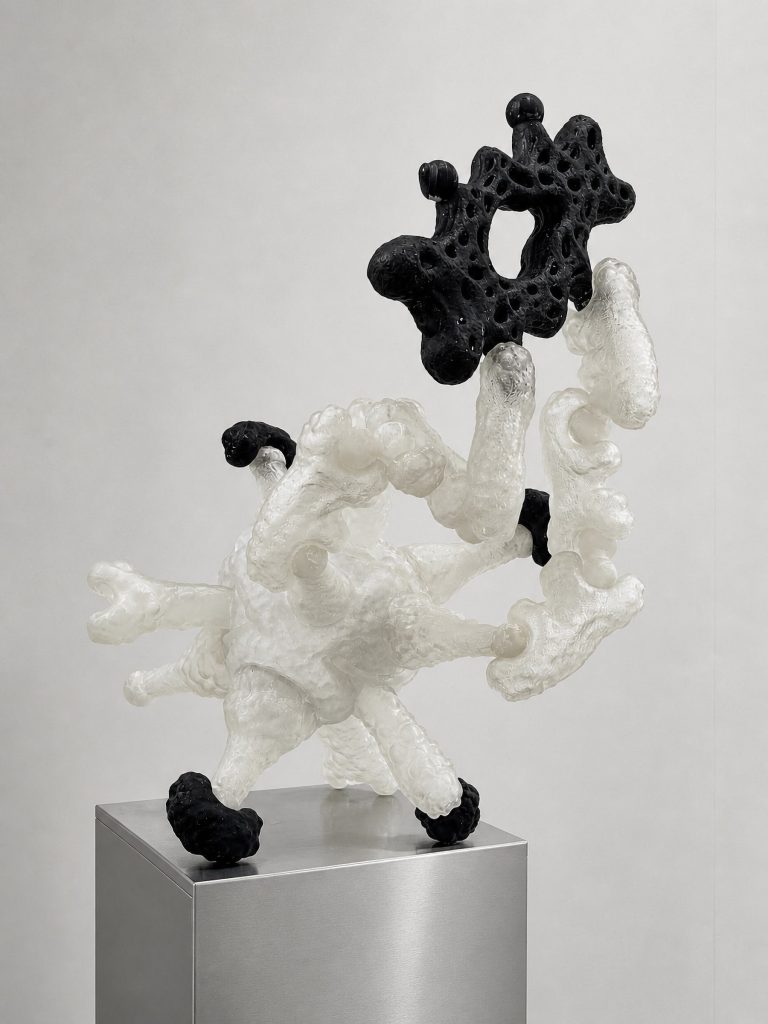
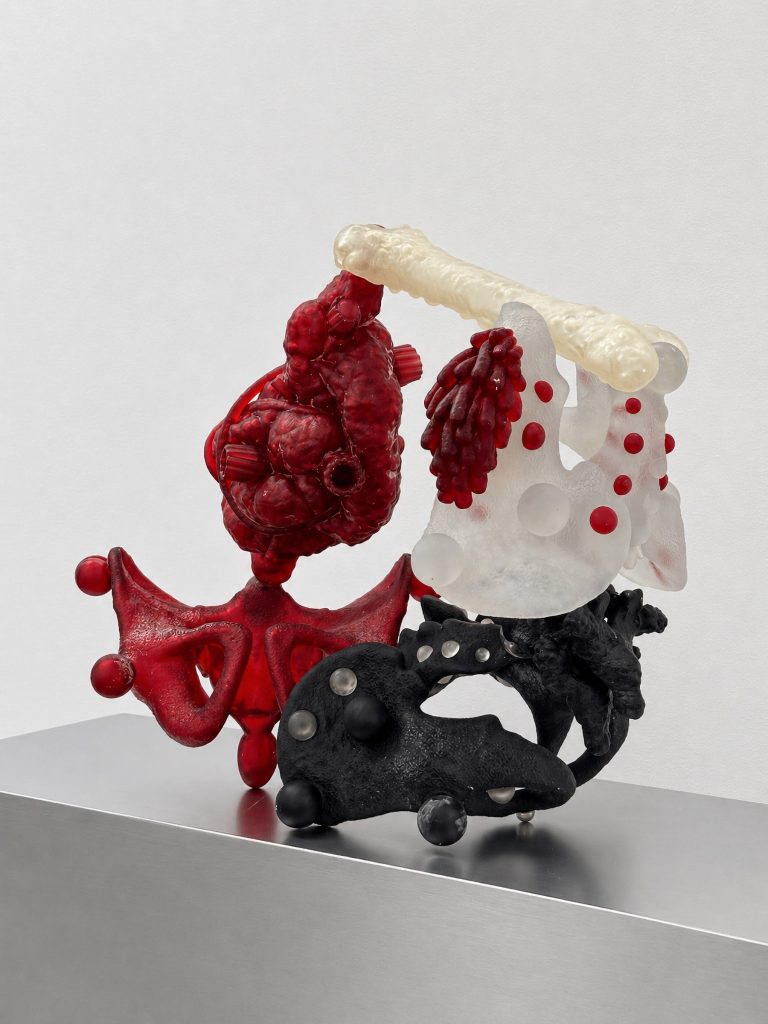
Rebone Organism’os is a participatory sculptural practice by Ottone Radavi, ongoing in Paris since 2025. The artist describes it as a construction game and a modular system at the same time. Its parts are bones, organs, viruses, joints and abstract body fragments. Each one is digitally sculpted, printed in photopolymer resin and finished by hand.
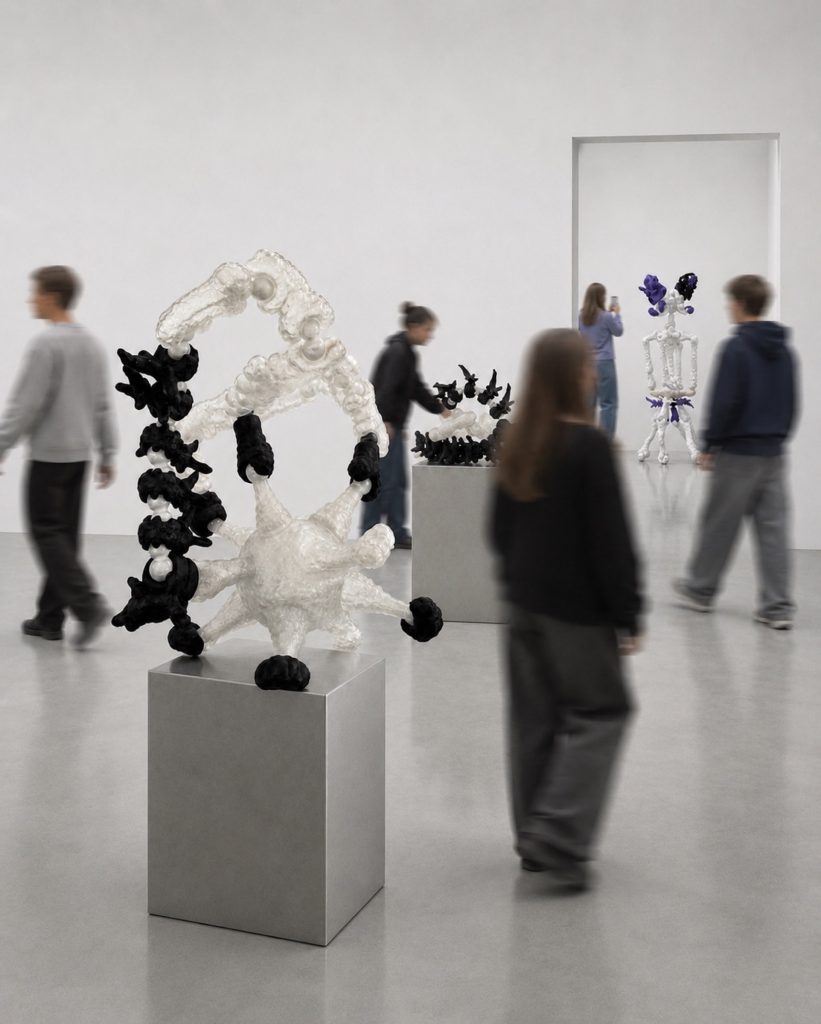
A shared spherical connector joins every element, so the work never settles into one final form. The project had its first public presentation at Pop Up Gallery in Paris from 3 to 6 May 2026, curated by Olga Pogasova.
A body that has already been taken apart
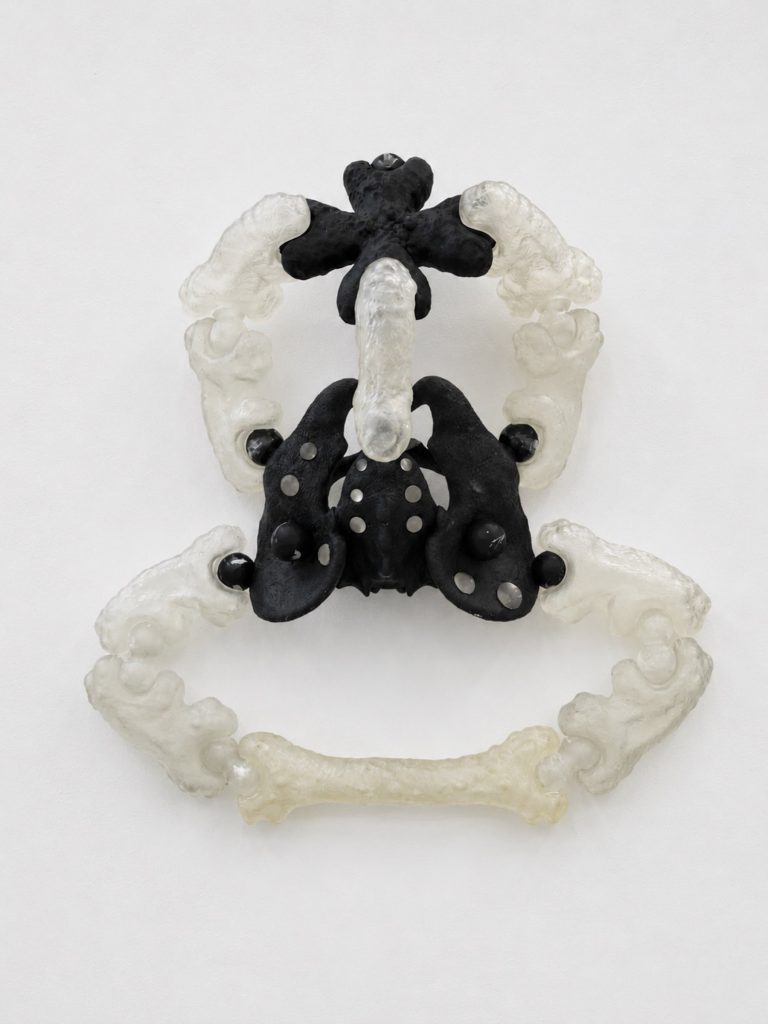
According to Radavi, the project starts from a body that has already been taken apart. Its parts are still recognisable, but they refuse anatomical obedience. Pelvises become masks, bones become handles and organs become hinges. Viruses, meanwhile, turn into decorative or structural agents.
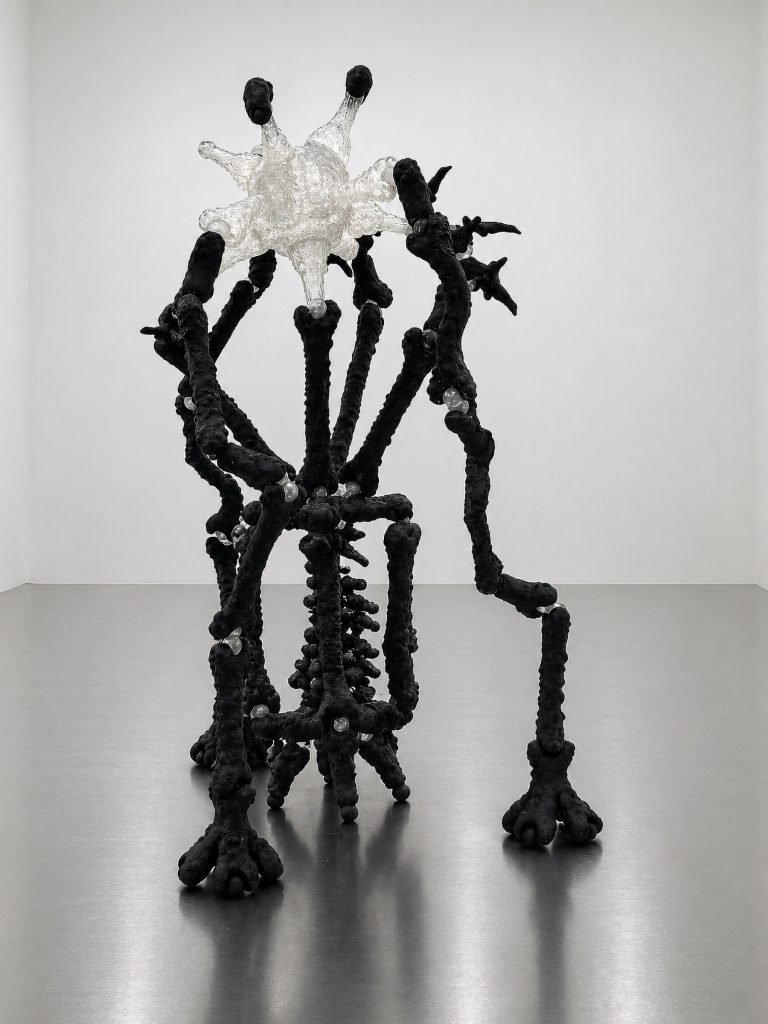
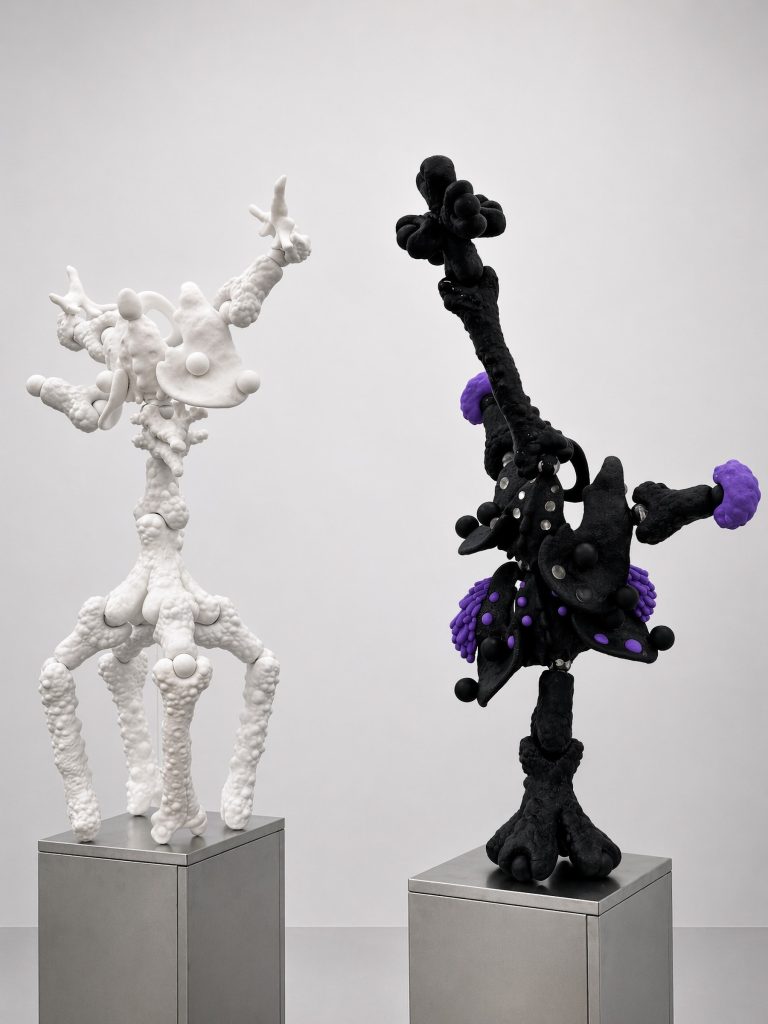
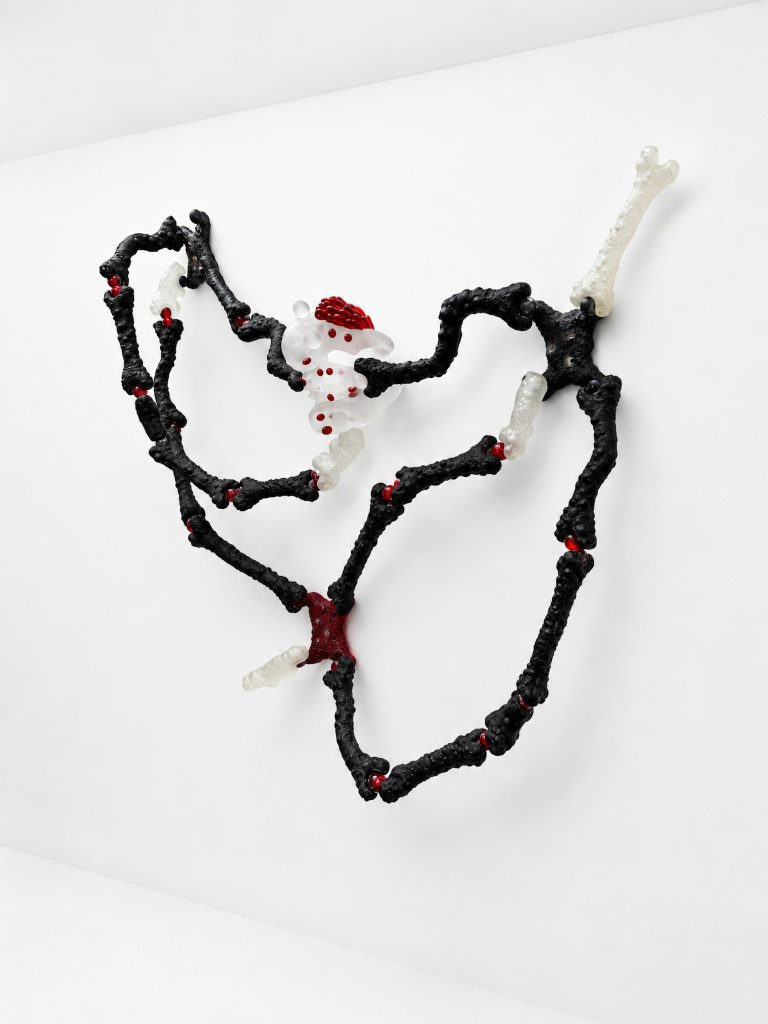
The artist calls this approach a way of treating the body as “an open grammar”. Injury, repair, mutation and play can all be composed with the same set of parts. Depending on how the pieces meet, the system becomes a skeleton, a temporary creature or a prosthetic structure. It can also turn into a wearable object or a spatial composition.
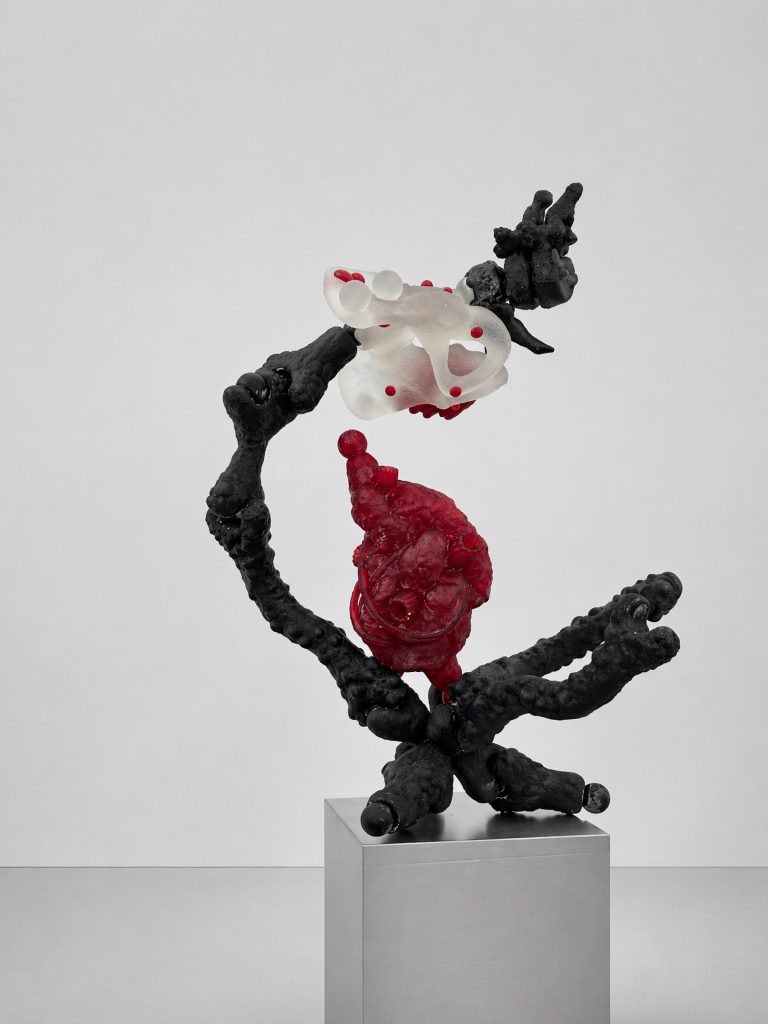
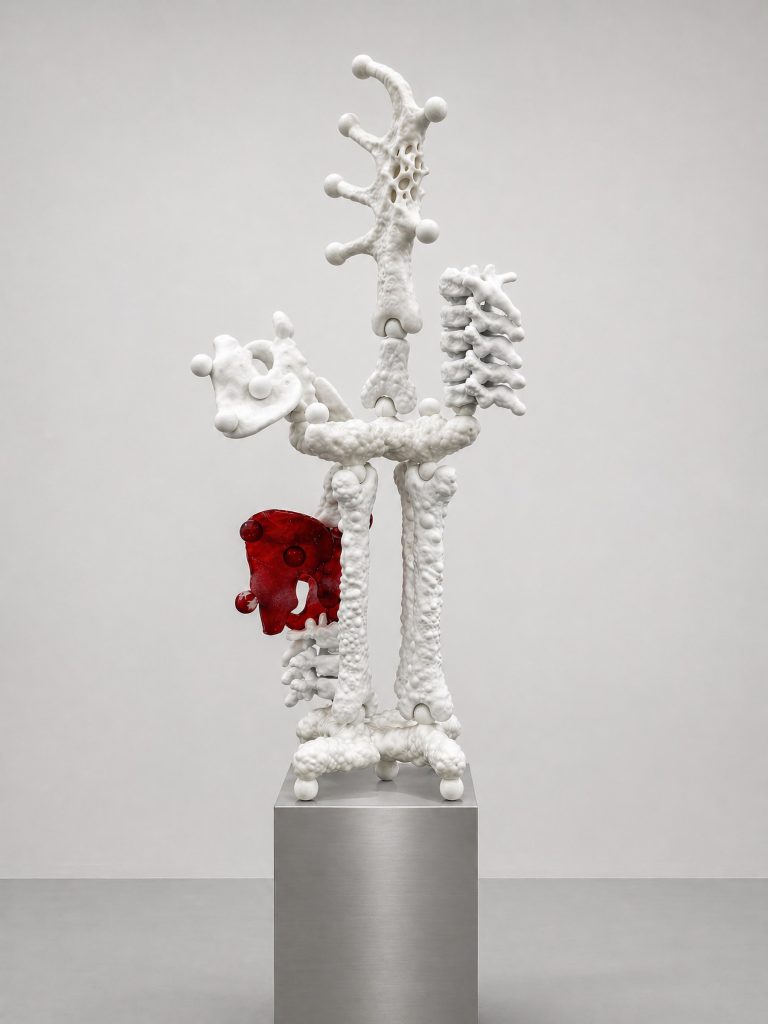
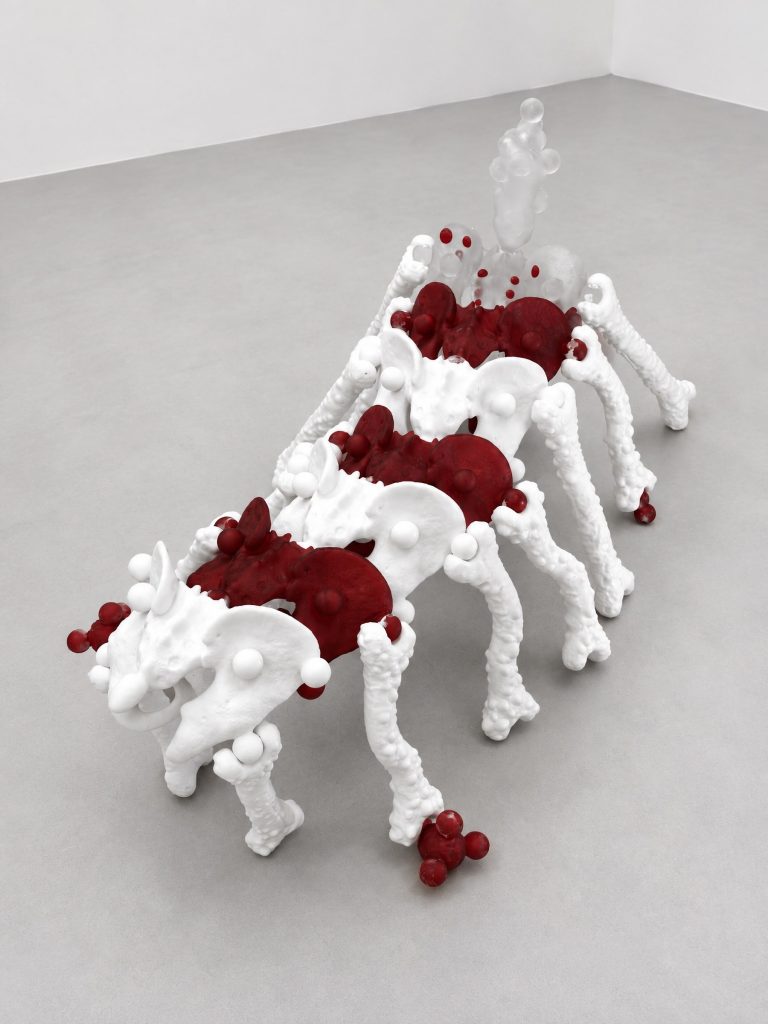
Precise enough to hold, loose enough to fail
Smooth resin surfaces and repeated joints make the sculptures feel clinical and handmade at once. Radavi links them to medical models, toys, ritual objects and construction parts. The system is precise enough to hold together, yet loose enough to invite mistakes.
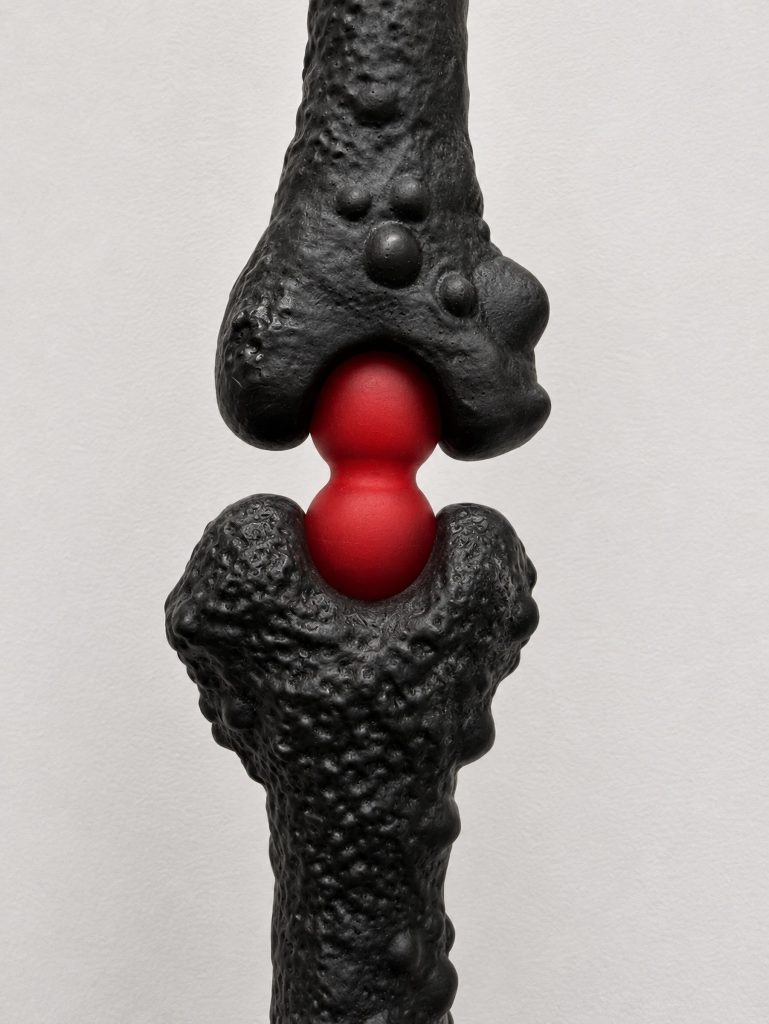
As a result, a structure can stand, collapse, lean or hang. It can be carried, too, or rebuilt into something that no longer resembles its previous version.
Assembled by the people in the room
Visitors do more than look at the work. Instead, they physically negotiate it. Each assembly is a temporary agreement between hands, balance, weight, desire and the limits of the connector.
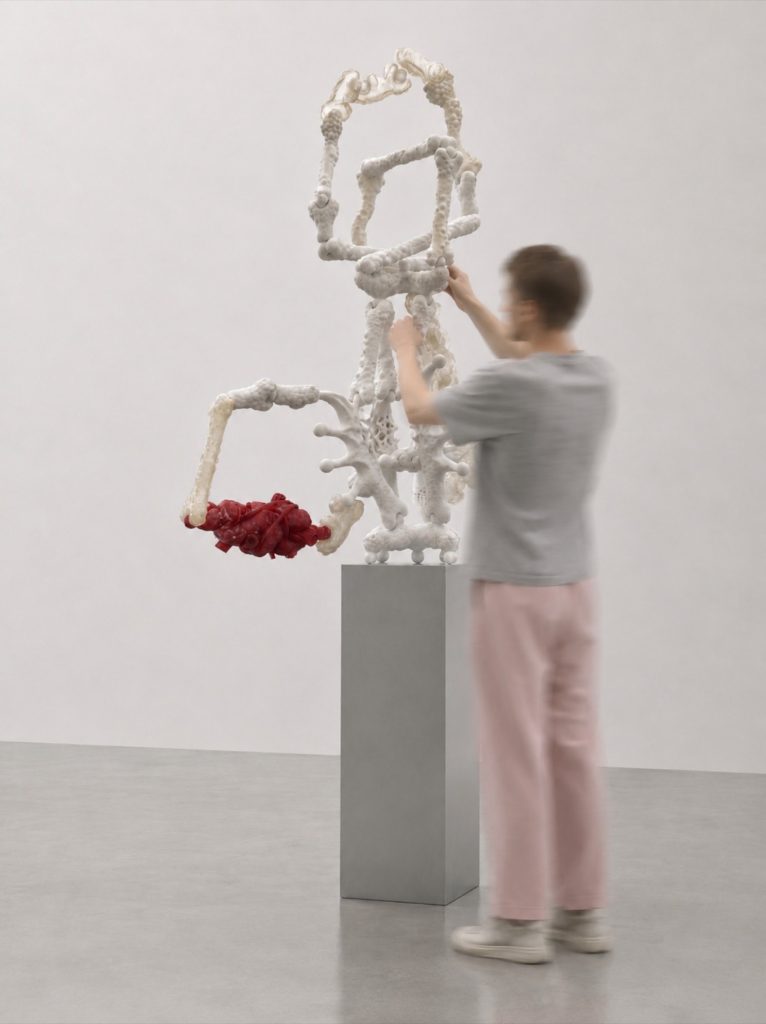
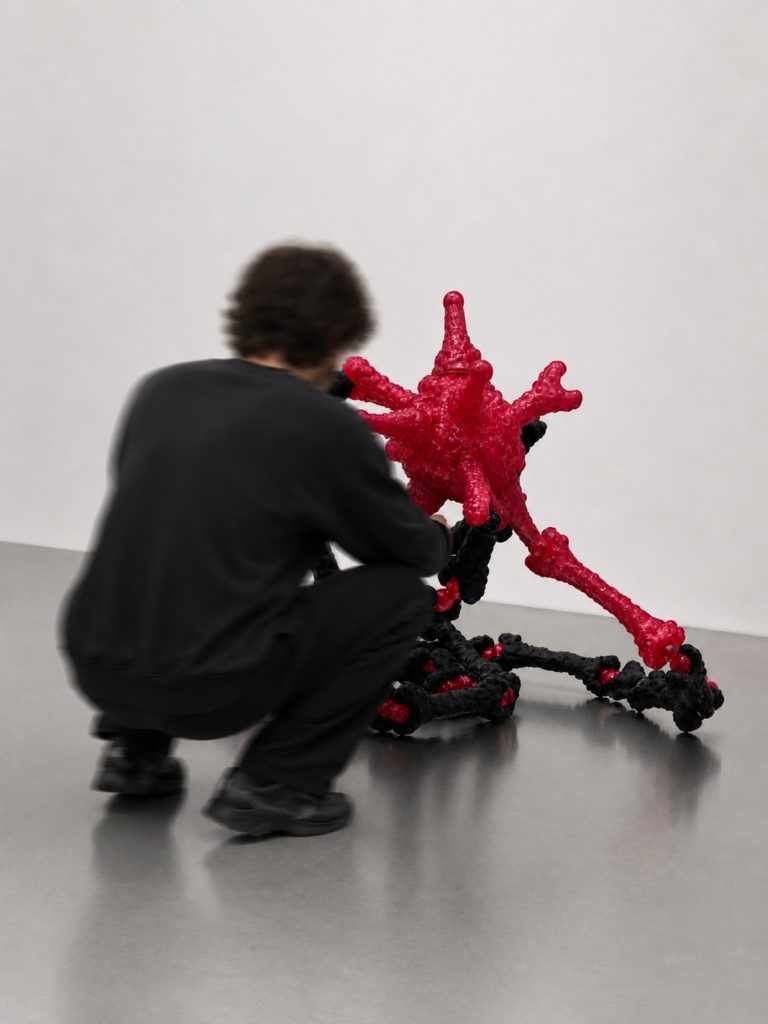
Authorship therefore becomes a shared action. Radavi provides the anatomy and the rules of attachment. Each participant then tests what kind of organism can exist for a few minutes before it changes again.
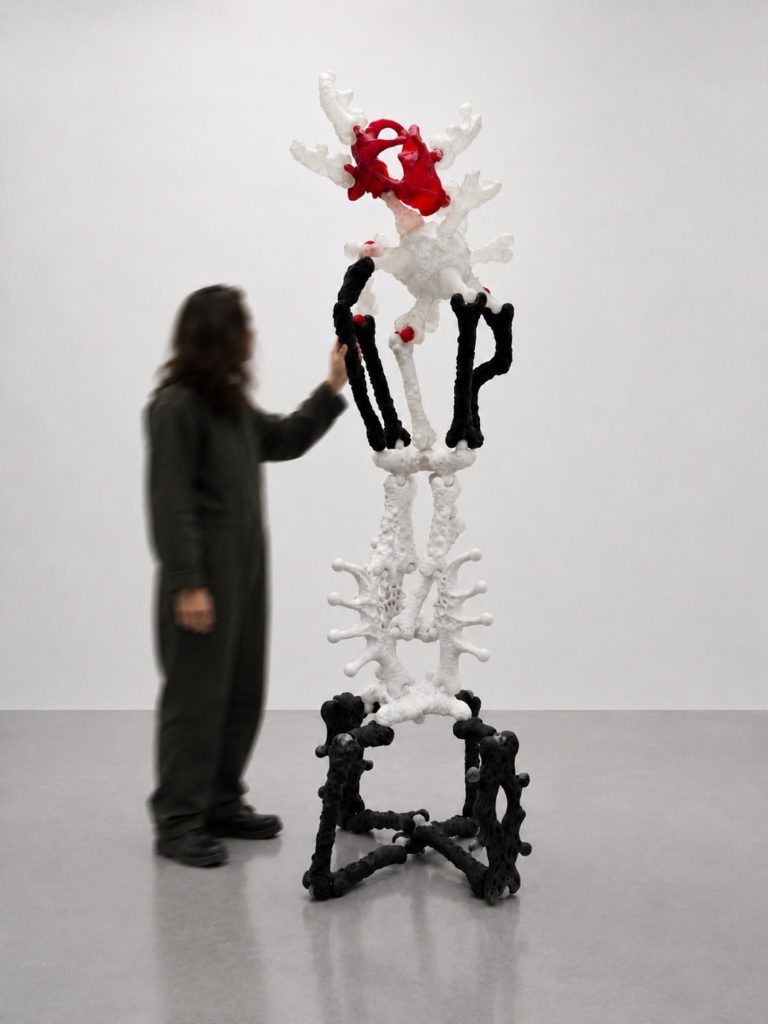
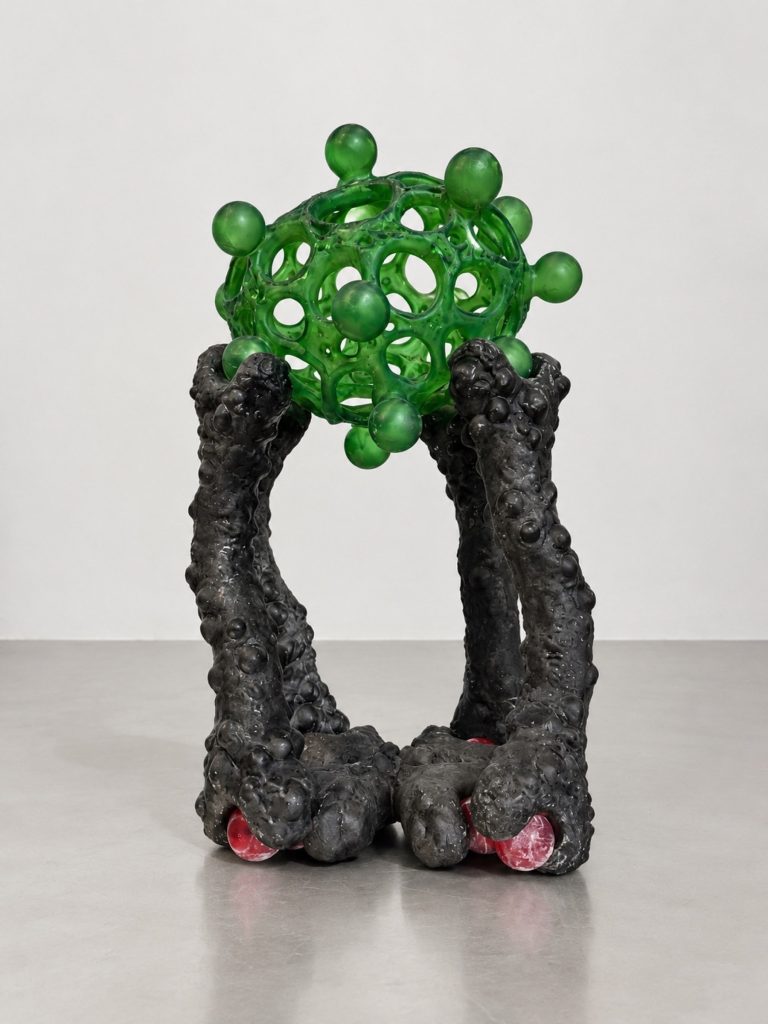
A response to migration
In the artist’s statement, Rebone Organism’os began as a personal response to migration. It grew out of the loss of solid ground underfoot and an identity split across many relocations. The elements are modelled in Blender and produced through photopolymer 3D printing.
From these bones the artist assembles new versions of the self, rebuilding a damaged organism to regain stability. Visitors are then invited into that reconstruction. The statement calls it “a collective act that constructs something new from what remains”.
Artist and project conception: Ottone Radavi / @otroottoottone
Digital sculpting, production and installation: Ottone Radavi
First public presentation: Pop Up Gallery, Paris, 3–6 May 2026
Curator: Olga Pogasova / @artscout.studio
Photography: Ottone Radavi / @otroottoottone