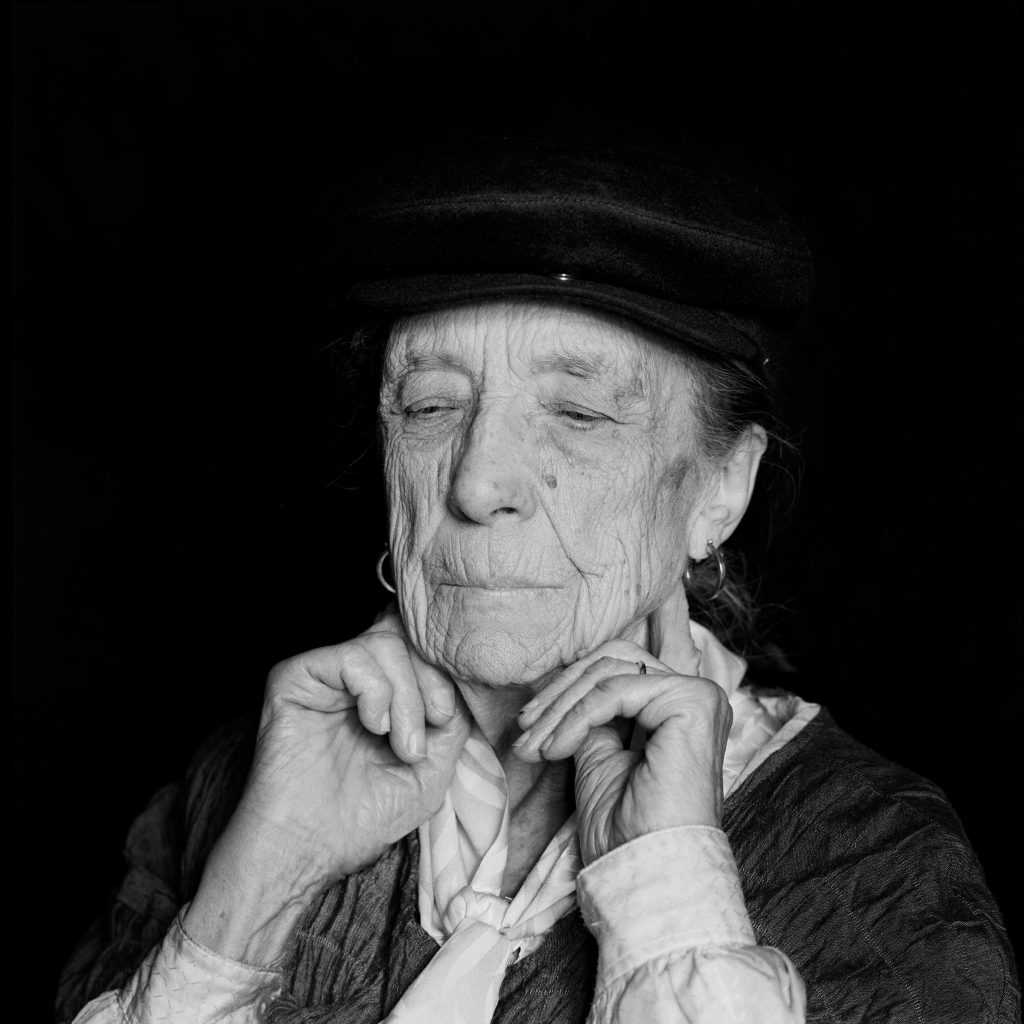
There are artists who create to offer the public an objective vision of beauty. But there are others who transform their entire lives, memories, and the deepest fractures of their psyche into the sole raw material for their artistic practice. Louise Bourgeois stands among them as a monumental figure. Standing before Bourgeois’s work, the viewer finds no conventional tranquility or comfort. Instead, one faces a densely compressed psychological space, a realm where fear, the wound of betrayal, maternal love that is simultaneously protective and possessive, and above all, a fierce instinct for survival intersect through material form.
Bourgeois once affirmed that art is a guaranty of sanity. For her, artistic labor was never a purely decorative choice nor a commercial act, but a vital mechanism for self-preservation. Without molding the dark shadows of her past into three-dimensional structures, she would have been consumed by her own internal turmoil.
A workshop at Choisy-le-Roi
To understand the artistic universe of Louise Bourgeois requires a journey back in time to her family’s antique tapestry restoration workshop in Choisy-le-Roi, on the outskirts of Paris, during the early twentieth century. Beneath the quiet atmosphere of a traditional craft workshop lay a family structure severely fractured from within. Her father, Henri Bourgeois, embodied an overbearing patriarchal authority, relentlessly mocking his young daughter’s sensitivity. The most deeply engraved psychological trauma of Bourgeois’s youth occurred when her father brought her English tutor to live in the family home, maintaining an open affair with her for a decade under the same roof. In contrast, her mother, Josephine Bourgeois, chose silent endurance, channeling her entire mind into repairing tapestries worn away by time.
Growing up in a space where betrayal unfolded in plain view of a devoted mother planted in the young girl a profound dread of abandonment, alongside a deep resentment toward dominant masculinity. Nevertheless, within that very workshop, Bourgeois absorbed two foundational concepts for her entire career: the malleability and resilience of materials, and the act of cutting and sewing as a psychological ritual. Cutting signified destruction or the release of pent-up energy, whereas sewing represented an effort to heal and retain memory. These childhood conflicts compressed like a psychological spring, waiting to burst forth when she embarked on a professional artistic path.
Wood, stone, bronze and cloth
Bourgeois’s practice spanned nearly eight decades, traversing most of the major movements of the twentieth century from Surrealism and Abstract Expressionism to Feminist and Installation Art. Yet she refused to be governed by any orthodoxy or movement, maintaining an independent stance to forge an intensely personal visual language. Beginning in painting and printmaking, Bourgeois soon realized that the two-dimensional surface of the canvas could not bear the complex psychological weight she carried. She required three-dimensional space, where she could directly intervene by carving, sculpting, stitching, and engaging in physical confrontation with matter.

Throughout this creative journey, Bourgeois experimented with a wide array of materials. In her early period, solitary wooden structures evoking familiar figures she had left behind in France upon migrating to America expressed an isolated yet resolute presence. Later, she turned to carving marble and casting bronze. These materials required intense physical exertion and served as a channel to release anger and assert spatial control. Toward the end of her life, Bourgeois made a homecoming to her origins by utilizing her own old garments and those of her late mother, cutting and stitching them into fabric sculptures reminiscent of bodily forms. Artistic labor for her was a tense physical dialogue, where thinking operated not through abstract theory, but through full sensory engagement, manual labor, and memory.

Maman
The work that most fully condenses Bourgeois’s philosophy and emotional landscape is Maman, the monumental bronze spider sculpture rising over nine meters high. While in collective perception the spider often evokes fear or threat, through Bourgeois’s creative lens, it becomes the ultimate metaphor for the mother. Like the mother restoring tapestries years before, the spider spins thread, weaves webs, and patiently repairs broken meshes. Beneath its massive body lies a sac holding eggs carved from white marble, creating a protective canopy for anyone stepping underneath. The contrast between eight spindly, precarious legs and their firm grounding on the earth mirrors the nature of motherhood: extraordinary strength wrapped in a fragile form amidst life’s turbulence.


Maman on the move
Bourgeois made Maman in 1999 for her commission in The Unilever Series, which opened the Turbine Hall of Tate Modern in London in 2000. The original was made in steel, followed by an edition of six bronze casts. Since then, the spider has stood in front of museums and in city squares across several continents.


The Cells
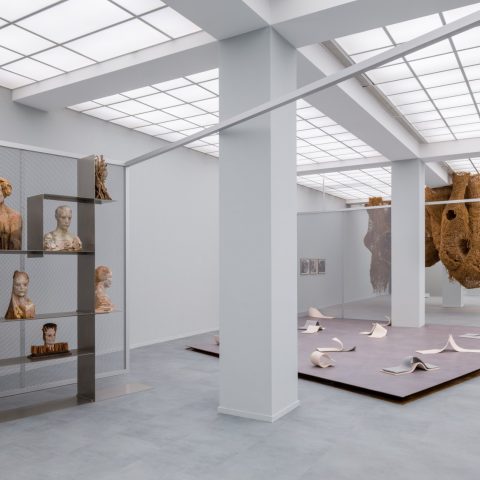
Entering the 1990s, well into her eighties, Bourgeois initiated her Cells series, widely regarded as a pinnacle of twentieth-century psychological installation art. Each cell is an enclosed space formed by iron mesh, housing personal objects such as mirrors, old garments, plaster sculptures, or carved marble hands clasped together. The iron cage establishes a boundary separating the external world from the hidden inner domain, forcing the viewer into the role of a voyeur peeking through the mesh grid. Angled mirrors inside reflect not only the internal artifacts but also the face of the observer, conveying the message that this pain and isolation do not belong to the artist alone, but represent an inherent attribute of human existence.

The Destruction of the Father
In a different mode of expression, The Destruction of the Father, created in 1974, represents her most violent purge of repressed rage regarding family memory. Constructed within a dark recess lined with deep red velvet evoking bodily tissue, the work reimagines a childhood fantasy of family members dragging an overbearing father onto the dinner table and dismembering him. Here, Bourgeois fearlessly unearths the darkest psychological strata. This metaphorical act of release serves to digest and eradicate the source of trauma, stripping away the real father’s absolute power to reclaim agency over her own destiny.
Unlike many of her contemporaries who strove to detach creation from personal biography to achieve pure abstraction, Louise Bourgeois openly declared her work to be entirely autobiographical. For her, creation was not aimed at decorative utility or aesthetic purity; art had to be an act of psychological surgery. She recognized that negative emotions like anger, isolation, or trauma would destroy body and mind if suppressed, but when transformed through hands into wood, stone, fabric, or metal, that destructive energy converted into constructive creative power.
Though celebrated as an icon of Feminist Art, Bourgeois maintained her distance from pure political slogans. The feminine dimension in her work emerged from the lived experience of a woman: states of childbirth, feelings of control, nurturing instincts, and a spiritual connection with her mother. It was neither passive vulnerability nor an imitation of male violence, but an elemental, resilient, and inherently restorative force.
Recognition at seventy-one
The most inspiring aspect of Louise Bourgeois’s creative life lies in her extraordinary perseverance across time. Despite producing work continuously since the 1930s, she remained largely overlooked by the mainstream art world for decades. While her male peers achieved early fame, Bourgeois worked quietly in her New York studio, refusing to follow trends or compromise with the market. It was not until 1982, when the Museum of Modern Art in New York hosted a retrospective of her work when she was 71 years old, that the world fully recognized the scale and depth of her output. This long-overdue recognition did not alter her rhythm; she continued to create relentlessly until her passing at age 98.

Looking back across Louise Bourgeois’s career reveals the journey of a courageous soul. She demonstrated that trauma or past wounds need not be a final sentence, but can become the genesis of a legacy. With the patience of a weaver and the fierceness of a sculptor, Bourgeois gathered the broken fragments of memory, stitched them together with artistic thread, and constructed a sanctuary of healing for humanity. Standing before her masterworks, we do not merely observe the story of an individual artist; we recognize the fractures within our own inner lives, confronted by the enduring question of whether we possess the courage to transform pain into eternal beauty.