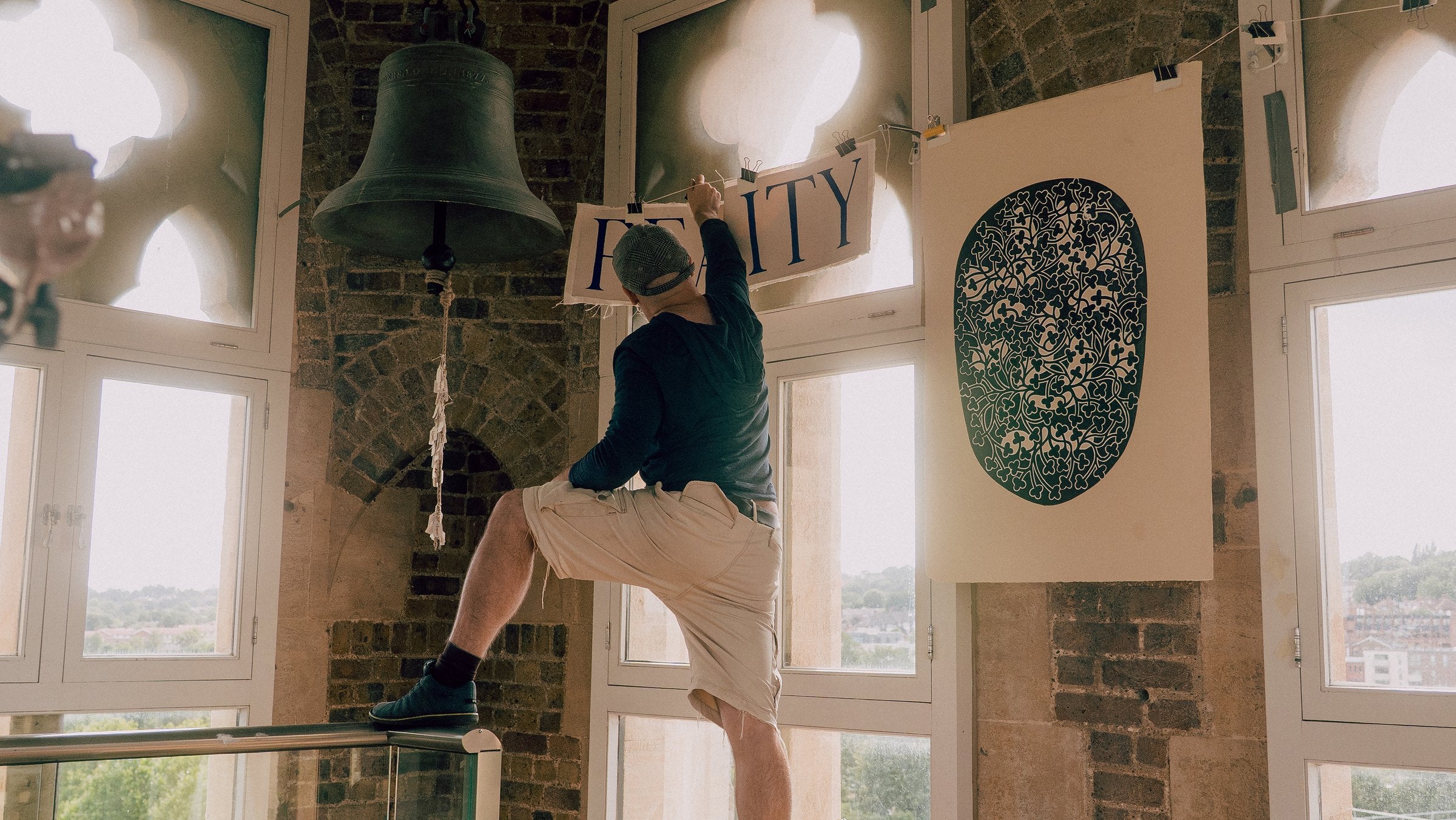
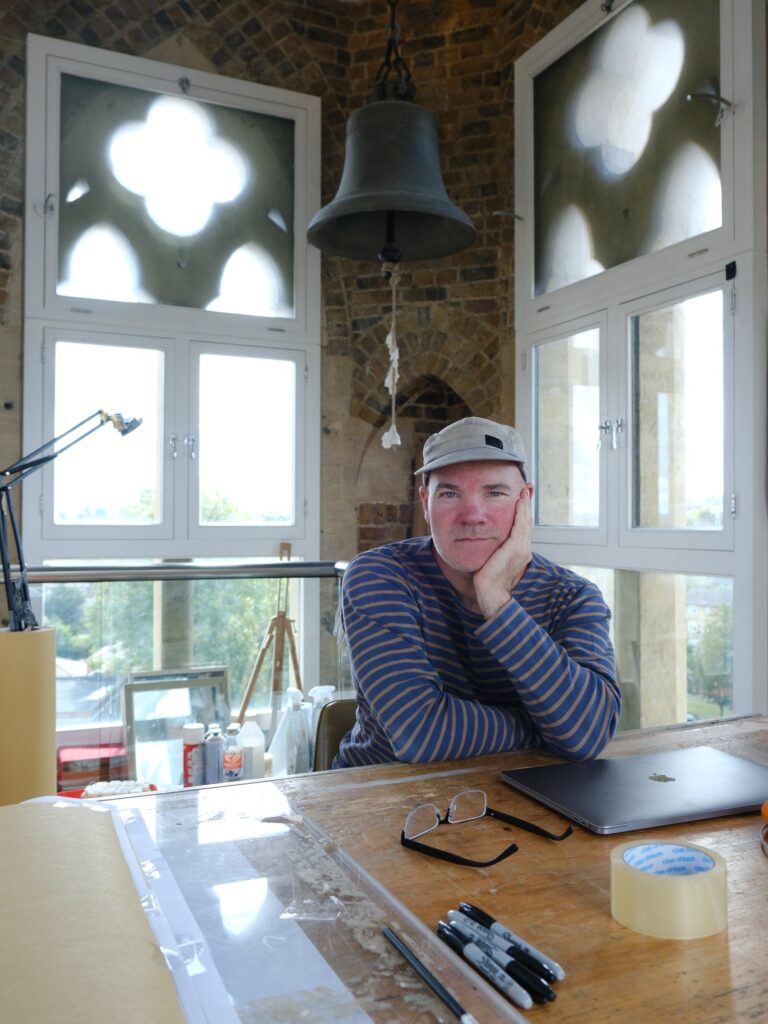
Swedish artist Henrik Delehag lives and works inside Christ Church Tower in Forest Hill, South London. The converted Victorian tower is his family home, his studio and an occasional venue for exhibitions and performances. Its original church bell still hangs in the studio.
A tower found by chance
In the autumn of 2014, after more than a decade living north of the Thames, Delehag spent an afternoon at the Horniman Museum and discovered Forest Hill. When he later looked for a family home that could also hold his practice, the first listing he found there was for an entire Victorian church tower.
He arranged a viewing the next day and signed the contract immediately. The building’s vertical layout suited him: bedrooms and family life below, kitchen and living spaces in the middle, studios and exhibition rooms above.
The keeper of the bell
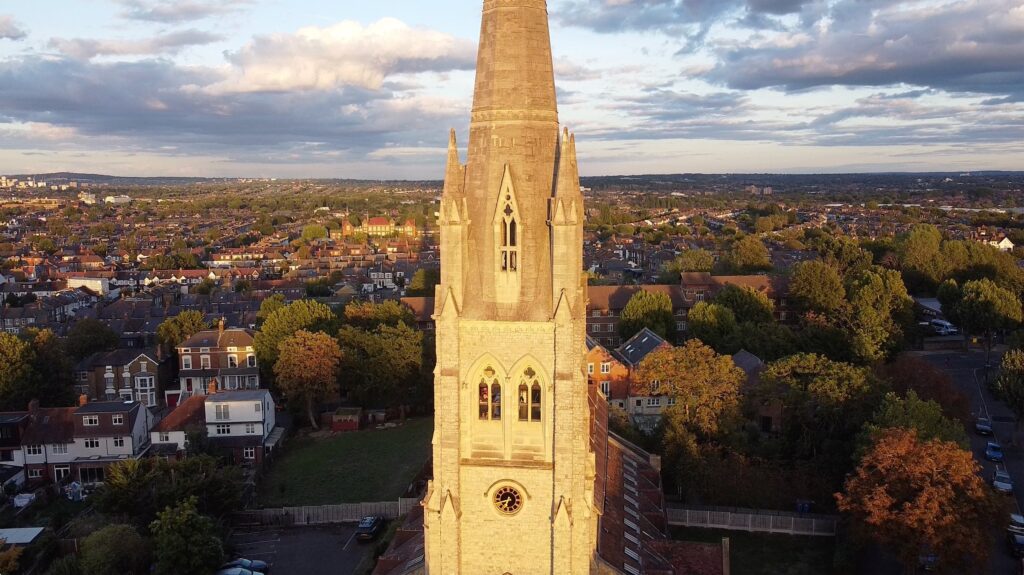
Christ Church was consecrated in 1854 to designs by the Victorian architect Ewan Christian. In 2007–08 the church was converted into homes, and its tower, 56 metres high with its spire, was kept as a single dwelling over ten floors and half-levels.
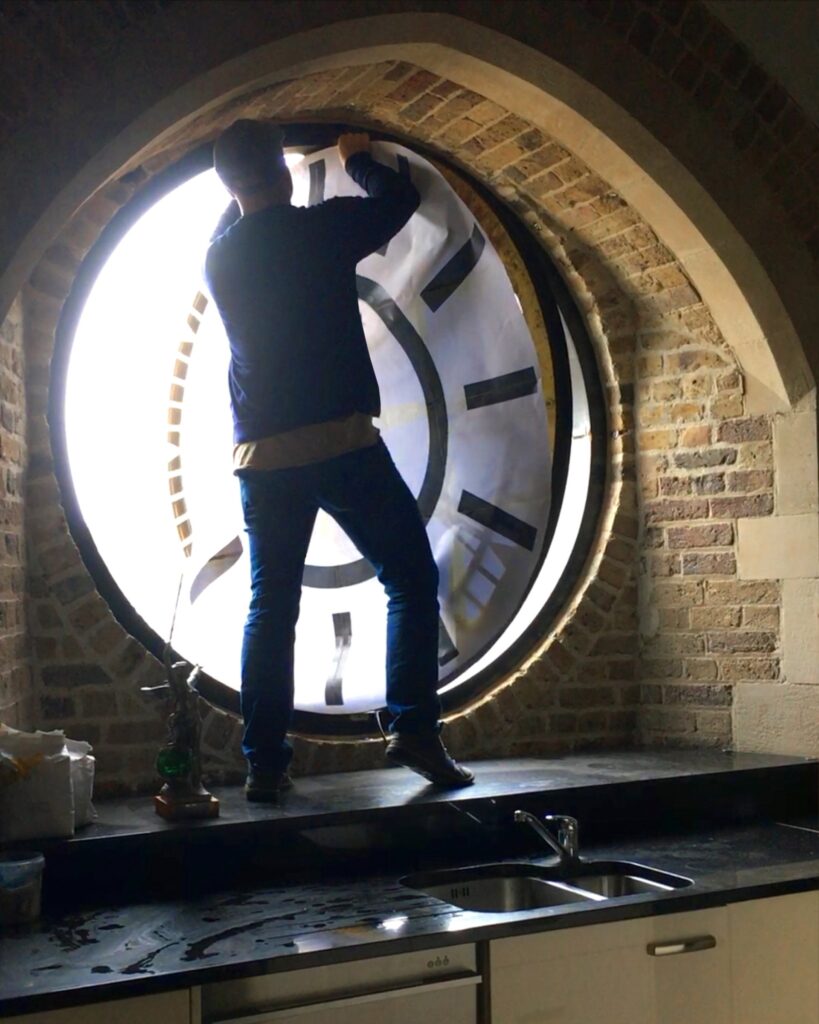
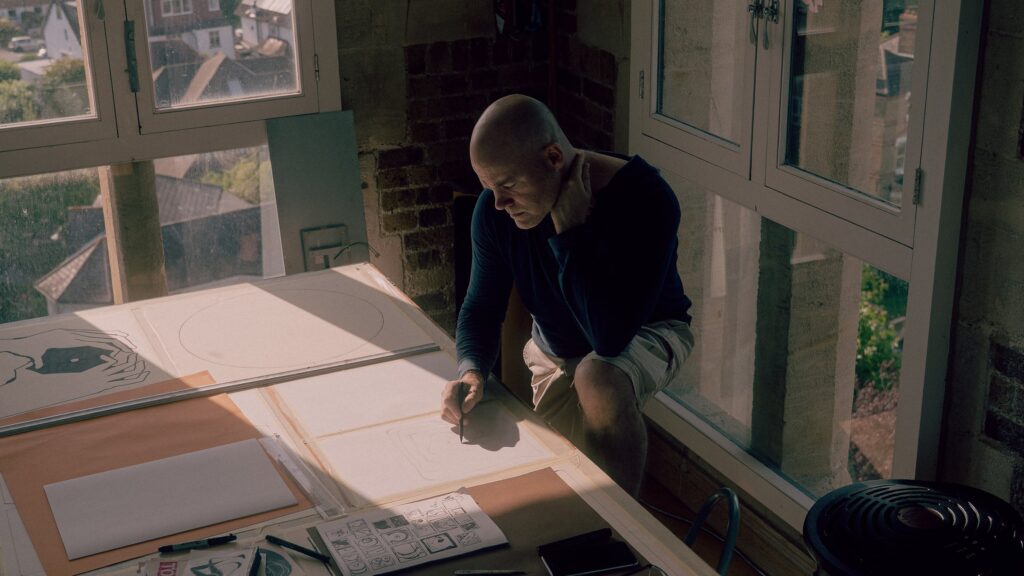
The studio receives natural light from every direction. Above it, inside the spire, an octagonal room looks out across London. Meanwhile, the original church clock doubles as the kitchen window, and stained glass remains in place.
The bell hangs in the studio above the living quarters, and Delehag appointed himself its keeper. A pair of peregrine falcons nests at the very top of the spire.
A line maker
Delehag was born in Stockholm in 1973 and spent part of his teenage years in New Zealand, where he encountered Māori visual culture and its traditions of iconography. He studied graphic design and typography, then worked as a creative director in advertising.
Even so, he makes little distinction between that work and his own practice. “Above all, I am a line maker,” he says.
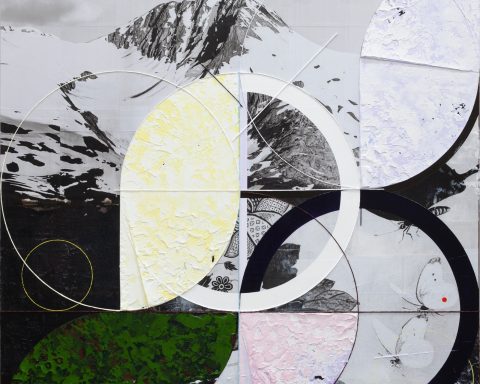
His drawings deal with the boundary between black and white. Human figures, faces, sexuality and the absurdities of contemporary life recur throughout them. His stated aim is to create new icons and symbols around which people might gather.
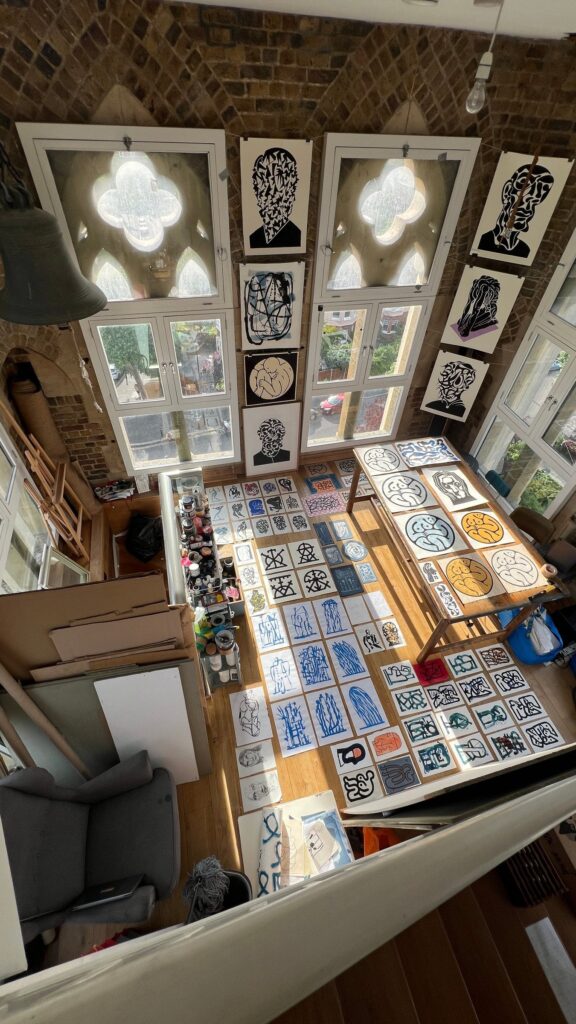
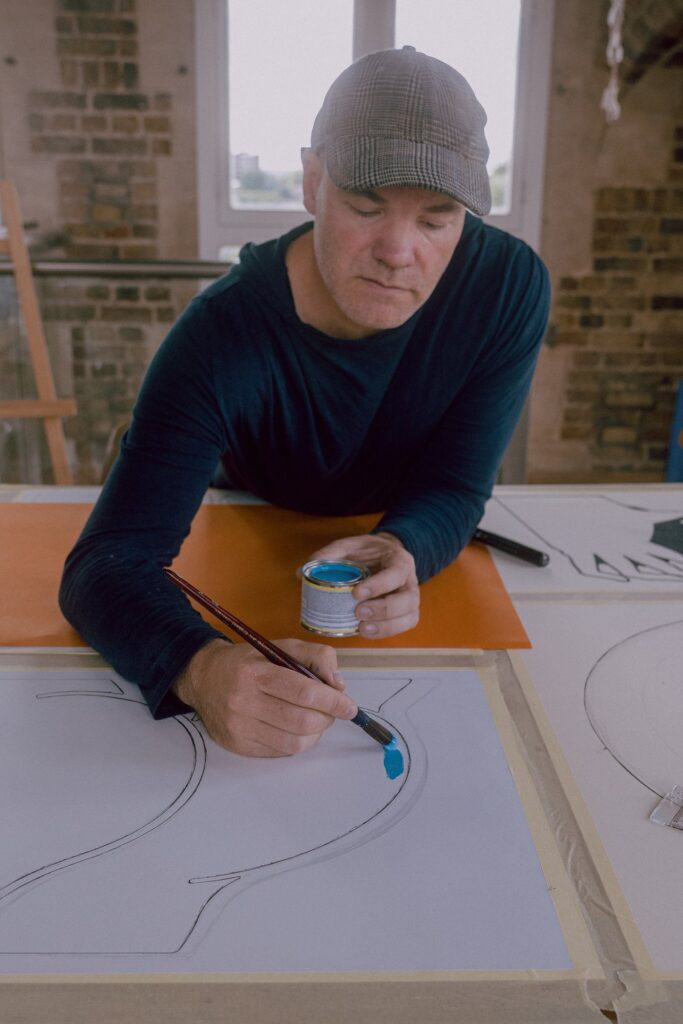
For larger works, he currently favours graphite, which he beats into paper or canvas with a stippling brush. First, the surfaces are carefully masked. As a result, only when the tape comes off at the end does he find out whether a work has succeeded.
A tower open to the world
Delehag felt the building’s original purpose as a gathering place was hard to ignore. He began inviting friends and neighbours to exhibitions in the octagonal room inside the spire.
Over time, however, the evenings grew to include candlelit readings, Brazilian dance and jazz. On one night, the post-punk band Stagedoor Guy performed a hymn to Moby-Dick from the studio’s drafting table to about a hundred guests dressed as sailors.
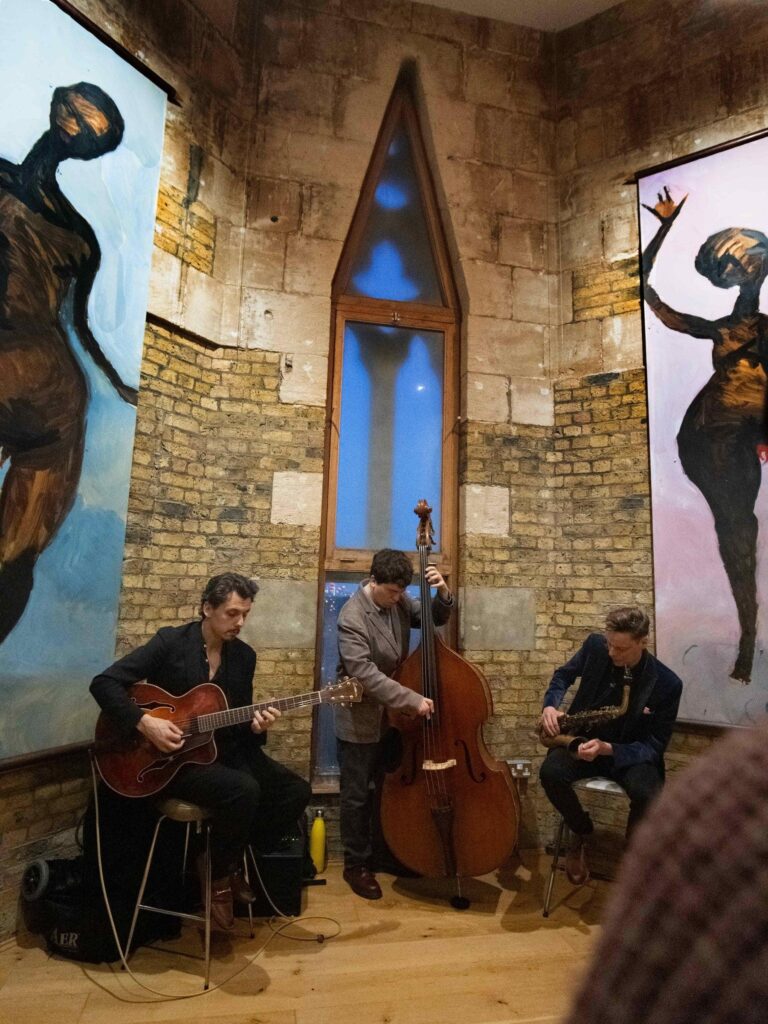
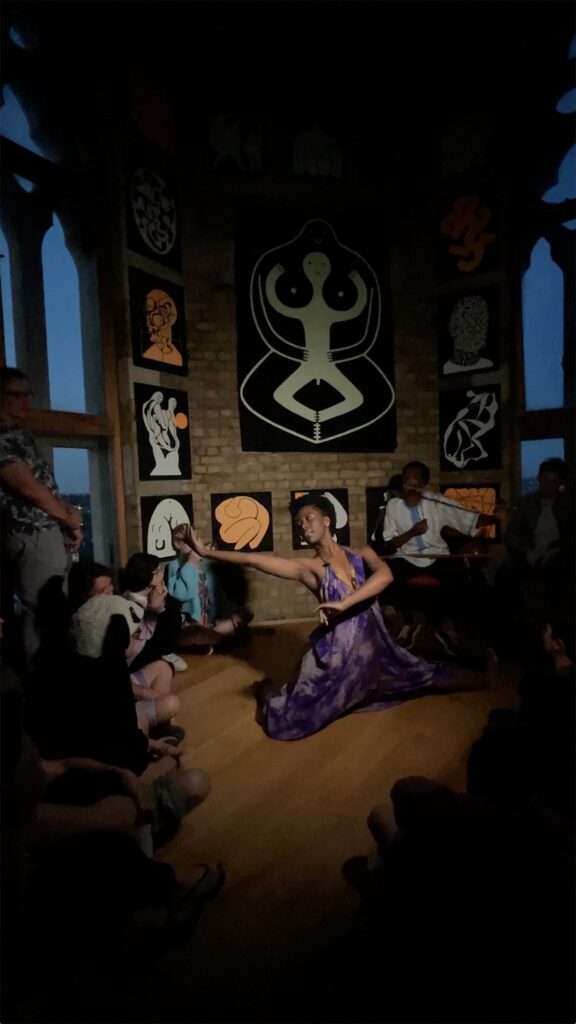
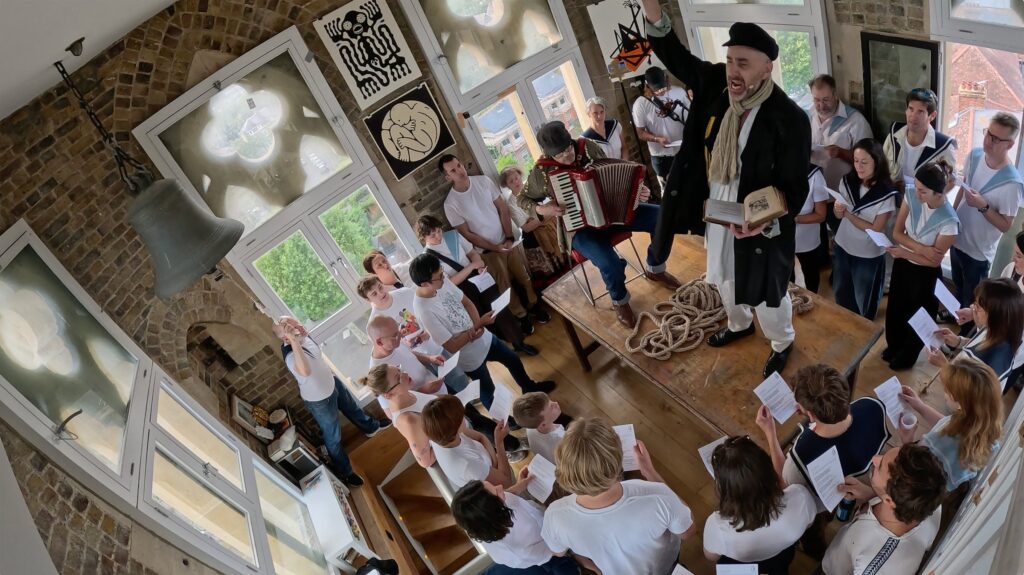
In addition, he used the building itself. Large temporary artworks appeared on its façade, visible from Forest Hill railway station, and the church clock became a circular canvas.
The bell at noon
During the pandemic, he rang the bell at noon each day and invited neighbours to join him, from their own homes, in a three-minute stretch. In the meantime, he made a drawing every day.
Later, he turned those lockdown drawings into glow-in-the-dark paintings and filled the spire room with them. In a series of manifestos, he declared the building a Totem of Reality.
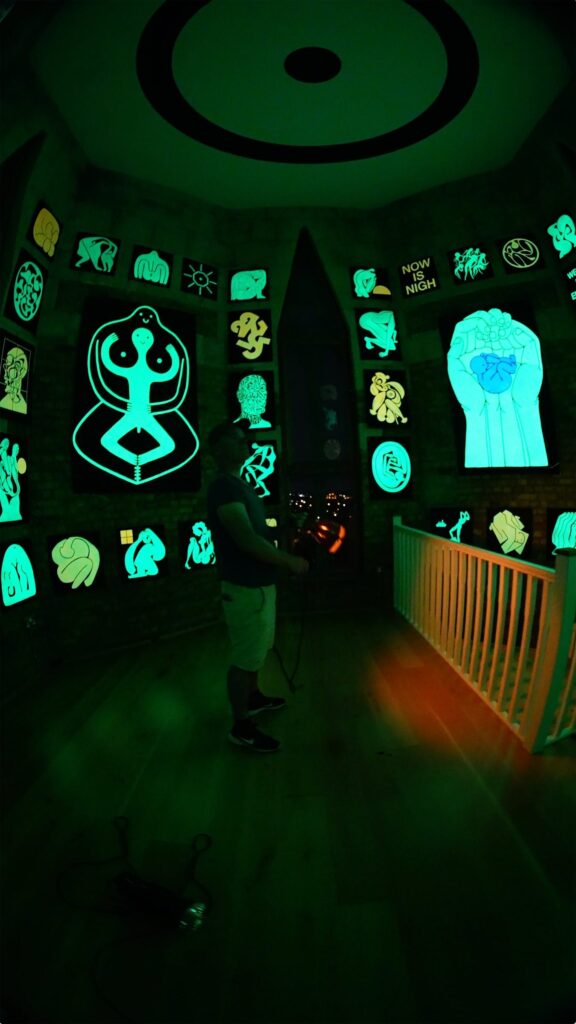
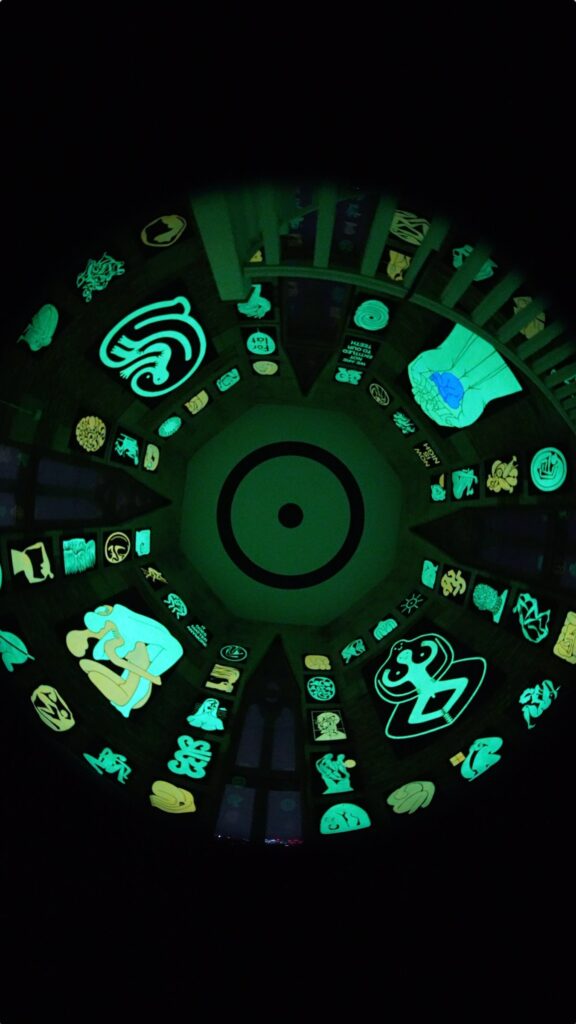
The tower’s upkeep depends in part on sales of the work made inside it. Delehag has now opened DELEHAG.STORE, an independent shop that sells his drawings as archival-quality prints.
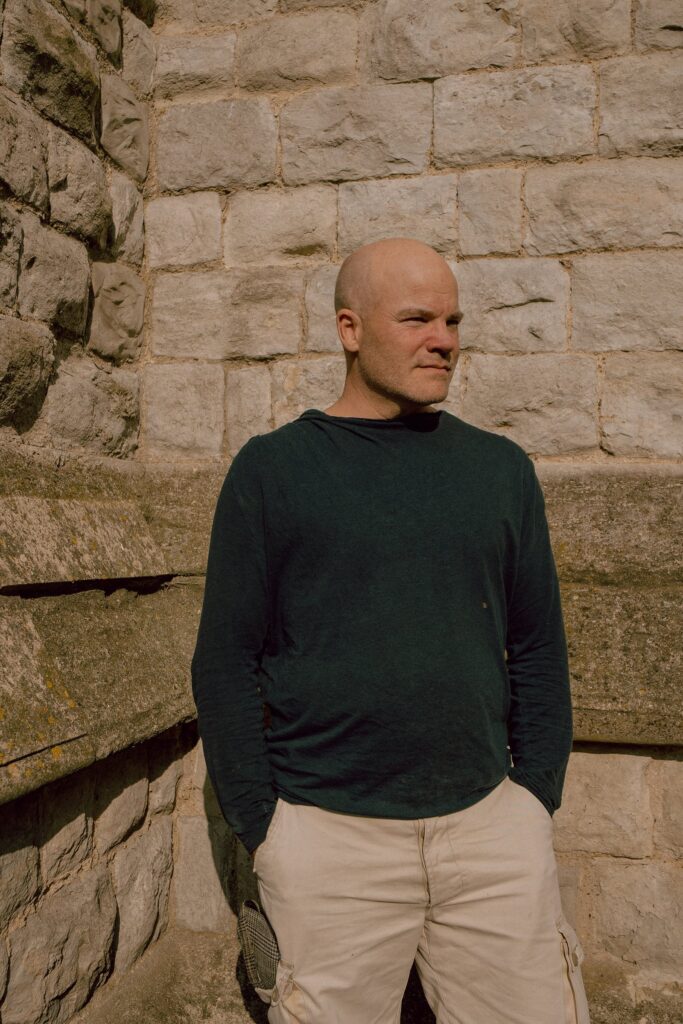
Artist: Henrik Delehag / @delehag
Photography: Caterina Nasini, Henrik Delehag / @delehag
Location: Christ Church Tower, Forest Hill, London, United Kingdom