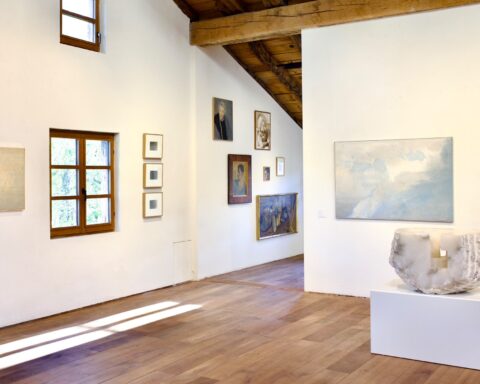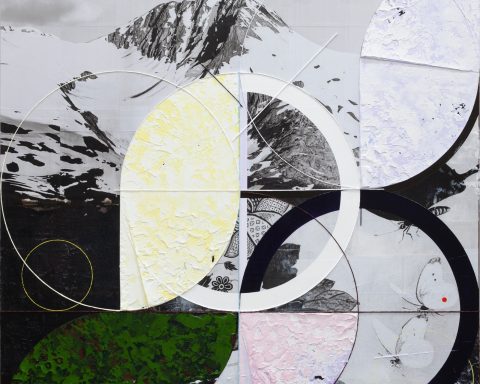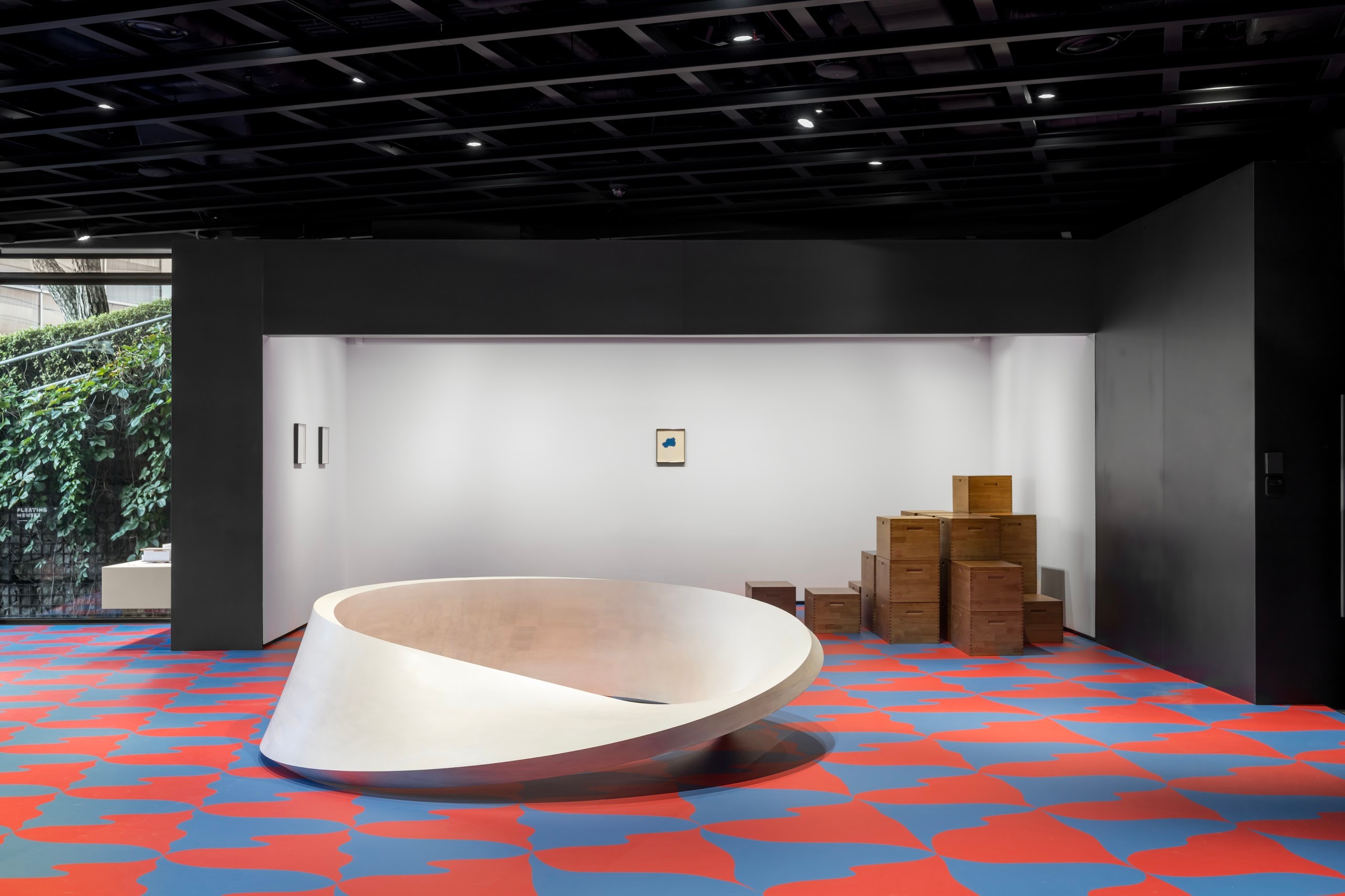
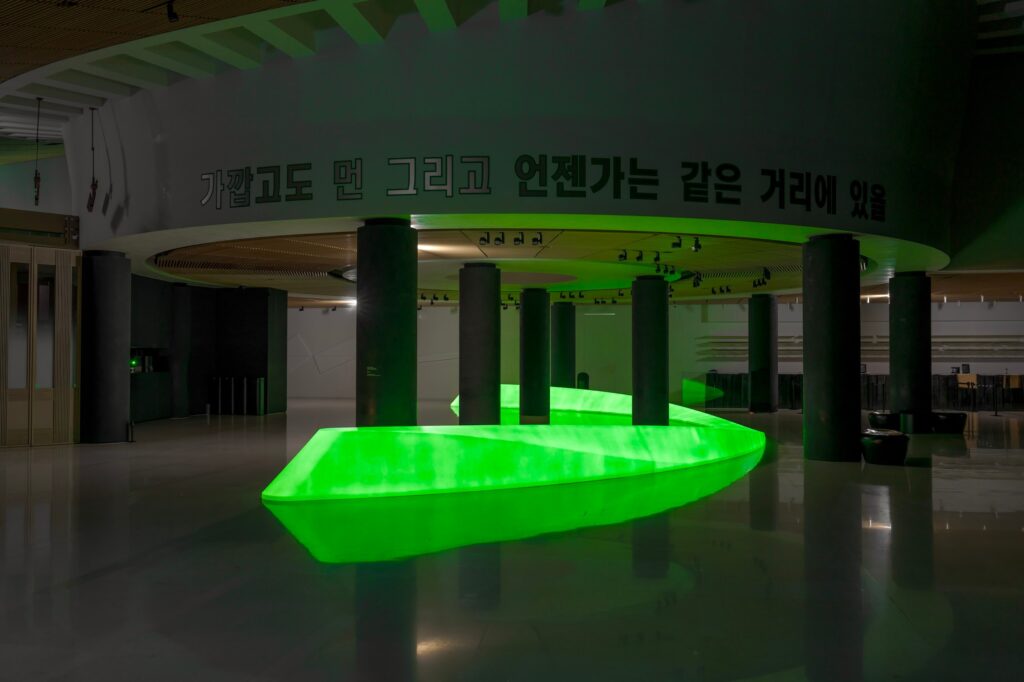
Leeum Museum of Art in Seoul is showing KOO JEONG A: OUSSSMOS, the artist’s largest solo exhibition in Korea to date. It runs until 27 December 2026 and spreads from the M2 galleries into the lobby, the traditional Korean art galleries and the gabion walls around the museum.
A cosmos without a centre
The title joins two words. OUSSS is a term Koo Jeong A coined in the mid-1990s, which the museum describes as refusing a single meaning and constantly connecting with different states. COSMOS completes it.
As a result, the exhibition has no fixed centre and no set route. Visitors wander, pause or pass works by without noticing, and connect the sensory clues they meet in their own way.
For the museum, what matters is also what visitors overlook, and how those things come back to memory later. “Missing something has the same value as seeing it,” curator Sungwon Kim told the Korea Times.
MOBIOUSSS and GRAVITTA
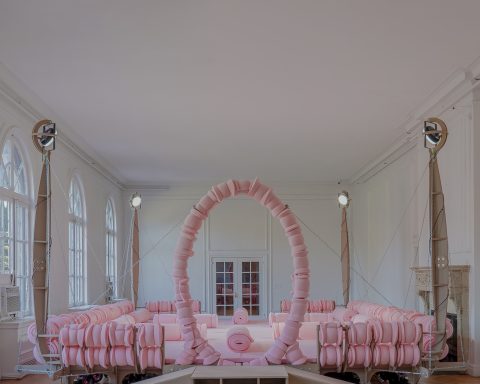
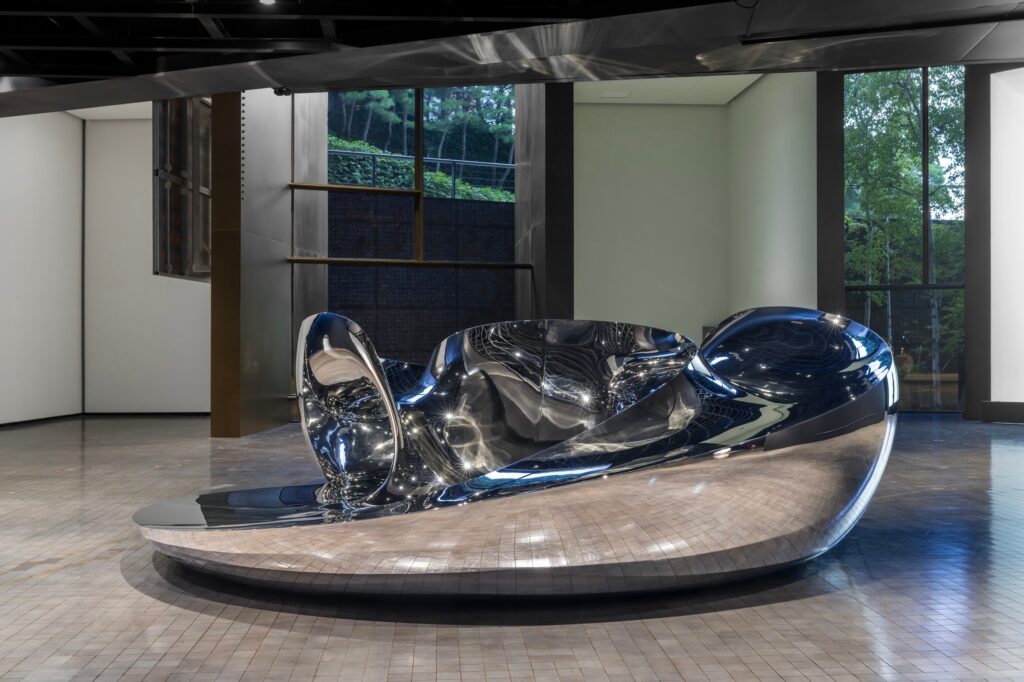
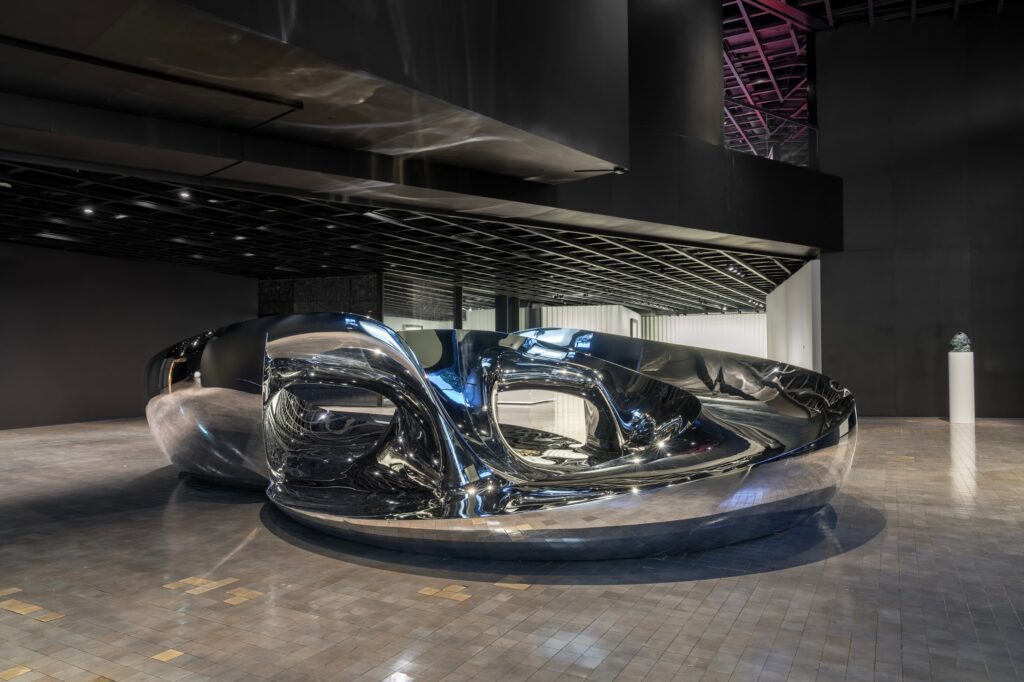
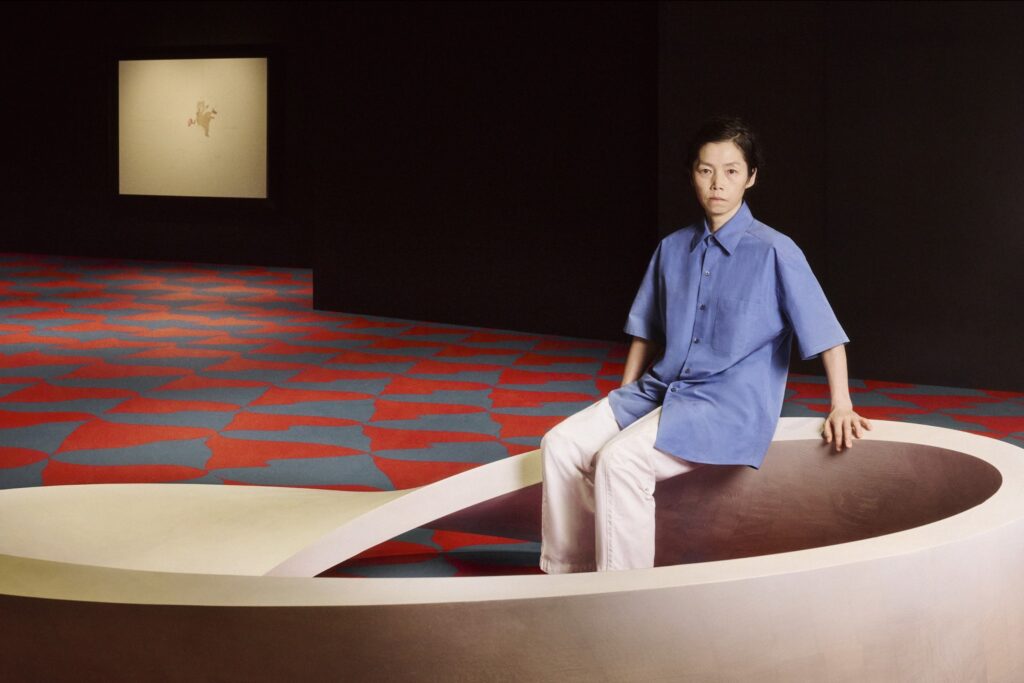
At the heart of M2 sits [ MOBIOUSSS ], a stainless steel work commissioned by Leeum. Its title combines the name of the mathematician August Möbius with OUSSS.
According to the Korea Times, the work reads at eye level as a maze of linked tunnels and resolves from above into an infinity symbol. The Pilar Corrias gallery compares it to a spacecraft crash-landed in the gallery.
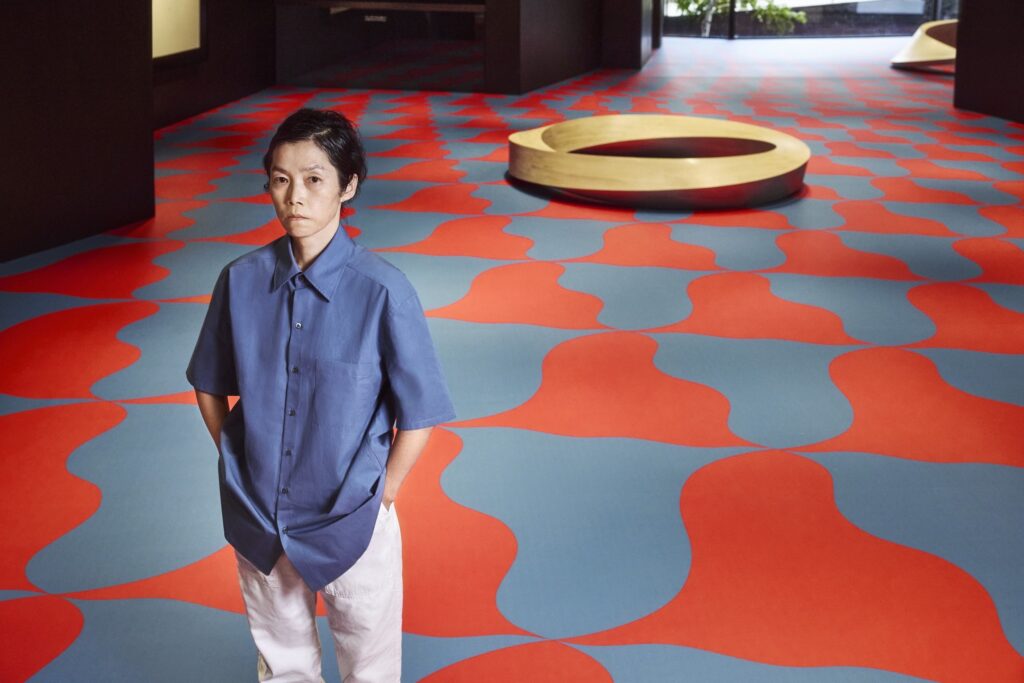
Meanwhile, [ GRAVITTA ] (2025) is a reinforced fibreglass structure painted with GITD paint, nearly 19 metres long. Elsewhere in the show, visitors walk across a red-and-blue patterned floor.
Magnets, drawings and hidden crystals
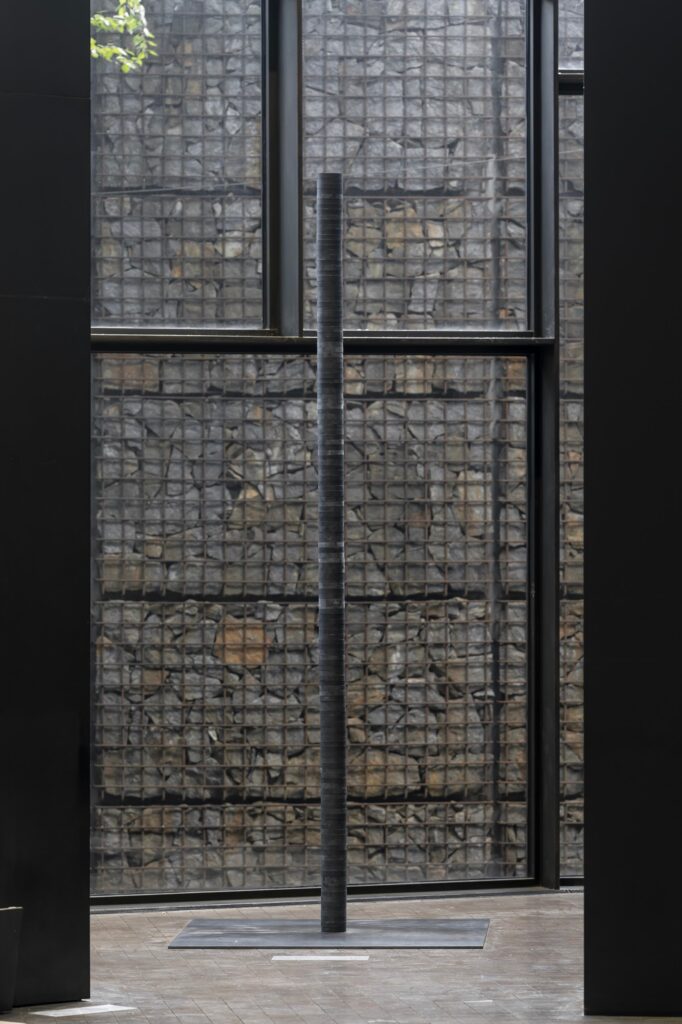
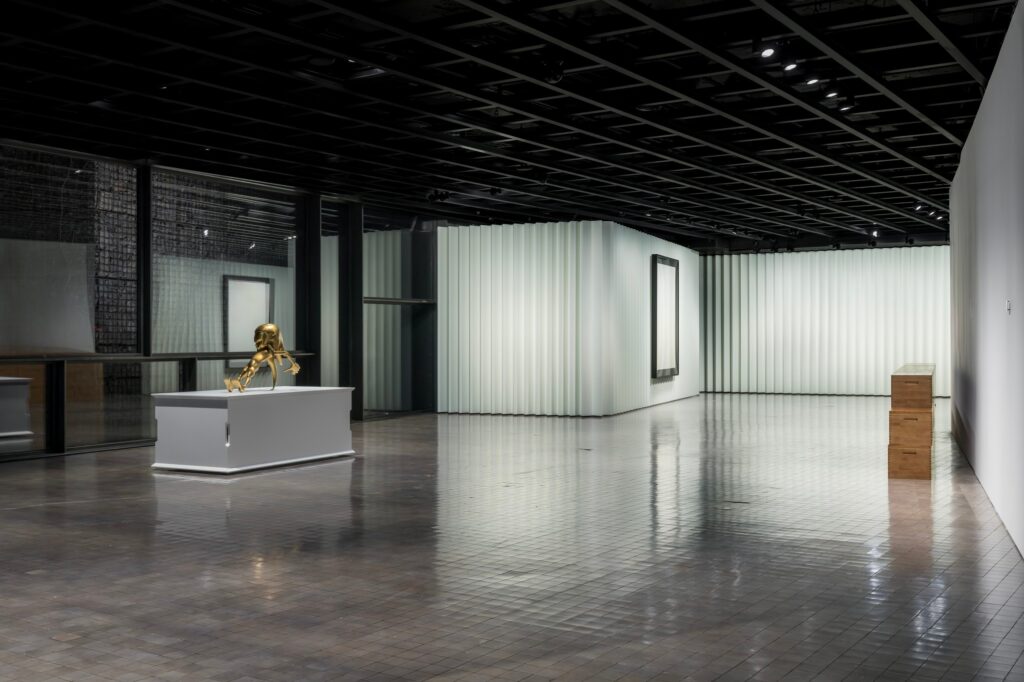
In addition, the white boxes hold the [ MAGNET CITIES ] series. Here, thousands of ferrite magnets rise as columns or hang from the walls, held together only by magnetism, without any armature.
The series starts from the artist’s research into the British architect Cedric Price’s concept of the Magnet City, a vision built on adaptability and temporality. The sculptures never settle into one form. Instead, they take a new configuration at each installation, depending on the site, the other magnets and even the person installing them.
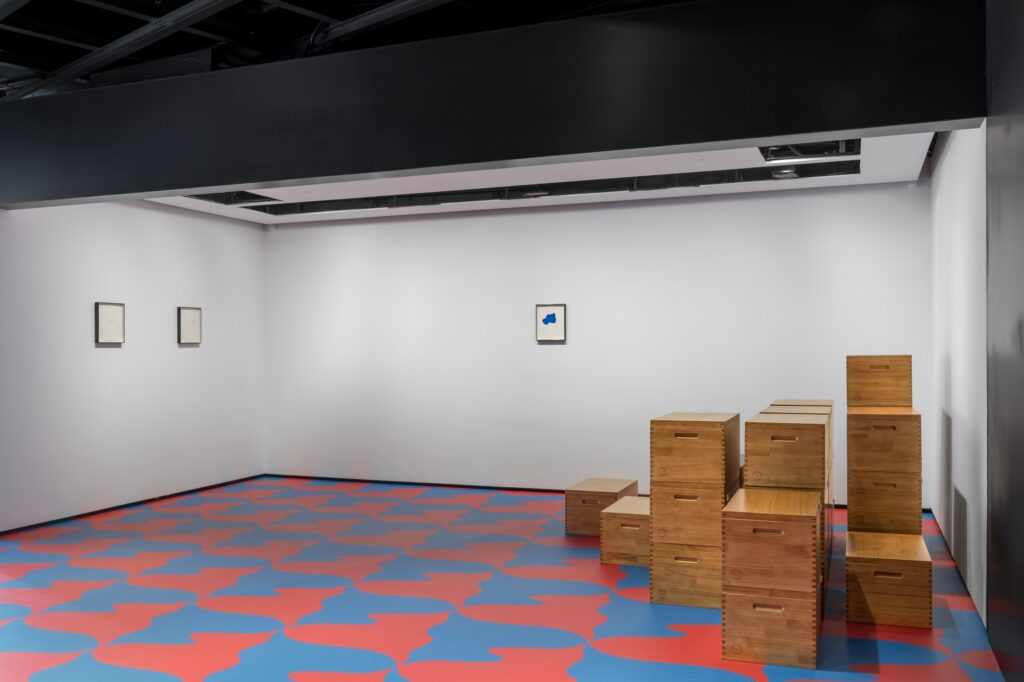
[ R ] (2005) consists of 1,001 drawings in felt pen and ink and 77 wooden boxes. It is shown in full for the first time, though no visitor can see all of it at once. For example, some drawings hang on the walls while the rest stay in the boxes, and the displayed ones rotate over the course of the show.
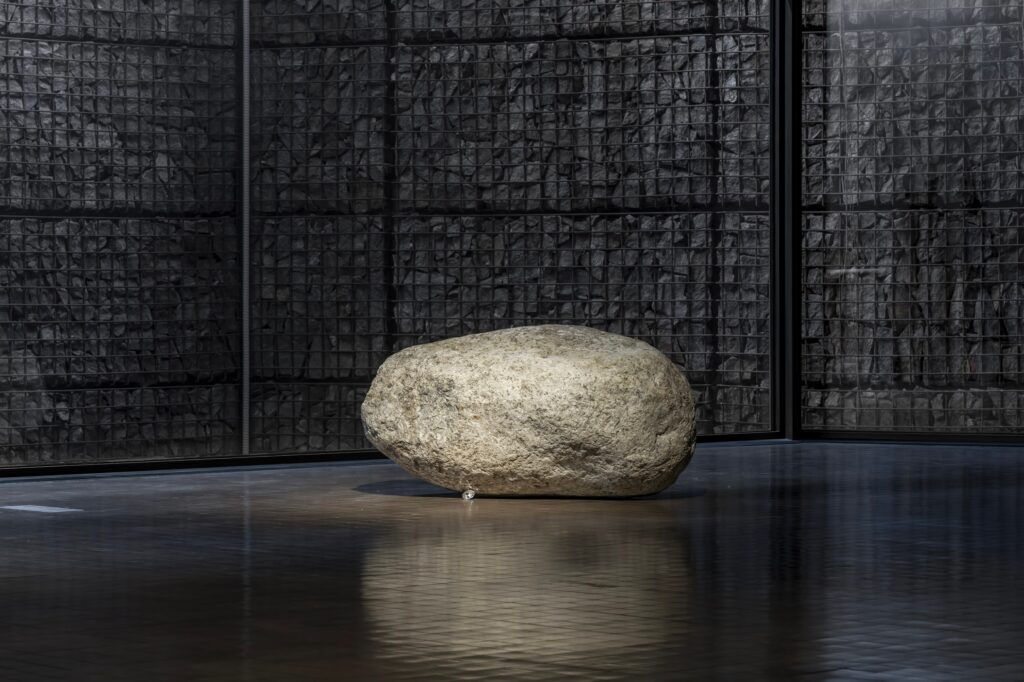
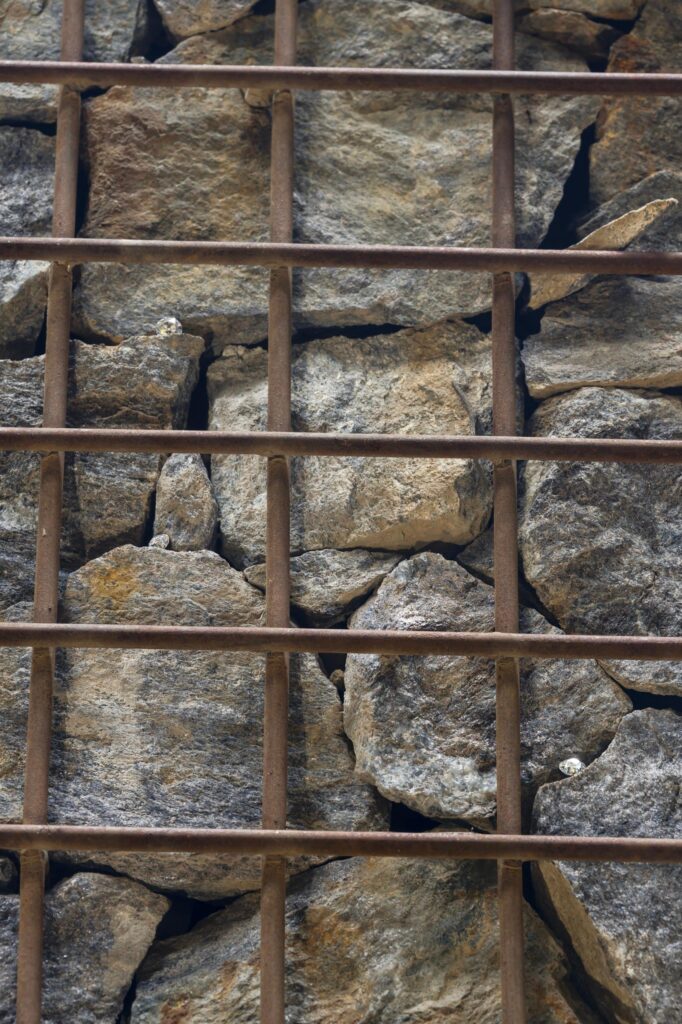
Finally, outside the gallery, [ A Reality Upgrade & End Alone ] (2003/2026) places a rock and 50 crystal diamonds in the dark gabion wall. The crystals flash only when a viewer stands in the right spot.
Third in a cycle
Pilar Corrias presents the show as the third chapter of a cycle, after Land of OUSSS [KANGSE] at LUMA Arles in 2025 and Land of OUSSS [GRAVITTA] at Kunsthaus Bregenz in 2026.
Born in Seoul, the artist studied at the École des Beaux-Arts in Paris and settled there in the 1990s. In 2024 she presented ODORAMA CITIES in the Korean Pavilion at the Venice Biennale. The exhibition is curated by Sungwon Kim with Sol Kim.
Artist: Koo Jeong A / @koojeonga
Photography: Jeon Byung-cheol, Mok Jung Wook
Location: Leeum Museum of Art / @leeummuseumofart, Seoul, South Korea