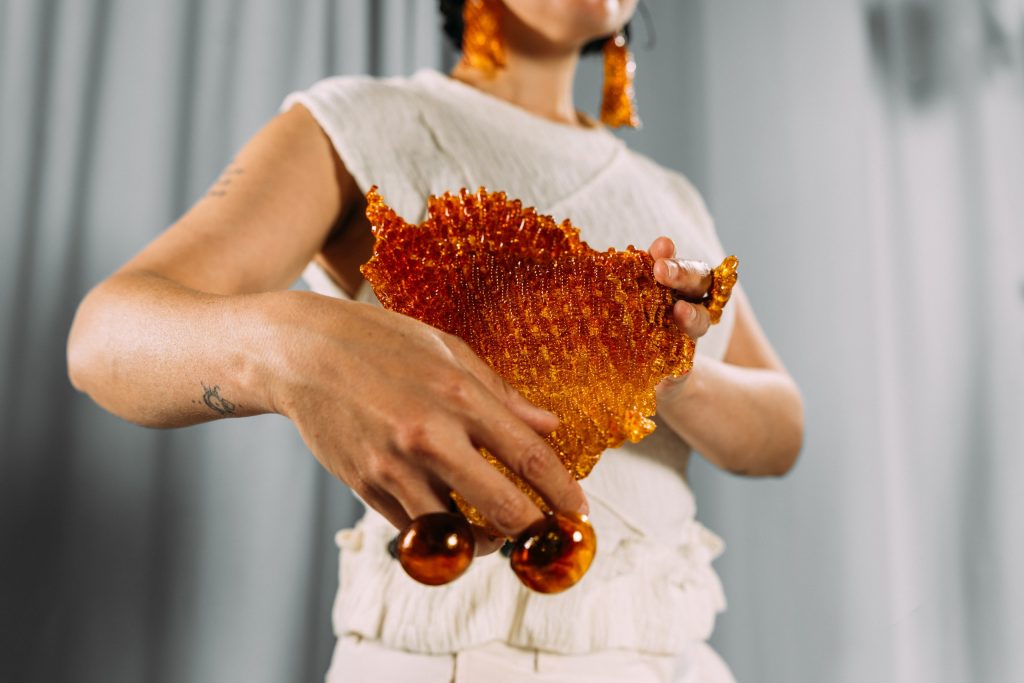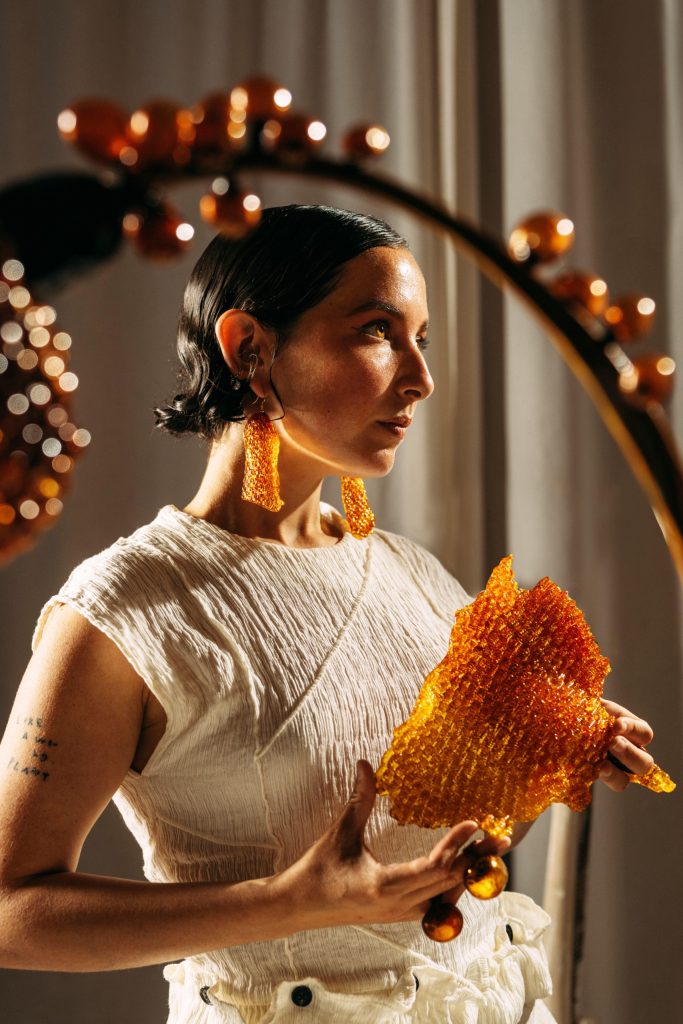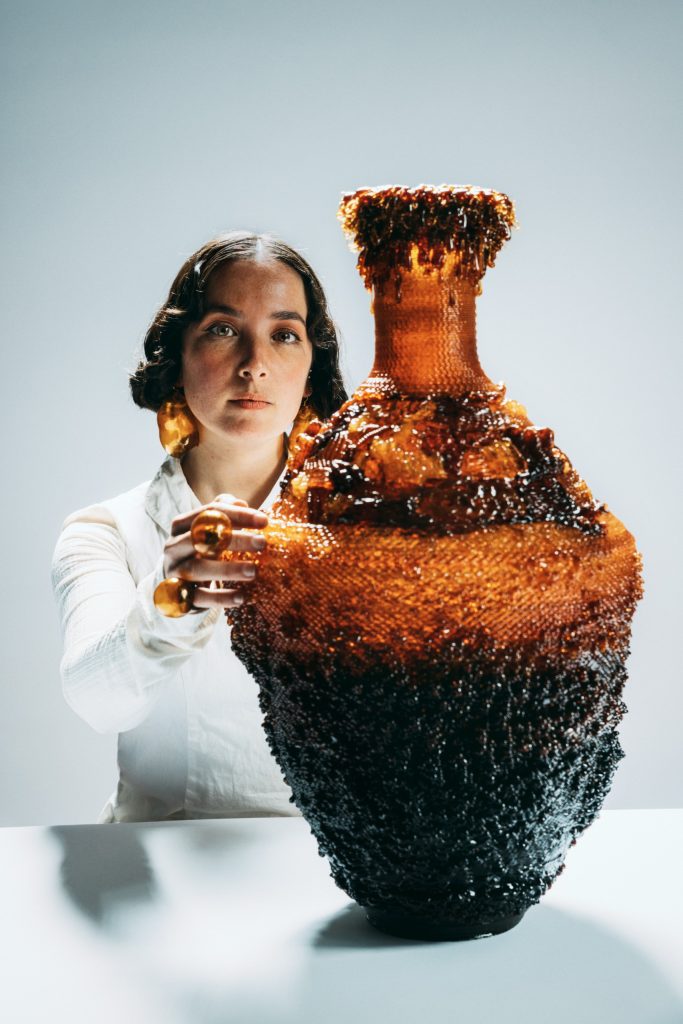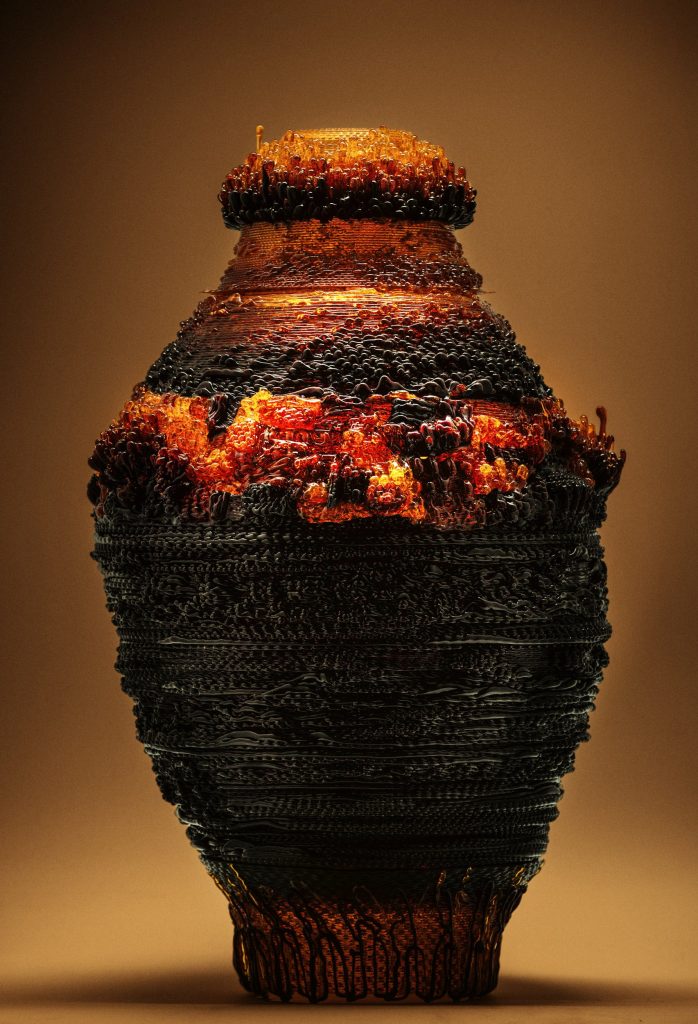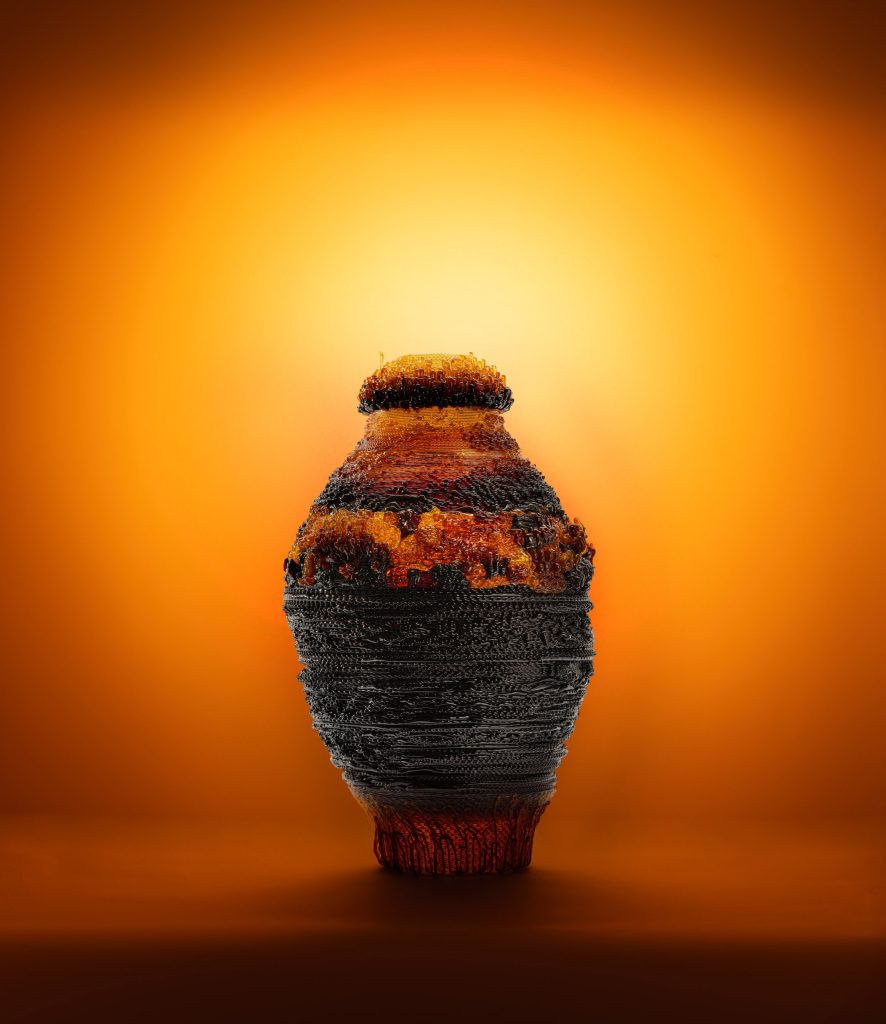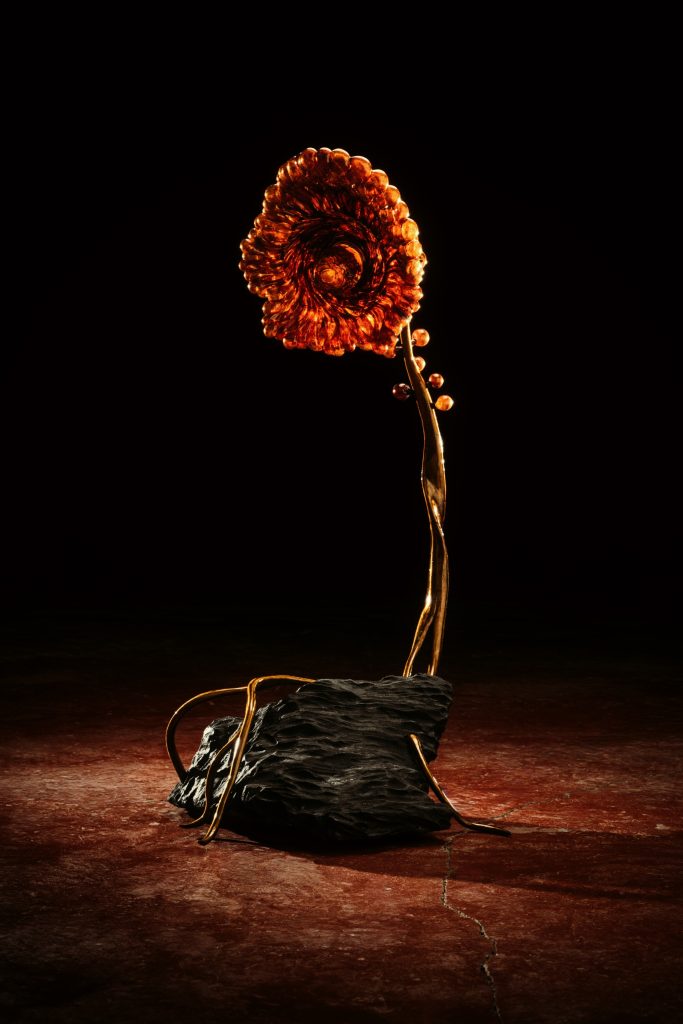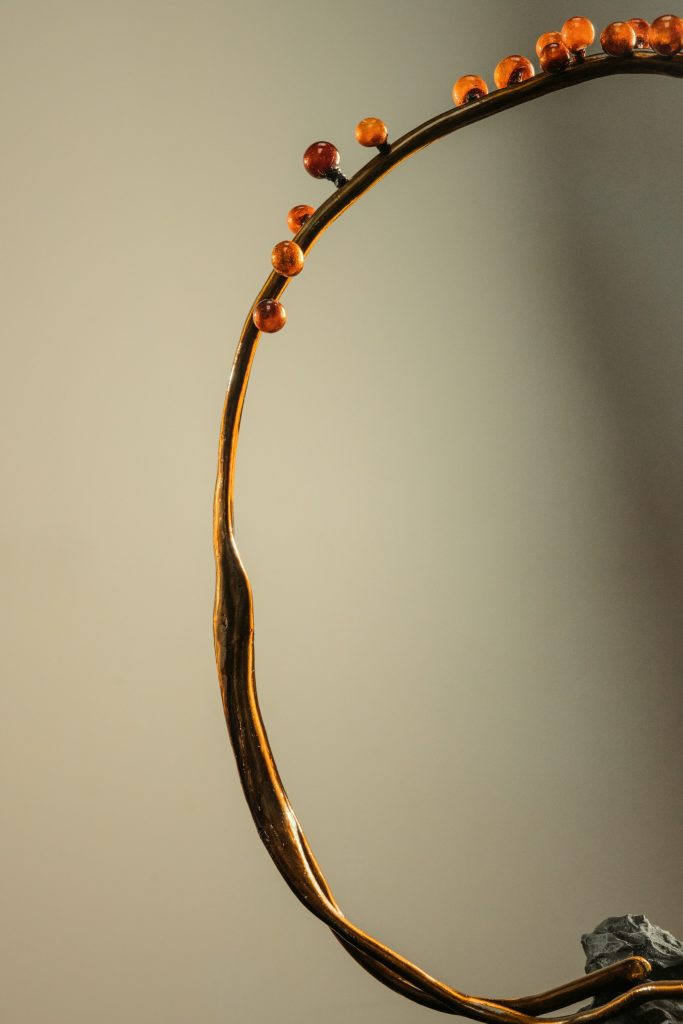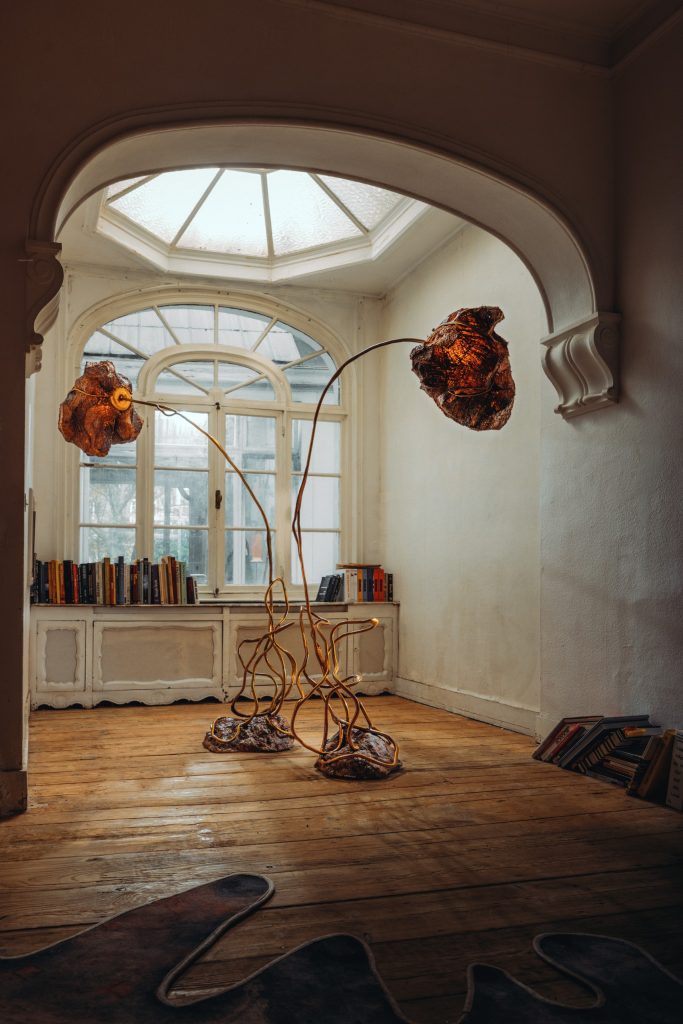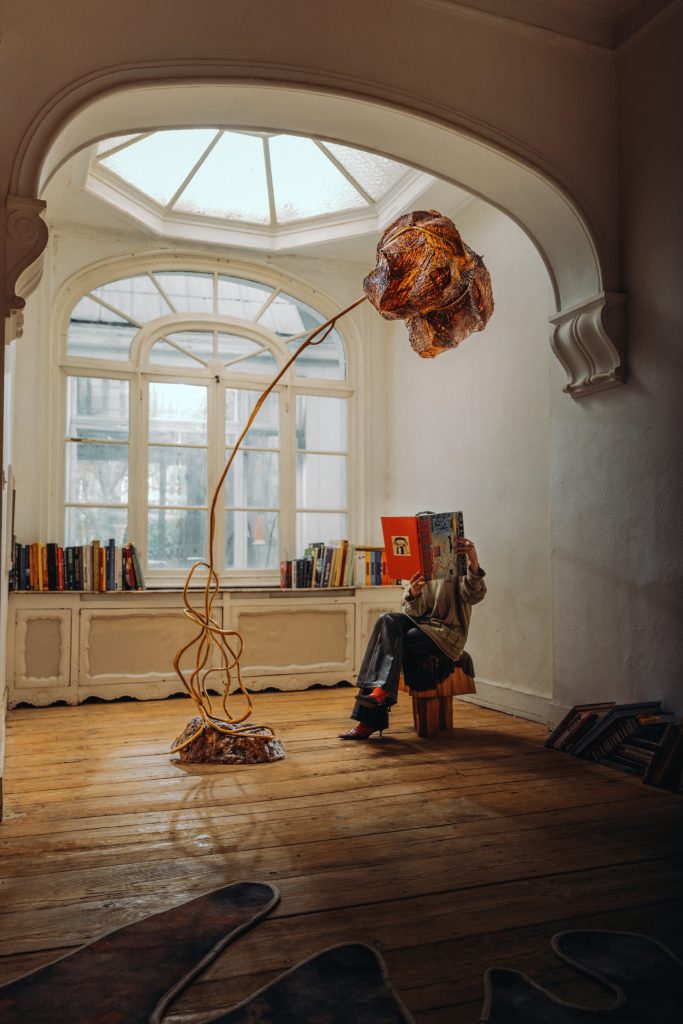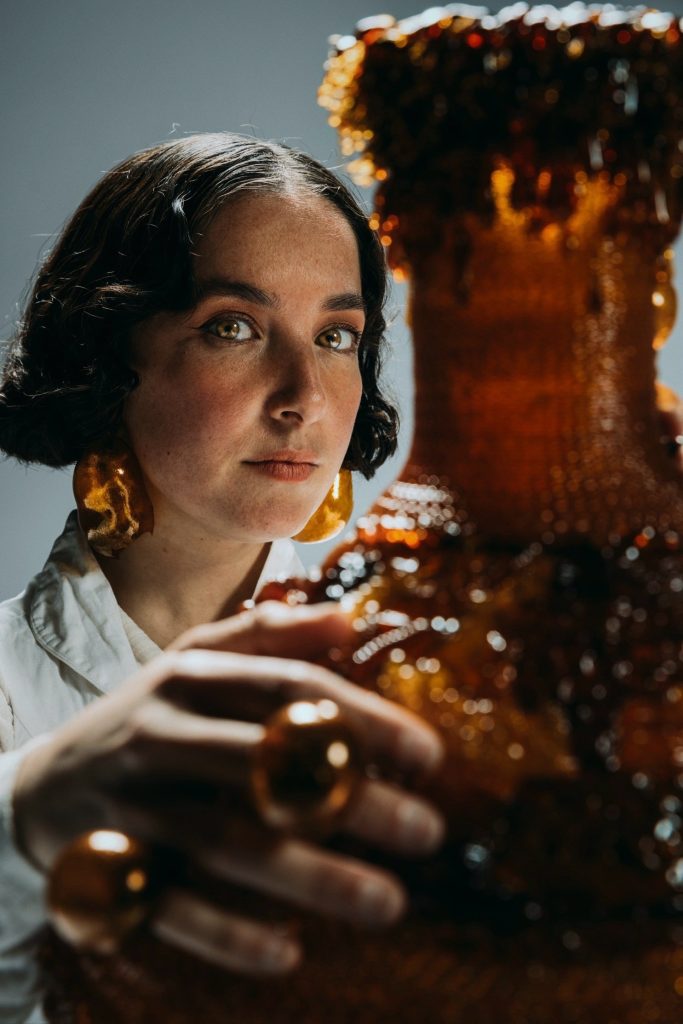
Ori Orisun Merhav with a piece from the Morpho edition

Ori Orisun Merhav shapes sculpture from insect resin

Start

Ori Orisun Merhav is an artist, designer and material researcher. Through Made by Insects, her ongoing research and artistic practice, she works with lac, a natural resin produced by Kerria lacca insects.

Orisun treats materials as active participants in the process of making. “The main practice of the studio is research,” she says. “The sculptures are the leftovers, segments of the time and journey of our research.”
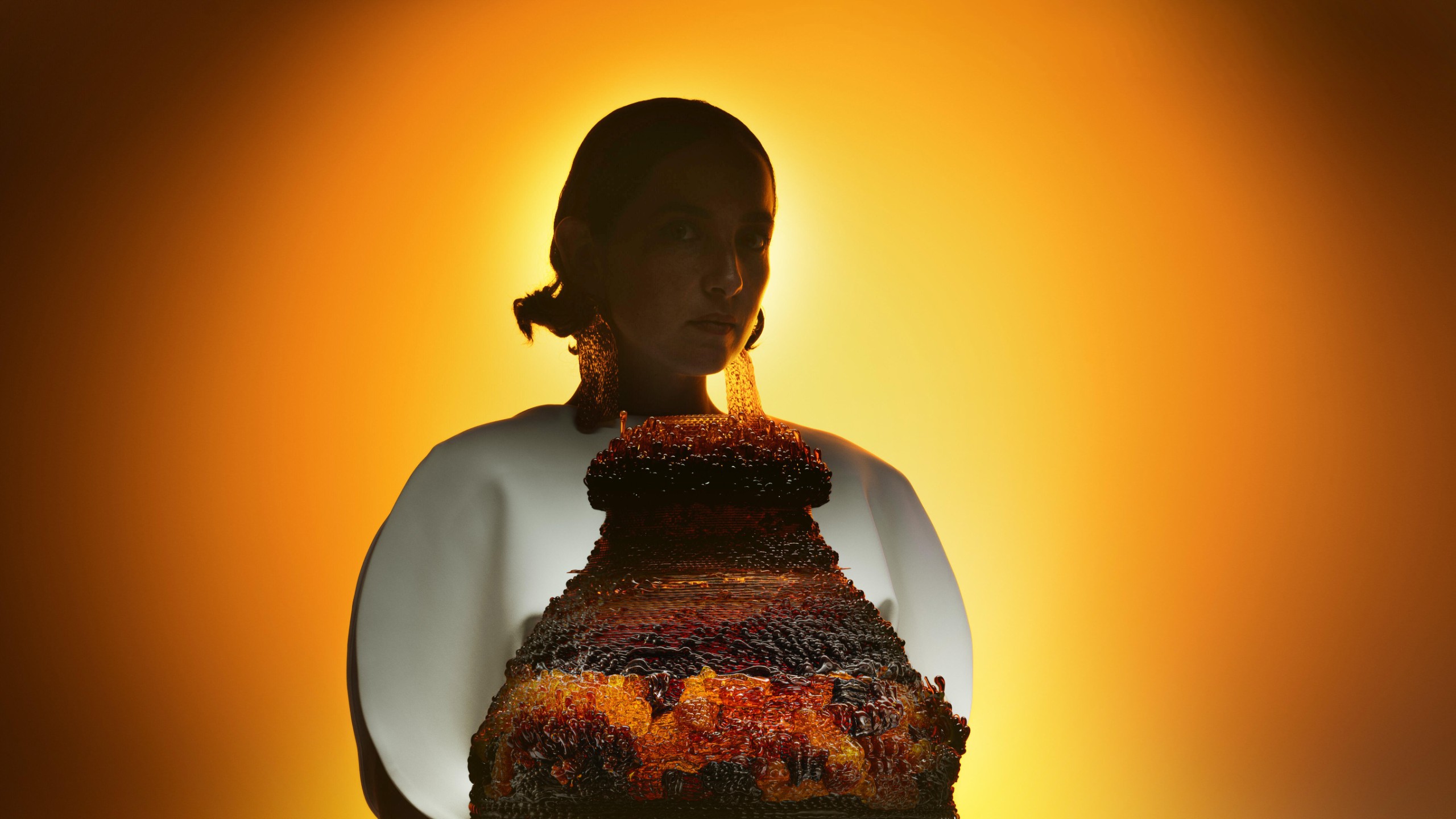
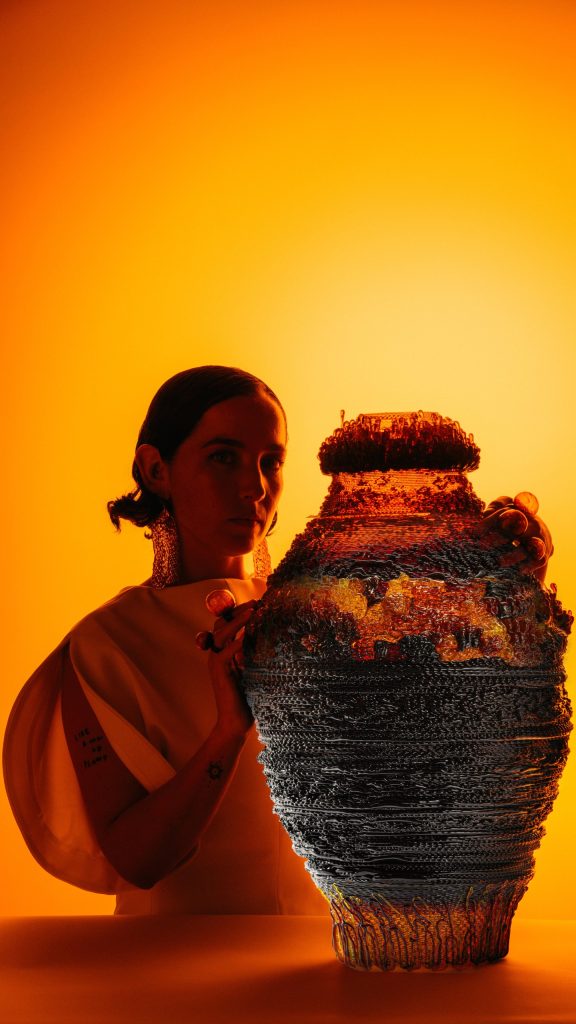
Ori Orisun Merhav with a Morphopoiesis vessel
Ori Orisun Merhav with a piece from the Morpho edition. Photo: Studio Mimesis.

The insect and the cocoon

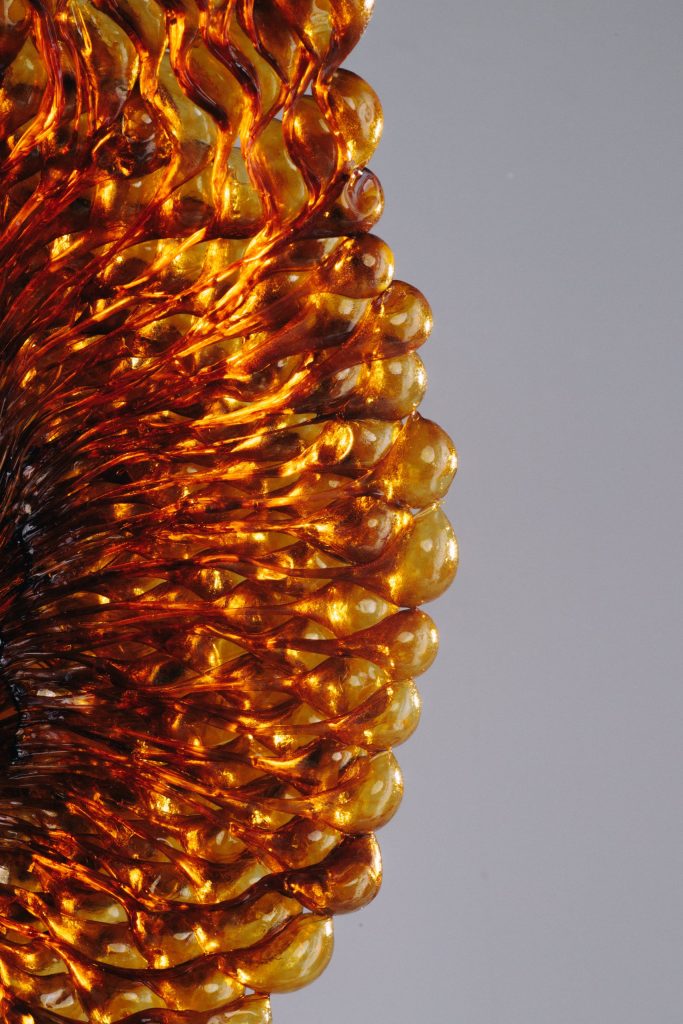
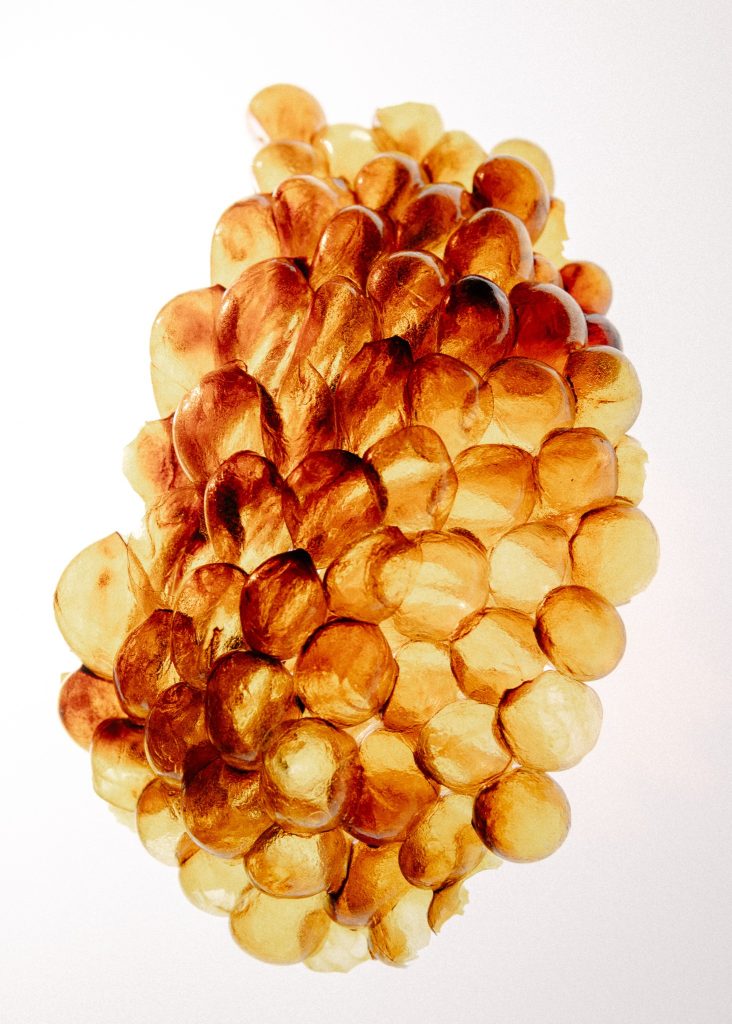
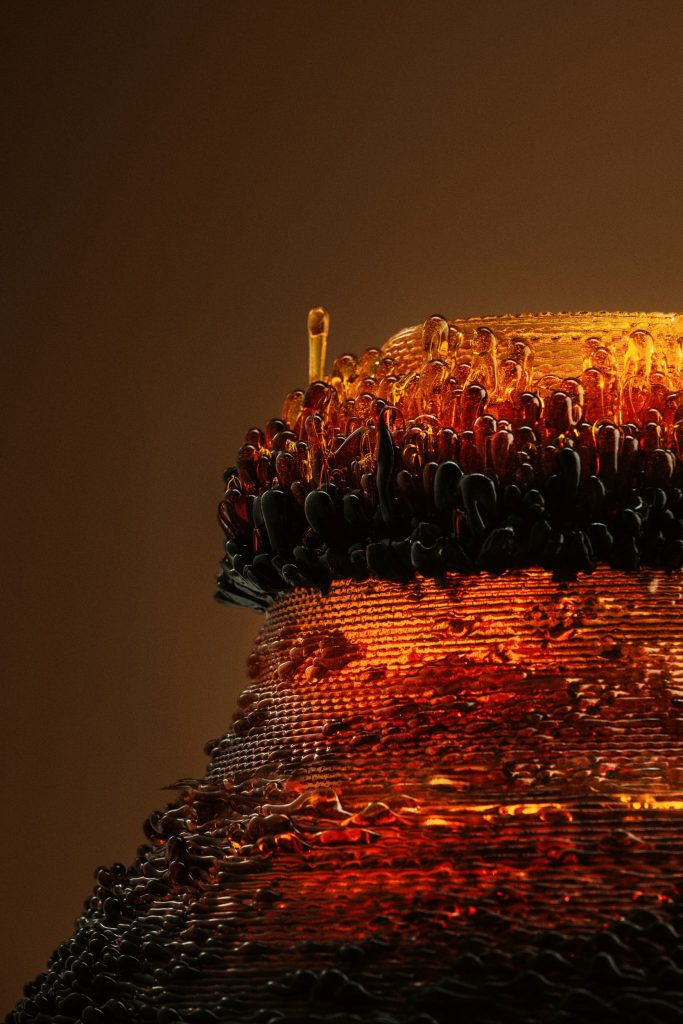
Kerria lacca are tiny scale insects, each as small as a grain of sand, and they always live in colonies. They pierce the phloem in a tree’s twigs and branches and transform its sugary sap into a resinous polymer. Over five to ten months, they secrete this resin and encase themselves in thousands of tiny bubbles. In time, the bubbles merge into a cocoon that weaves into the bark and protects the colony from predators.

The insects live for about ten months. Only after the new generation has emerged and left the cocoons do farmers harvest the polymer from the branches. For Orisun, shellac is the visible trace of a relationship between organisms, environments and time.
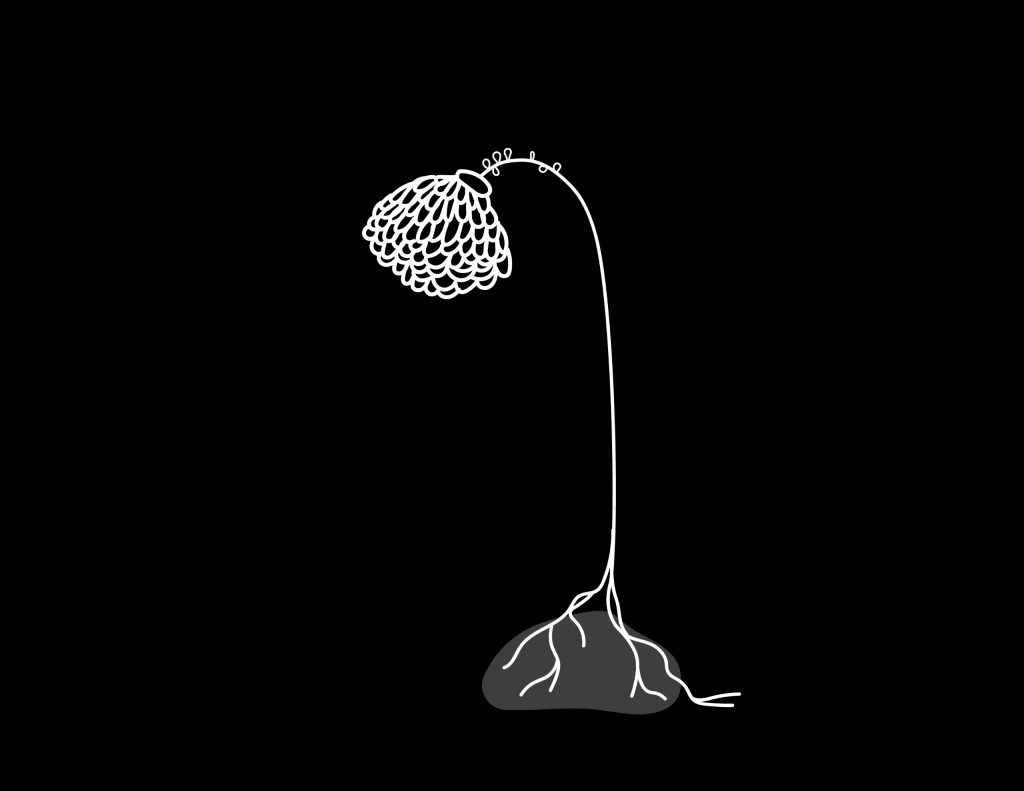
Sketch by Ori Orisun Merhav for Made by Insects

Fieldwork and the Insects Lab

Her research unfolds through fieldwork with farmers, scientists, entomologists and manufacturers in Thailand and India. It has also led to a collaboration with the Bio-Polymer Lab at Avans University of Applied Sciences in Breda.

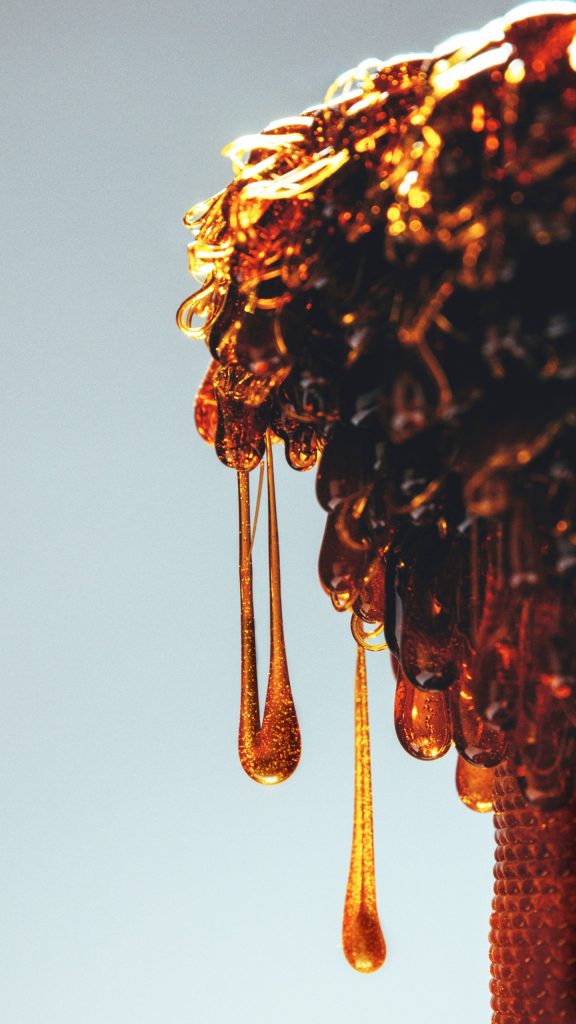
At the Insects Lab, the behaviour of shellac redirects the process. Unexpected reactions and deformations count as moments of discovery rather than failures. Over time, the studio has developed techniques specifically for the insect polymer. These range from translating glass-blowing into shellac to custom extrusion systems inspired by the way the insects build their cocoons.
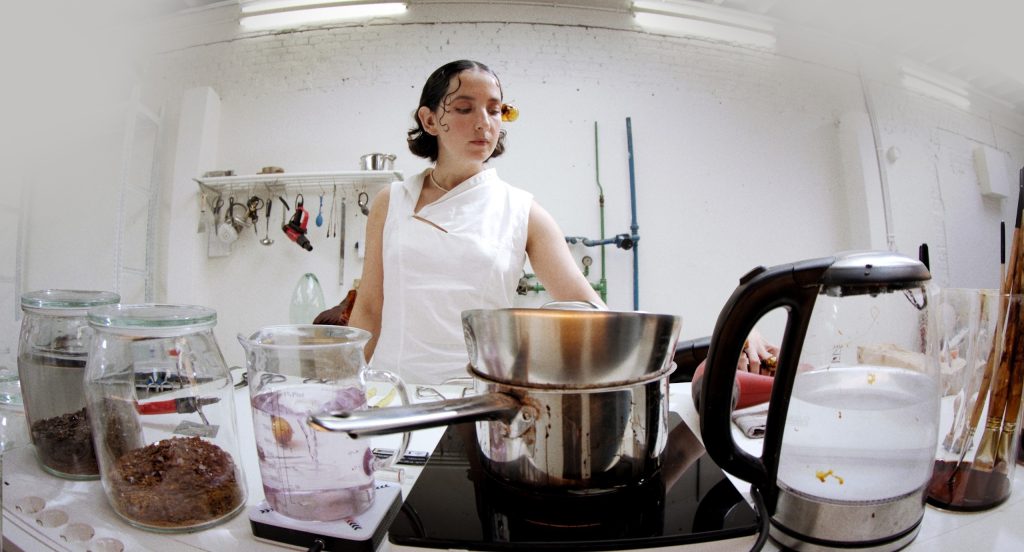
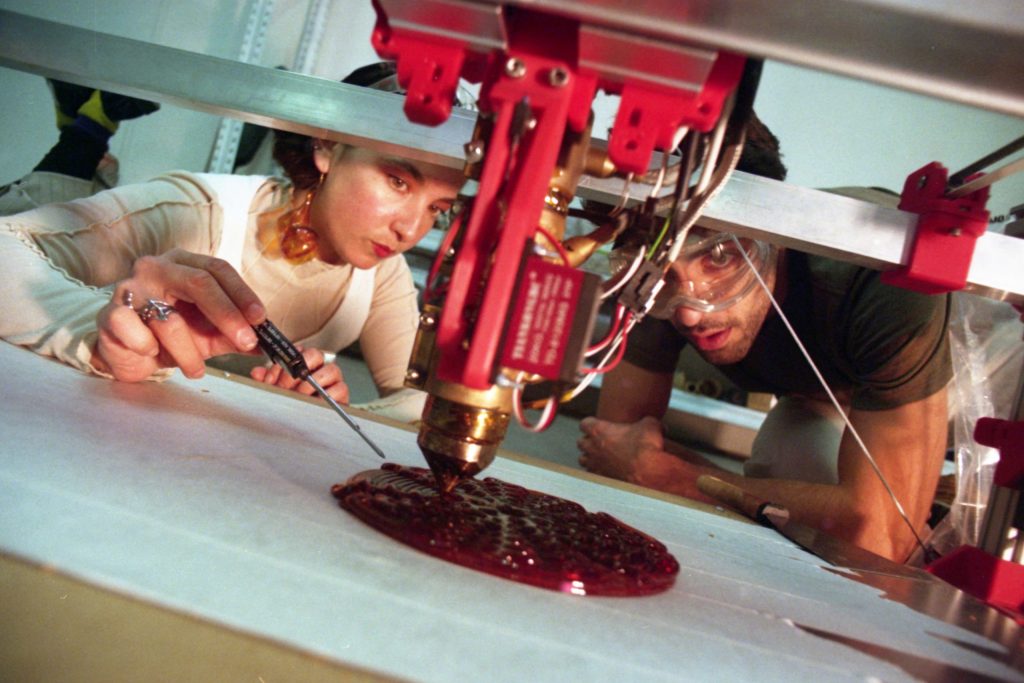
Ori Orisun Merhav at the Lac Lab
Ori Orisun Merhav at the Lac Lab. Photo: Fitzbrien.
Ori Orisun Merhav and Tom Samson adapting ginger additive technology for the insects printer
Ori Orisun Merhav and Tom Samson adapting ginger additive technology for the insects printer. Photo: Lea Crabe.
A 3D-printed sample in insect resin
A 3D-printed sample in insect resin. Photo: Studio Mimesis.
Experiments from the Insects Lab
Experiments from the Insects Lab. Photo: Studio Mimesis.
Detail of a blown insect cocoon
Detail of a blown insect cocoon. Photo: Studio Mimesis.
Detail of a blown insect cocoon
Detail of a blown insect cocoon. Photo: Bureau Rouge.

Morphogenesis

Morphogenesis was the first work by the studio to enter the permanent collection of the Centre Pompidou. To make it, the team scanned the textures and growth patterns of insect cocoons and translated their logic into code. These algorithms then guided a custom-built 3D printer, which extruded according to principles learned from insect construction.

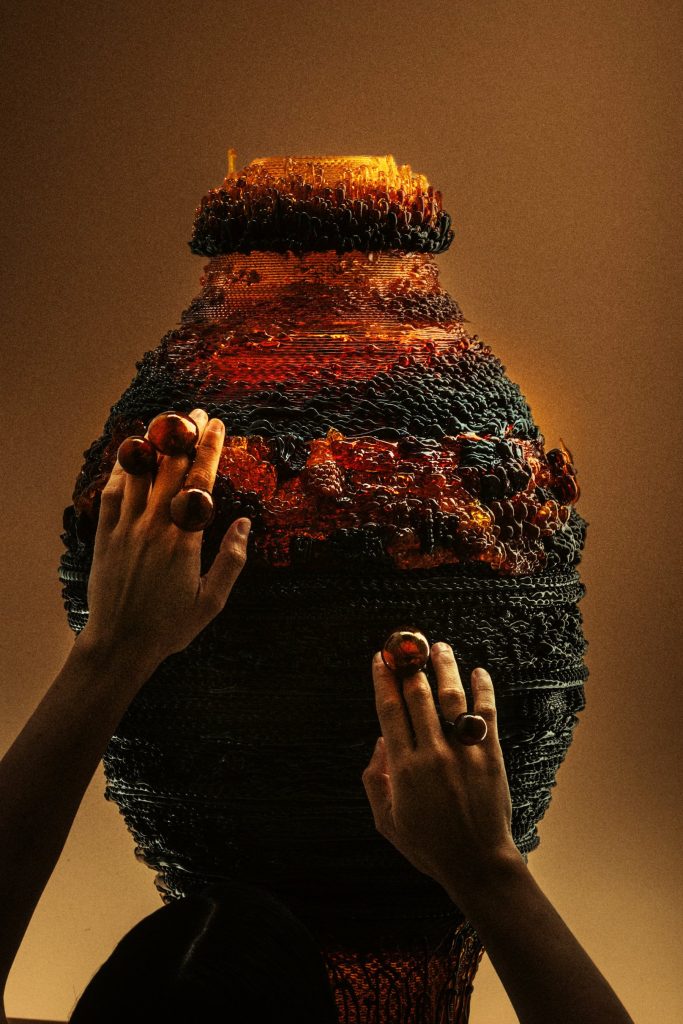
The same language continues in an edition of 26 digitally crafted vessels. Meanwhile, Morphopoiesis is a body of works exploring the intersection of insects, humans, craft and machine.
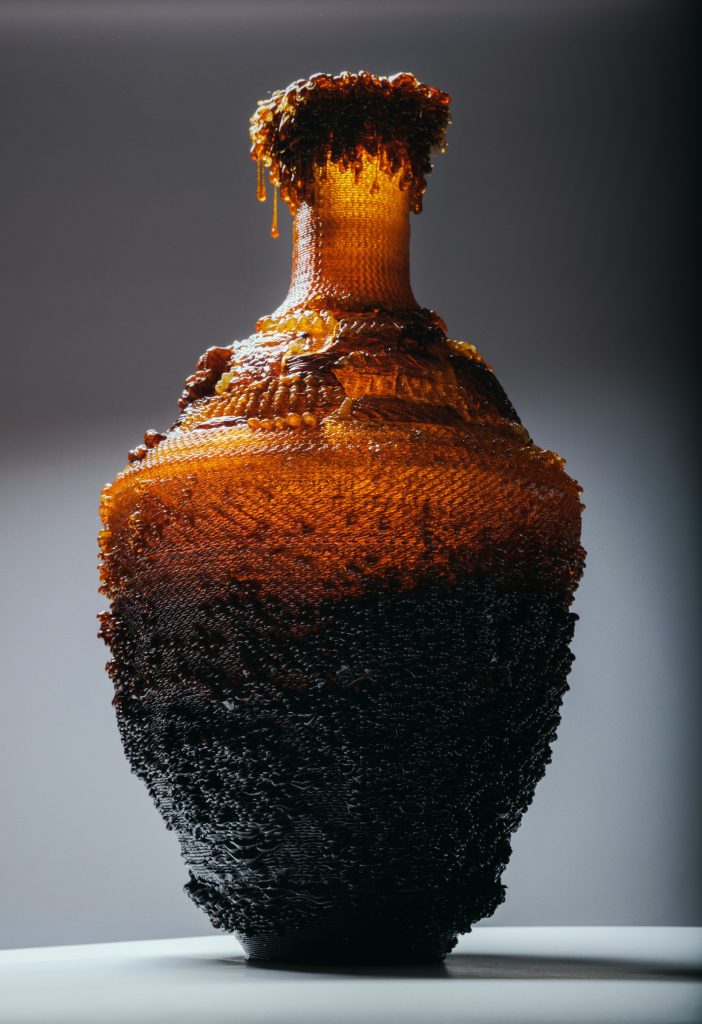
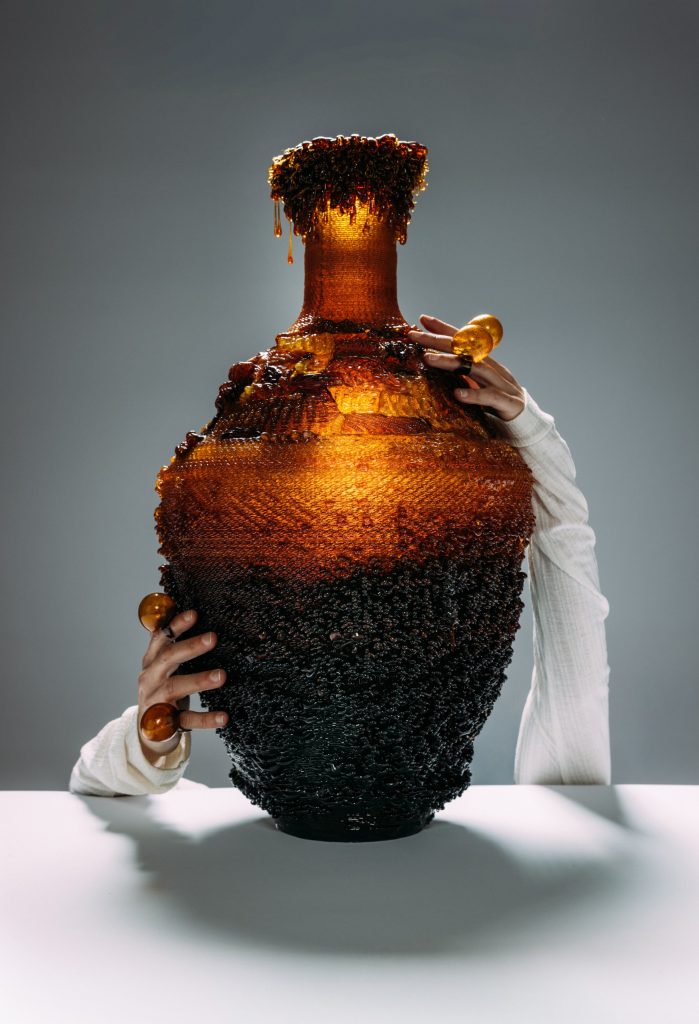
Morphogenesis, permanent collection of the Centre Pompidou
Morphogenesis, permanent collection of the Centre Pompidou. Photo: Studio Mimesis.
Morphogenesis, permanent collection of the Centre Pompidou
Morphogenesis, permanent collection of the Centre Pompidou. Photo: Studio Mimesis.
Detail of Morphogenesis
Detail of Morphogenesis. Photo: Studio Mimesis.
Morphogenesis, permanent collection of the Centre Pompidou
Morphogenesis, permanent collection of the Centre Pompidou. Photo: Studio Mimesis.
Morphopoiesis
Morphopoiesis. Photo: Studio Mimesis.
Morphopoiesis
Morphopoiesis. Photo: Studio Mimesis.
Morphopoiesis
Morphopoiesis. Photo: Studio Mimesis.
Morphopoiesis
Morphopoiesis. Photo: Studio Mimesis.
Morphopoiesis
Morphopoiesis. Photo: Studio Mimesis.

Beyond the Cocoon and Desert Insects

Beyond the Cocoon was first shown at PAD London 2025, while Desert Insects made its debut at TEFAF Maastricht 2026. Both are courtesy of Sarah Myerscough Gallery, which represents the artist. In addition, Insect Plantasia was previously shown at the Triennale di Milano.
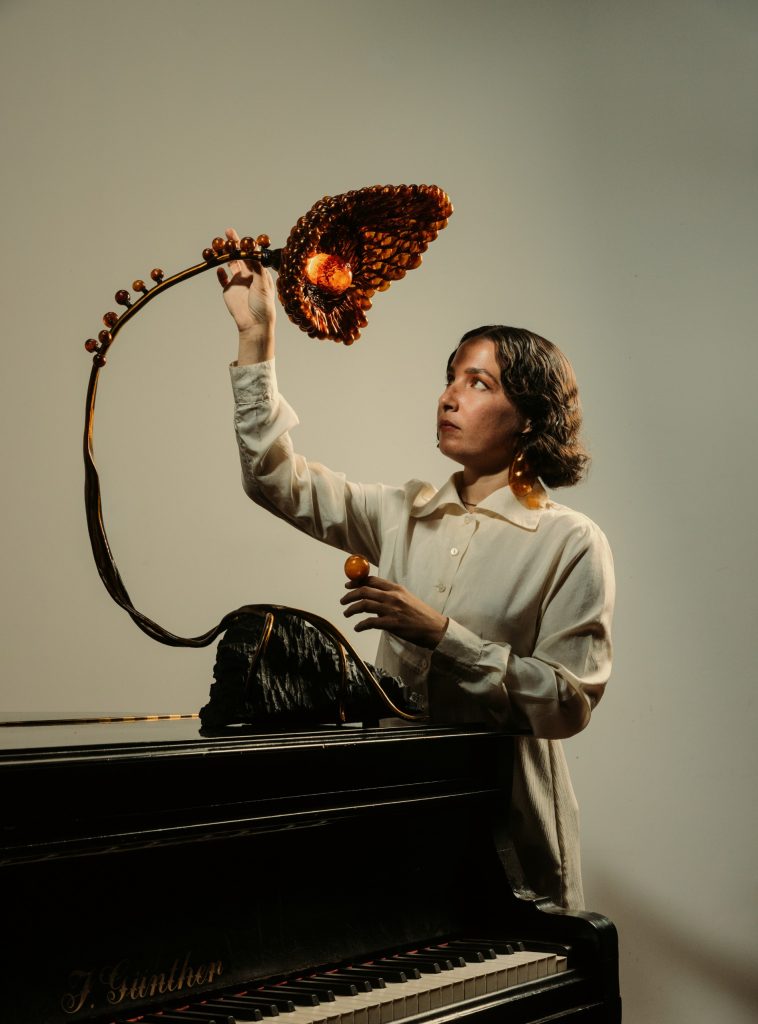
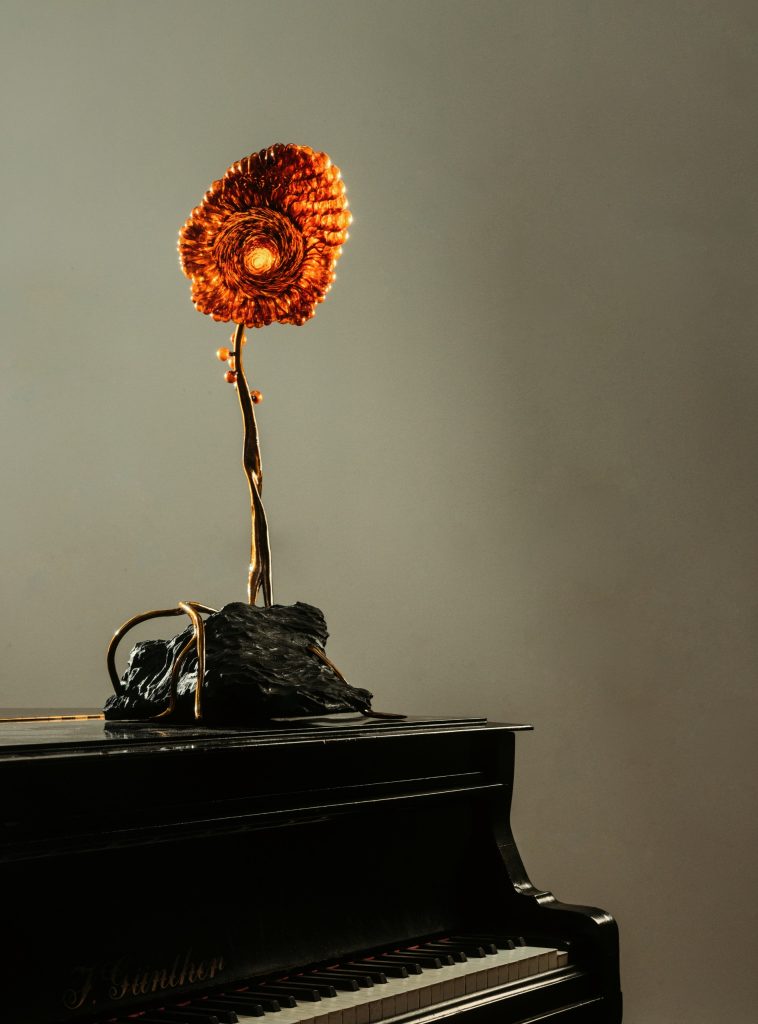
Beyond the Cocoon, first shown at PAD London 2025, courtesy Sarah Myerscough Gallery
Beyond the Cocoon, first shown at PAD London 2025, courtesy Sarah Myerscough Gallery. Photo: Studio Mimesis.
Beyond the Cocoon, first shown at PAD London 2025, courtesy Sarah Myerscough Gallery
Beyond the Cocoon, first shown at PAD London 2025, courtesy Sarah Myerscough Gallery. Photo: Studio Mimesis.
Beyond the Cocoon, first shown at PAD London 2025, courtesy Sarah Myerscough Gallery
Beyond the Cocoon, first shown at PAD London 2025, courtesy Sarah Myerscough Gallery. Photo: Studio Mimesis.
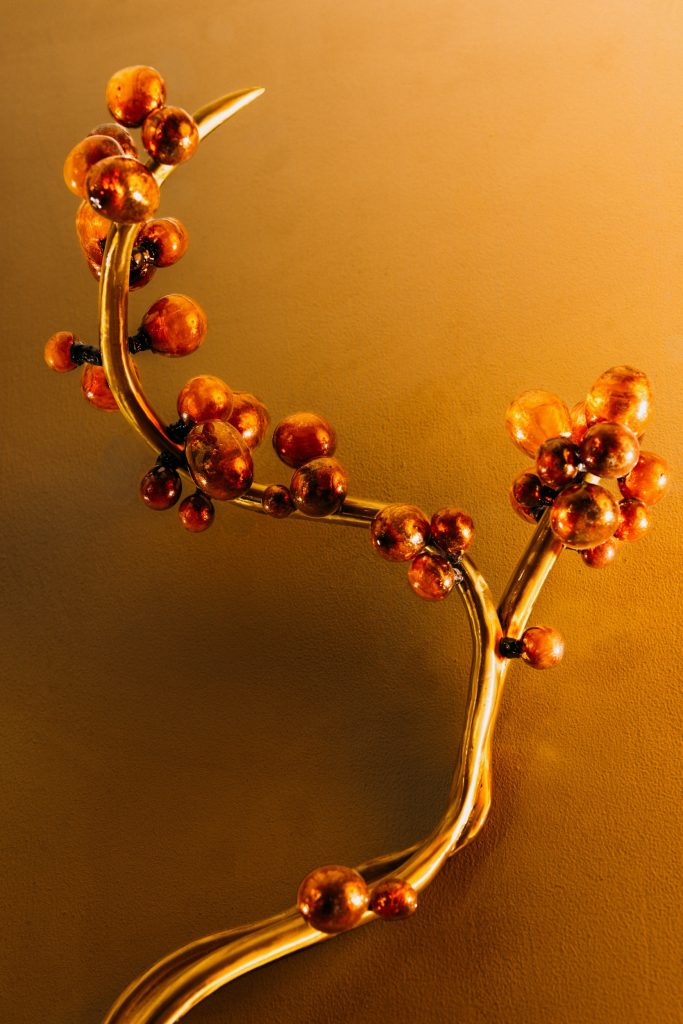
Between Grown and Made, insect-blown bubbles on steel with an insect patina finish
Between Grown and Made, insect-blown bubbles on steel with an insect patina finish. Photo: Studio Mimesis.
Desert Insects, courtesy Sarah Myerscough Gallery
Desert Insects, courtesy Sarah Myerscough Gallery. Photo: Studio Mimesis.
Desert Insects, courtesy Sarah Myerscough Gallery
Desert Insects, courtesy Sarah Myerscough Gallery. Photo: Studio Mimesis.
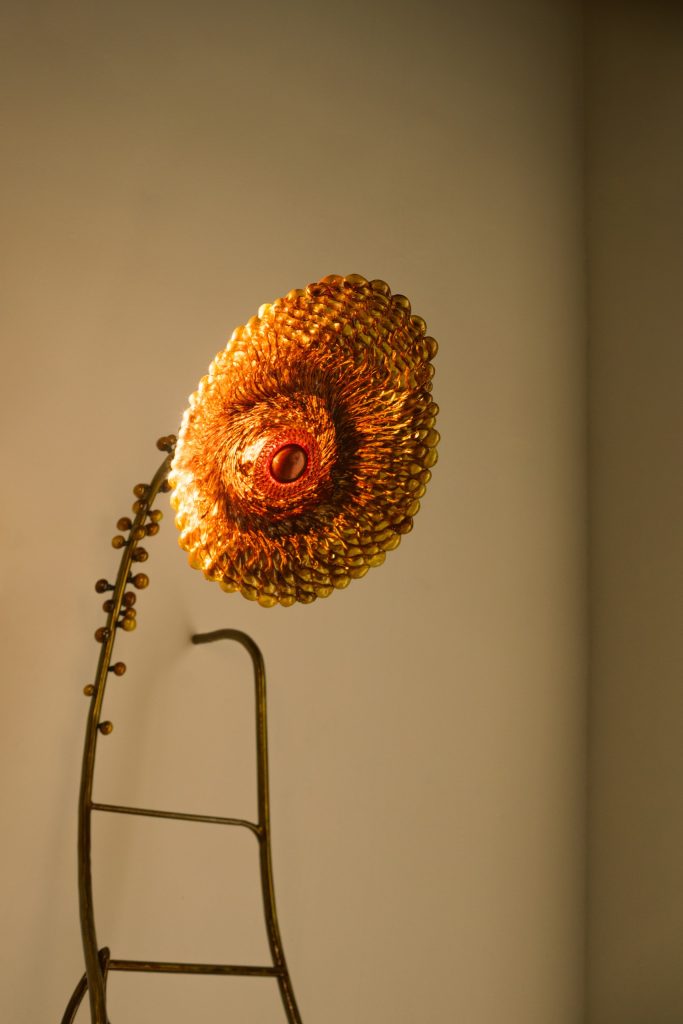
Insects Branches, courtesy Sarah Myerscough Gallery
Insects Branches, courtesy Sarah Myerscough Gallery. Photo: Studio Mimesis.
Insect Plantasia, previously shown at the Triennale di Milano, courtesy Rossana Orlandi Gallery
Insect Plantasia, previously shown at the Triennale di Milano, courtesy Rossana Orlandi Gallery. Photo: Studio Mimesis.

Becoming the Insect is a short film commissioned by the Centre Pompidou and soon to be revealed.
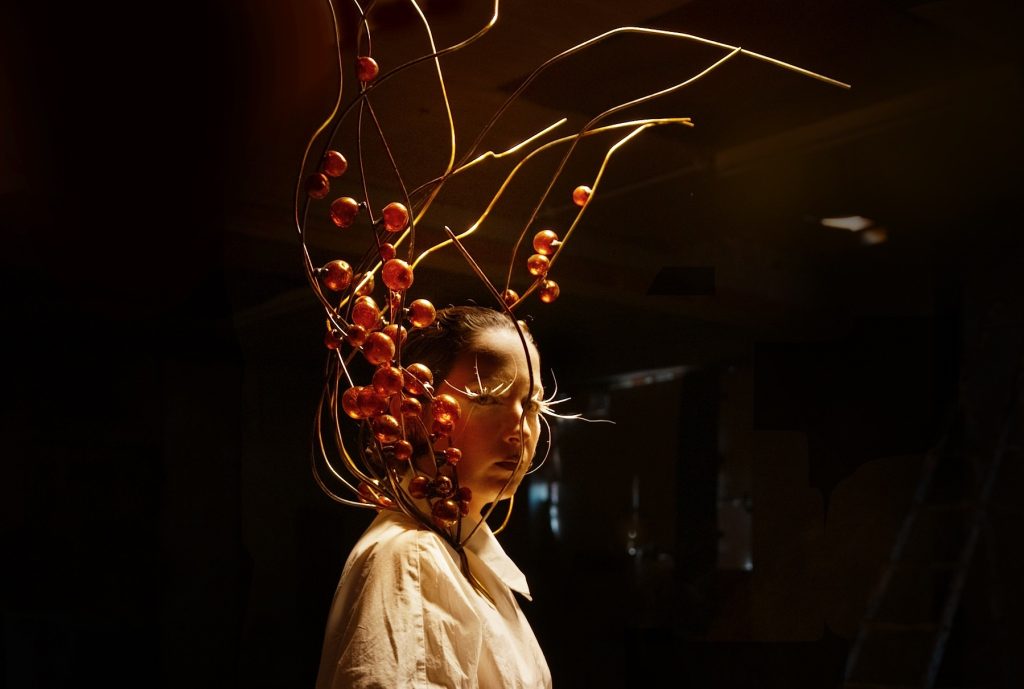
Becoming the Insect, a still from a short film commissioned by the Centre Pompidou
Becoming the Insect, a still from a short film commissioned by the Centre Pompidou. Photo: Studio Mimesis.

Woven Landscapes

Woven Landscapes is the studio’s most recent body of research. During a residency in AlUla, Orisun spent time in the oasis, learning from the date palm and the communities who have cultivated it for generations. There, she became fascinated by the palm’s ability to weave its own fibres into a protective architecture.

In AlUla, the local community reveres the palm as The Mother. Through hands-on experimentation, this research entered into dialogue with her work on lac. In the resulting works, recurring cocoon-like forms connect the architecture of the insect with the fibrous architecture of the palm.
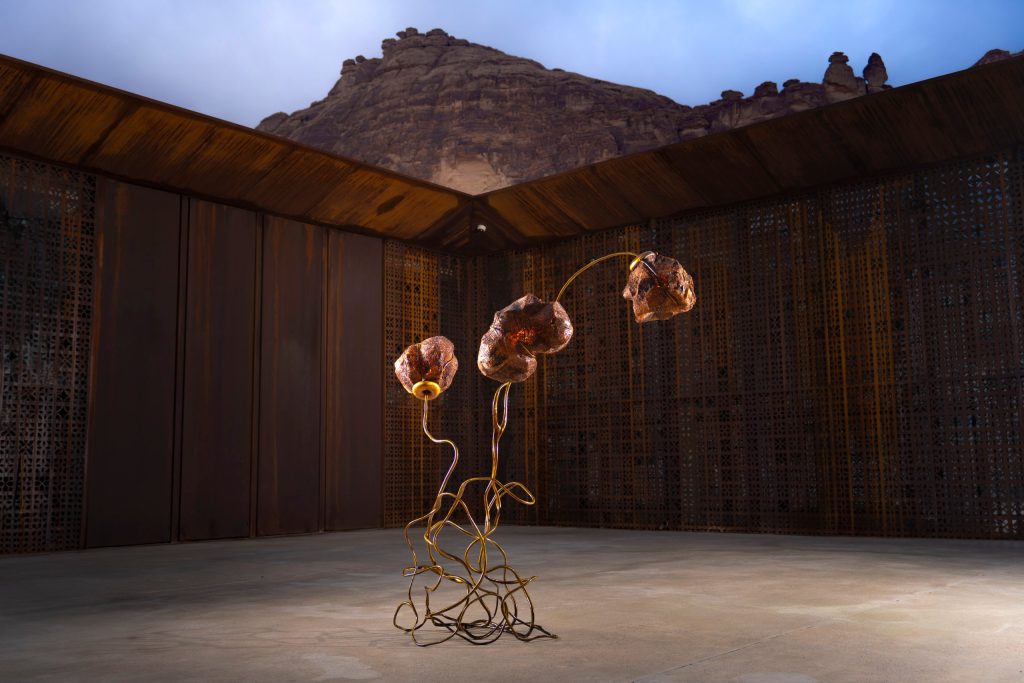
Woven Insects, developed during the AlUla Design Residency 2025
Woven Insects, developed during the AlUla Design Residency 2025. Photo: Lorenzo Arrigoni.

From Eindhoven

Orisun graduated from Design Academy Eindhoven in 2022 and was one of the three winners of the Dutch Design Awards 2026. For the past four years, she has lived and worked alongside Espace Aygo, Nicolas Zanoni and Billy de Luca. Their ateliers sit next to one another, and they share tools, knowledge and ideas.

Her work is also held in the Future Material Bank of the Jan van Eyck Academie, as well as in private collections.
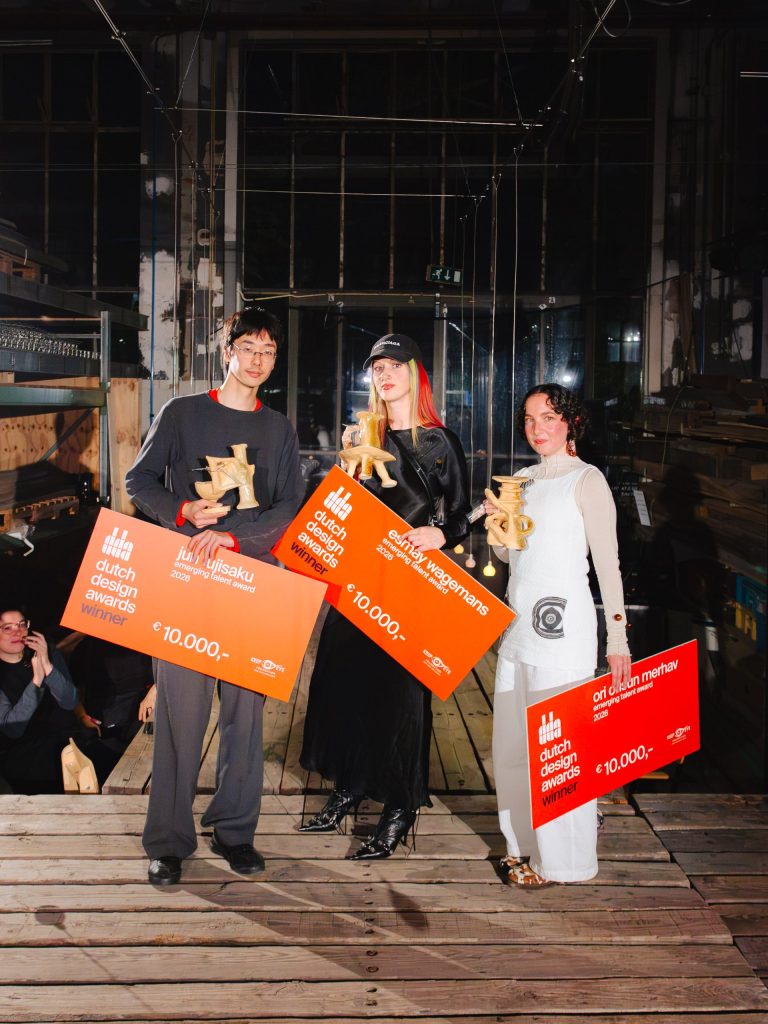
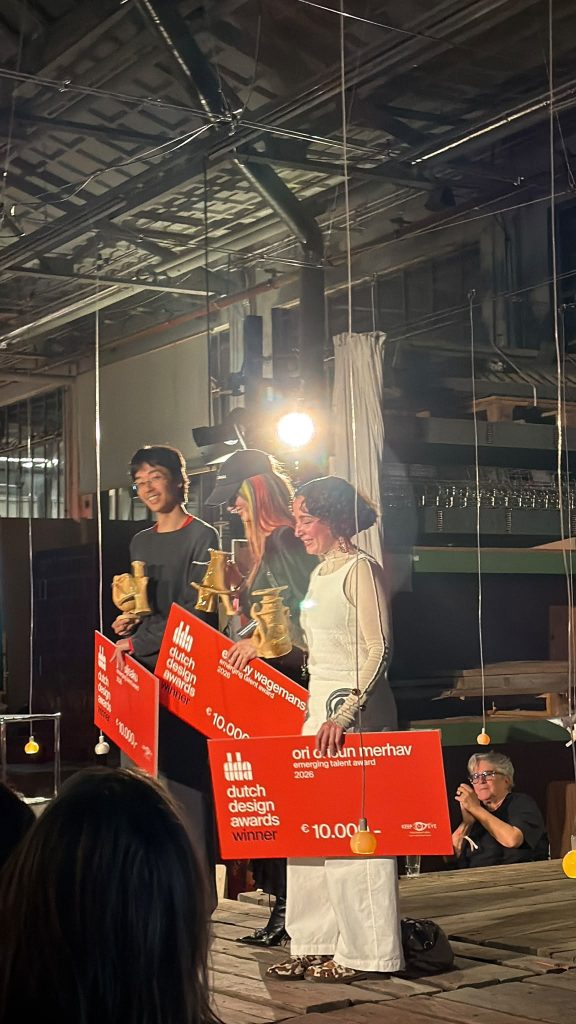
Dutch Design Awards 2026
Dutch Design Awards 2026. Photo: Anwyn Howarth.
Dutch Design Awards 2026
Dutch Design Awards 2026. Photo: Charlotte Cornier.

Artist: Ori Orisun Merhav / @ori_orisun
Photography: Studio Mimesis, Lorenzo Arrigoni, Bureau Rouge, Fitzbrien, Lea Crabe, Charlotte Cornier, Anwyn Howarth
Subscribe to Sketchure

A periodic digest of new stories on art, design, architecture and craft.

Don't Miss

Stems, nodes and blank documents at Kukje Gallery

Kukje Gallery opens Heejoon Lee’s Stems and Nodes and Jenny Holzer’s BLANK,
Izumi Kato's exhibition at Perrotin New York

Hitogata, fishing lures and floating stones by Izumi Kato

Izumi Kato fills Perrotin New York with hanging aluminium figures, sea creatures