M HKA brings Lee Bul’s cyborgs and lost utopias to Antwerp

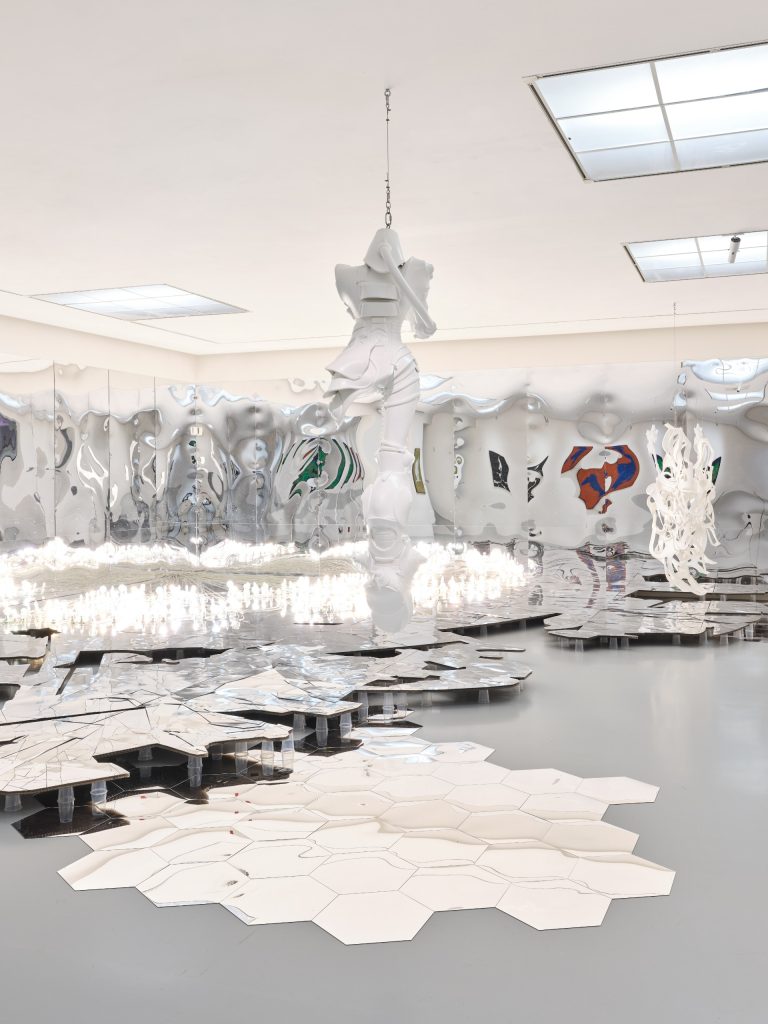
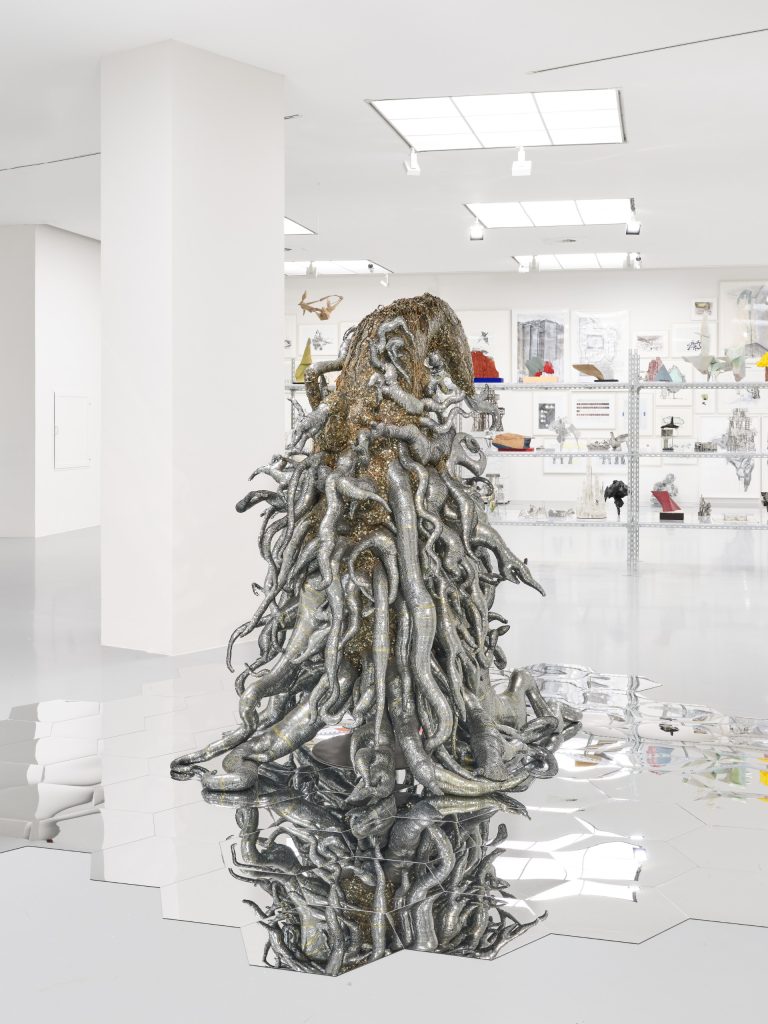
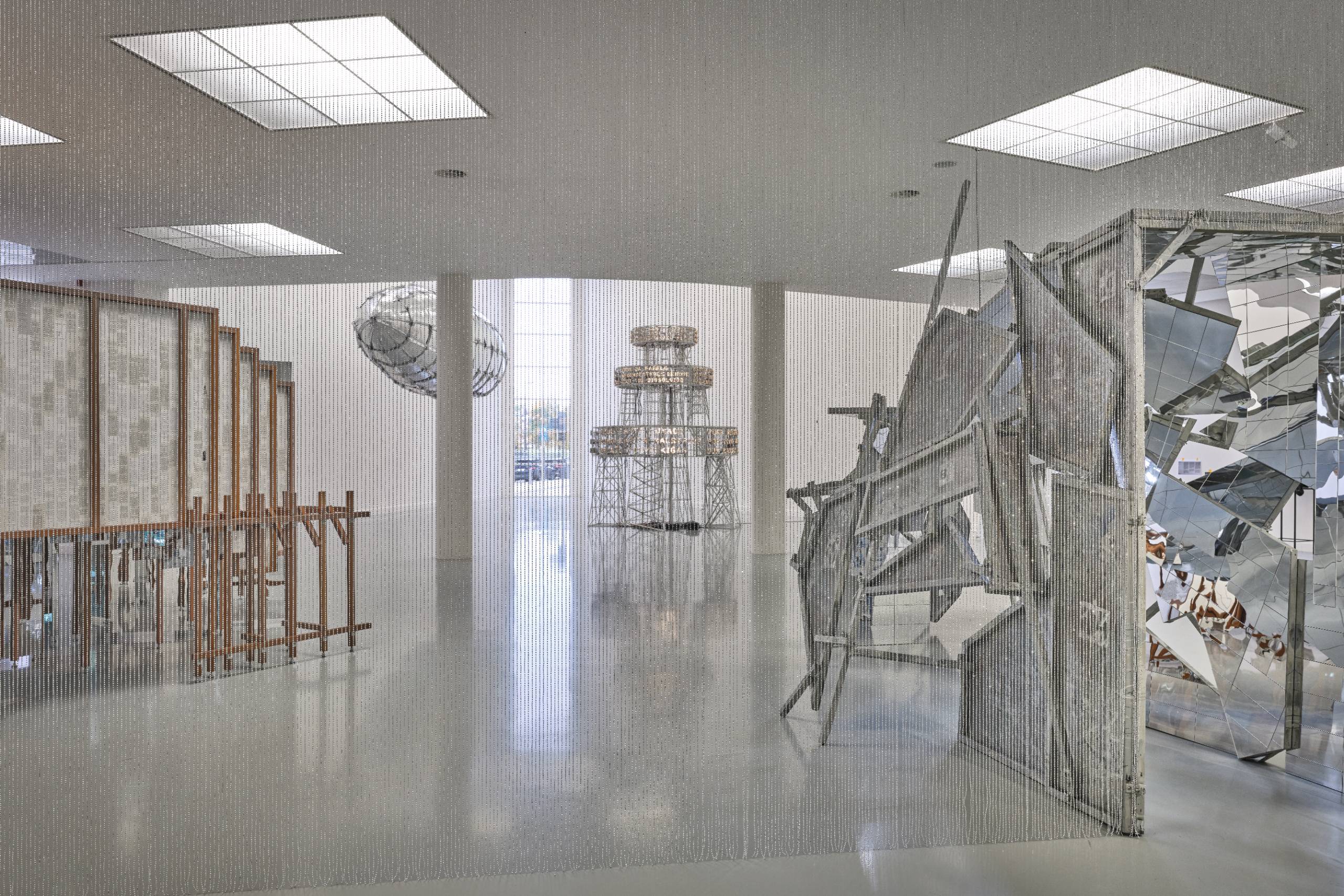
M HKA in Antwerp is presenting Lee Bul: From 1998 to Now, a major survey of one of Asia’s most influential contemporary artists. The exhibition runs from 13 November 2026 to 7 March 2027 across both floors of the museum.

Inside the Lee Bul survey

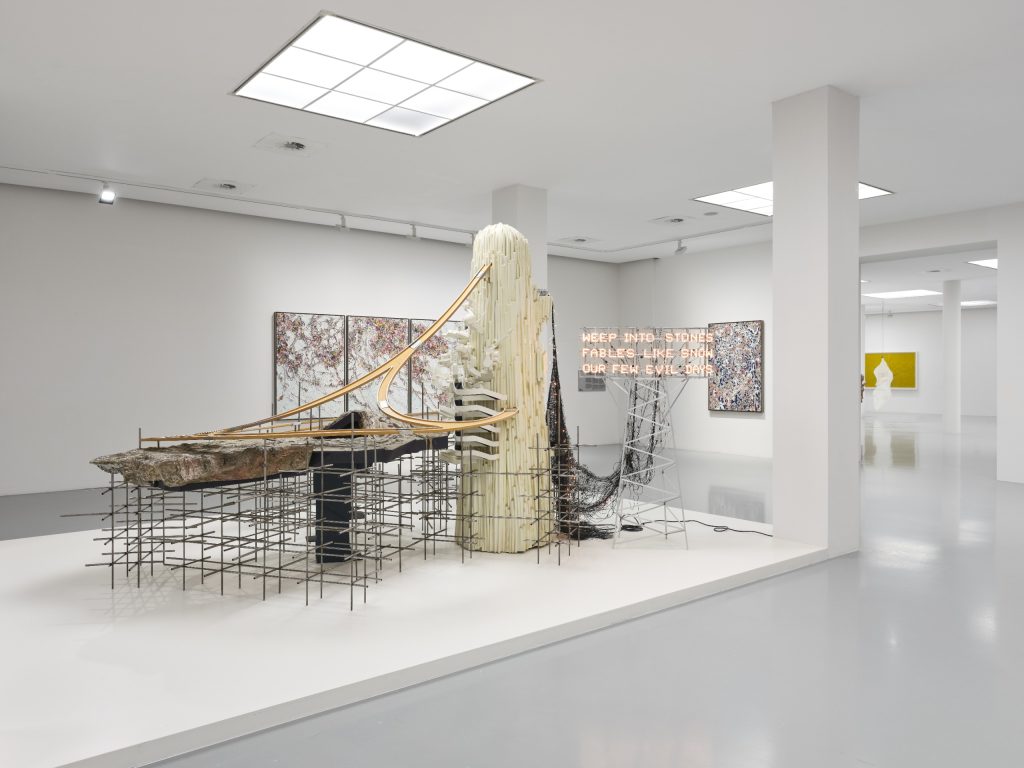
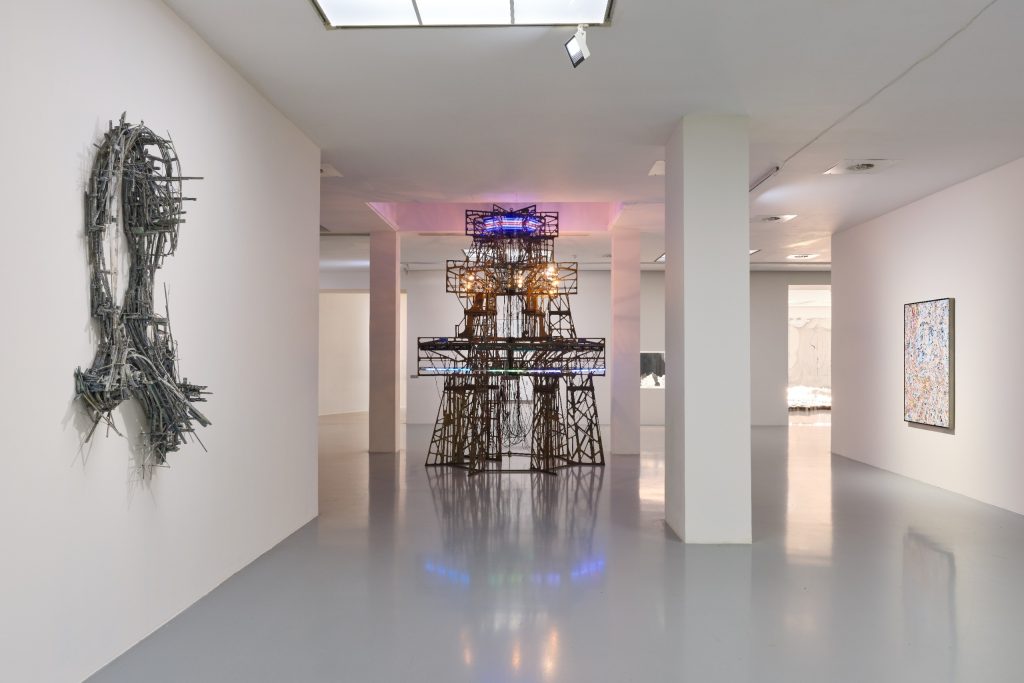
Spanning more than three decades, the survey brings together more than 150 key works. It traces the artist’s sustained engagement with utopian thought, modernist architecture and the historical avant-garde, from early iconoclastic performances to immersive, multi-sensory installations.

The exhibition is co-organised by Leeum Museum of Art and M+ in collaboration with M HKA. After Antwerp, it travels to the National Gallery of Canada in Ottawa, where the tour will conclude in late 2027.

According to the museum, the show also resonates with Antwerp’s history as the birthplace of utopia. Thomas More conceived and wrote part of Utopia in the city, published in 1516.
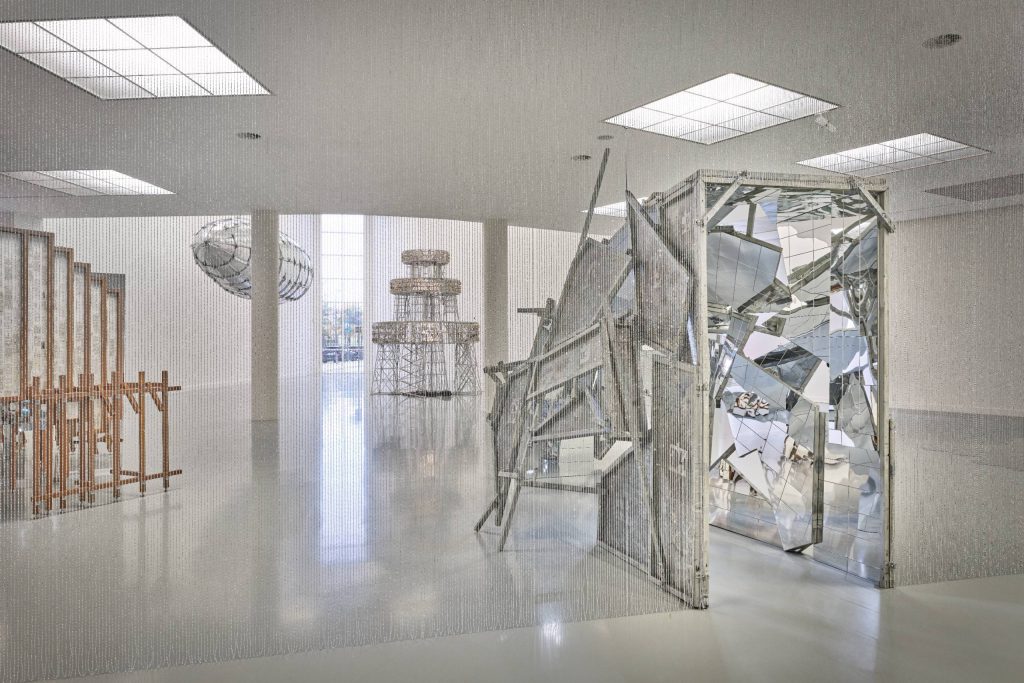
Installation view of Lee Bul: From 1998 to Now at M HKA, Antwerp
Installation view ‘Lee Bul: From 1998 to Now’, M HKA, 2026. Photo: We Document Art.
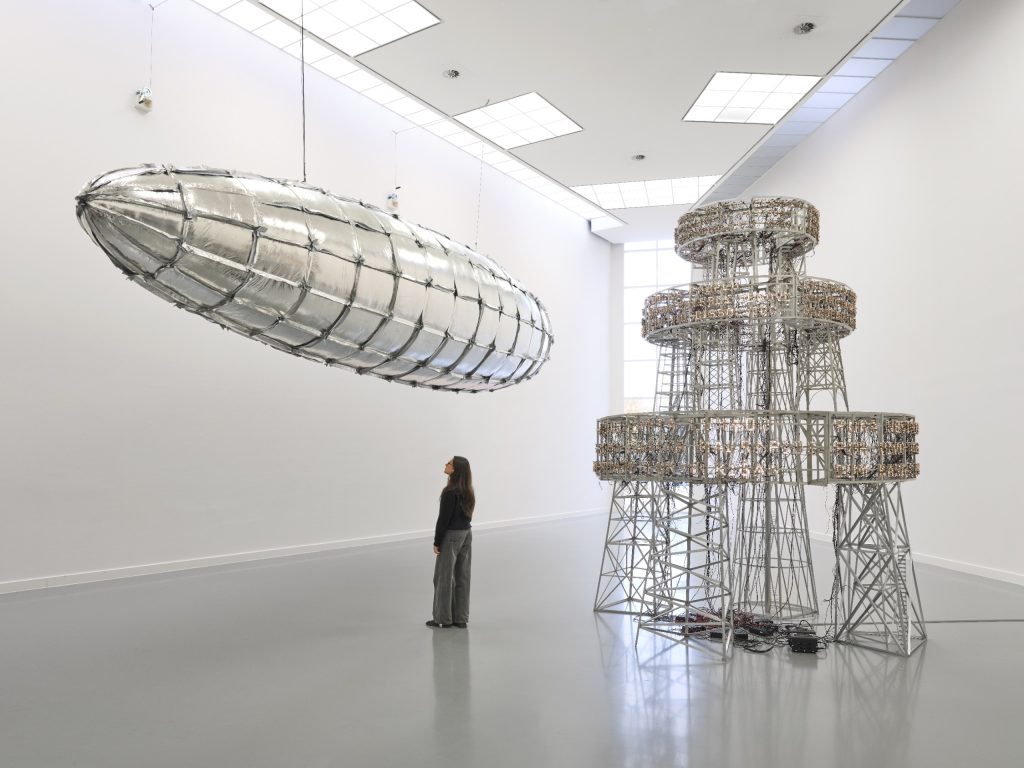
Installation view of Lee Bul: From 1998 to Now at M HKA, Antwerp
Installation view ‘Lee Bul: From 1998 to Now’, M HKA, 2026. Photo: We Document Art.

Body, technology and society

Emerging in the late 1980s, Lee Bul developed her work in dialogue with South Korea’s shifting social and political realities. Working across sculpture, installation and performance, she has explored the relationship between the body and society, humanity and technology, nature and civilisation.

In the mid- to late 1980s, she made performances in which she wore ‘soft sculptures’ as extensions of the body. These works confronted societal ideals of femininity and gender roles.

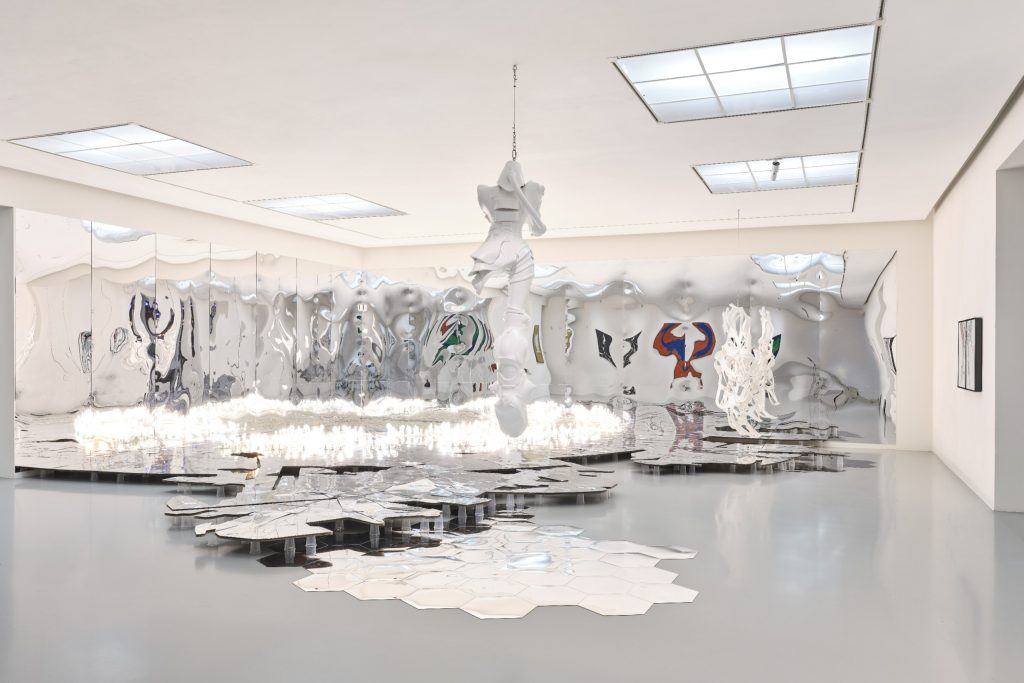
Later, her Cyborg and Anagram series brought her international prominence in the late 1990s and early 2000s. Their hybrid forms question the relationships between nature, technology and the human body.
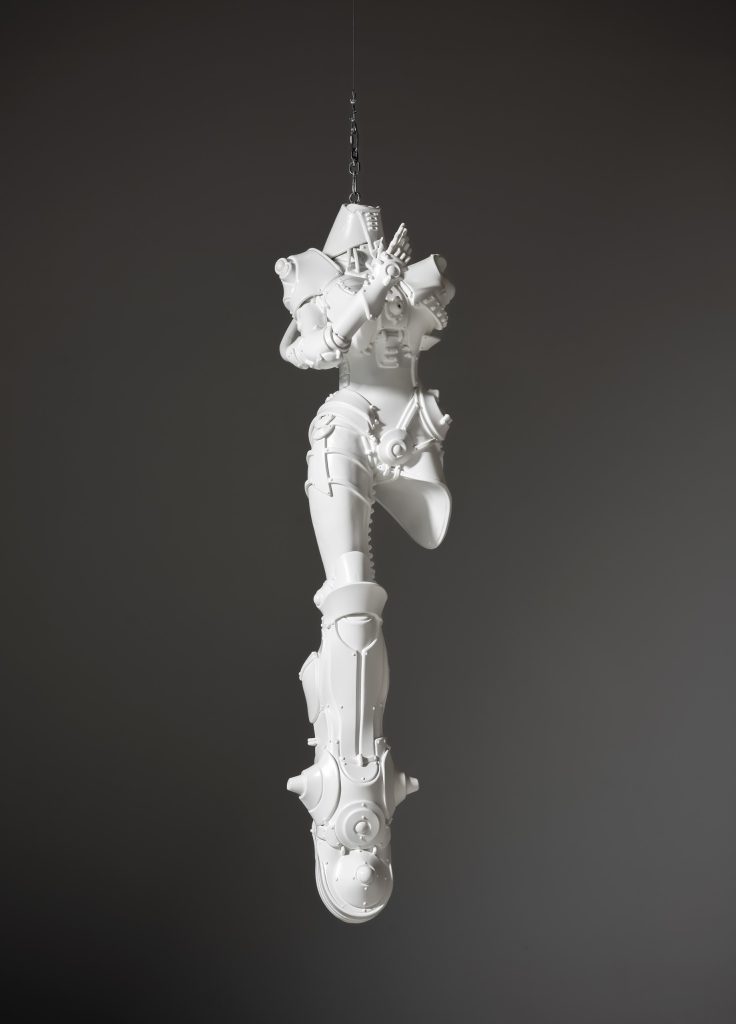
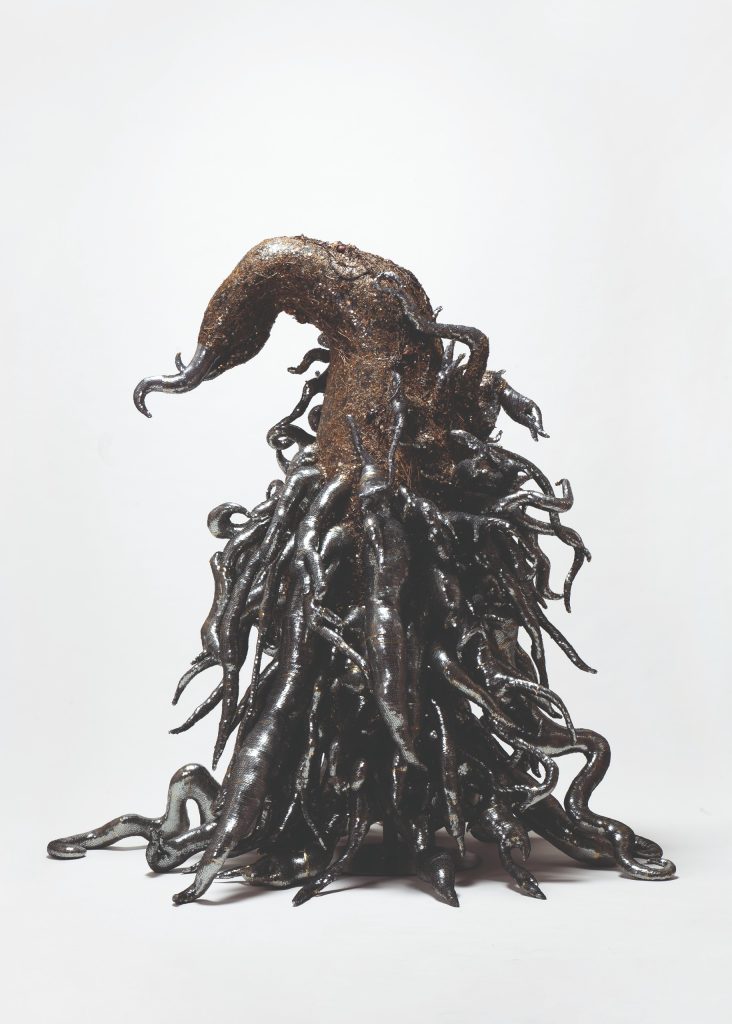
Cyborg W6, a white suspended sculpture by Lee Bul
Lee Bul. Cyborg W6, 2001. Collection of Leeum Museum of Art. © Lee Bul. Photo: Jeon Byung-cheol. Courtesy of the artist and Leeum Museum of Art.
Monster: Black, a soft sculpture by Lee Bul
Lee Bul, Monster: Black, 2011 (reconstruction of 1998 work). Collection of Leeum Museum of Art. © Lee Bul. Photo: Jeon Byung-cheol. Courtesy of the artist.

The Cyborg sculptures draw on Donna Haraway’s A Cyborg Manifesto (1985). In them, the artist questions archetypes of beauty and cultural constructions of gender and the female body.

For Lee, however, the cyborg is not an unequivocal feminist symbol. Instead, it is a figure poised between human and machine, male and female, power and vulnerability.
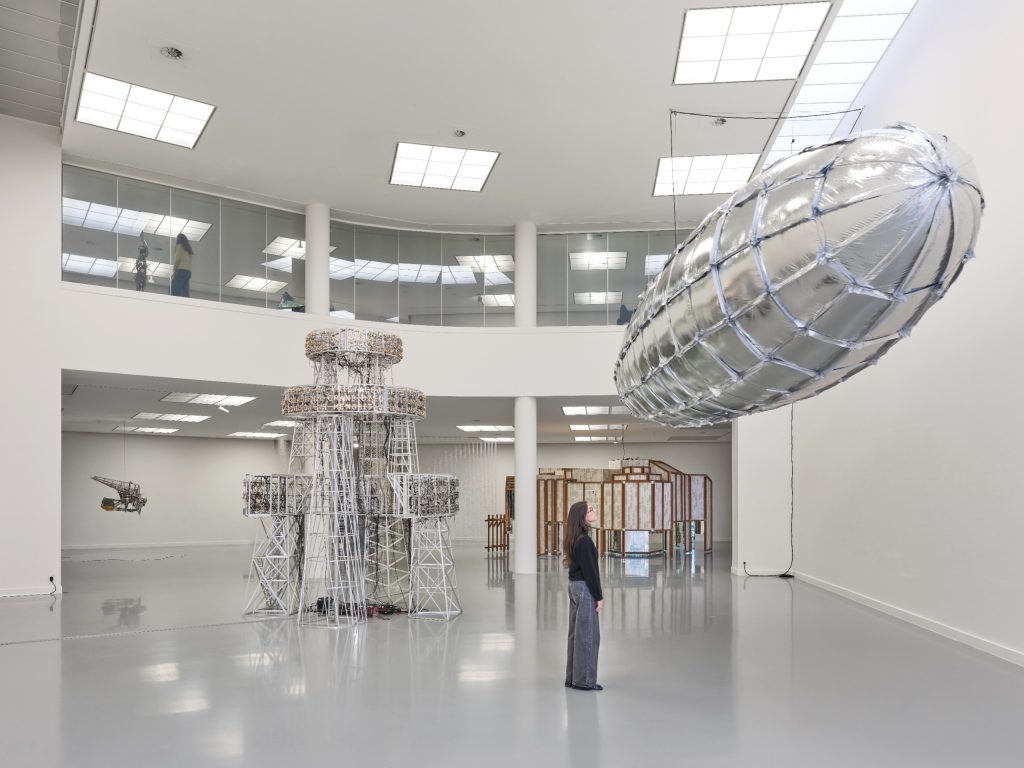
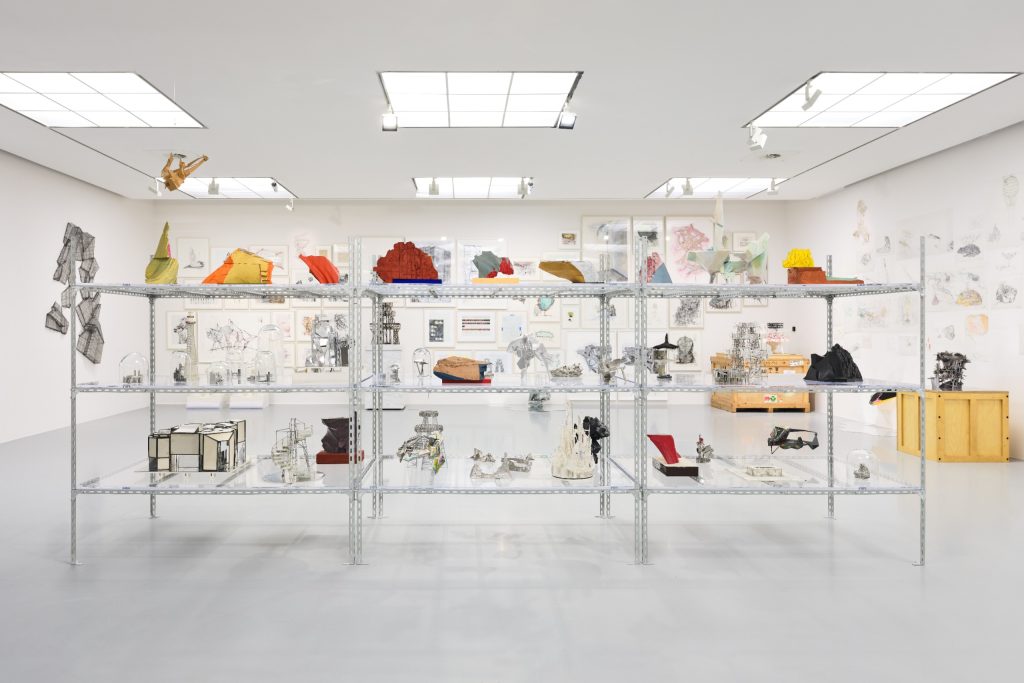
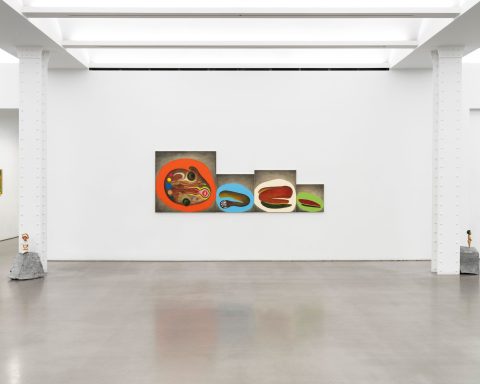
Installation view of Lee Bul: From 1998 to Now at M HKA, Antwerp
Installation view ‘Lee Bul: From 1998 to Now’, M HKA, 2026. Photo: We Document Art.
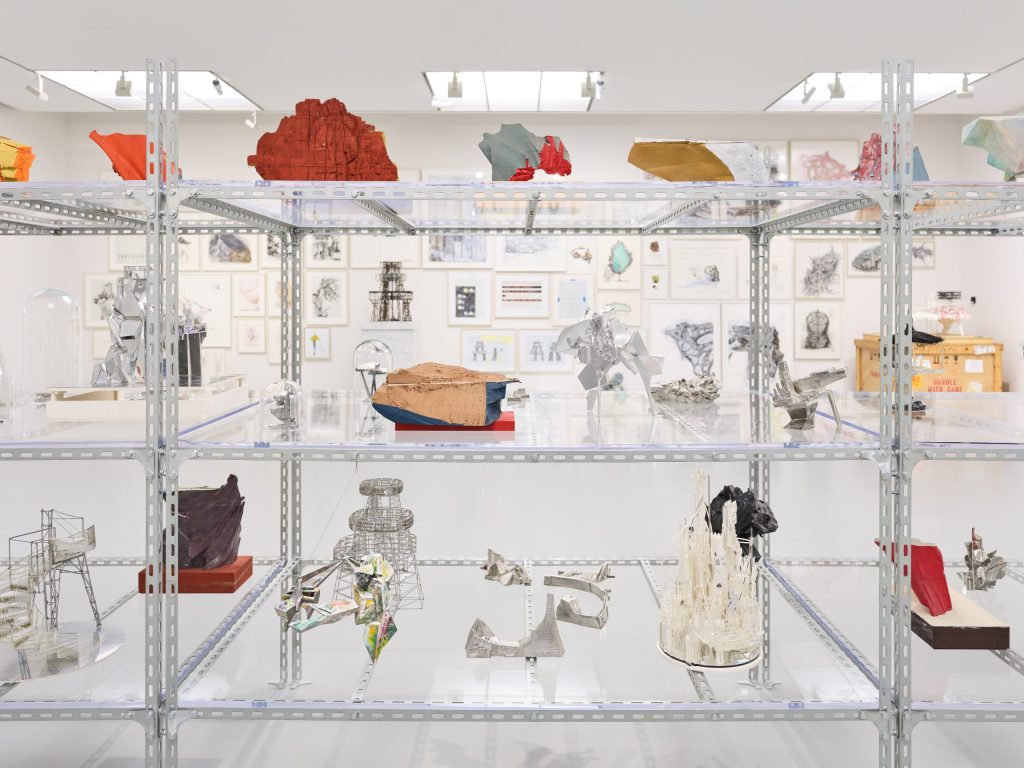
Installation view of Lee Bul: From 1998 to Now at M HKA, Antwerp
Installation view ‘Lee Bul: From 1998 to Now’, M HKA, 2026. Photo: We Document Art.

Lost utopias

Lee began the Mon grand récit series in 2005. The title translates to ‘my grand narrative’, an ironic reference to 20th-century debates about grand narratives of progress and modernity.

In a conversation with M+ Artistic Director and Chief Curator Doryun Chong, who co-curated the exhibition, she describes the references in her work. They all point to “human attempts to envision and realise utopia”, as well as their inevitable failure.
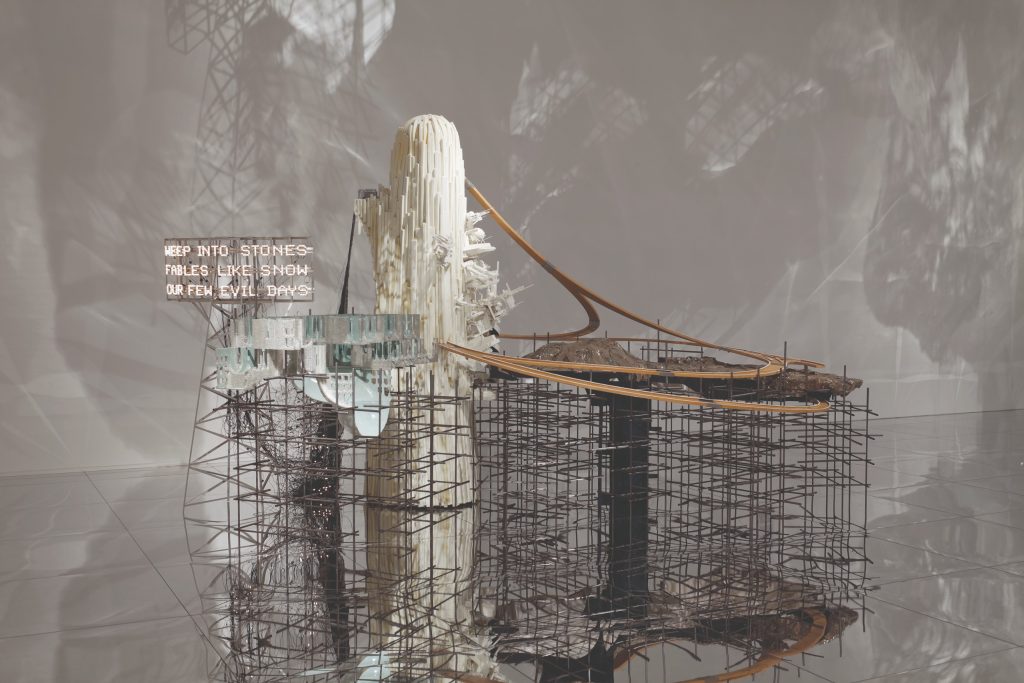
Mon grand récit: Weep into stones by Lee Bul at Mori Art Museum
Lee Bul, Mon grand récit: Weep into stones…, 2005. Installation view of Lee Bul: From Me, Belongs to You Only, Mori Art Museum, Tokyo, 2012. Collection of HITEJINRO Co., Ltd. © Lee Bul. Photo: Osamu Watanabe. Courtesy of the artist. Photo courtesy of Mori Art Museum.
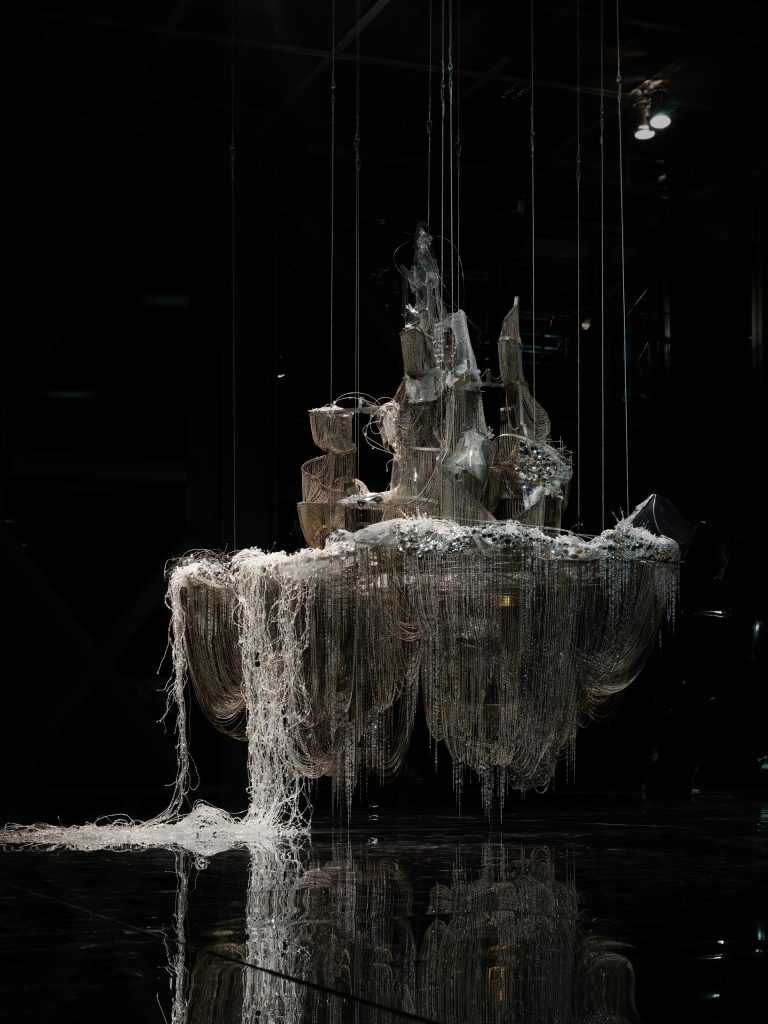
After Bruno Taut, a hanging crystal sculpture by Lee Bul
Lee Bul, After Bruno Taut (Beware the sweetness of things), 2007. Installation view at Lee Bul, On Every New Shadow, Fondation Cartier pour l’art contemporain, Paris, 2007–2008. Collection of Galerie Thaddaeus Ropac. © Lee Bul. Photo: Patrick Gries. Courtesy of the artist and Fondation Cartier pour l’art contemporain.

She is often drawn to the modernist architecture of the late 19th and early 20th centuries. For her, it embodies the belief in progress and the utopian ideals of Western modernity, along with their darker undercurrents of totalitarian control and uniformity.
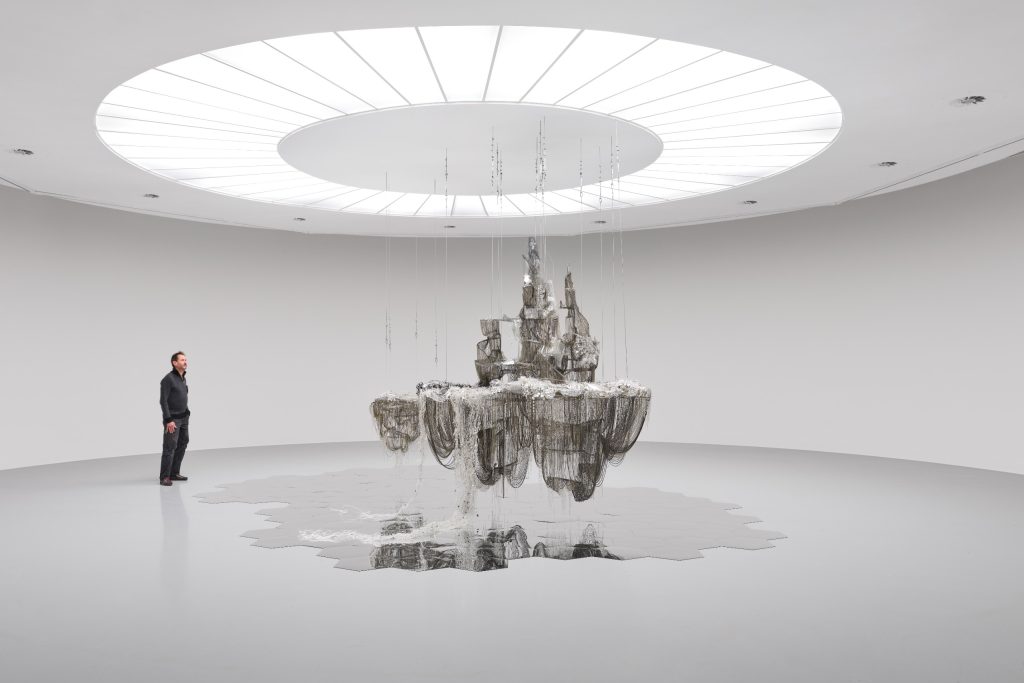
Installation view of Lee Bul: From 1998 to Now at M HKA, Antwerp
Installation view ‘Lee Bul: From 1998 to Now’, M HKA, 2026. Photo: We Document Art.
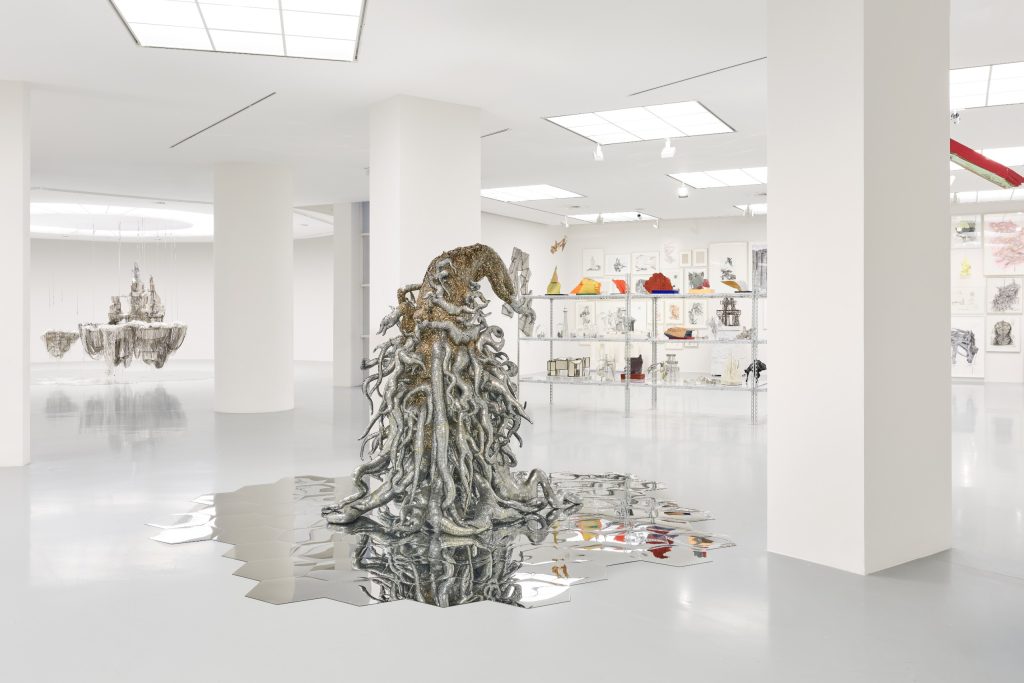
Installation view of Lee Bul: From 1998 to Now at M HKA, Antwerp
Installation view ‘Lee Bul: From 1998 to Now’, M HKA, 2026. Photo: We Document Art.
Installation view of Lee Bul: From 1998 to Now at M HKA, Antwerp
Installation view ‘Lee Bul: From 1998 to Now’, M HKA, 2026. Photo: We Document Art.
Installation view of Lee Bul: From 1998 to Now at M HKA, Antwerp
Installation view ‘Lee Bul: From 1998 to Now’, M HKA, 2026. Photo: We Document Art.

Materials and drawings

Materials are central to the practice. Her sculptures often look futuristic, yet they are grounded in meticulous craftsmanship and rigorous manual processes.

The beads in her work evoke childhood memories of her mother, who took up beadwork to support the family. Celadon porcelain, meanwhile, references the heritage of traditional Korean ceramics.
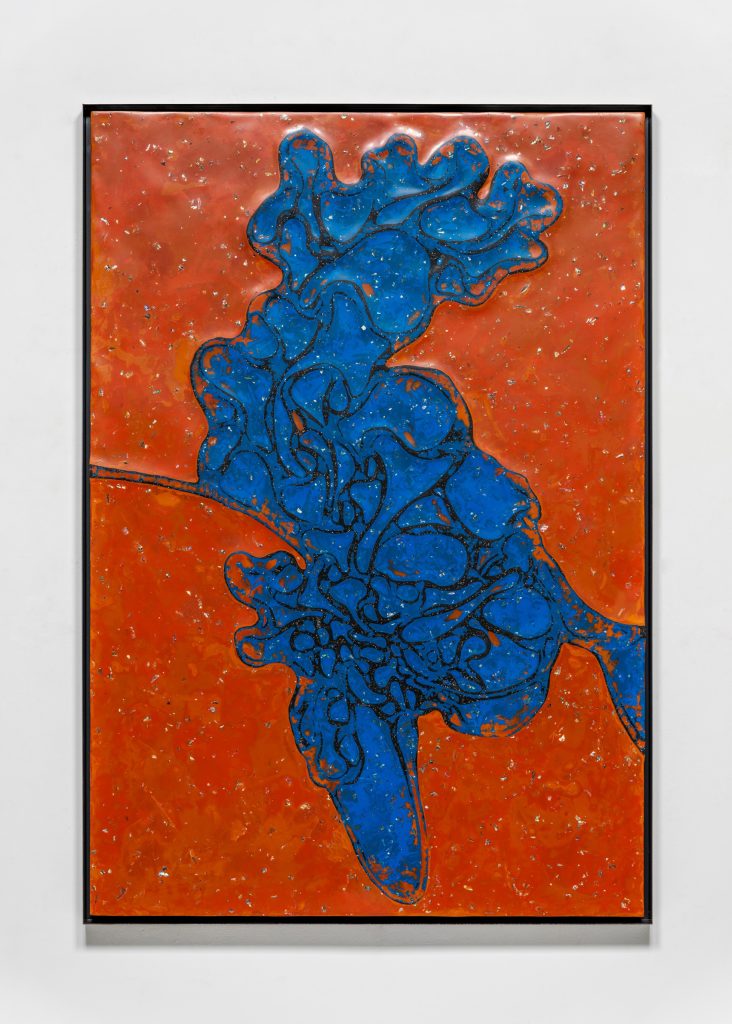
Perdu CV, a mother-of-pearl work by Lee Bul
Lee Bul. Perdu CV, 2021. Private Collection. © Lee Bul. Photo: Jeon Byung-cheol. Courtesy of the artist.
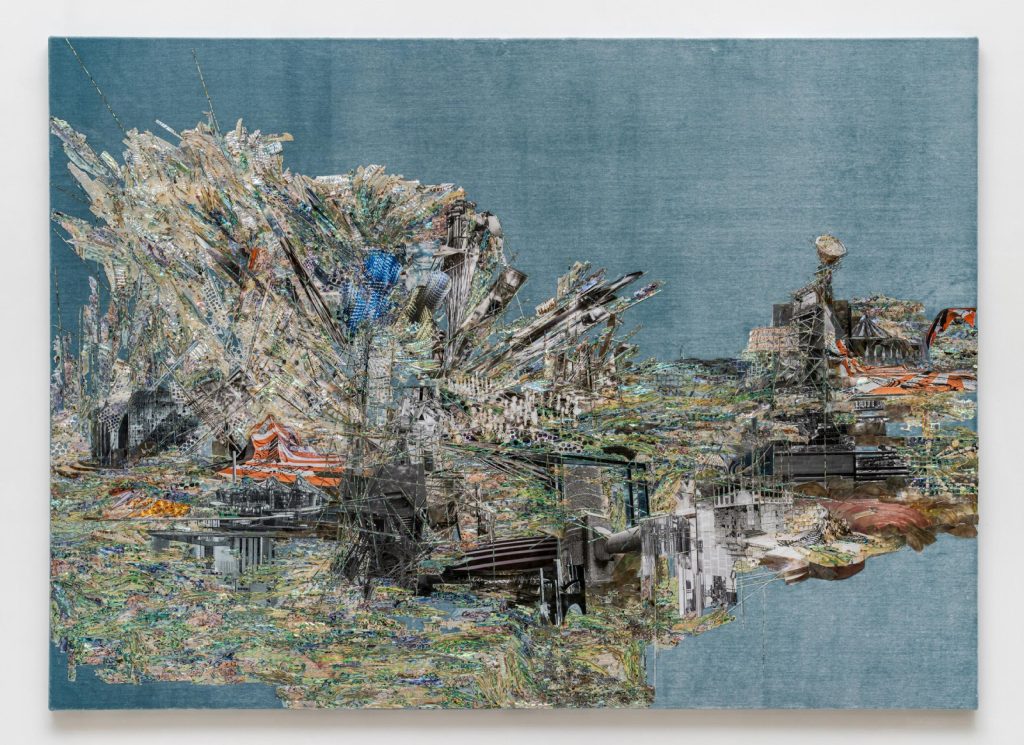
Untitled (Willing To Be Vulnerable – Velvet #15) by Lee Bul
Lee Bul, Untitled (Willing To Be Vulnerable – Velvet #15), 2021. Collection of Leeum Museum of Art. © Lee Bul. Photo: Jeon Byung-cheol. Courtesy of the artist.

A section of the exhibition shows sketches, maquettes and architectural models. Lee told Chong that most of her sculptures start from drawings, made each morning in the studio over a cup of coffee.

She does not make these drawings with the intention of showing them. Instead, they are records of thoughts that she sticks to her wall.
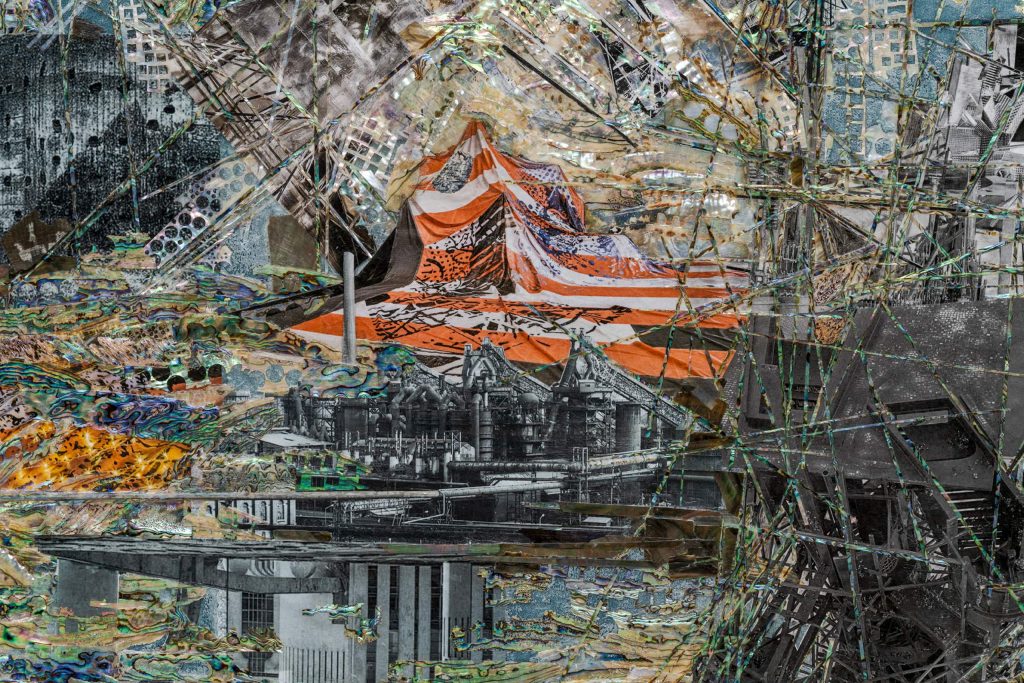
Detail of Untitled (Willing To Be Vulnerable – Velvet #15) by Lee Bul
Lee Bul, Untitled (Willing To Be Vulnerable – Velvet #15) (detail), 2021. Collection of Leeum Museum of Art. © Lee Bul. Photo: Jeon Byung-cheol. Courtesy of the artist.
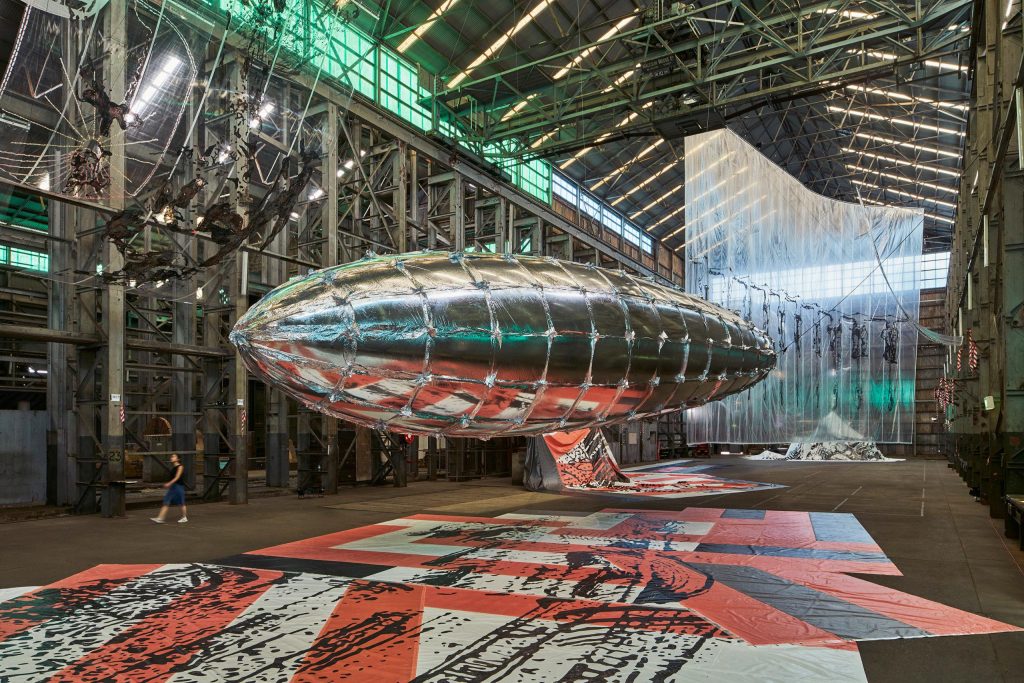
Willing To Be Vulnerable – Metalized Balloon by Lee Bul on Cockatoo Island
Lee Bul, Willing To Be Vulnerable – Metalized Balloon, 2015–2016. Installation view on Cockatoo Island at 20th Biennale of Sydney, 2016. © Lee Bul. Photo: Algirdas Bakas. Courtesy of the artist.
Installation view of Lee Bul: From 1998 to Now at M HKA, Antwerp
Installation view ‘Lee Bul: From 1998 to Now’, M HKA, 2026. Photo: We Document Art.
Installation view of Lee Bul: From 1998 to Now at M HKA, Antwerp
Installation view ‘Lee Bul: From 1998 to Now’, M HKA, 2026. Photo: We Document Art.
Installation view of Lee Bul: From 1998 to Now at M HKA, Antwerp
Installation view ‘Lee Bul: From 1998 to Now’, M HKA, 2026. Photo: We Document Art.
Installation view of Lee Bul: From 1998 to Now at M HKA, Antwerp
Installation view ‘Lee Bul: From 1998 to Now’, M HKA, 2026. Photo: We Document Art.

The curators

The exhibition is co-curated by June Young Kwak, Head of Modern and Contemporary Art Department II at Leeum Museum of Art and Hoam Museum of Art, and Doryun Chong. They worked with Heyeon Kim, Curator at Leeum Museum of Art and Hoam Museum of Art, and Sunny Cheung, Curator of Design and Architecture at M+.

Nav Haq, Associate Director at M HKA, organised the presentation in Antwerp. Asked about the future, Lee told Chong that she is not an optimist, but that she wants to keep pushing as far as she can in her life and practice.
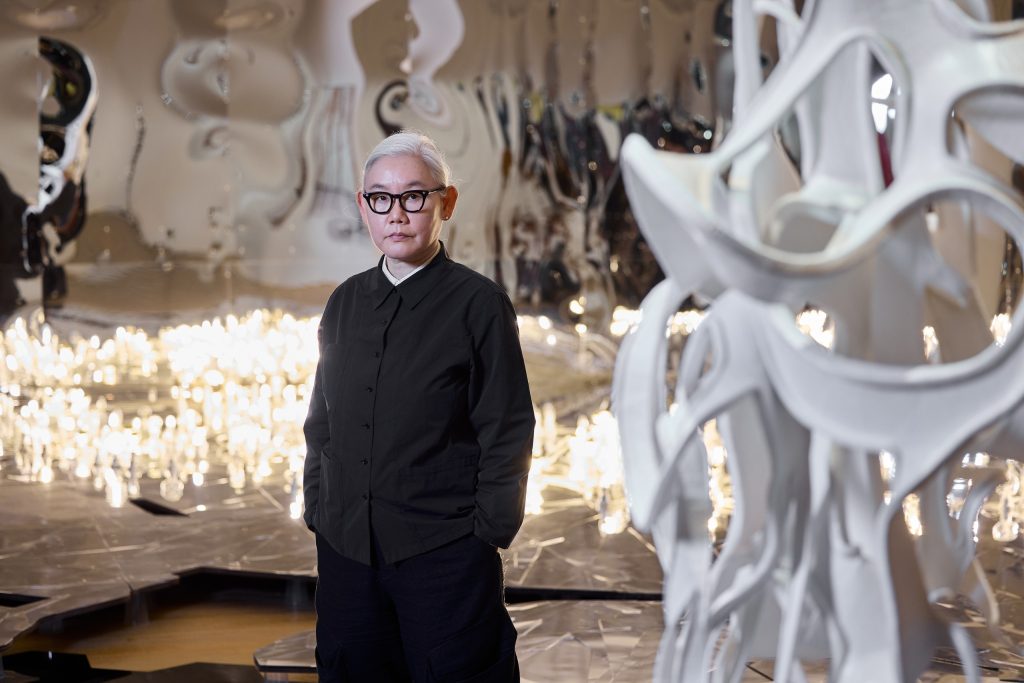
Portrait of Lee Bul among her sculptures
Portrait of Lee Bul. © Lee Bul. Photo: Dan Leung. Courtesy of M+, Hong Kong.

Artist: Lee Bul
Photography: Algirdas Bakas, Dan Leung, Jeon Byung-cheol, Osamu Watanabe, Patrick Gries / @patrickgries, We Document Art / @wedocumentart
Location: M HKA / @mhkamuseum, Antwerp, Belgium
Subscribe to Sketchure

A periodic digest of new stories on art, design, architecture and craft.

Don't Miss

TAKK turns a bed into a gathering space for the Beaux Arts Ball

At the Andrew Freedman Home in the Bronx, TAKK’s Communal Bed gave

Stems, nodes and blank documents at Kukje Gallery

Kukje Gallery opens Heejoon Lee’s Stems and Nodes and Jenny Holzer’s BLANK,