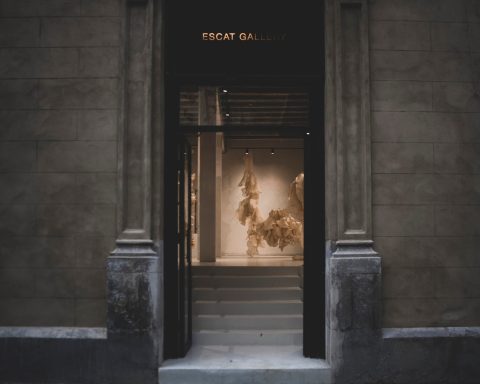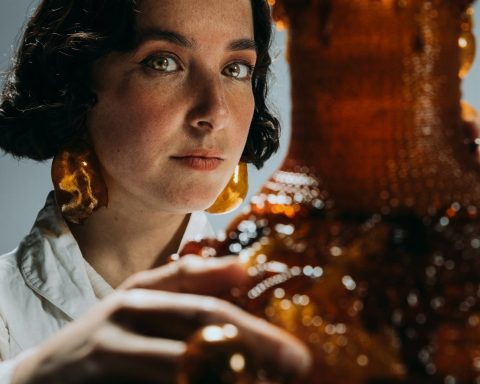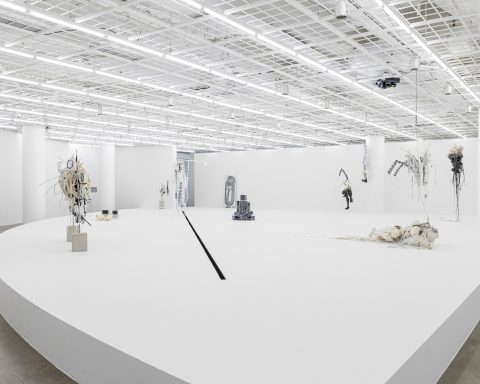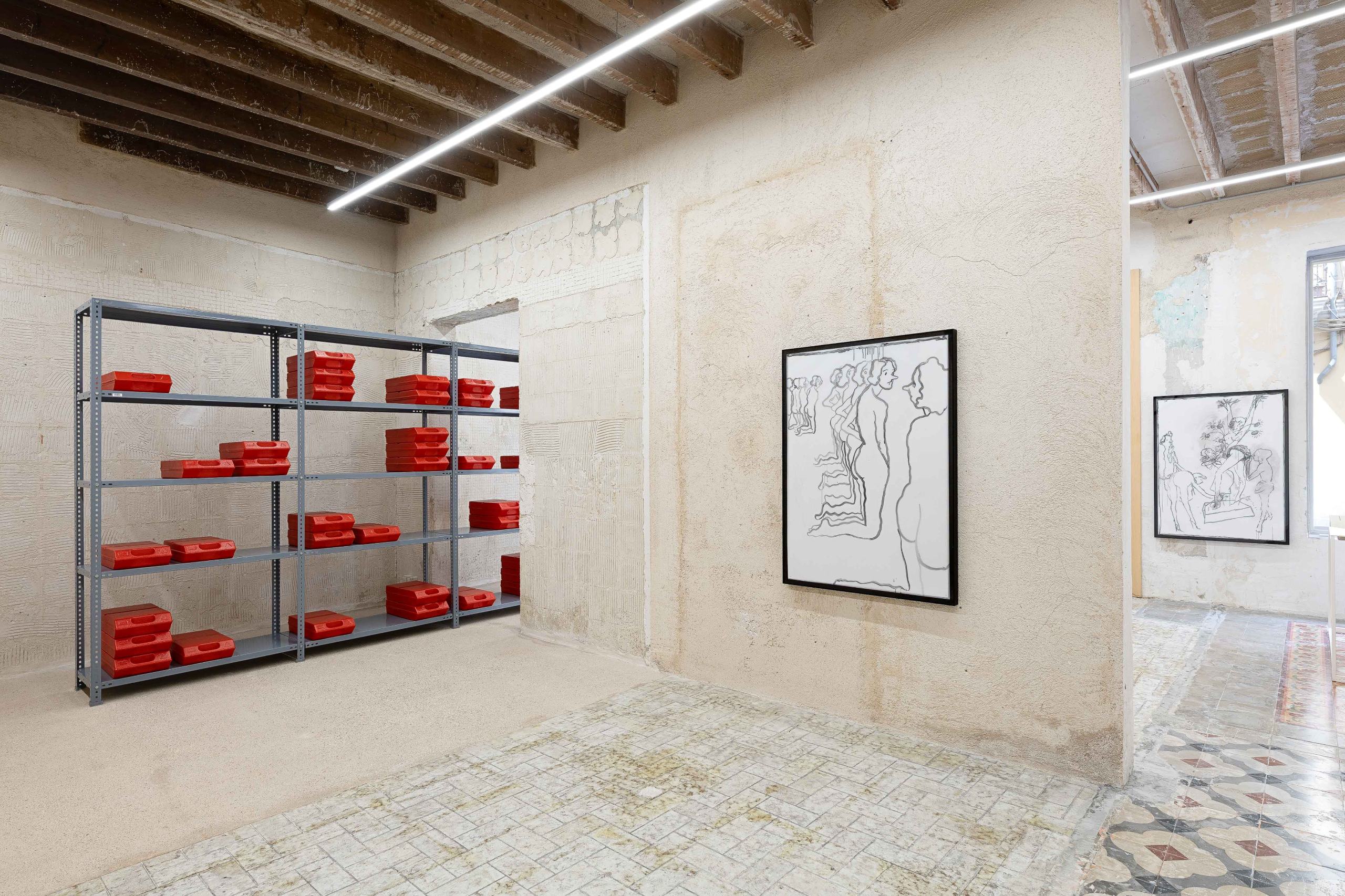
At Galería Florit/Florit in Palma de Mallorca, Miedo al colapso (Fear of Breakdown) brings together the work of Alejandro Leonhardt and Dasha Shishkin. The exhibition runs from 19 September to 13 November 2026.
The exhibition text starts with entropy. In a system cut off from the outside world, disorder tends to increase. Moreover, nothing returns to its original state on its own. Living beings, by contrast, keep their internal order through exchanges with their surroundings, at the cost of releasing disorder into them. According to the text, the two artists work with these two forces of life. Leonhardt contains, while Shishkin overflows.
What remained of a bank
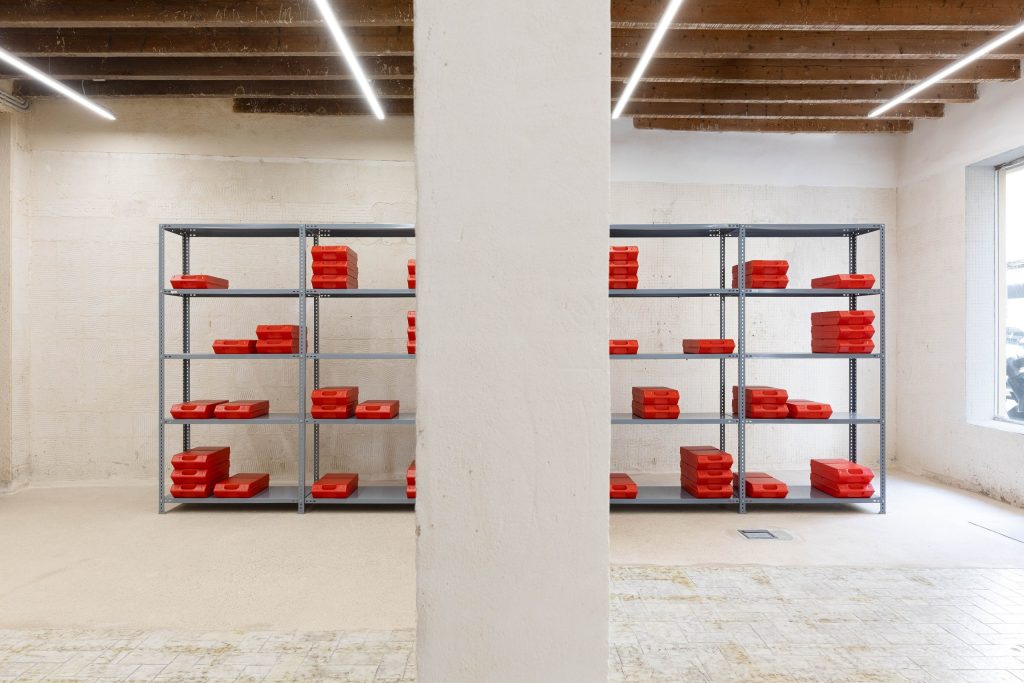
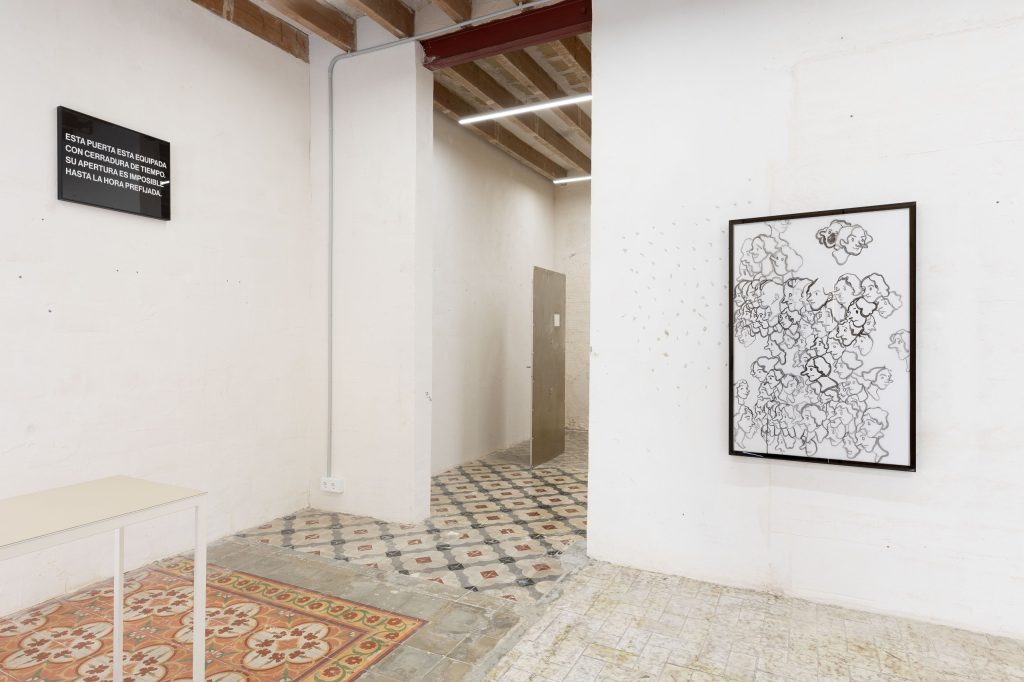
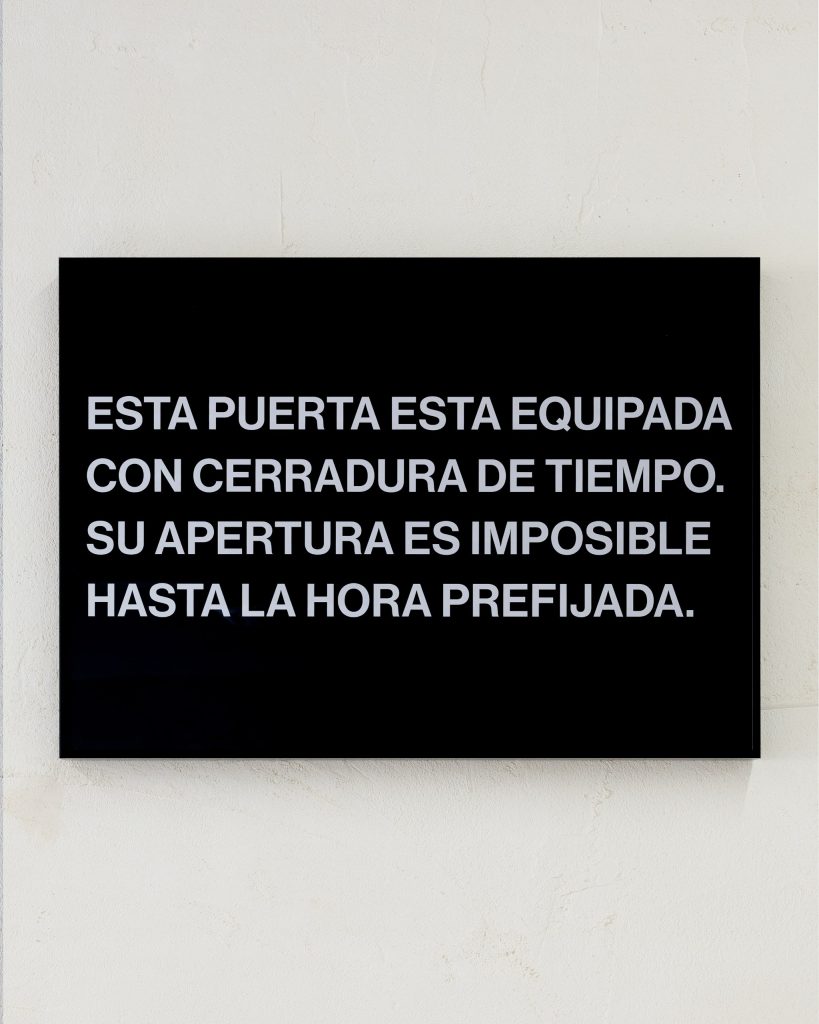
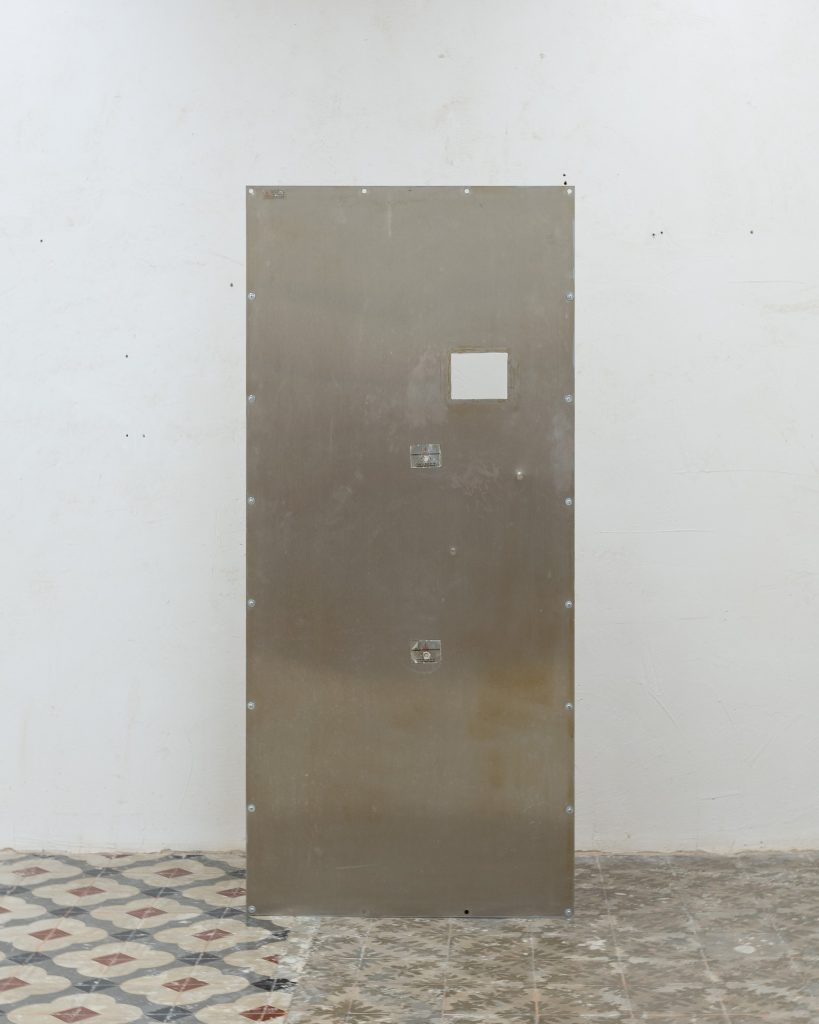
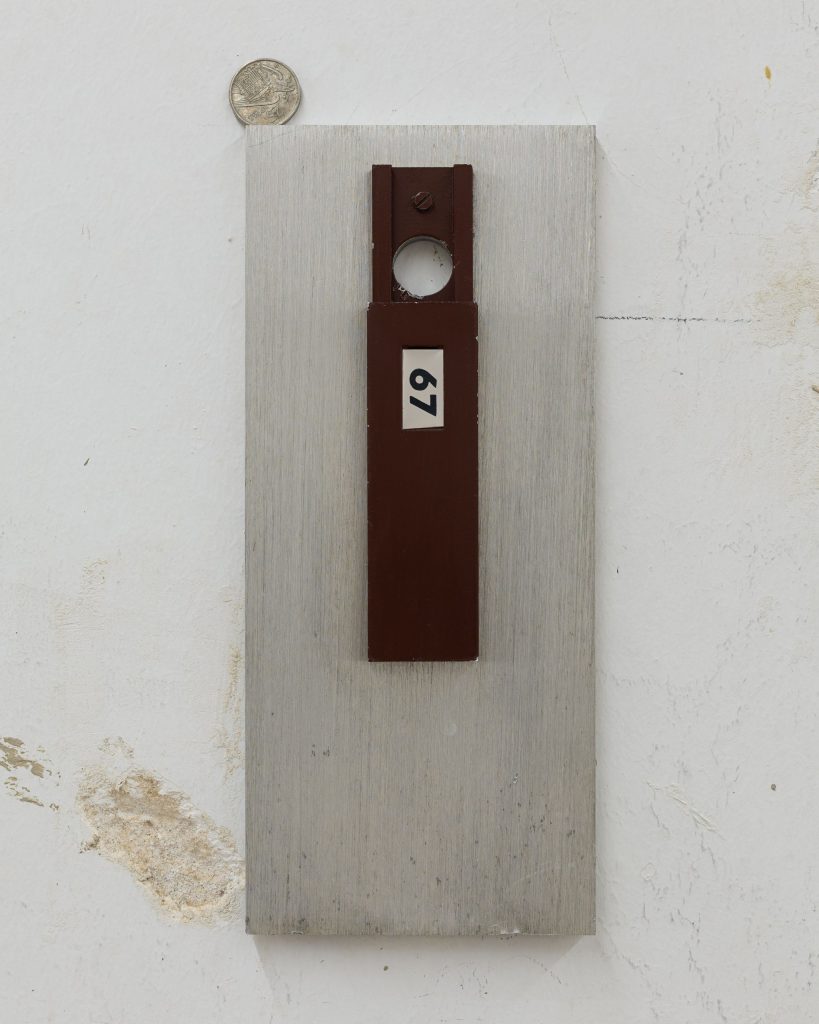
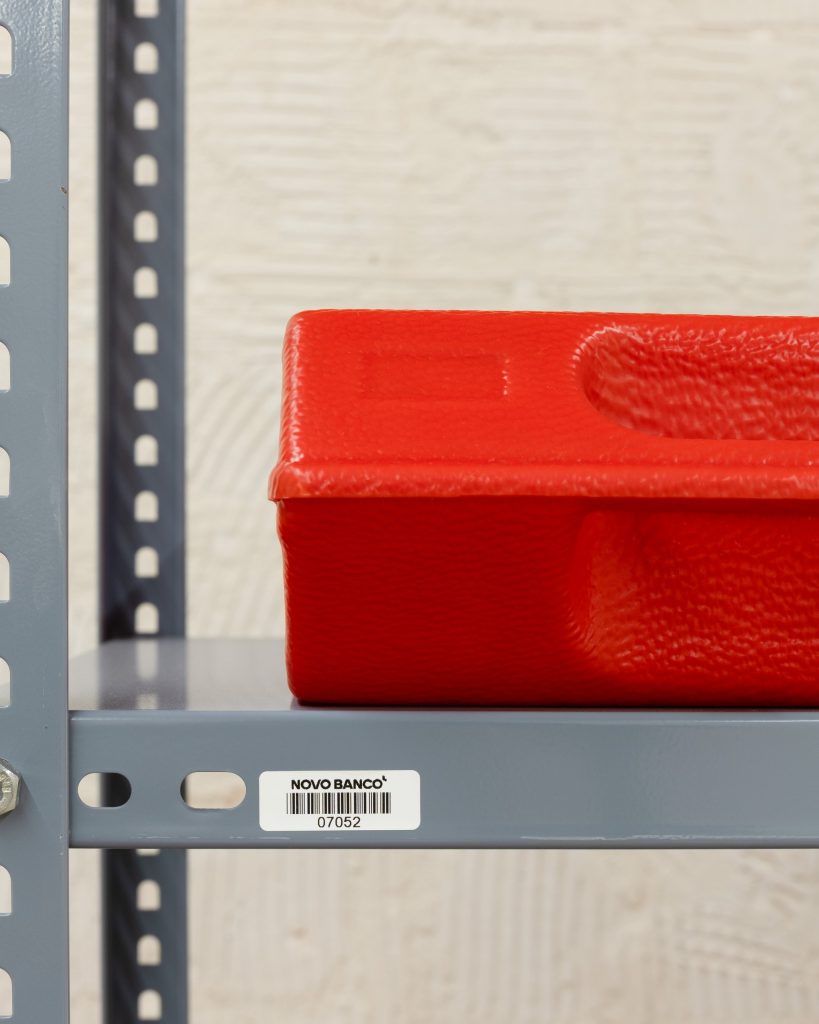
On entering, visitors meet an office shelving unit laden with red security boxes that cuts across the room and restricts access to a passageway. Leonhardt spent his residency at Florit/Florit with what remained of a branch of Banco Pastor, a bank that disappeared in the aftermath of the 2008 crisis. Boxes, doors and grilles have lost their function, but not the memory of what they once were. A sign still announces that the door cannot be opened until the preset time.
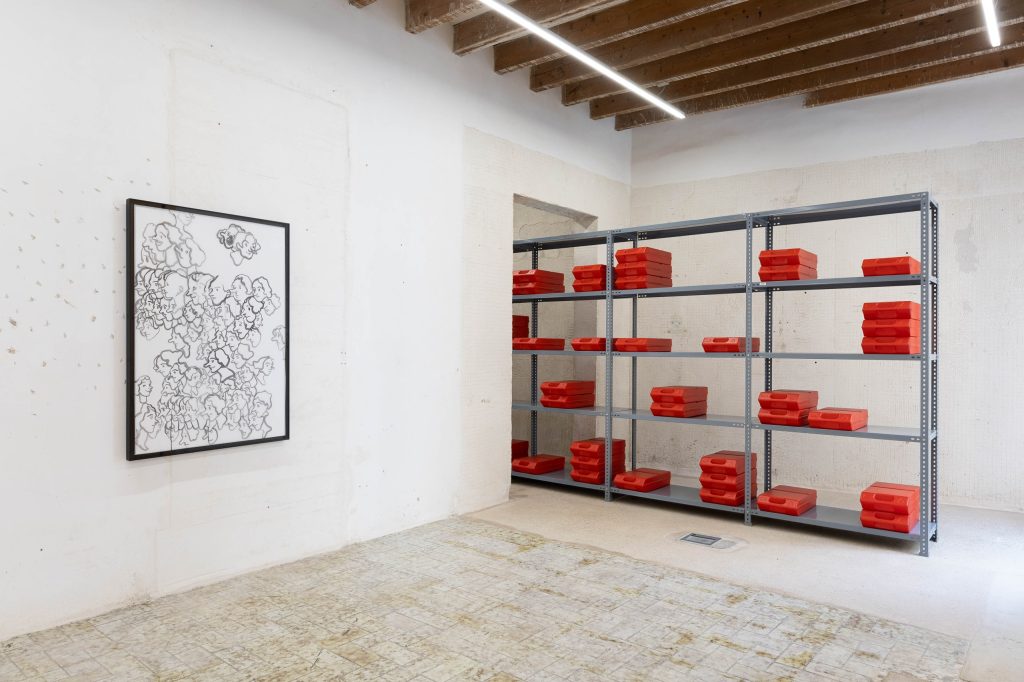
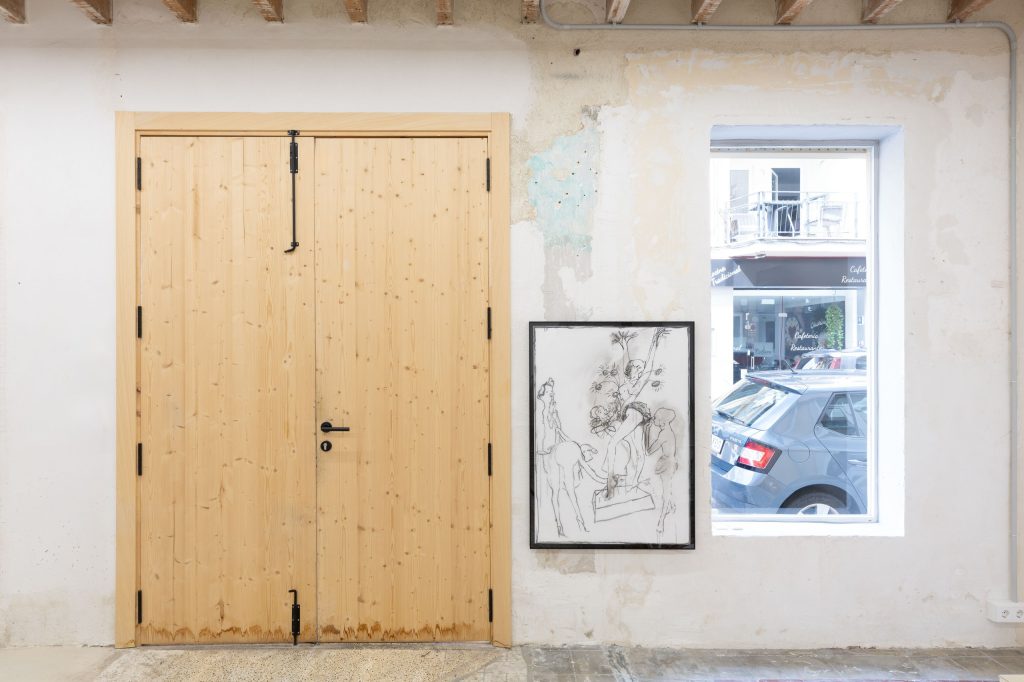
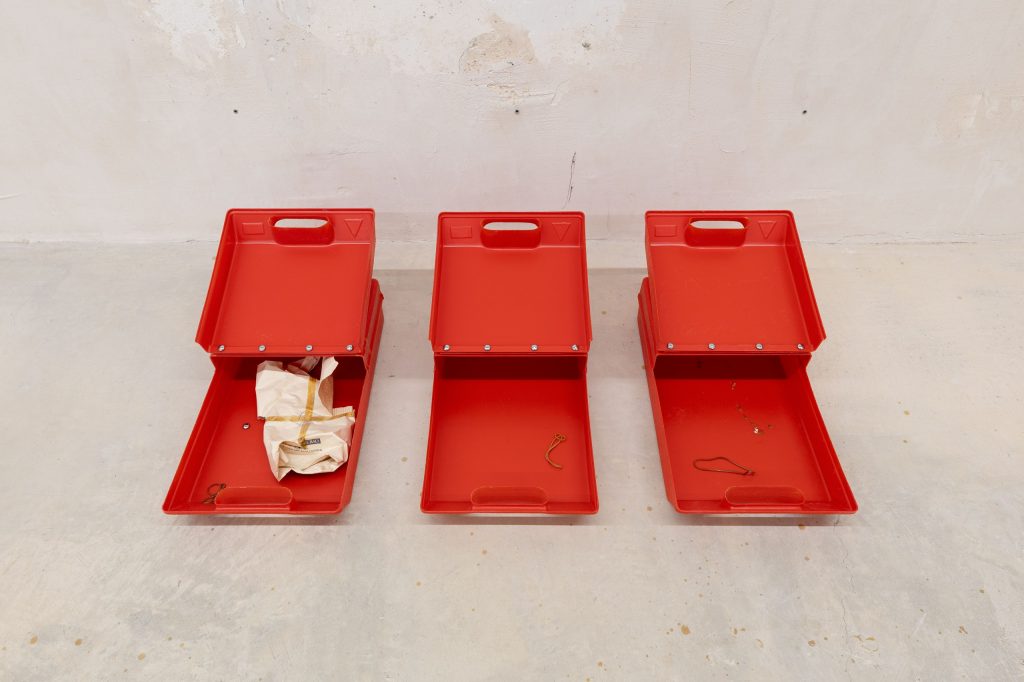
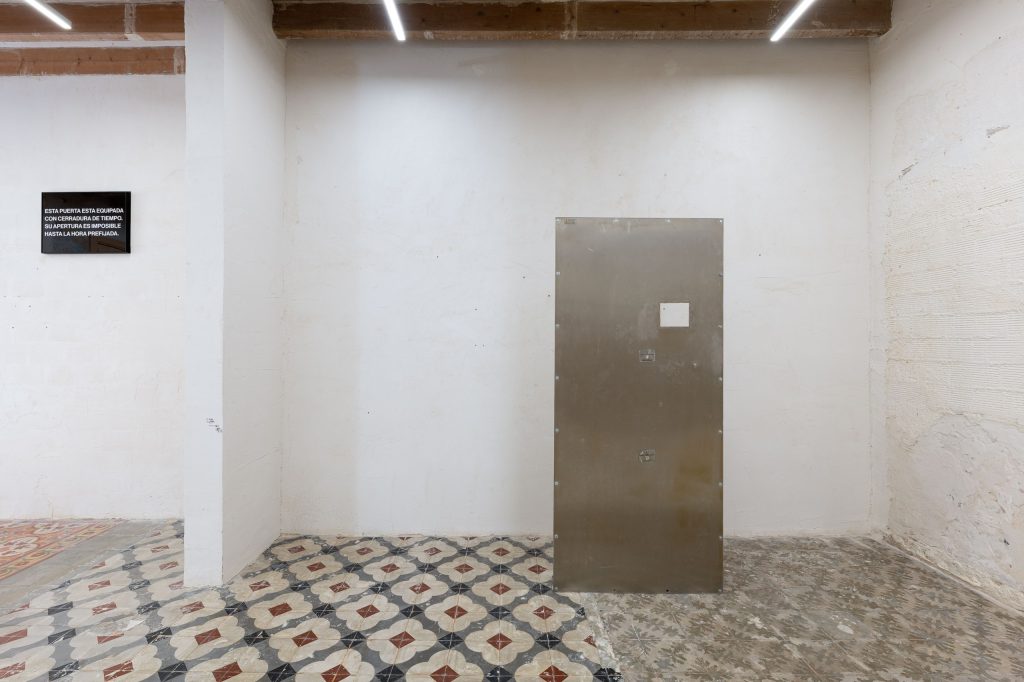
Leonhardt does not recreate a bank. Instead, he works with objects that have already gone through an irreversible process and configures a new system from them. A collapse that has already happened is held in suspension. With a playful gesture, he also places coins in precarious balance on the edge of a precipice. These small fissures keep tension alive in a still space and add a note of irony: all that protective architecture to safeguard so little value.
Bodies without edges
Among the shelves and other remnants of the old bank, Shishkin’s characters introduce a human vibration through repeating profiles and accumulating faces. In her work, forms lose their boundaries. Her figures multiply, become entangled and press towards the edges. A hand can have eyes, and a body part can claim a story of its own. From this excess emerges the grotesque, a carnal energy that overflows the body and subverts systems of order. Even intimate gestures, caressing or breastfeeding, become unsettling.
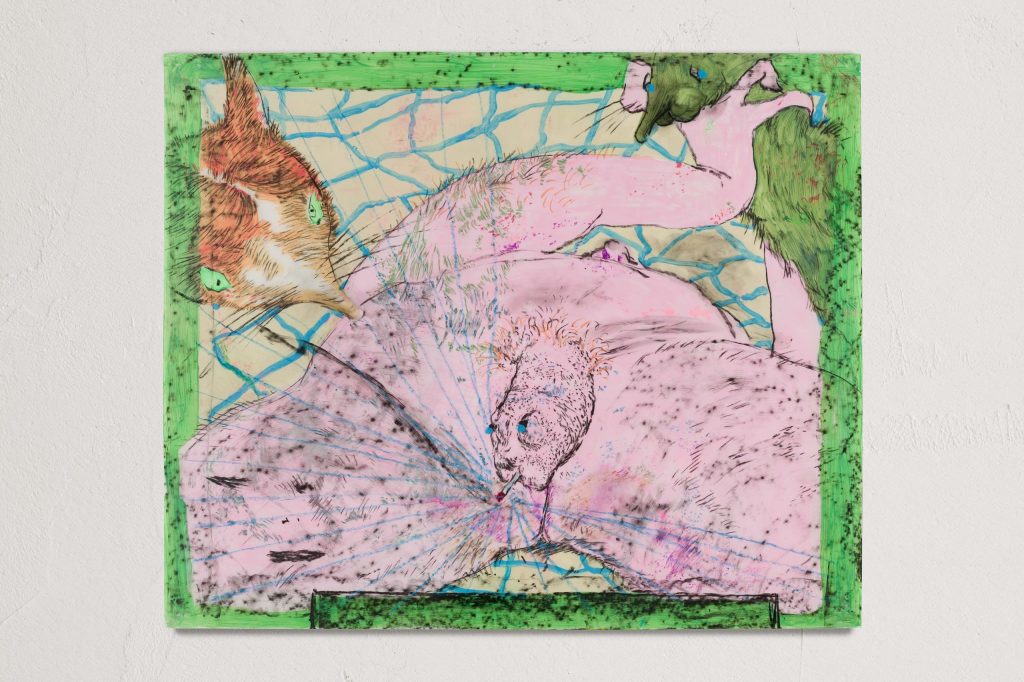
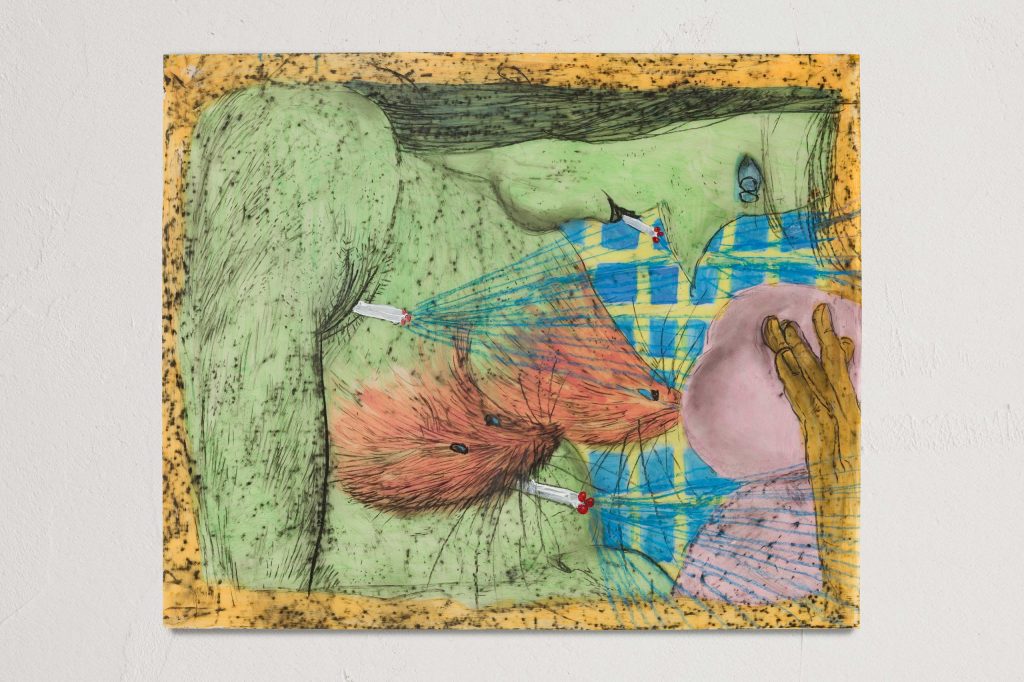
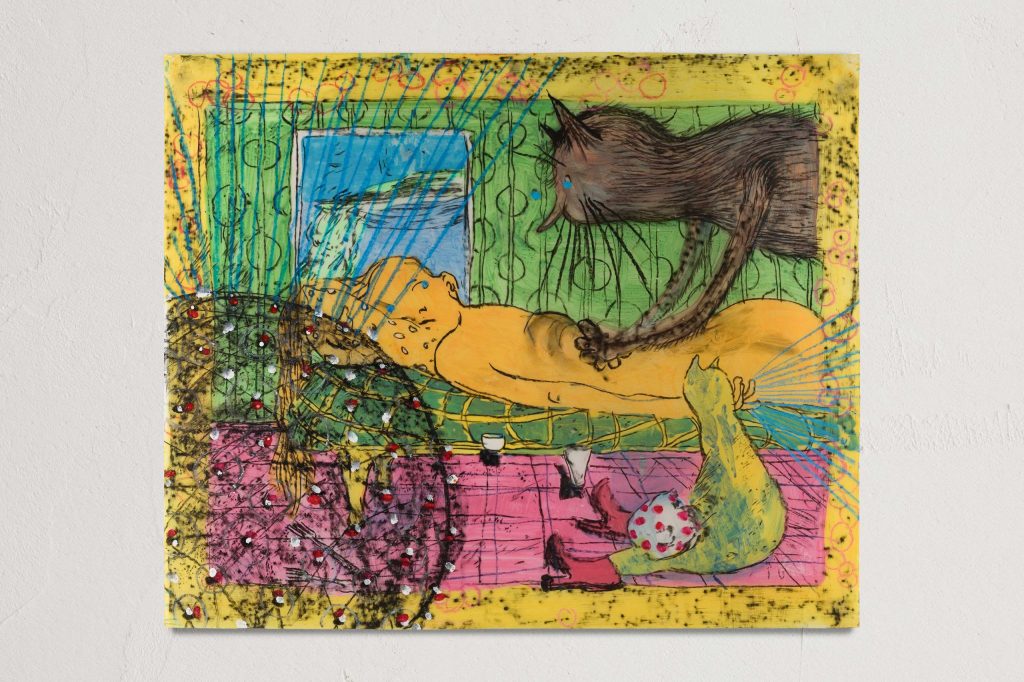
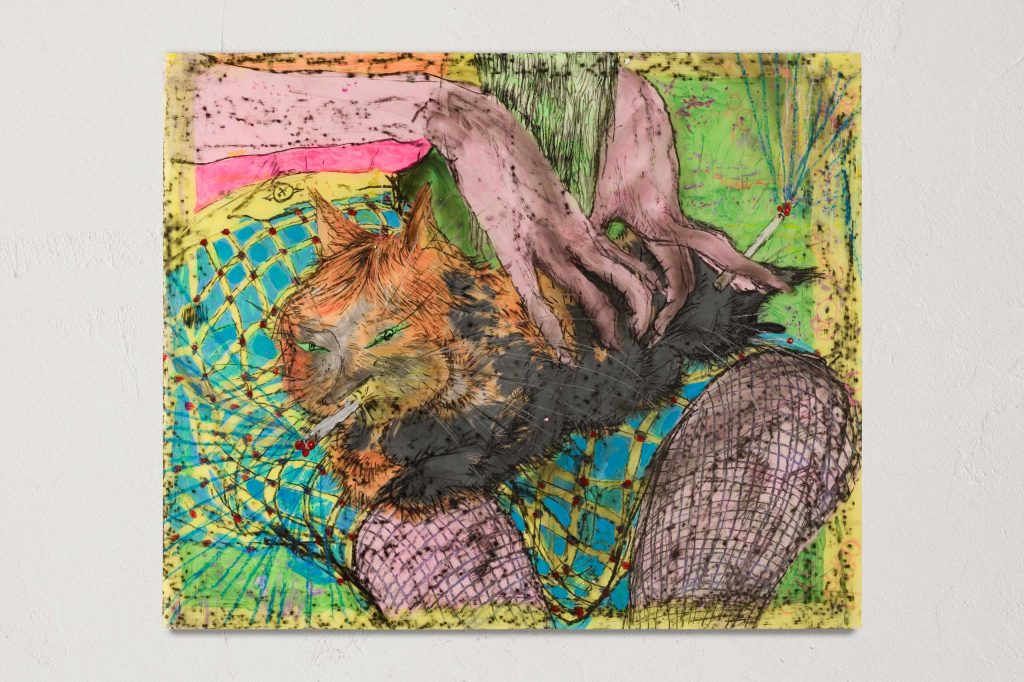
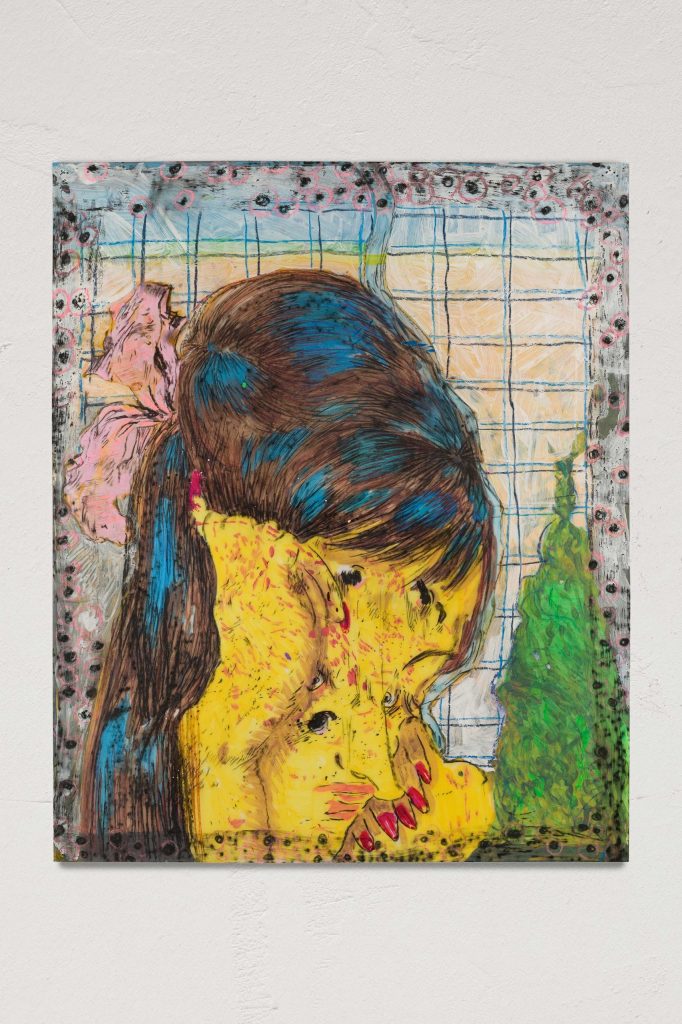
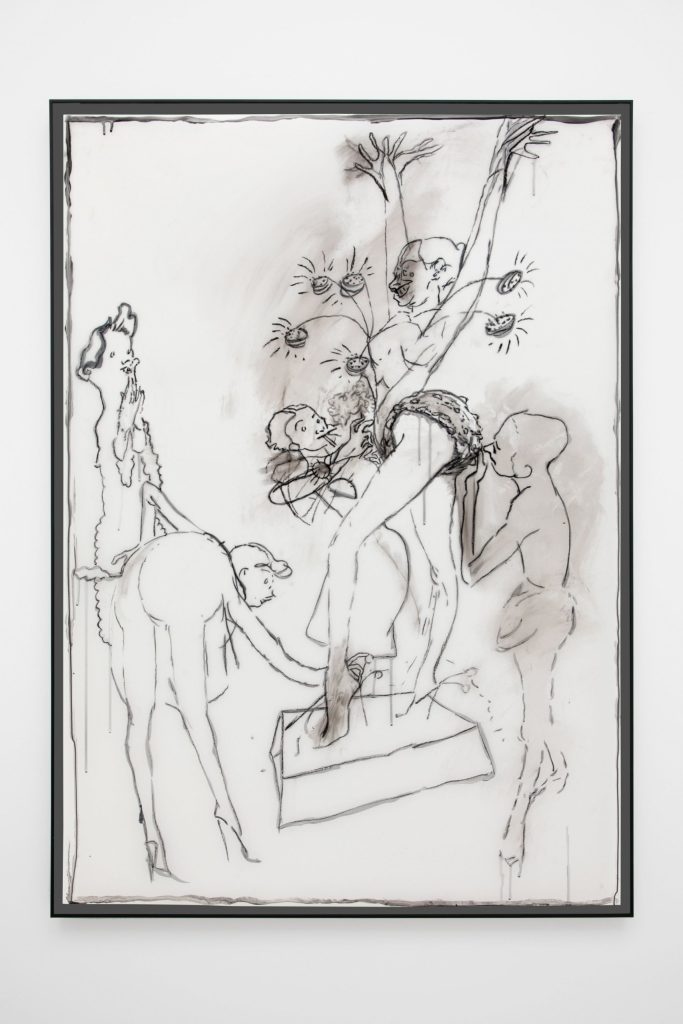
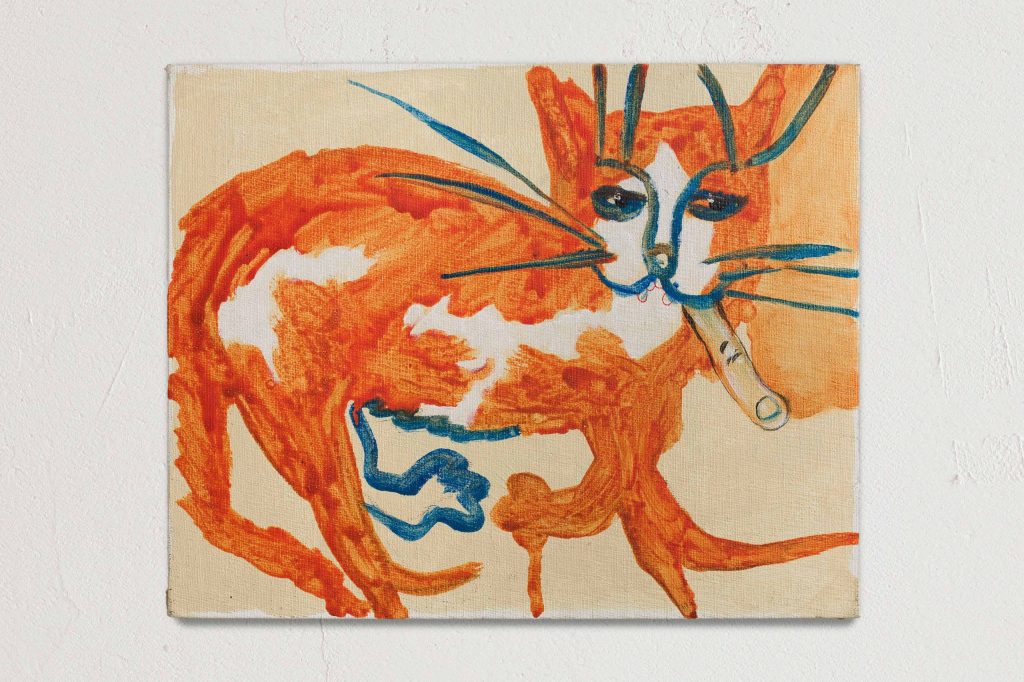
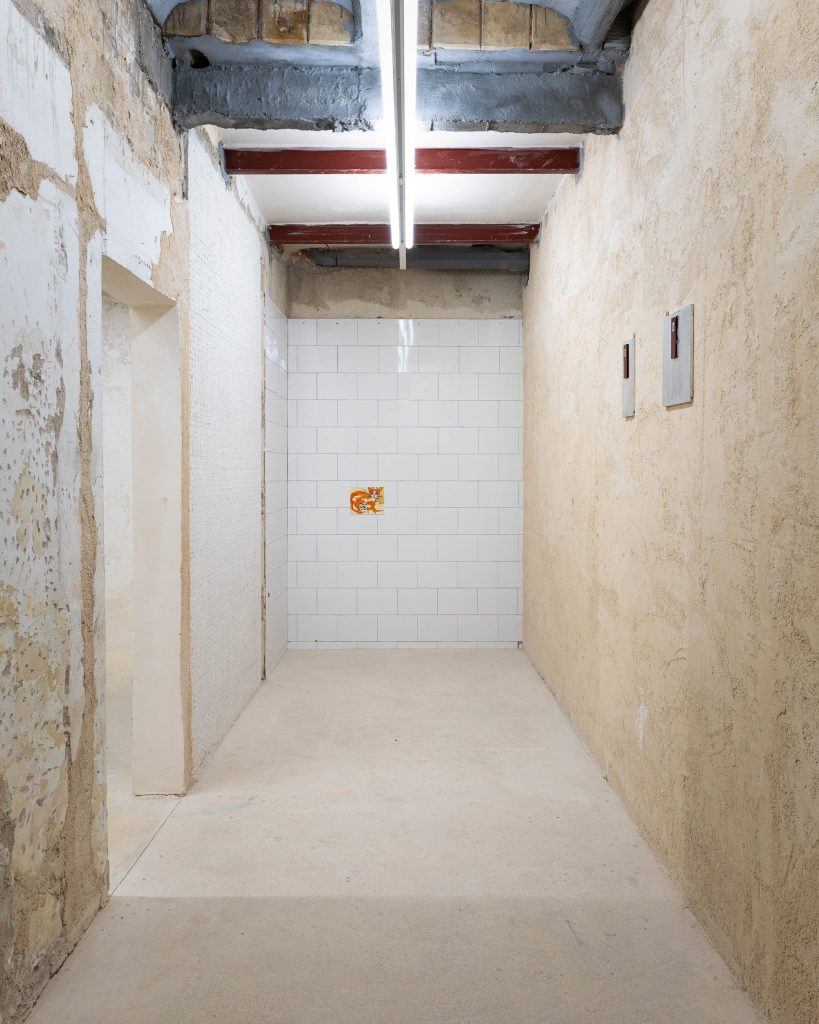
Shishkin also places cigarettes where they do not belong: in a figure’s armpit or in an animal’s snout. Each one is a small point of combustion within the scene. At the end of a corridor, meanwhile, an orange cat, the only apparently normal figure, watches everything from a distance while calmly smoking a finger.
Two floors, two territories
At first, the two presences coexist in apparent harmony. On the first floor, however, each claims its own territory.
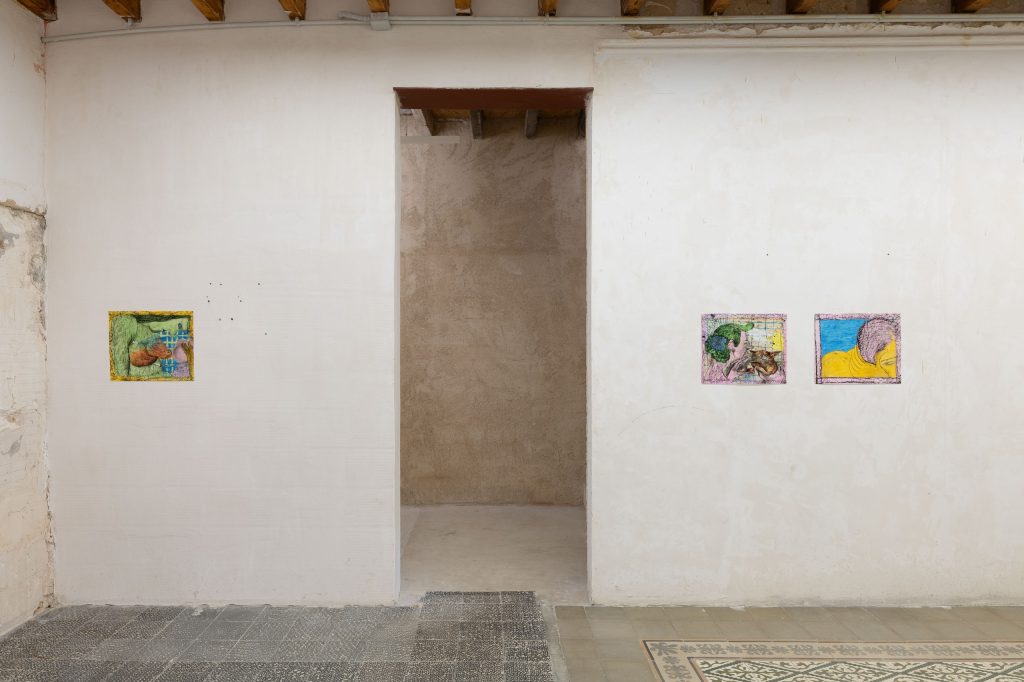
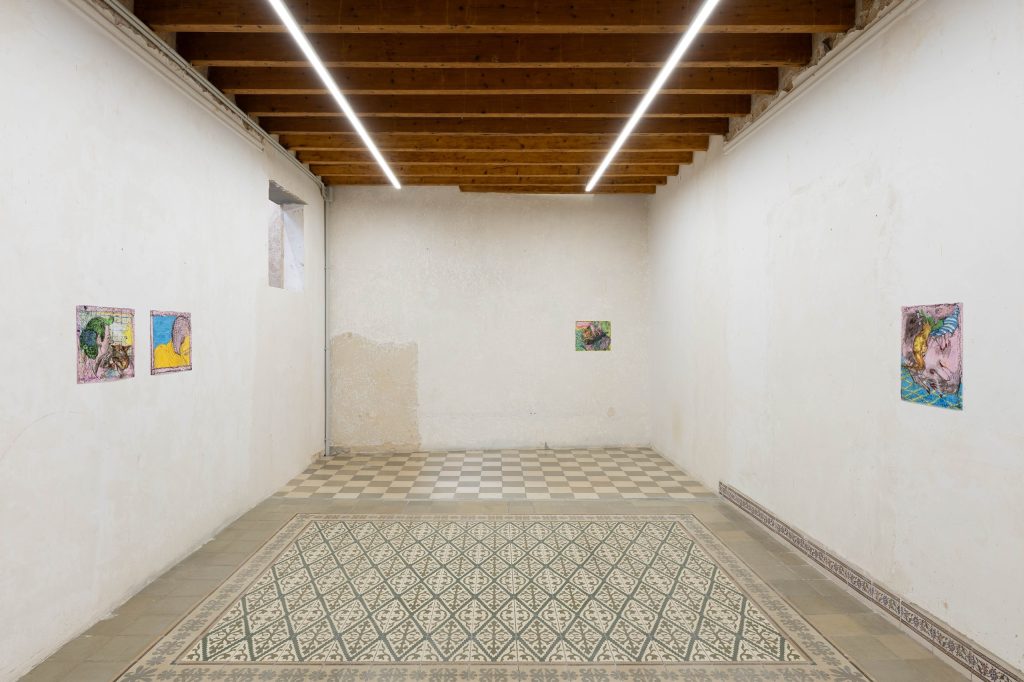
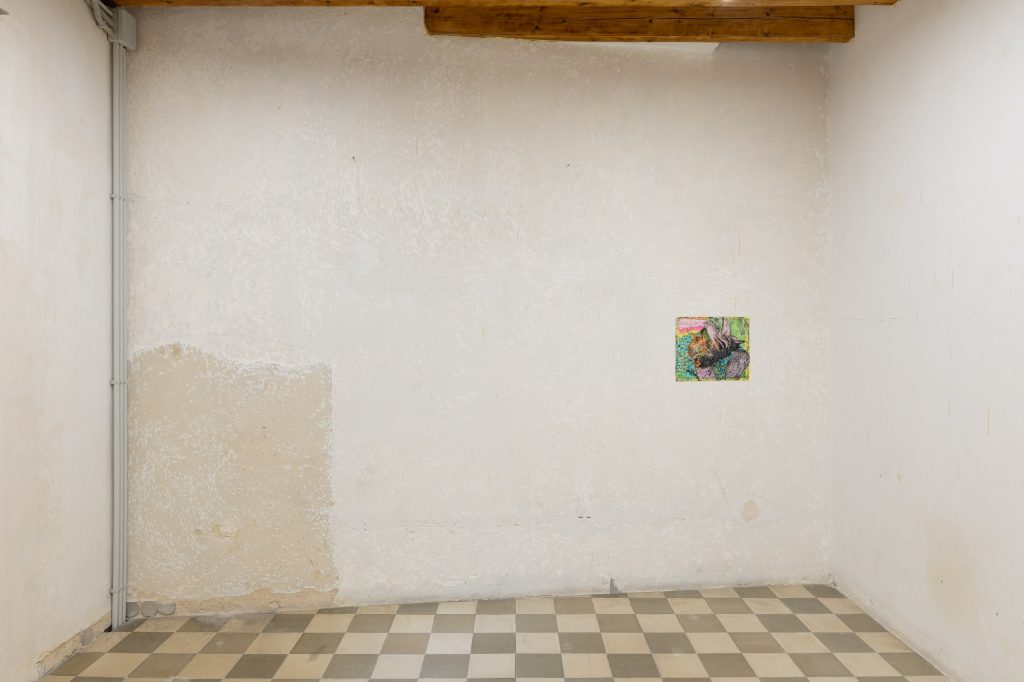
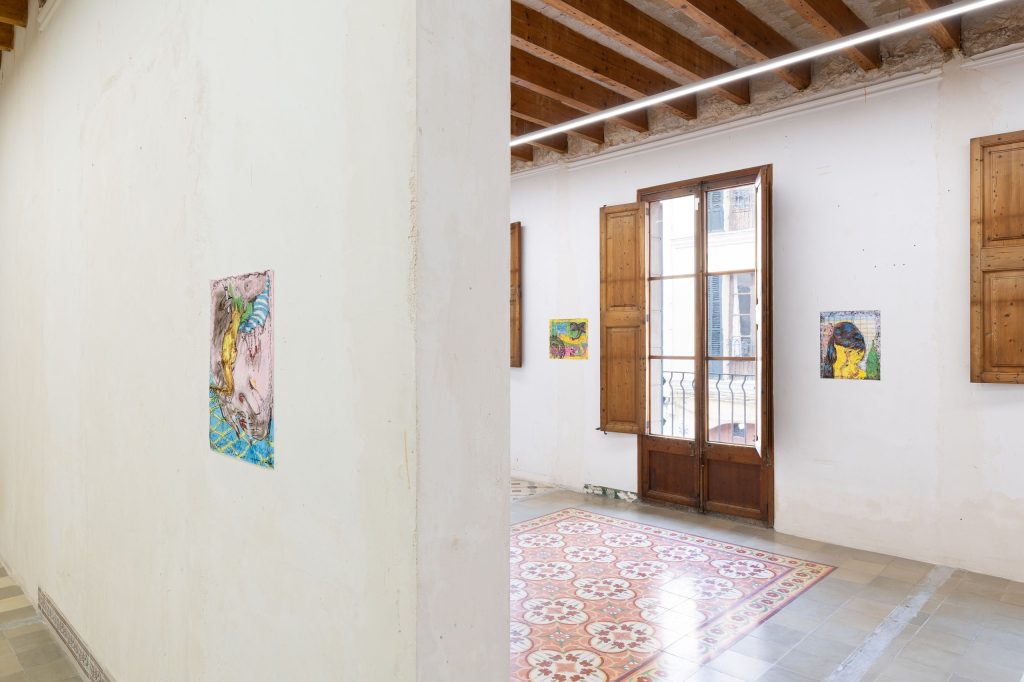
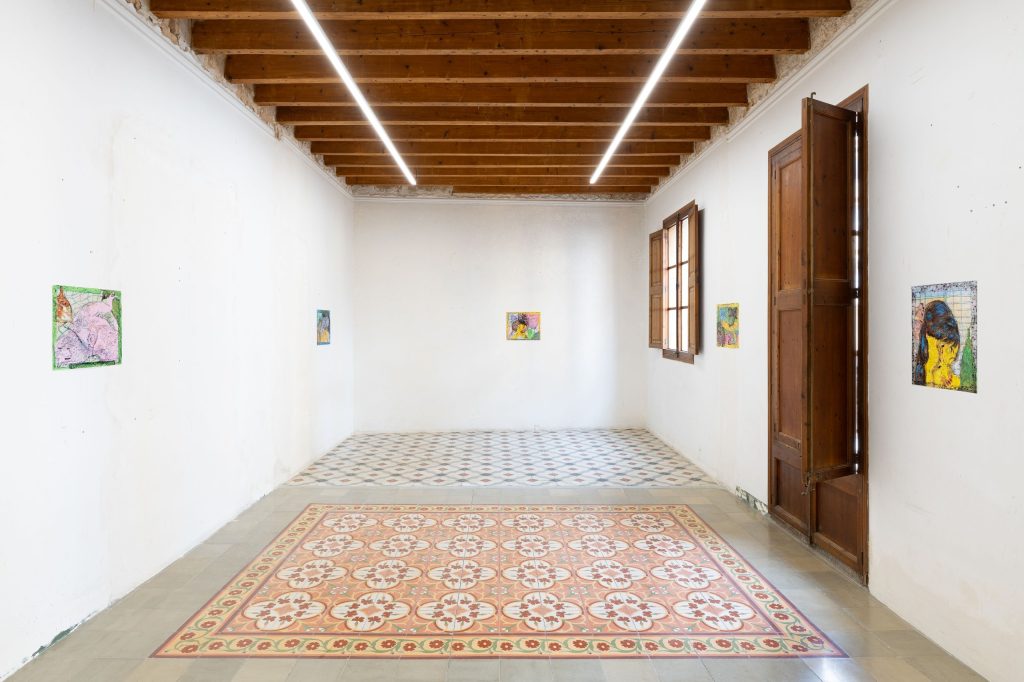
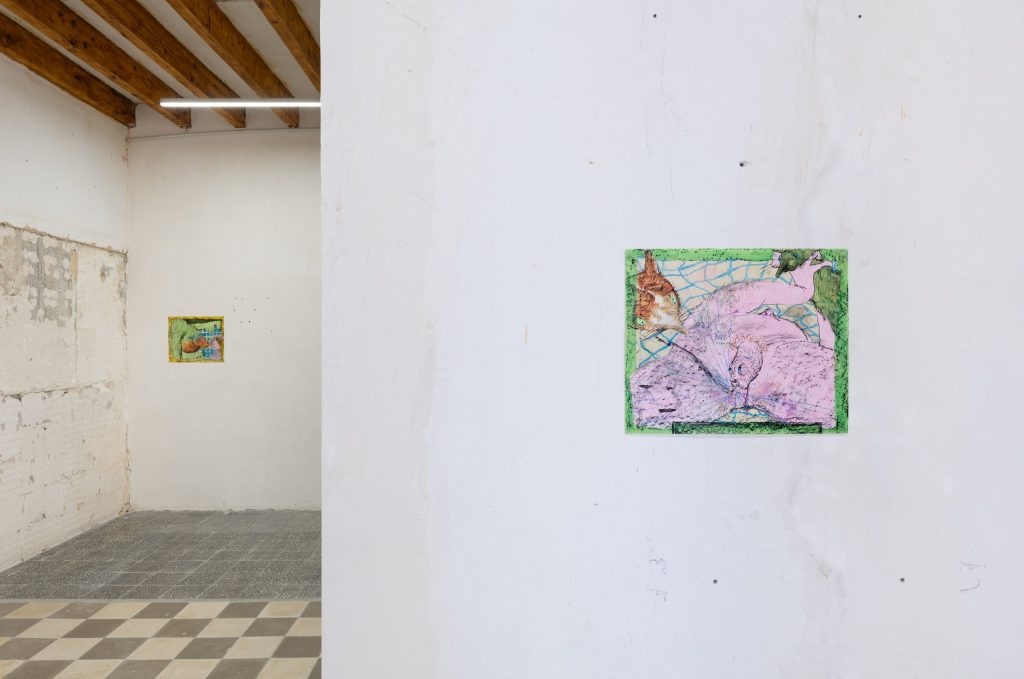
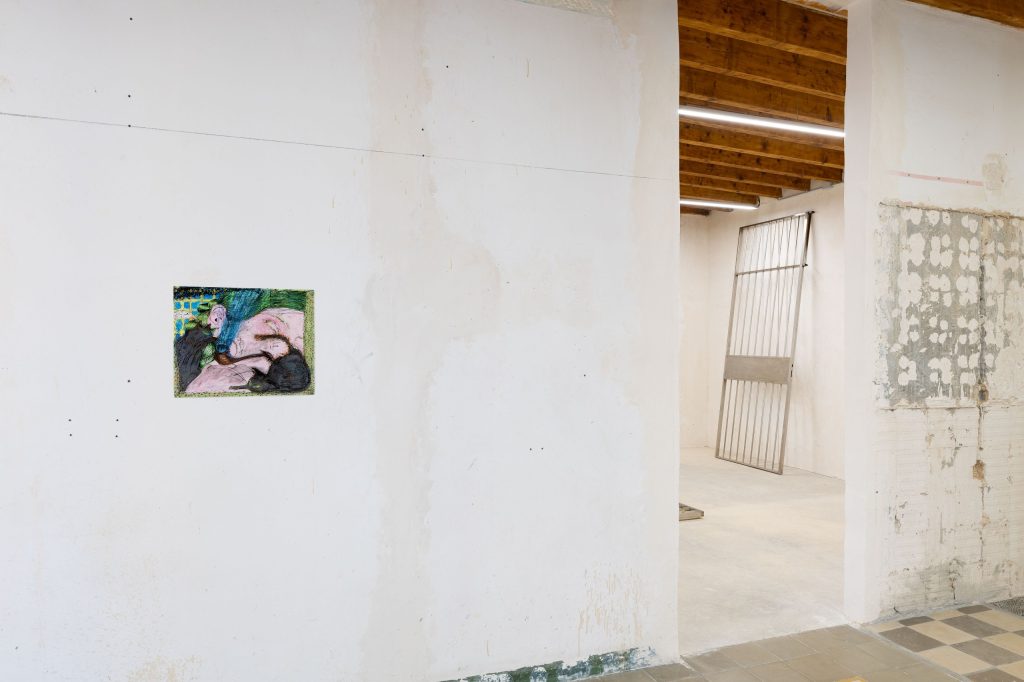
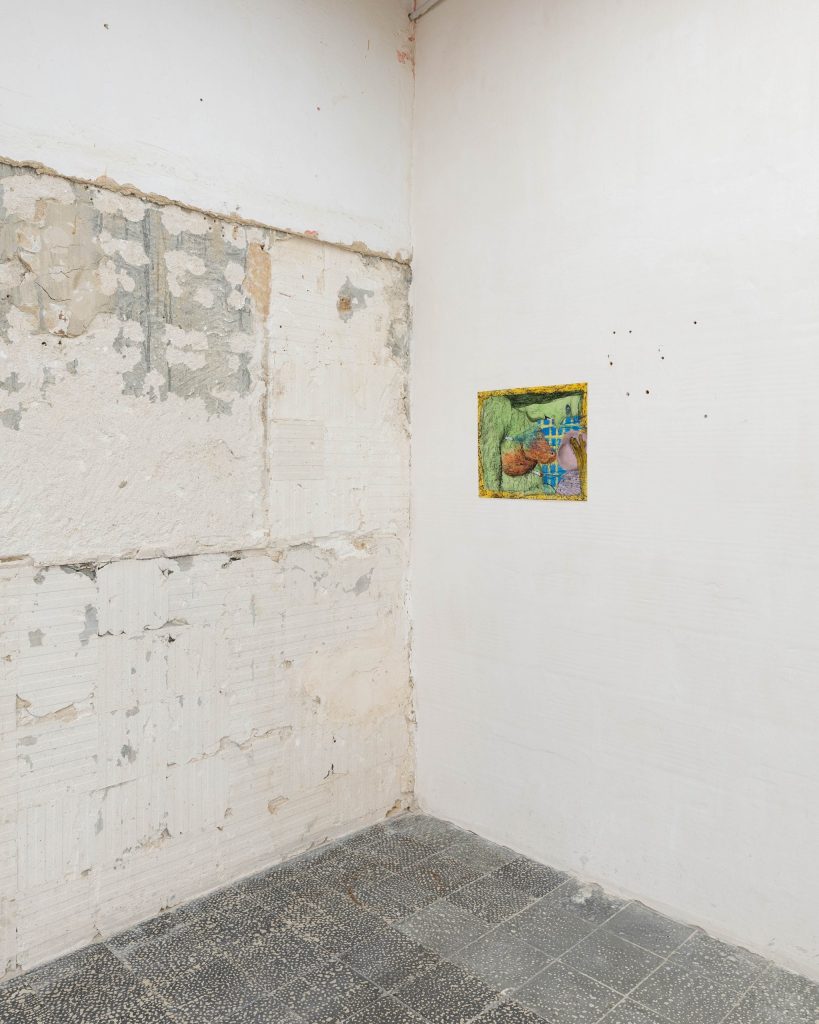
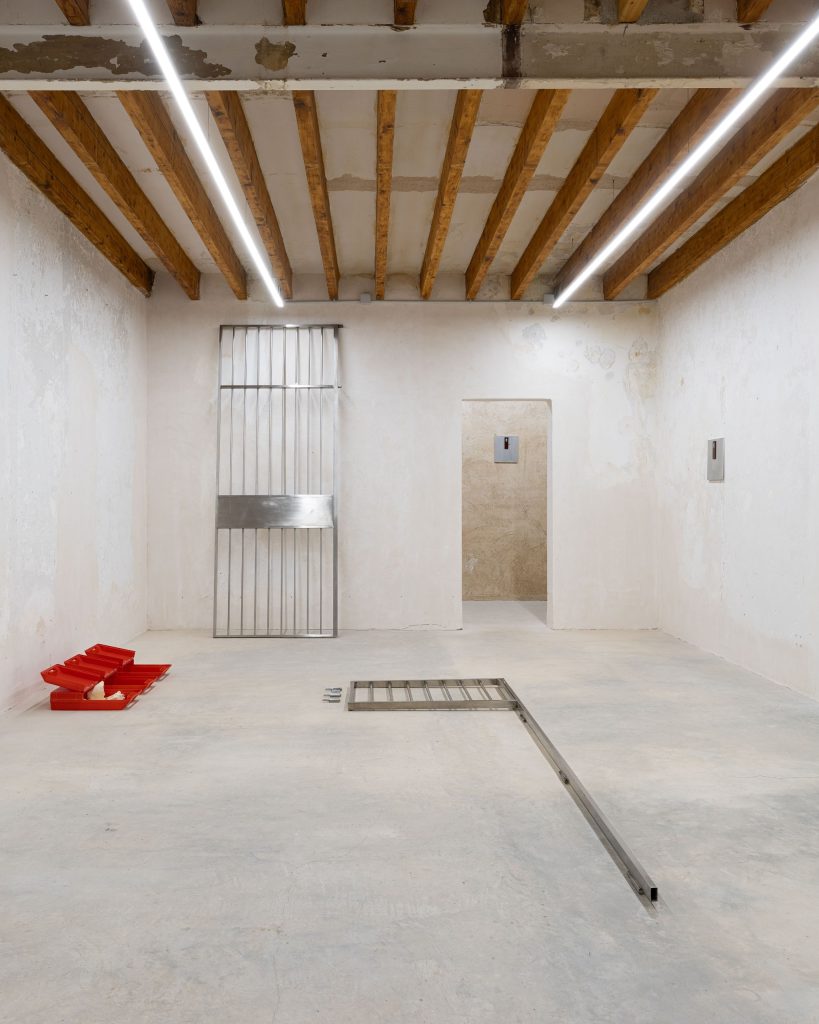
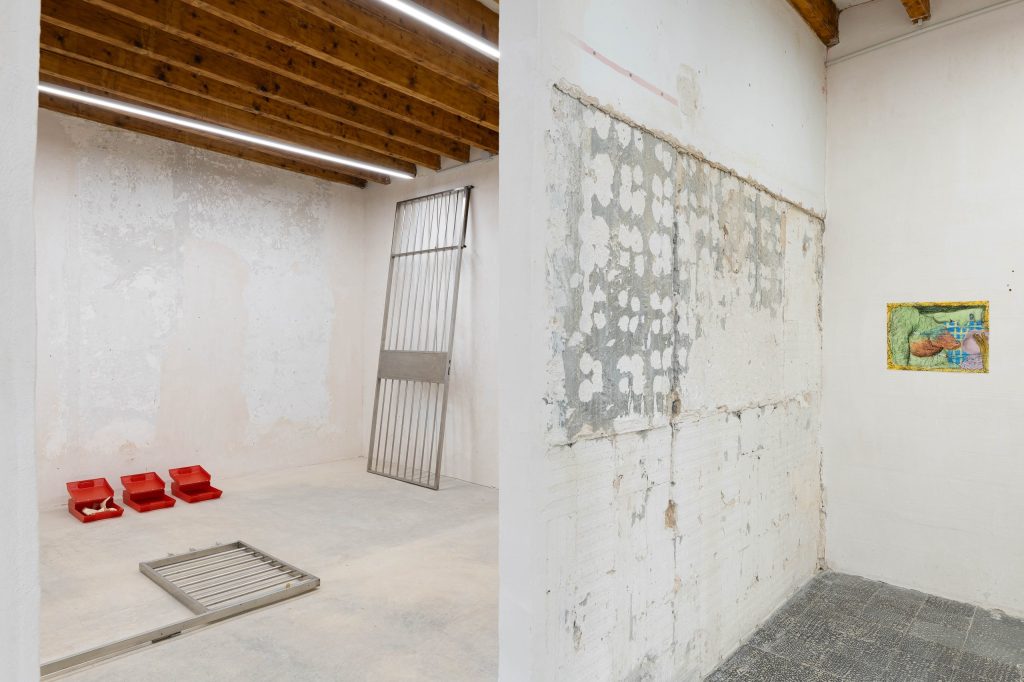
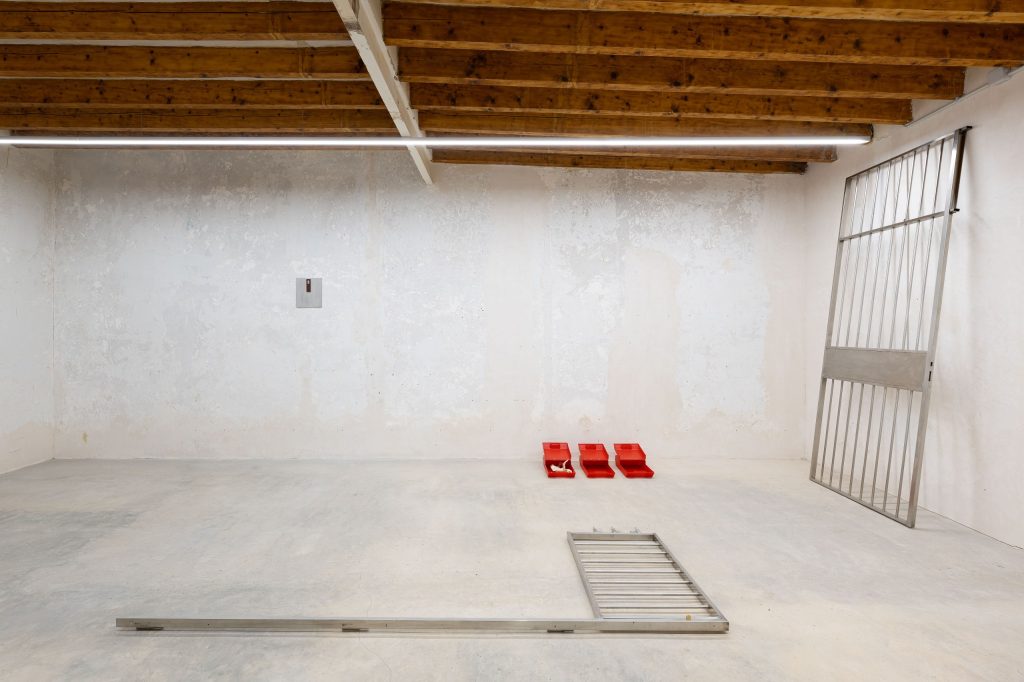
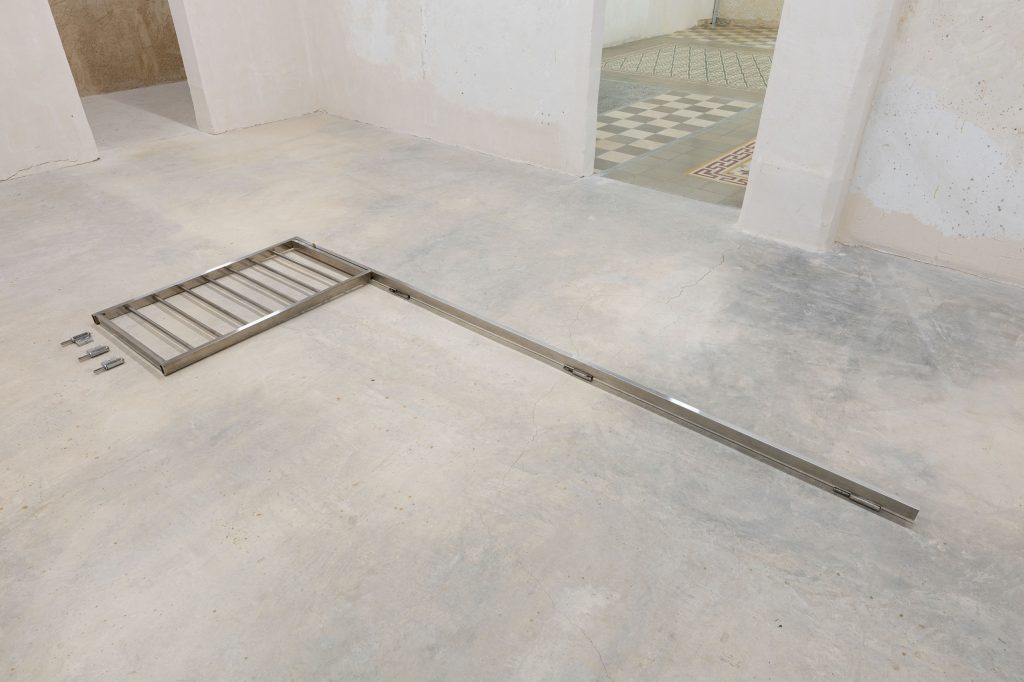
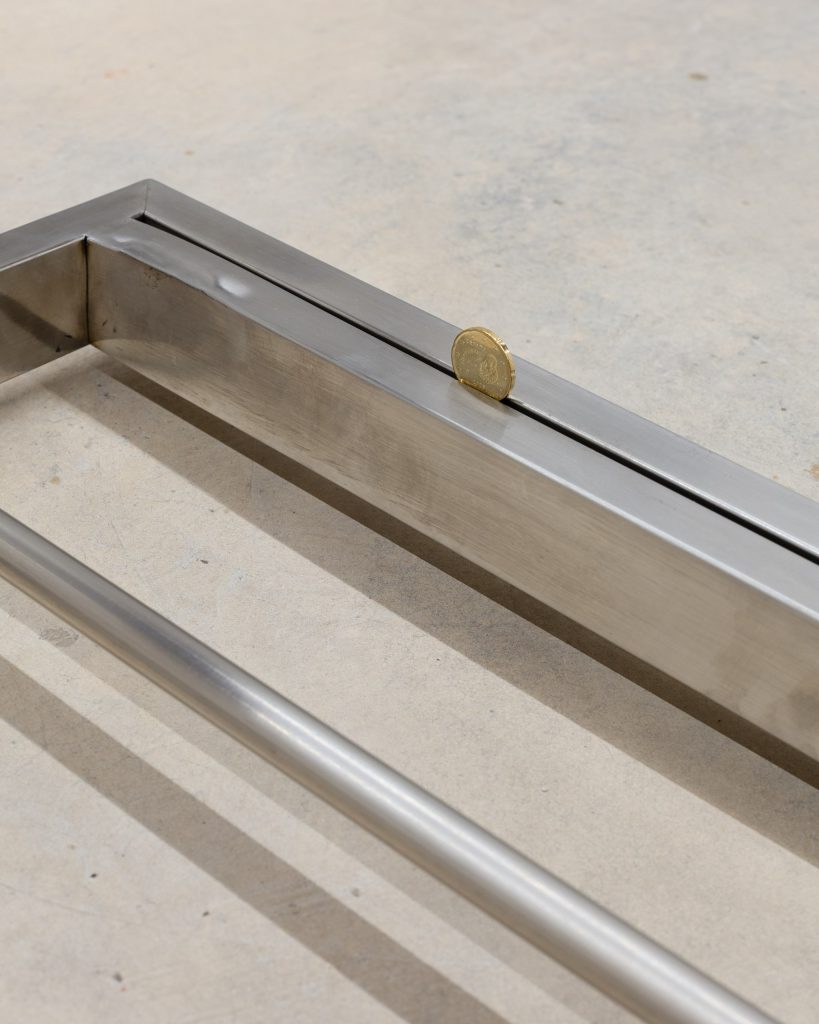
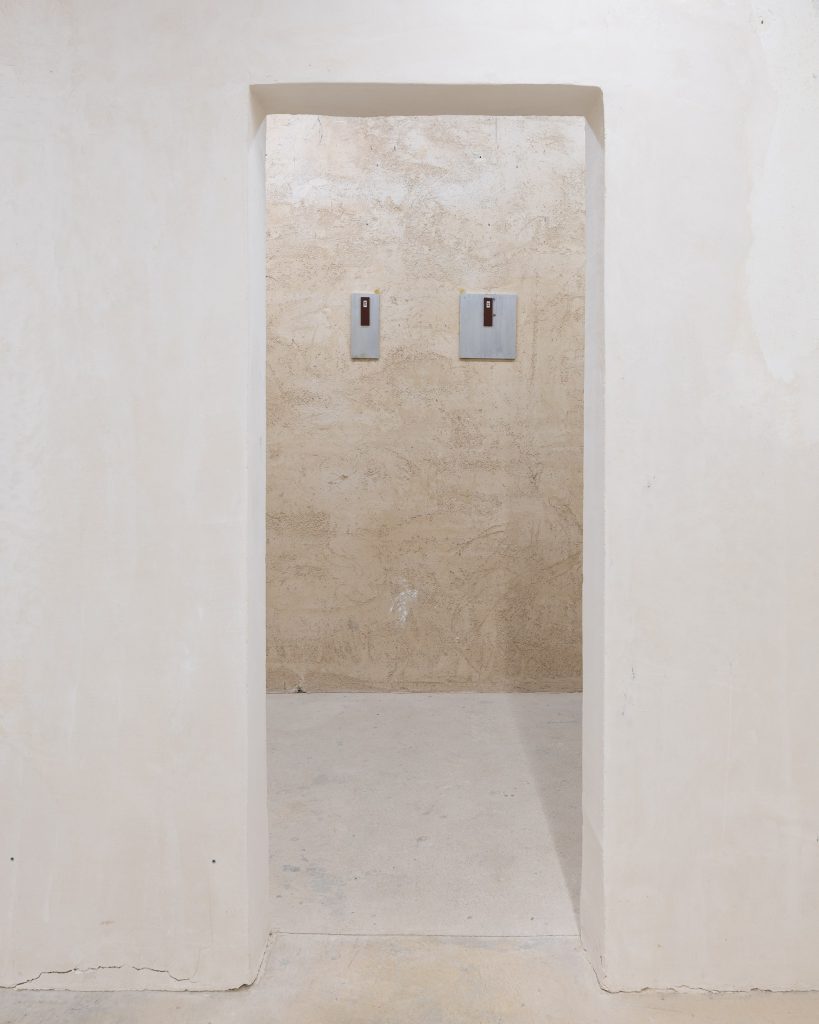
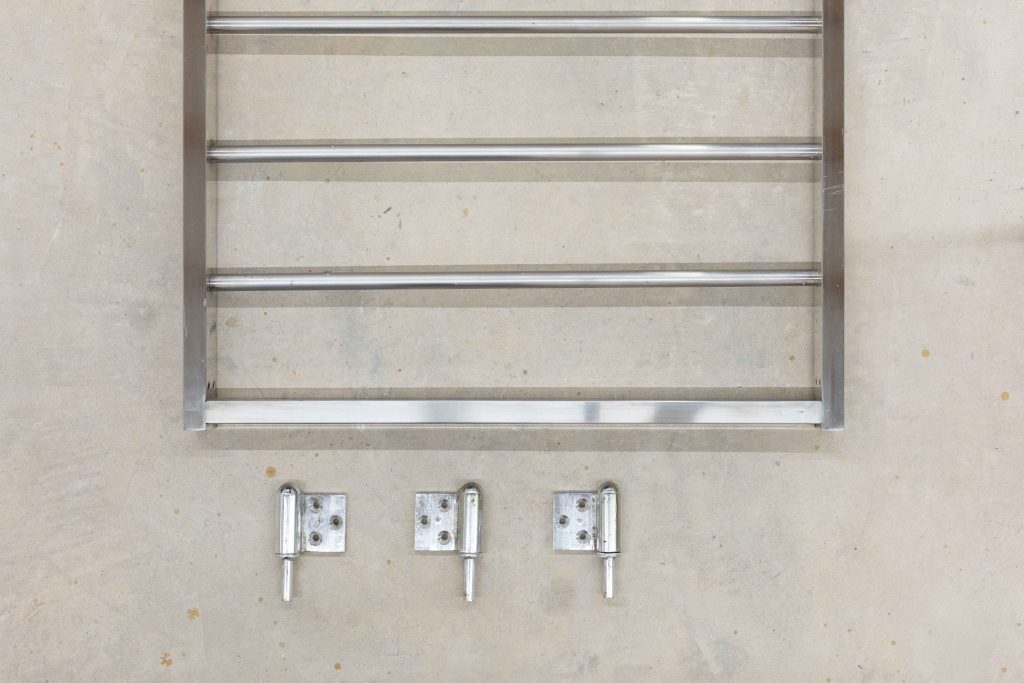
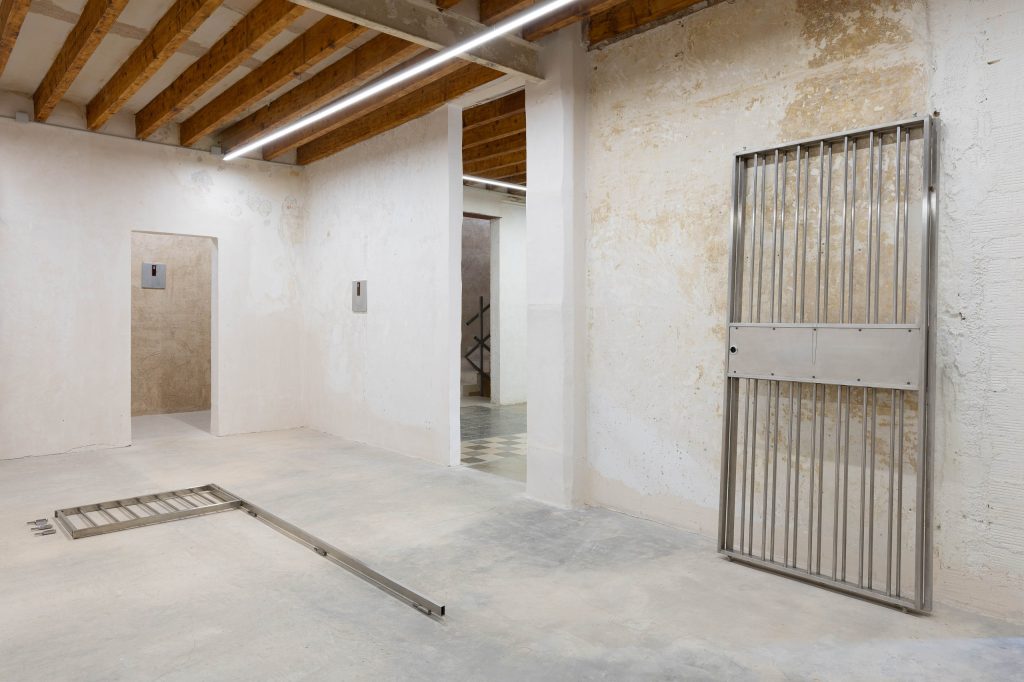
The fear of breakdown, the text argues, drives people to seal themselves off, like a vault. Leonhardt and Shishkin do the opposite and release disorder back into the world. A coin on the edge of a precipice and a proliferation of cigarettes resolve nothing. Yet, according to the text, these absurd gestures are enough to keep building with the pieces that remain.
The artists
Shishkin was born in Moscow. Today her work is held in public collections including the Museum of Modern Art, the Whitney Museum of American Art and the Art Institute of Chicago.
Leonhardt was born in Puerto Varas, Chile, in 1985. His practice examines the waste and material vestiges of human activity. Working with discarded materials, he builds sculptures and installations. He has also received the Ron Barceló Imperial / ARCO Madrid Prize and the Visioni Future Award at SWAB Barcelona.
Artists: Dasha Shishkin / @dashashishkin, Alejandro Leonhardt / @alejandro.leonhardt
Photography: Juan David Cortés / @juan.david.cortes_studio
Location: Galería Florit/Florit, Palma de Mallorca, Spain