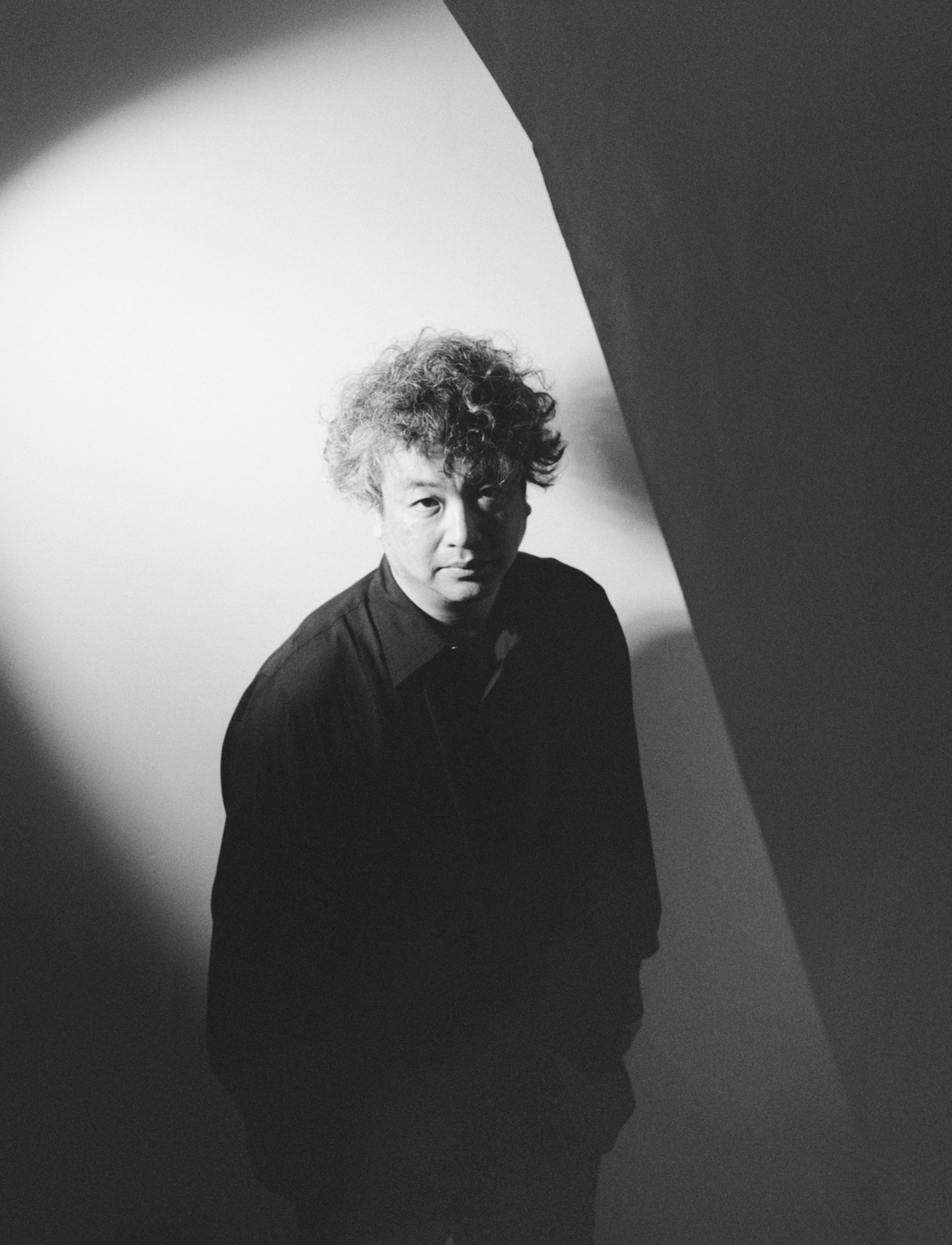
Kengo Kito builds large installations from things anyone can buy: hula-hoops, parasols and scarves, often set in rotation or motion, together with the reflections of mirrors and lamé. Born in Nagoya in 1977, he studied oil painting in Nagoya and at Kyoto City University of Arts, and later worked in New York and Berlin on grants. He now lives in Takasaki, Gunma, and teaches as a professor at the graduate school of Kyoto University of the Arts. His first solo exhibition in Vietnam, Spinning Ghost Colors (Huyễn sắc xoay vần), runs from 9 October to 6 December 2026 at the Japan Foundation Center for Cultural Exchange in Vietnam, 27 Quang Trung, Hanoi.
Answering in writing, Kengo Kito explains why he thinks of himself first as a painter, why he prefers mass-produced goods whose context is weak, and why he leaves about 30 percent of each work to the unexpected. He looks back on the moment Yoshitomo Nara changed his idea of art, the year-long run of Full Lightness during the first wave of COVID-19, a handkerchief installation that visitors read as the tsunami in March 2011, and the self-rotating lanterns he found in a Hanoi market.
Artistic approach, materials and ideas
Your practice moves across installation, painting, sculpture and photography, often using everyday or mass-produced objects. What connects these different forms of work, and how do you decide which medium an idea calls for?
Basically, I am a painter, so for me installations and sculptures are expansions of painting. I choose materials the way I would choose paint colours, and I regard that selection as important. That is why everything in our daily lives can become material for my work. There is a tendency, though. I often use mass-produced goods, because I need them in quantity, rather than craft products that are made one at a time. Having a large number of the same product is what makes my work possible.
Colour, light, reflection and movement recur throughout your work. Do you usually begin with a particular material or visual effect, or with a question about how people perceive space?
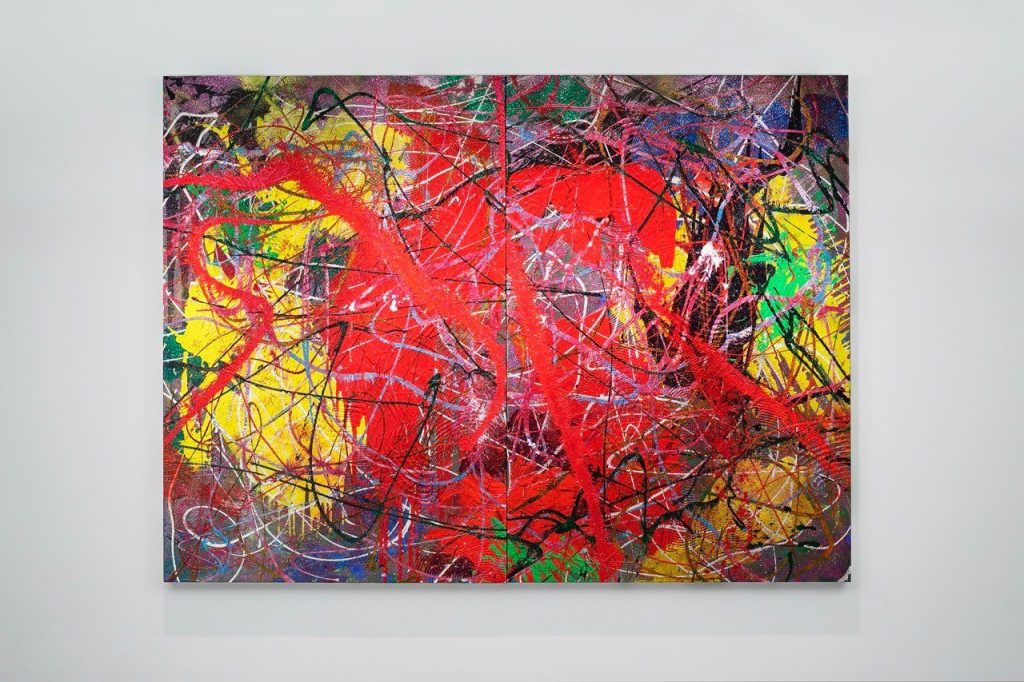
I like Minimal Art, so my means of expression tend to be minimal. With a huge painting, for example, I always try to make it impossible to “grasp” what it is. That is why I use reflection, or the halation that colour creates. I also think about visual experience, which can be divided into taking photos, making films and watching them. Each of these is different, and the gap between them interests me a great deal: what is the true artwork?
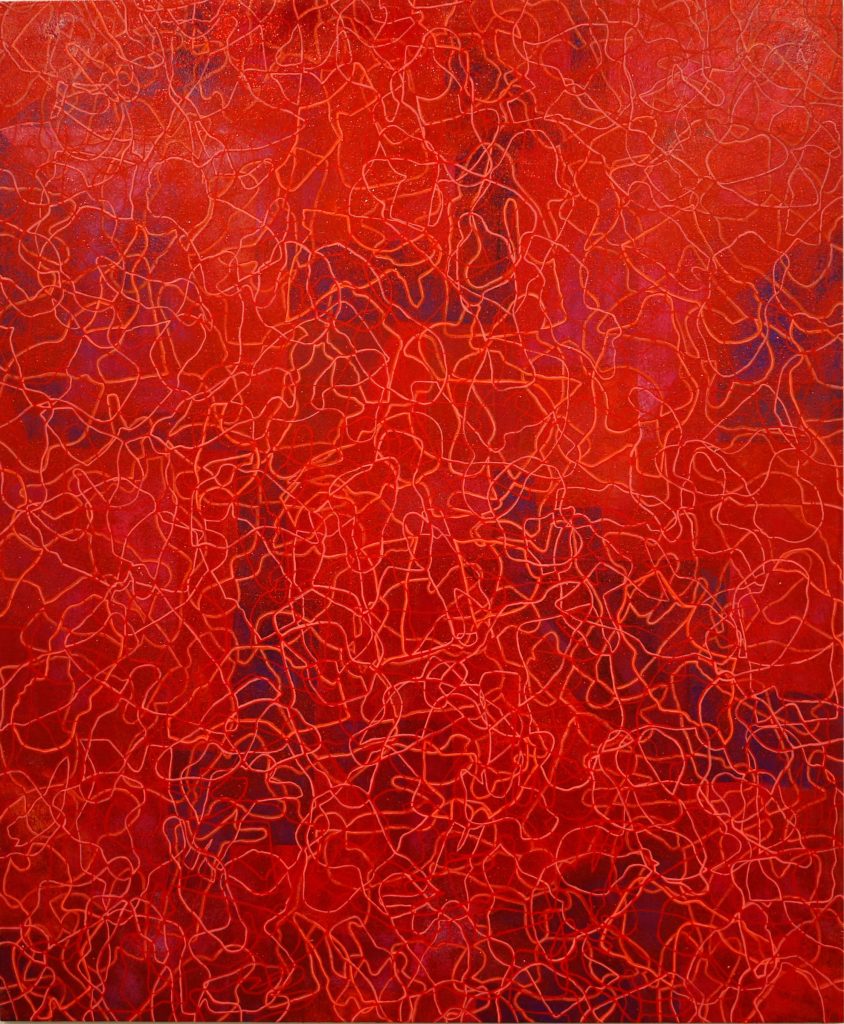
I would like to go beyond the space of human skill, the human scale at which people actually see. So my works are interactive with visitors. Whether it is a painting or another flat work, movement is always essential to what I do. It is easy to imagine that an installation requires you to think about movement, or about how people move through a space, but I believe paintings do the same. So you could say that I begin with the expectation of a visual effect.
Many of your works transform familiar objects into unfamiliar forms. What draws you to these objects, and what do you hope becomes visible when their original function or context shifts?
I am certain that everything has its own function and context, but I want to use things whose context is as weak as possible, things that almost nobody has strong feelings about. With that in mind, and because they are easy to obtain, I often use mass-produced goods. I also like the colours and materiality of industrial products.
I often think art is a kind of magic: artists create a work with nothing but canvas and paint. In the same way, I like to use mass-produced goods so that the result seems miraculous. Then I try to separate the material from its context, even though that is impossible, because people live with these things. I would like to create something that is completely nothing, not full of my own context. I think art is always all or nothing, and I do not worry about what other people think or do. I do not want to control other people’s minds through my work.
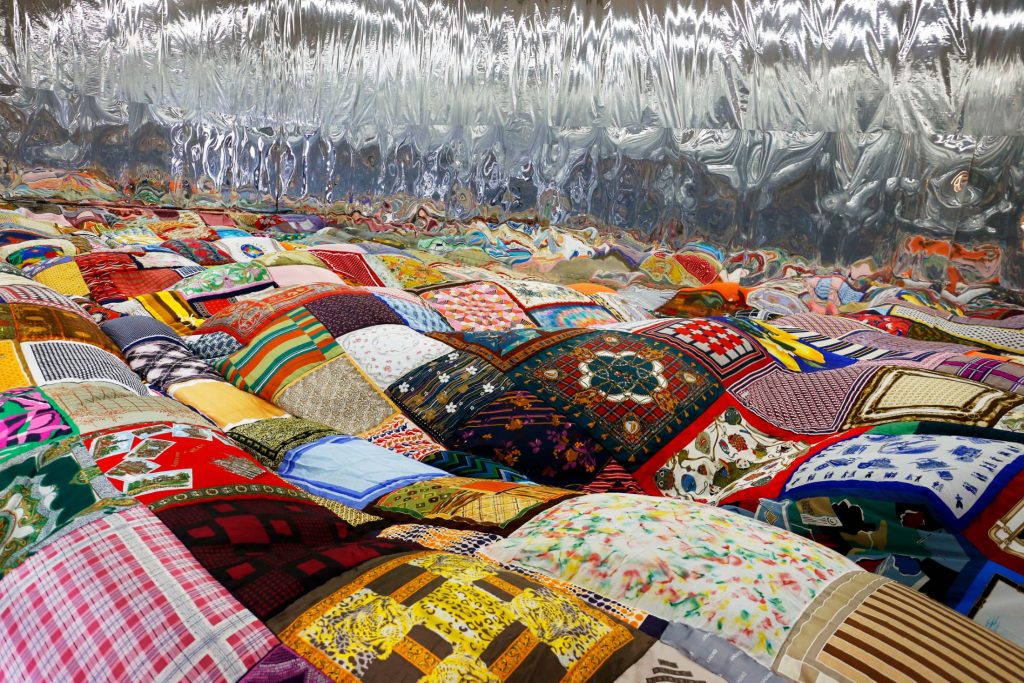
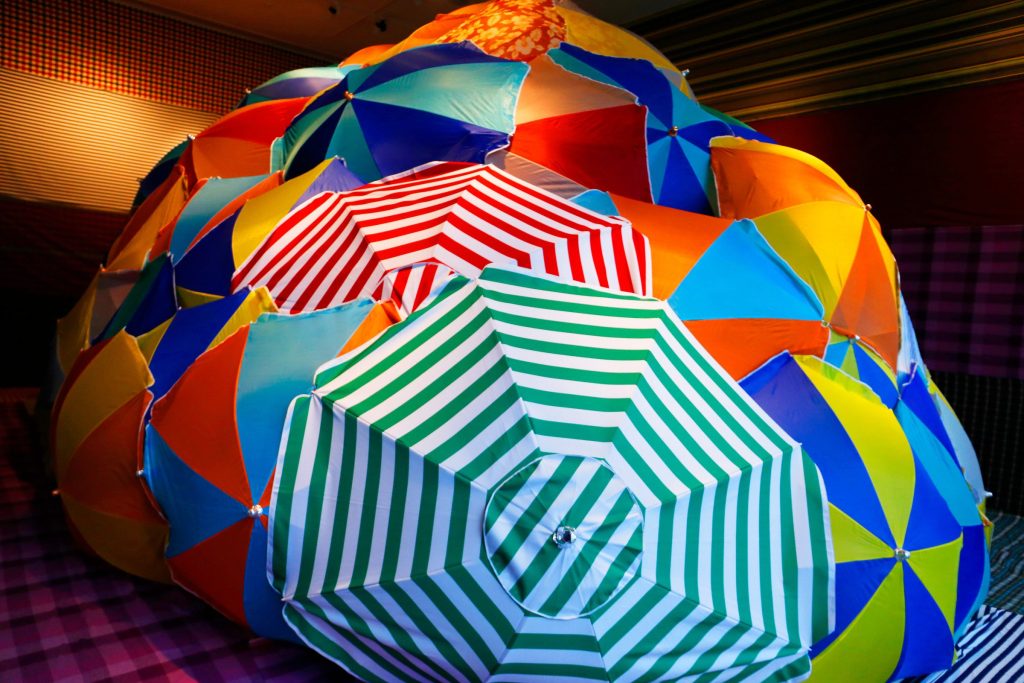
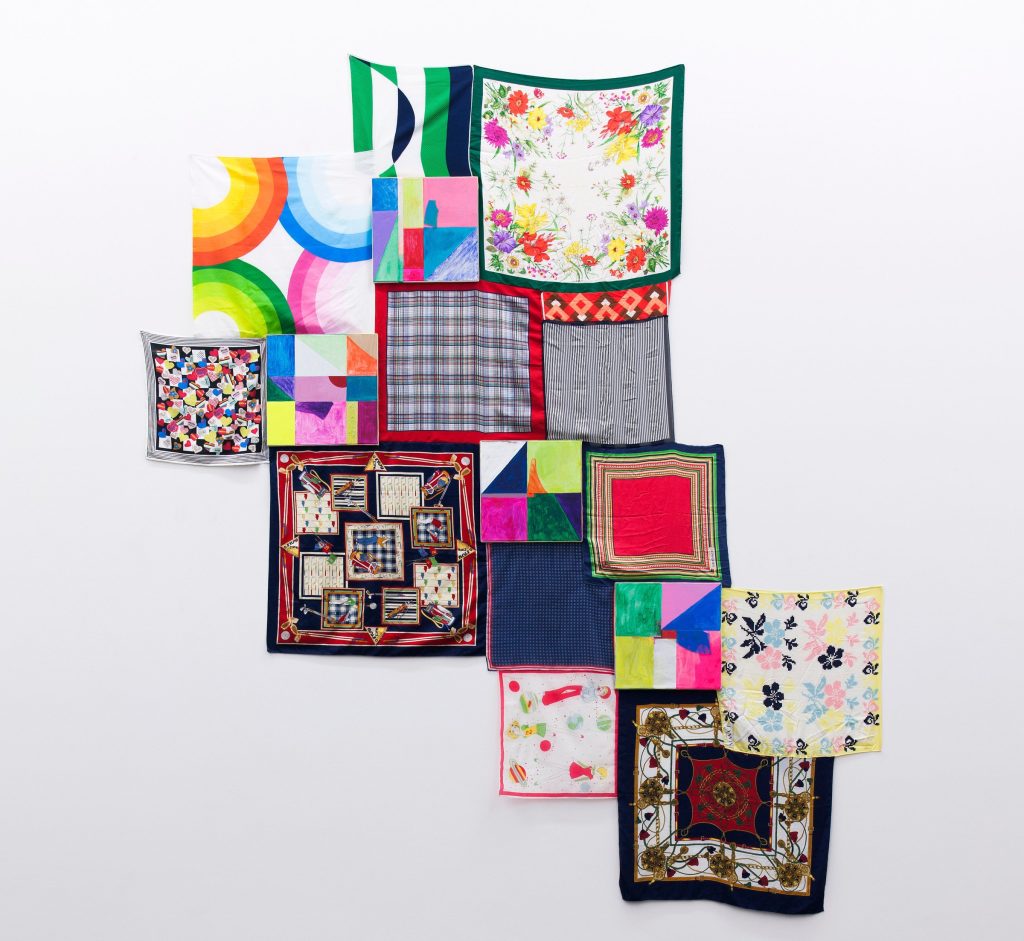
Your installations can change with the light, the movement of viewers and the architecture around them. How do you balance what you plan in advance with what emerges through a site and the people who encounter the work?
What interests me is both the expected and the unexpected. Of course, after many years of making work, it is easy for me to predict what will happen next. Still, I try to leave about 30 percent of a work open to the unexpected. I can bring a work to a successful result even when something unexpected happens. In any case, I look forward to “something unexpected” happening in my field. It gives me a new point of view.
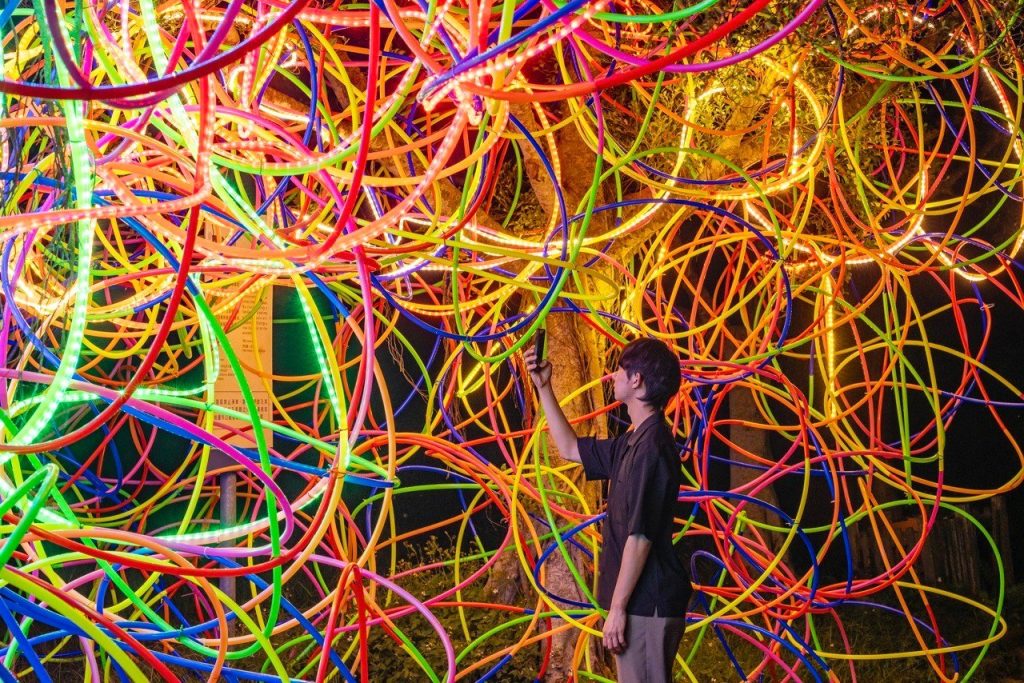
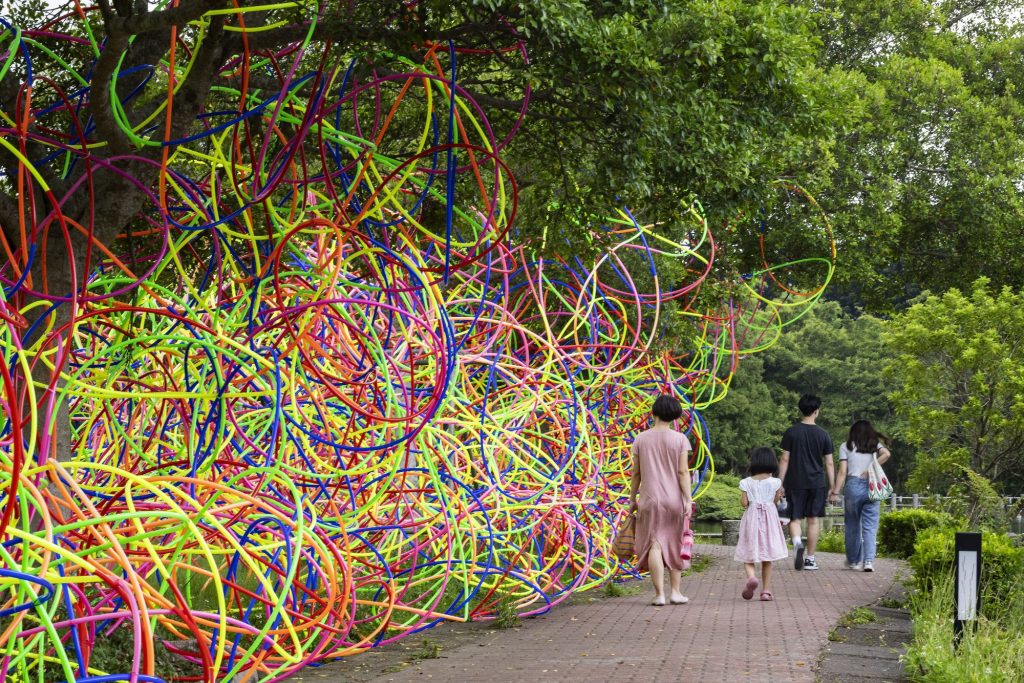
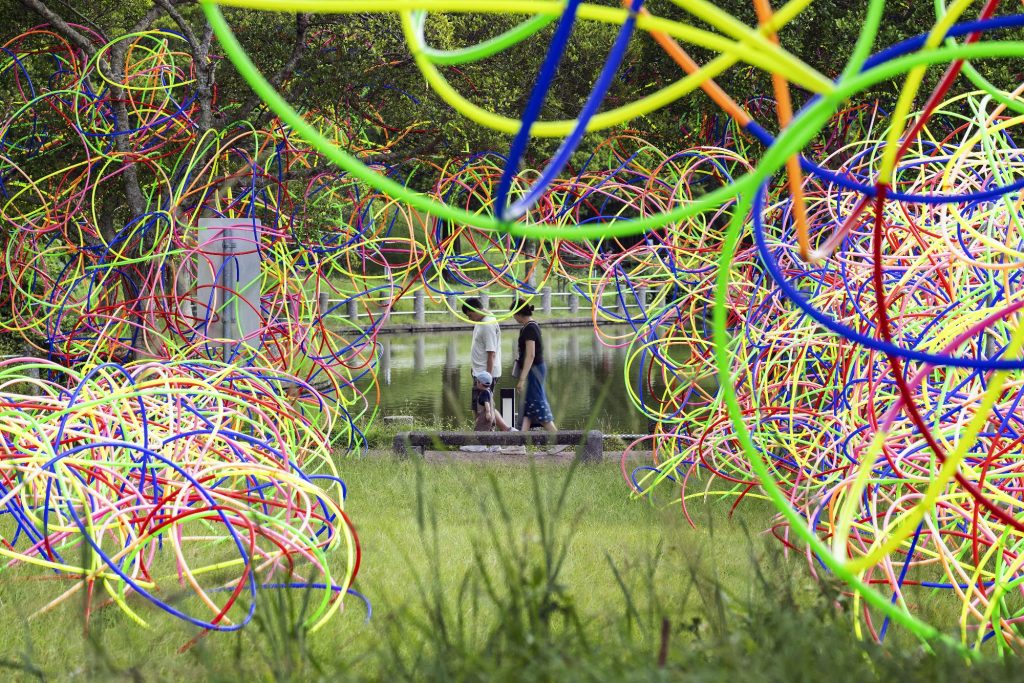
Were there particular experiences, places, people or works of art, including those from your childhood, that helped shape your way of seeing? How have they influenced your understanding of contemporary art?
I do not have a specific experience or person from my childhood that shaped my values. Perhaps the only thing is that my parents praised me. When I first saw the work of Yoshitomo Nara as a high school student, it changed my values. At that time, in the mid-1990s, I did not regard manga, or work like his, as art. Nara’s new challenges, his cross-disciplinary art, showed me an entirely new style of art. I was shocked. He is the biggest turning point in my career.
Exhibitions, audiences and working across places
Full Lightness at Kyoto City KYOCERA Museum of Art and Unity on the Hudson at the Hudson River Museum brought your installations into very different settings. How did each site shape the work, and what did you learn from presenting it there?
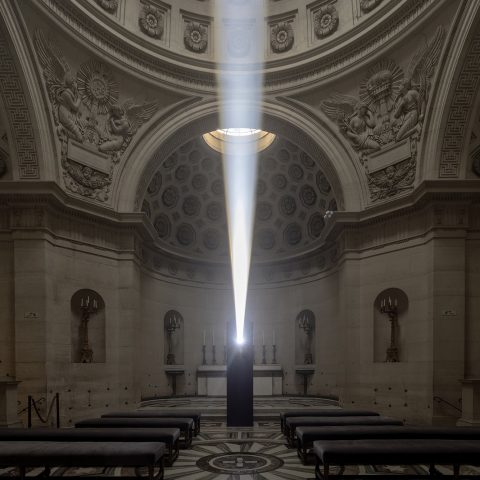
The exhibition at KYOCERA was held during the first wave of COVID-19. It was a very interesting experience: we installed the works during that wave, and in the end the exhibition stayed open for almost a year. KYOCERA had also just reopened, with its building renewed by Jun Aoki. My works often harmonise with architecture. My first exhibition was in Nagoya, in a building by Mr. Taniguchi, and he liked my work and the way it stood neck and neck with the architecture.
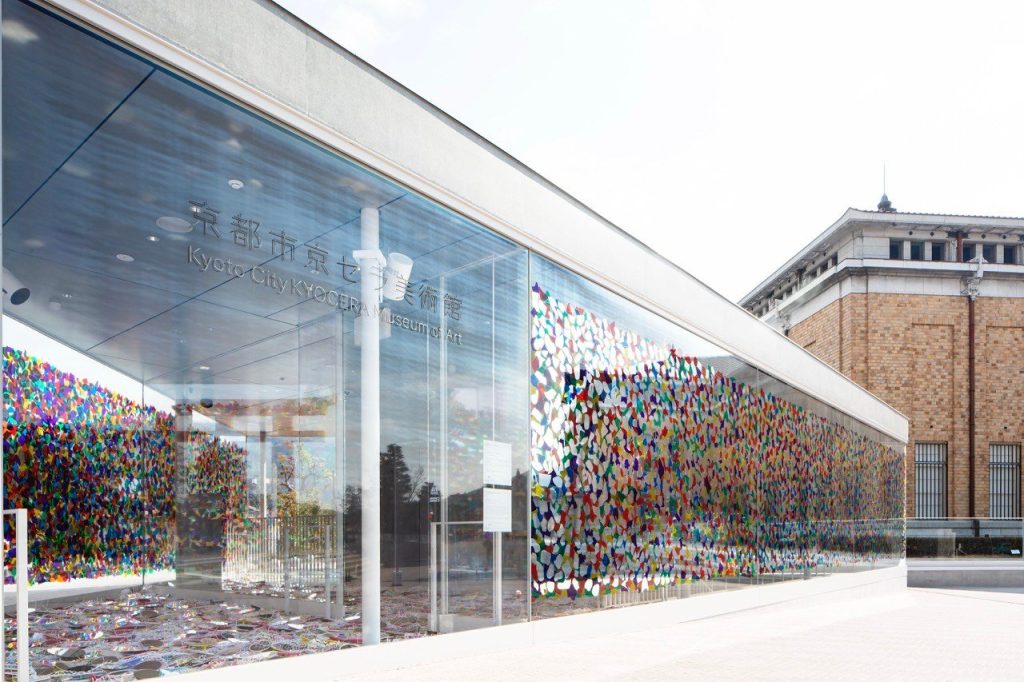
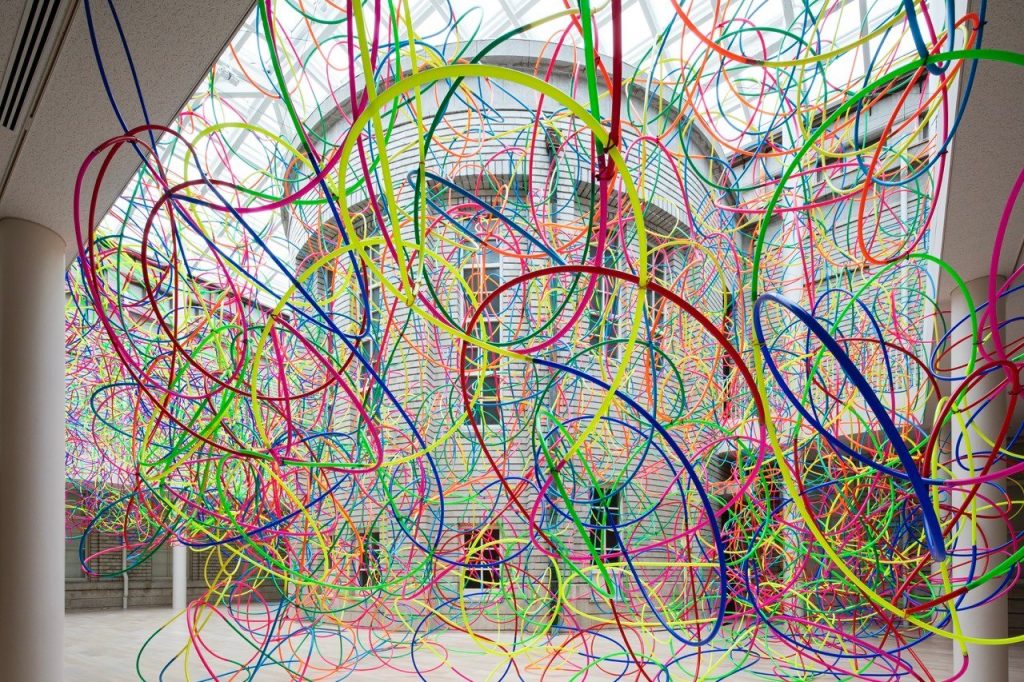
At KYOCERA, three elements came together in the soaring space of the museum: my work, the old parts of the building and the new parts by Aoki. I liked having an exhibition somewhere that was not a white cube. Working outside the white cube taught me that I can “paint” anywhere. I had felt that I was drawing a line of colour in a white space, but it is not limited to a white background.
The Hudson was also impressive, with its river and landscape. Recently, I have come to feel that I could make my work anywhere. I am interested in collaborating with old places and spaces, or eroding into them.
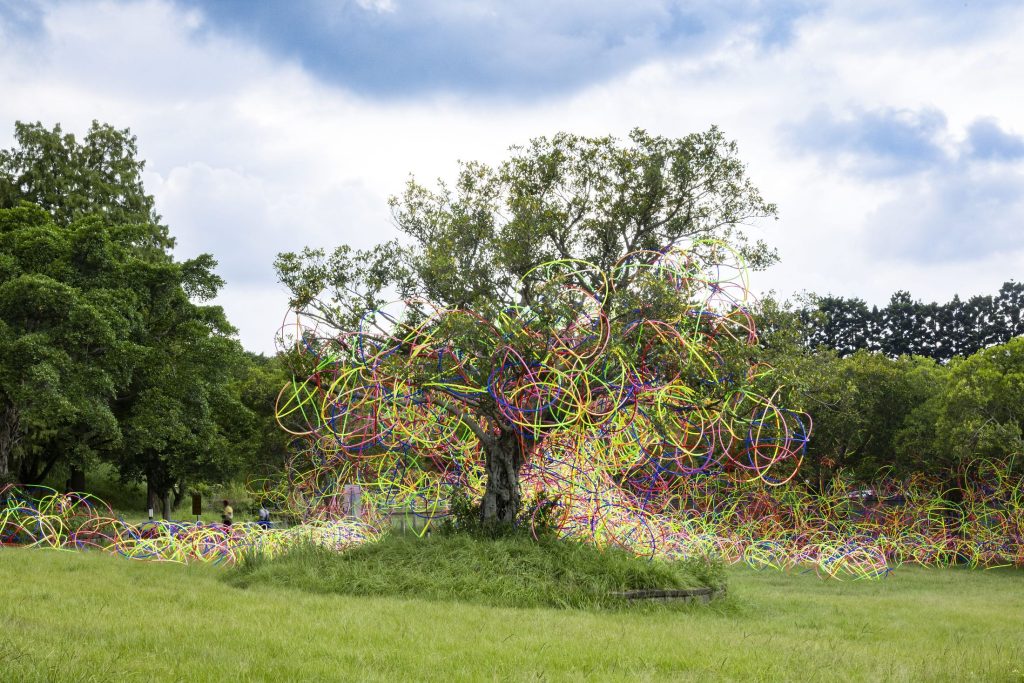
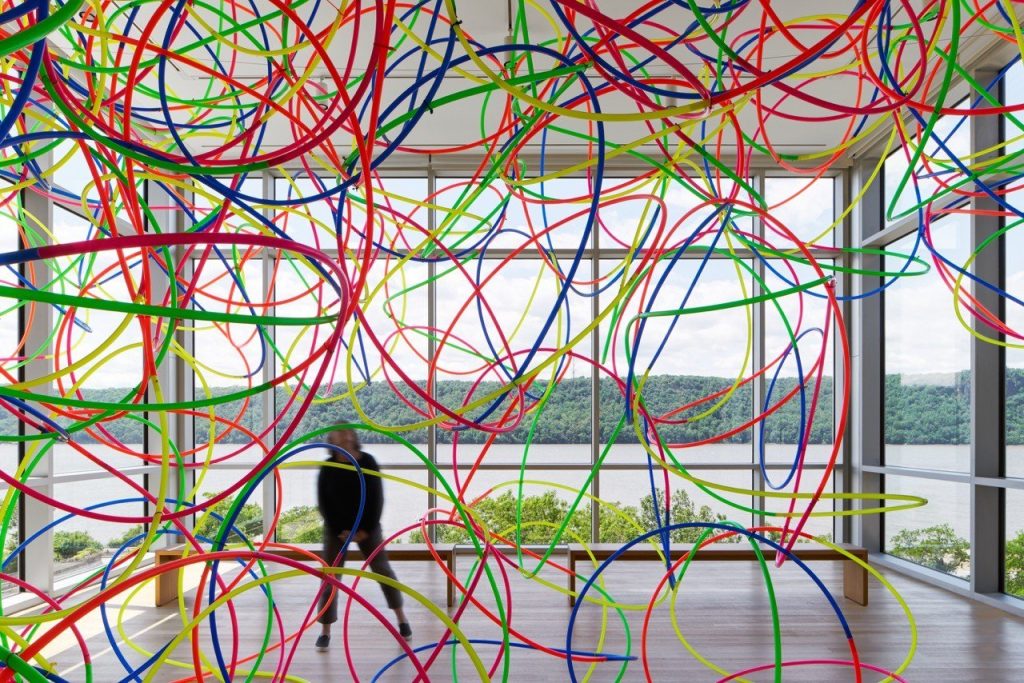
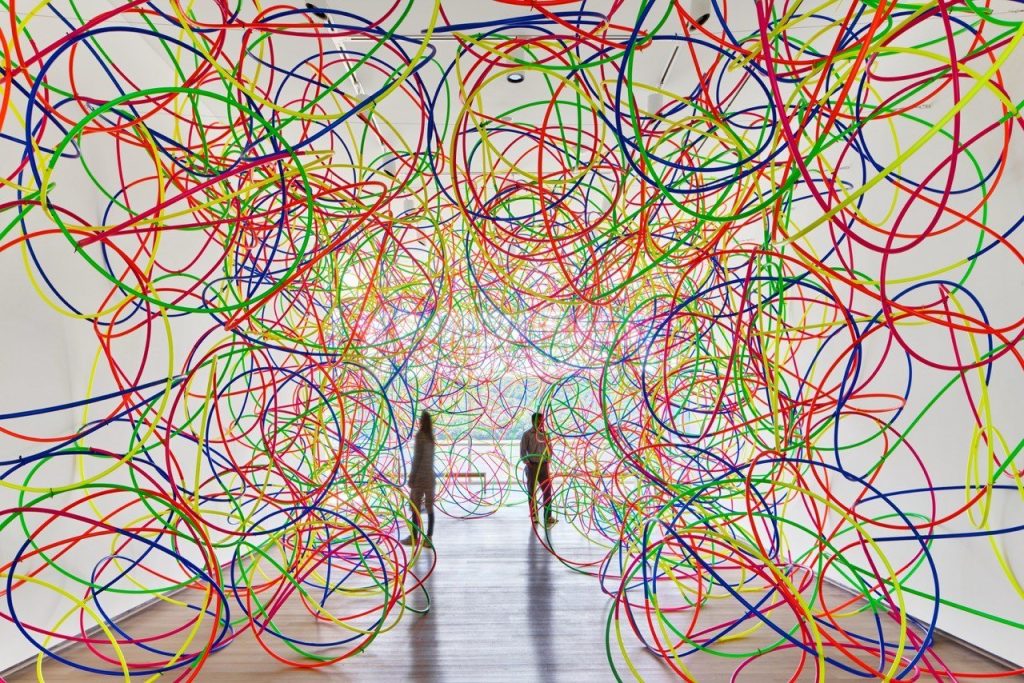
Your work has travelled across museums, public spaces and international exhibitions. When you bring a recurring material or visual language to a new country, what do you hope remains consistent, and what needs to respond to local conditions?
My works rarely change their meaning or context depending on where they are shown. Materials can be anything, anywhere, and I use whatever I like. However, my premise is a selection of patterns, lines or circles, that are very basic and minimal, even primitive. Rather than researching a place deeply, I discover something new in it.
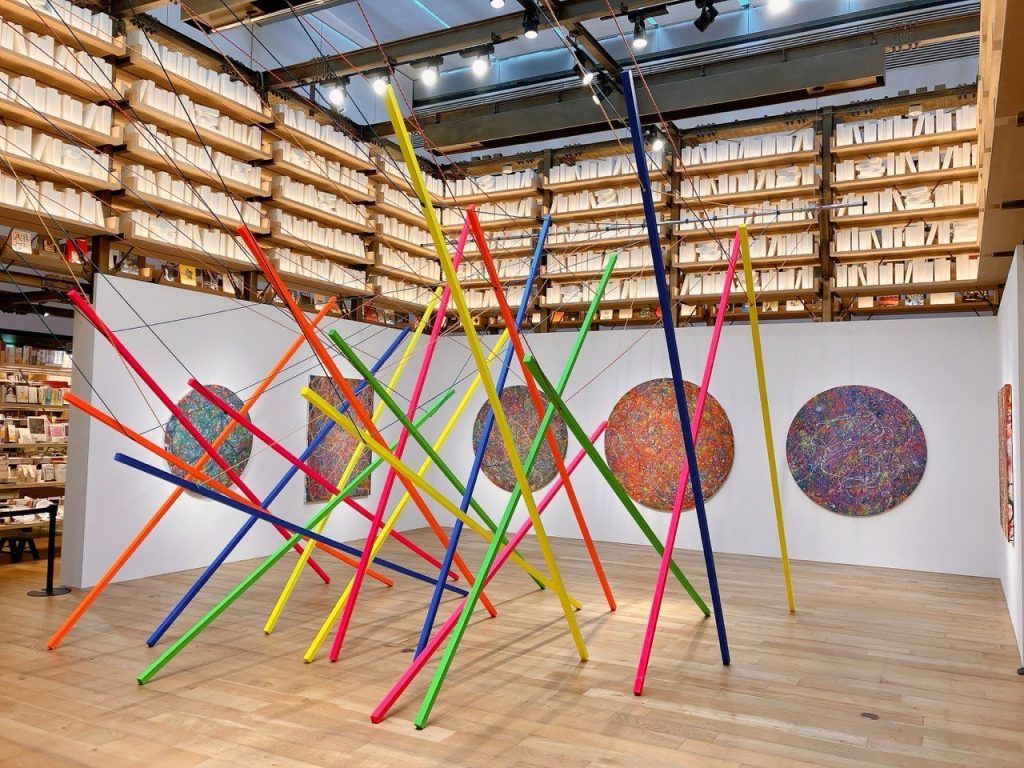
What has surprised you most about the ways audiences in different places experience your work? Have any encounters with viewers changed how you think about a work or its meaning?
On 11 March 2011, when the Great East Japan Earthquake struck eastern Japan, I was installing a work made with handkerchiefs to express a surface in the air. The exhibition opened after the earthquake, and visitors saw the work as a representation of the tsunami. Wherever I show my work, that experience has stayed in my mind.
Spinning Ghost Colors: Kengo Kito in Vietnam
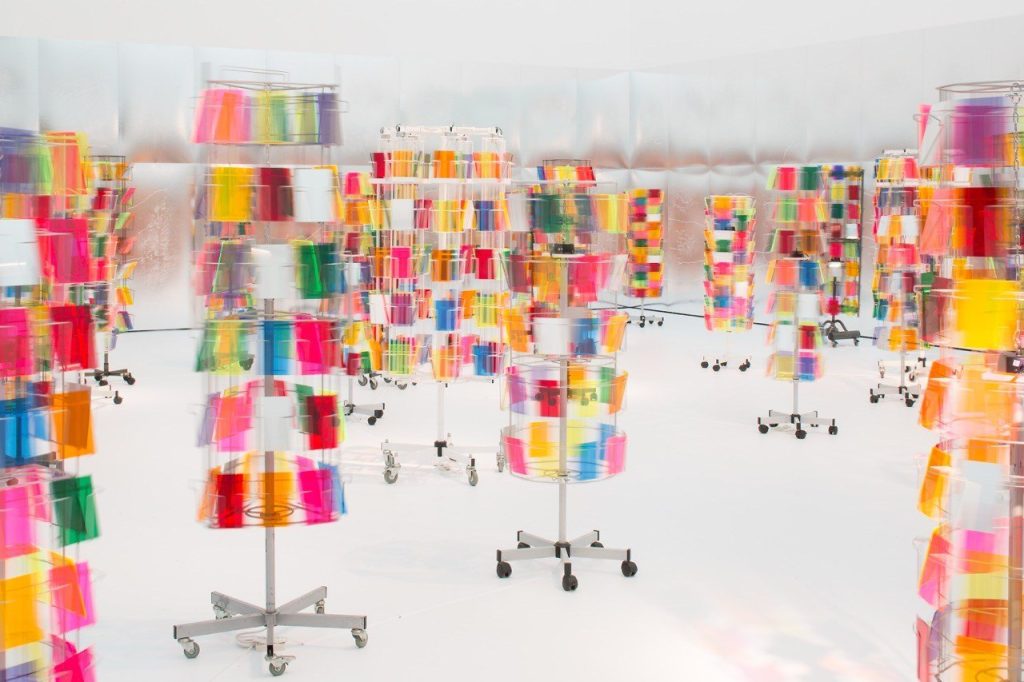
For Spinning Ghost Colors, your research in Hanoi led you to a self-rotating lantern, which became the starting point for a new installation with coloured filters and mirrors. What first caught your attention about the lantern, and how did your time in Hanoi shape the finished work?
I found the lanterns in a market in Hanoi. I was inspired, and caught by the way they spun and shone like a spinning disc. Their structure is very rare in Japan, but I really like them. The encounter felt as if I had met a UFO.
Hanoi itself is a very powerful place. Buildings have grown by attaching new parts to old ones, and the traffic is chaotic. I usually find my way with Google Maps or other tools, but Hanoi reminded me how important it is to walk around by intuition.
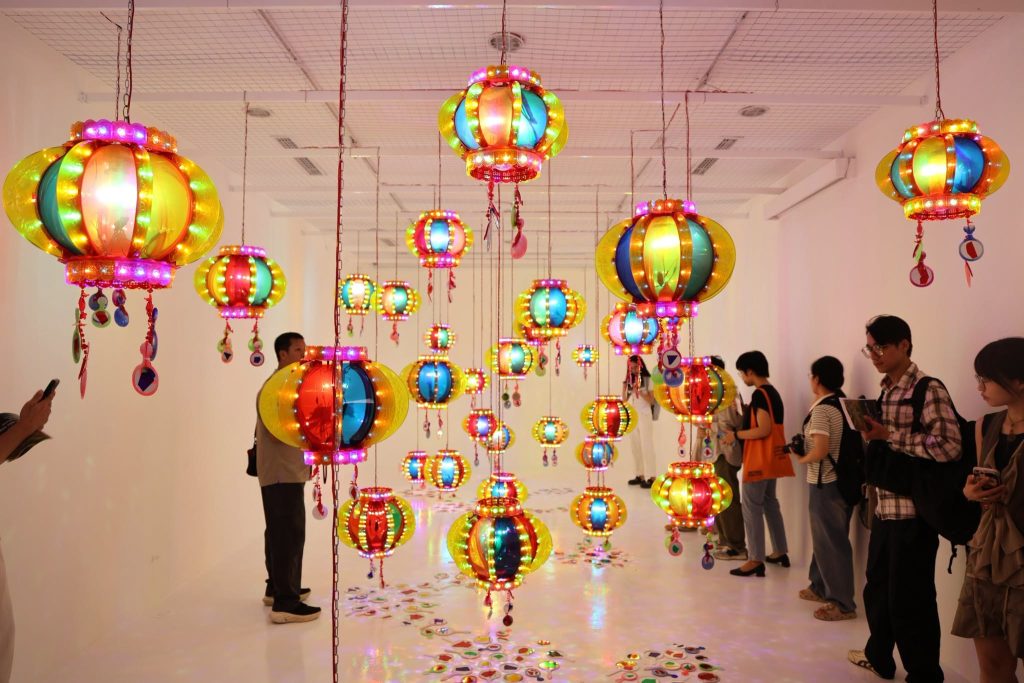
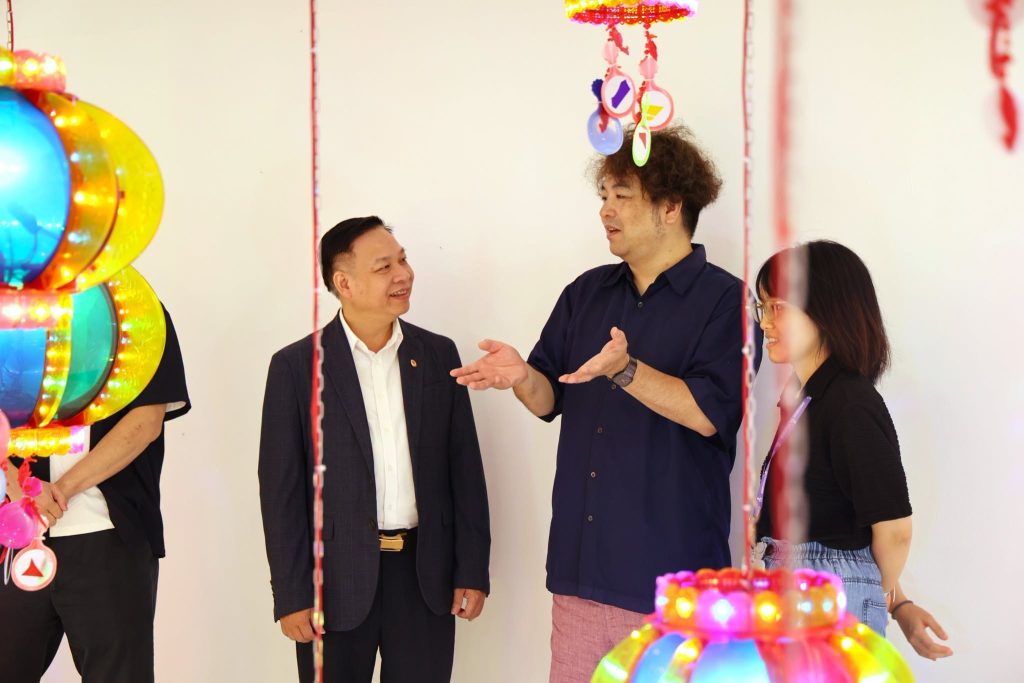
Photo: The Japan Foundation Center for Cultural Exchange in Vietnam.
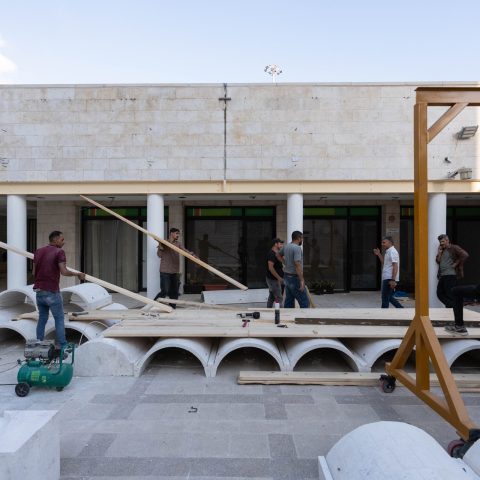
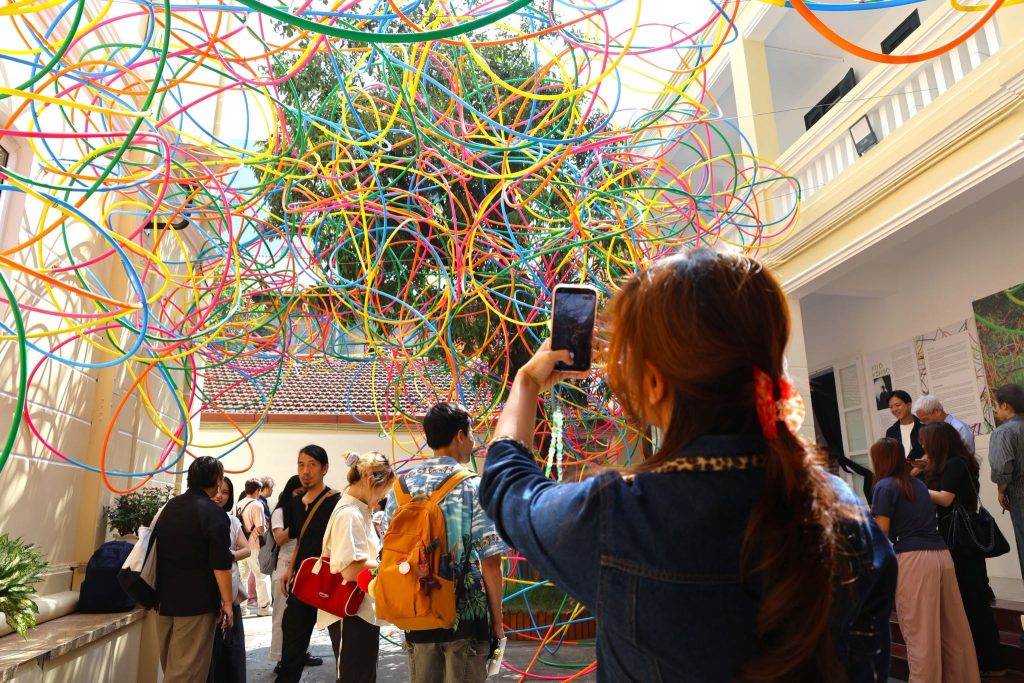
The exhibition also extends your hula-hoop installation from the gallery into the garden. How did the venue influence the relationship between the two works, and what would you like visitors in Vietnam to carry with them after seeing the exhibition?
I always think the approach is essential, and the way to the museum is part of the experience. In this exhibition, the work in the garden is a kind of running start for the main exhibition. The difference between inside and outside is what makes the exhibition interesting. In this case, I also made the most of the structure of the building. After visiting, I simply want visitors to feel satisfied and to experience an extraordinary sensation. You could say I want them to clear the cobwebs from their thoughts.
Interview: Linh Tran
Date: October 2026
Artist: Kengo Kito
Photography: © Kito Kengo, courtesy of The Japan Foundation Center for Cultural Exchange in Vietnam (portrait and outdoor hula-hoop installation); Khánh Long / Vietnam Pictorial and The Japan Foundation Center for Cultural Exchange in Vietnam (Spinning Ghost Colors, Hanoi); Wooson Gallery; other images courtesy of the artist.