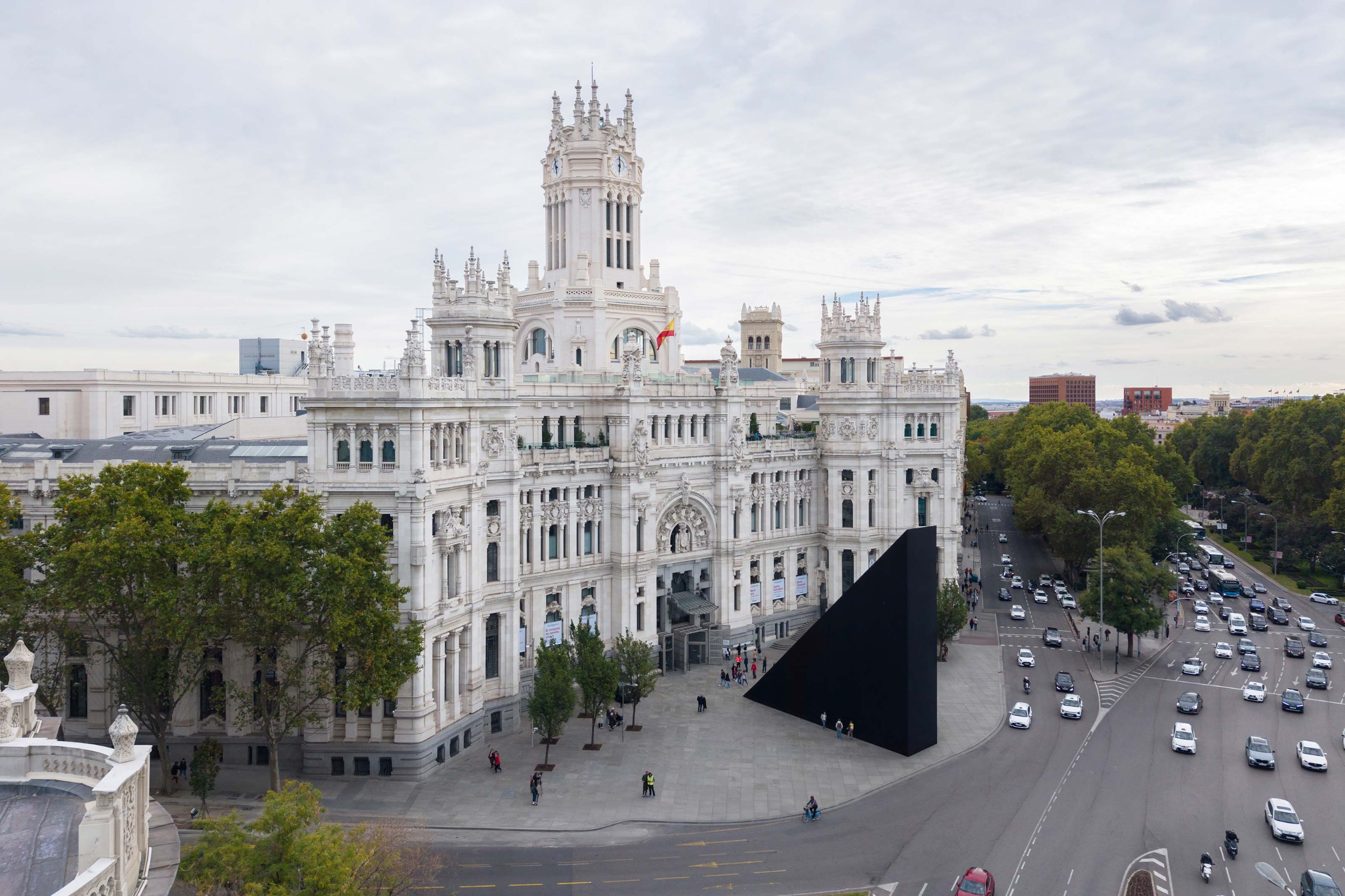
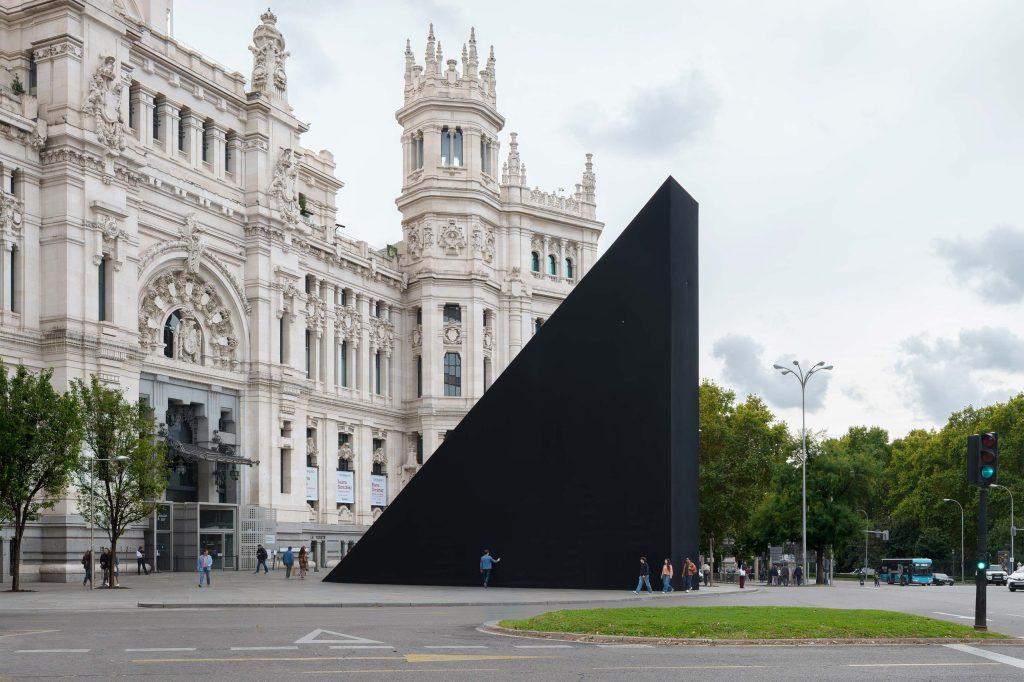
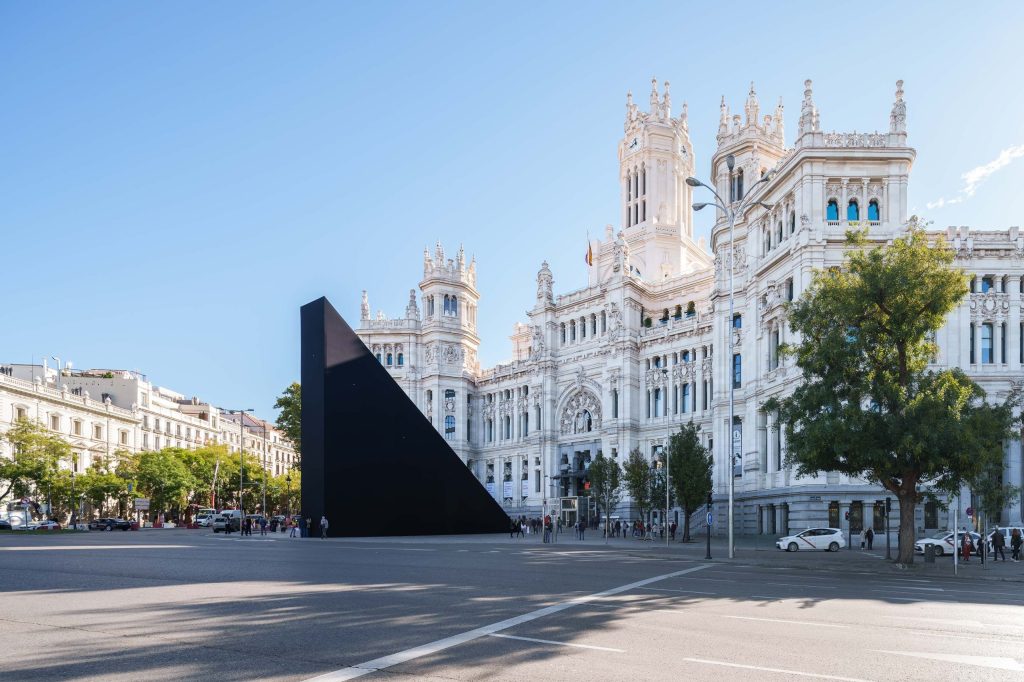
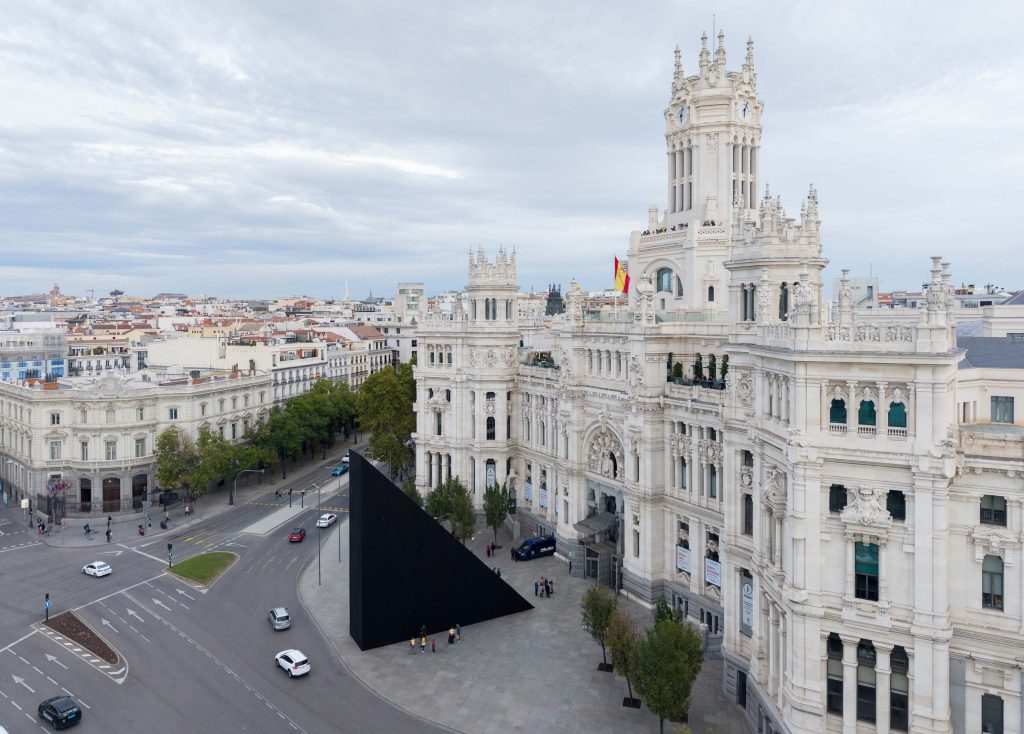
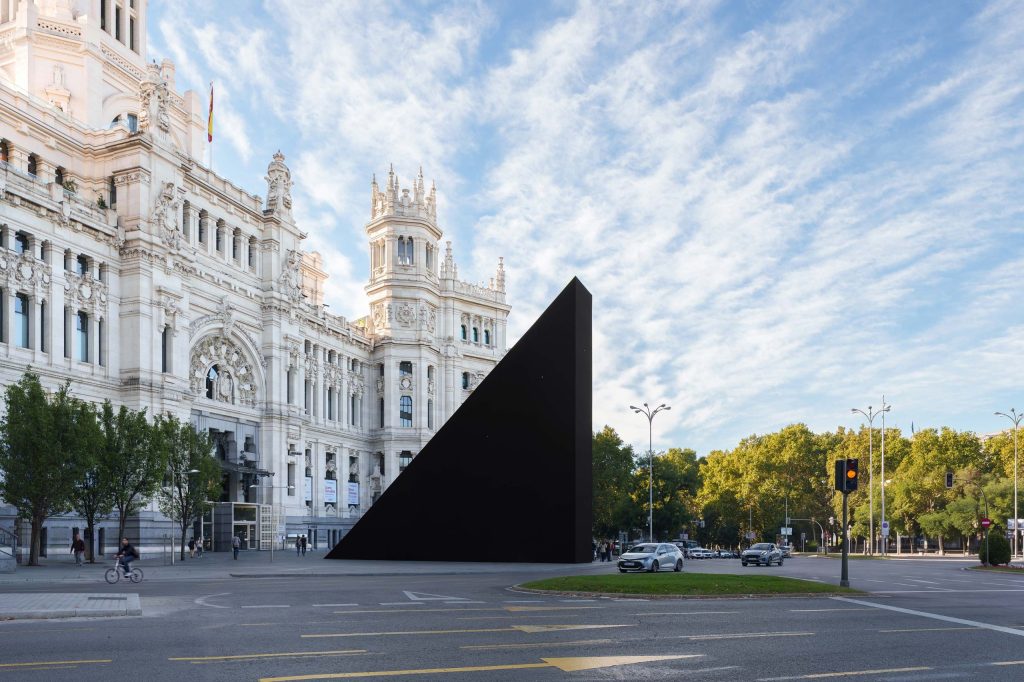
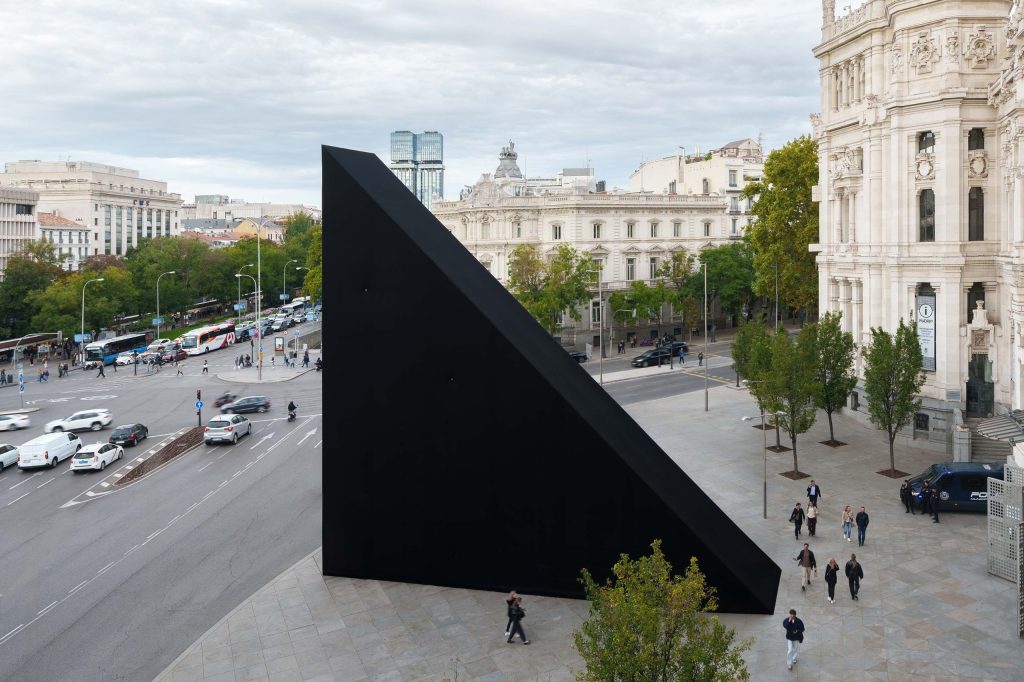
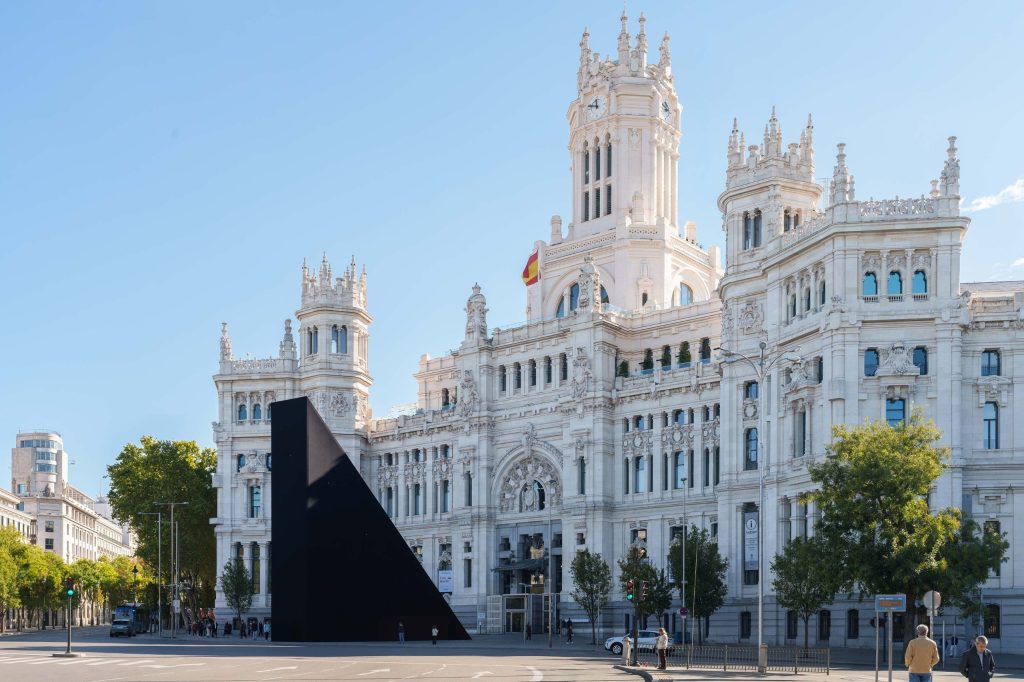
For five days in October, a black triangle twenty metres on each side stood in Plaza de Cibeles, in front of the Palacio de Cibeles in Madrid. PANOPTICON (PANÓPTICO) is a work by the anonymous artist SpY. It was open to the public free of charge from 20 to 24 October 2026, between 10:00 and 20:00.
The installation was part of Madrid es Paisaje 2026, a city programme whose theme this year looked at art in the shaping of the urban landscape. According to SpY, PANOPTICON reflects on the way we observe contemporary space.
An interruption in the square
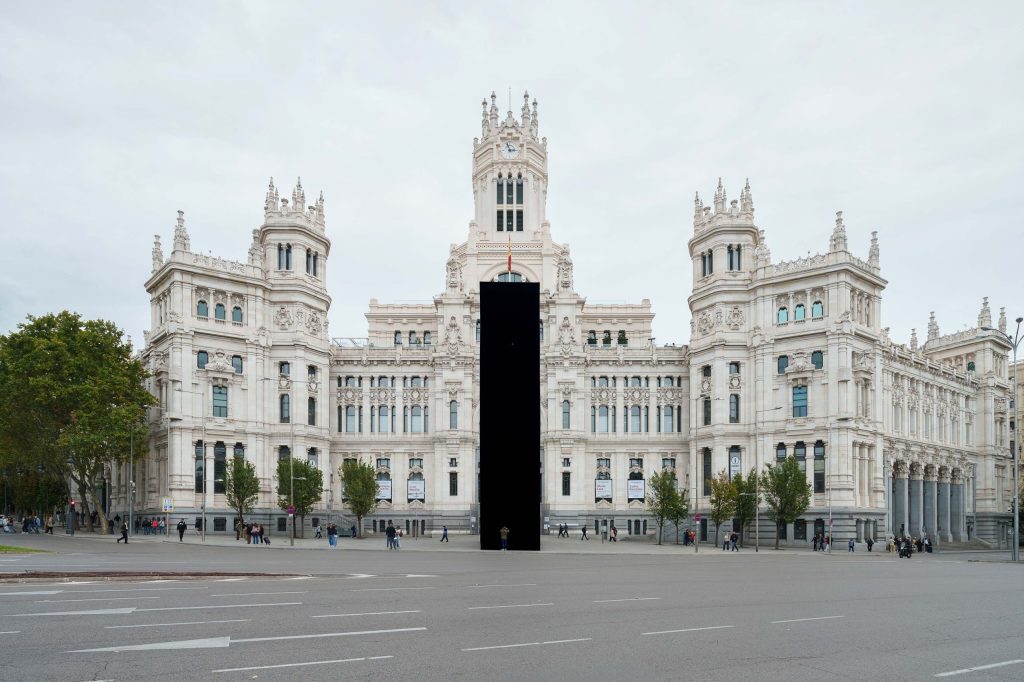
The triangle’s elementary geometry sets it apart from the distinctive architecture around it. It cuts across the square’s familiar sightlines and, for a while, changes a view that is deeply rooted in the city’s collective imagination.
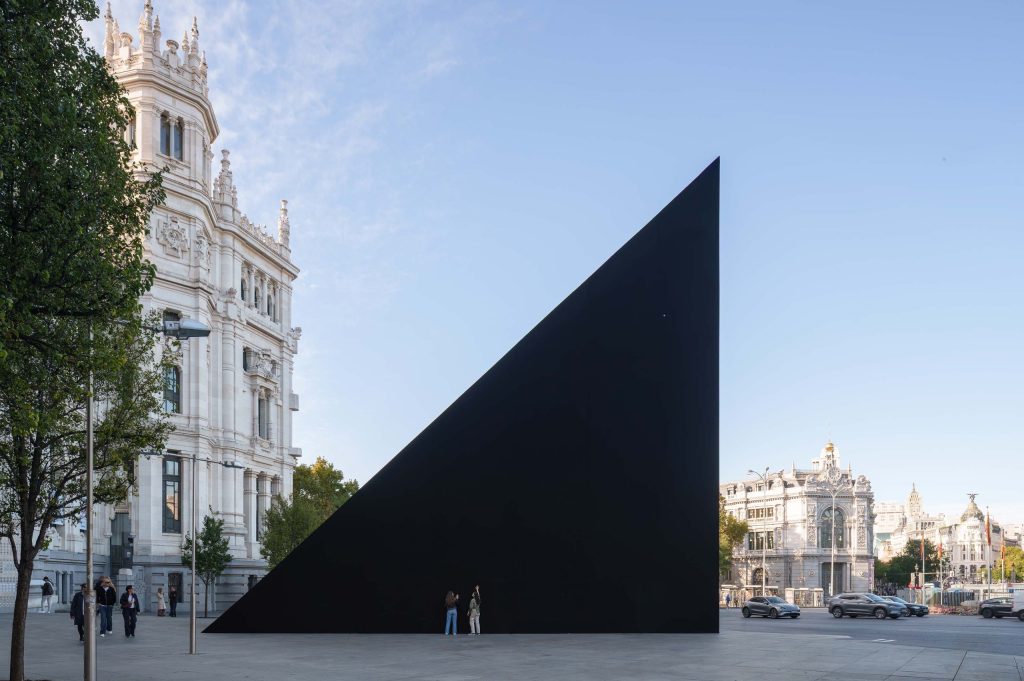
Its scale also relates directly to the human body. As a result, the structure unsettles familiar references of proportion. It affects how people move around it, how they find their bearings and how they look.
Looking through the triangle
As visitors approach and walk along its perimeter, small openings appear in the black surface. Each one is a viewing aperture fitted with a screen. The screens connect to CCTV surveillance cameras mounted at the top of the structure.
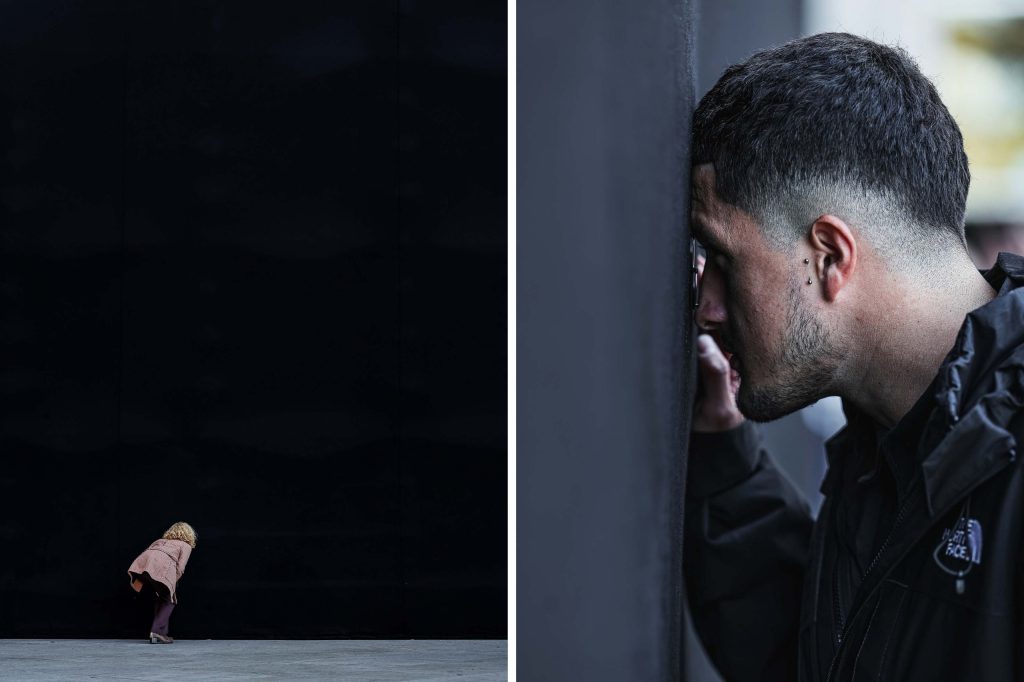
Where the triangle had first blocked the view of the square, the screens now return it in fragments. Architecture, pedestrians and traffic reappear from unexpected angles.
Watching and being watched
The device draws on the concept of the panopticon. In that model, the possibility of being watched leads people to internalise surveillance and regulate their own behaviour, even when no observer is visible.
SpY extends the idea to a society in which cameras, screens and digital devices increasingly mediate our relationship with the world. We observe, record and share our surroundings all the time. In doing so, we also take part in systems that expose us to the gaze of others.
PANOPTICON therefore places the viewer at the centre of a paradox. By using the apertures to discover the square, visitors join a surveillance system that may also be watching them. The work, according to the artist, asks how far we have come to accept these mechanisms in everyday life.
Artist: SpY
Photography: Rubén P. Bescós / @rubenpb, Mark(os)
Location: Plaza de Cibeles, Madrid, Spain