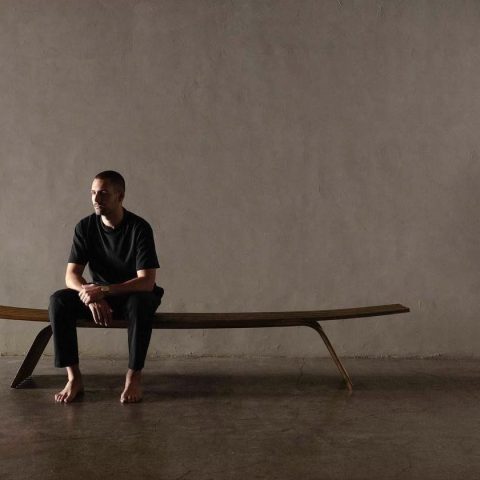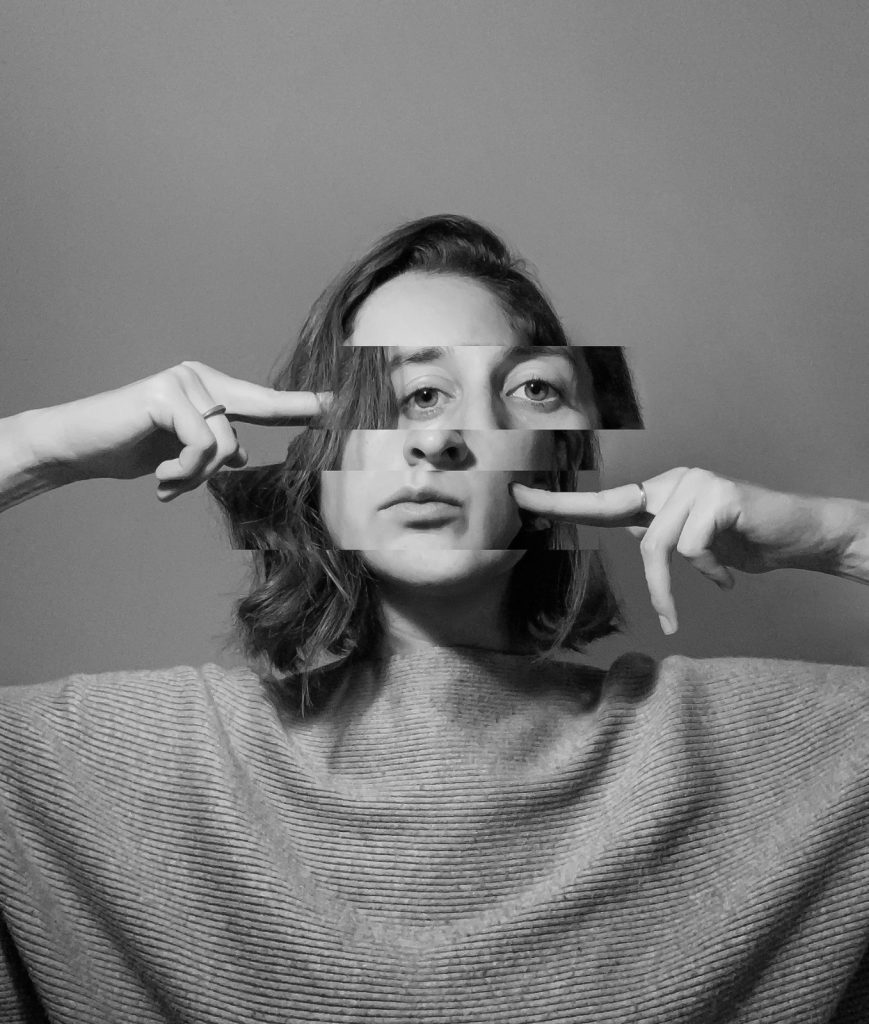
Paulina Ojeda is a Mexican architectural photographer, has long shared a connection and a love of photography. Recently she seemed to have “paused” photography and moved to Europe. We reached out to Paulina to talk and hear her thoughts on the work she has done and the quiet photographic practice she is pursuing in her new surroundings. The conversation took place one morning in Switzerland.

Hello Paulina. You are from Mexico, a tropical country. What brought you all the way to Switzerland?
I think you could say it was a combination of things. I came to Switzerland for some personal reasons. For the past five years I devoted all my time to architectural photography. I truly love this work and feel lucky to have met talented people and recorded a great variety of projects and places. But I also felt caught in a loop of constant work, while my personal projects were left aside. I made an effort to give time, space and thought to finishing projects I had left open, and to exploring how I have grown through my photographic practice.
By chance I came across a very good master’s programme in Basel, and that is what pushed me to decide to leave Mexico. I am now studying for the master’s degree, while continuing to work on projects in Mexico and trying to establish myself in a new country.

I would love to know what drew you to architecture. Could you tell us a little about that?
I was born and raised in a family deeply shaped by architecture. My father, my brother and especially my aunt, a very intelligent and gentle woman, are all architects. She always wanted to pass on to me what she knew. As a child I often went with her to visit buildings around the city, an experience that always fascinated me.
Whenever we stopped in front of a church or a building, she would explain it to me, reminding me: “Look at the subtle details of the space; they are there because of particular factors and points of view. Everything exists for a reason and is connected to its context.” To me back then, it was a way of telling stories that only my aunt had.
What’s more, everything I took in was closely tied to architecture. I felt that being born into a family with an architectural tradition, my curiosity went beyond explaining the complex details of a building I saw, to the effect of buildings and spaces on people. I was captivated by the stories of architecture’s creativity and its relationship with other fields.
Why did you decide to become an architectural photographer? Was there a particular reason?
At the moment I am pausing to think more carefully about the journey of becoming an architectural photographer. For more than ten years I really concentrated on photography. I started simply, with just a camera in my hands. Through some quite interesting projects in Mexico that I worked on with friends, I gradually discovered my passion for architectural photography.
They all had quite fresh ideas; the architecture they made was not heavily traditional and was full of experimentation, and that caught my attention. I found plenty of inspiration in seeing the rich, untapped potential of the city where I lived.
On trips around Mexico, I tended to share pictures on social media, some taken with a camera, some with my phone, like a visual diary. Being on social media brought me many connections and pushed me to get more and more involved in this work. I wanted to connect people with the changes taking place in a particular context. That is how people came to recognise me as an architectural photographer.
I feel lucky to have had the chance to work with many clients in Mexico, and I am glad that my work has offered a way of seeing through architecture.

Architectural photography is said to fall into two areas, commercial photography and documentary photography. Which are you pursuing now?
At the moment, because I am doing the master’s programme, I lean quite towards the commercial side of architectural photography. But I don’t limit myself to the role of a commercial photographer, because I don’t only want to present spaces and projects. I want to capture the essence and the story of each place I photograph.
Beyond that, I value photography’s inherent ability to tell stories and evoke emotion. The commercial side matters, but it is not the only thing I care about.
Every building has a story behind it, or its own particular character. How do you approach these through photography?
The projects I have had the chance to document are very varied. I usually approach a building by immersing myself in the space, taking time to explore and observe, whether it is a small area or a large one. I like to watch spaces change with the seasons, with materials and with many other factors. Even when I visit a building without a shoot, I find it good to see and understand how the space changes over time.
One thing I don’t like about how architecture is taught in schools is the emphasis on displaying and promoting buildings, while ignoring their core purpose, which is to serve the people who use them. Architecture is bound up with the individuals who live in and interact with buildings, so I always try to persuade clients to adopt a photographic approach focused on presenting space in a way that is accessible and close to its users.

Photography can convey many things, such as atmosphere, light, landscape and the interplay between nature and the man-made environment. I understand that not every architectural photographer shares the same view. Each photographer brings their own particular elements and inspiration, creating different colours and diversity. That is what is wonderful about architectural photography. The most satisfying thing is when a photographer is able to convey a particular message or create emotion through their pictures.

With technical developments, photography today is supported by new equipment that makes shooting easier. Would you choose natural light or artificial light? Why?
In general I find working with natural light easier and more interesting. It often brings unique contrasts and textures to the whole of an image. I also recognise that night photographs have their own character and appeal.
Some people like to use lights to brighten a scene and capture every detail, which suits commercial needs. Personally, I tend to work with natural light because it lets me render architectural space truthfully.
Every building contains a great deal: sections, elevations, plans, composition, structure. How do you approach a building through photography?
I experiment with quite a few lenses in my work, using different focal lengths to capture a variety of views and details. Sometimes I deliberately include blurred areas in a picture to arouse the viewer’s curiosity and create a richer story. This has become one of the ways I present my work.
In reality, the work of an architectural photographer is strongly shaped by the client’s requirements and preferences. Each project represents their own artistic point of view, and I appreciate that they understand these aspects of their work so well. So I listen to my clients while also being free to create, taking pictures that tell the story of the space. Then I select some images and present them to the client. The exchange shows my interaction with the client and with the building. Sometimes they choose the pictures themselves and tell the story of the space, and I am sometimes surprised by how meticulous and skilful they are in conveying their vision to others.
In a project, I find it special to be able to combine the views of both the client and outsiders like me. This gives depth and diversity to the story and offers a more complete view of the project. On the other hand, some clients trust me completely and let me present their architecture freely in my own way. This lets me express myself more truthfully, because I really feel the essence of the architecture. But I always value and consider the client’s feedback, which helps me adjust my photographic style to suit the project’s requirements and goals.

Focusing on one profession for too long can sometimes become tiring.
I think what matters is keeping a consistent attitude, which leaves me free to explore and tell the story of a building, even when it doesn’t match my personal taste or my initial expectations. Such buildings push me beyond my creative boundaries and challenge me to go past my limits. I long to bring art and imagination into my work, to step out of my comfort zone and embrace the whole process instead of rushing to a conclusion. Taking the time to understand what a building is trying to say is very important. Every small detail, the play of light and atmosphere, and people’s exchanges in a space contribute to the essence of the pictures. I take inspiration from everything around me and am always open to any project.


How do you keep your creative inspiration in photography and stay committed to architectural photography?
Right now I see the master’s programme as a time to breathe. This period lets me find new sources of inspiration and listen to myself. I have deliberately paused my personal photography projects to reflect on past experiences and find joy in the things around me.
Have you met difficulties or advantages working as a photographer in another country?
After moving from Mexico to Europe, I started working with new partners from Germany and Switzerland. Back in Mexico, I was recognised and trusted. In the new environment, few people know me or understand my work, which made me quite anxious and really challenged my ego.
In Mexico, everything was safe, and perhaps that is exactly what kept me from breaking away. I didn’t want to confine myself to my own limits. Seeing colleagues progress in their careers, I asked myself whether I was going in the right direction. A friend from Taiwan in my master’s class shared an interesting view. She said that in the West emptiness is often seen as a lack, while in the East emptiness is seen as potential. I find this way of thinking gives me motivation and the confidence to welcome new possibilities.
Also, living here I see discrimination quite clearly, especially in architectural photography. Women are still few in this field, and I think it is necessary to stress the need for diversity and equal opportunity for everyone, regardless of nationality or gender.

As a female photographer, what difficulties or advantages have you had?
What I value most about working as a photographer is, first of all, the endless potential for exploration. Through work I get to connect with many different people, take part in interesting projects and discover fascinating places. I am quite free (without family responsibilities), so I can arrange my time flexibly according to my wishes and needs.
In a market dominated by men, I face quite a few challenges, especially in communicating with clients. Although clients are aware of my role and expertise, I sometimes feel they don’t fully trust my abilities. There is also a gap in fees based on gender; clients sometimes compare what they pay me with what they pay male photographers. But overall I haven’t faced any very significant difficulties as a female photographer. As women, we have a responsibility to prove our skill and ability in this field.
I share that view. Are there photographers or artists who inspire your work? Have they influenced the way you photograph architecture?
Yes, one person who has had a strong effect on me is the renowned Mexican photographer Graciela Iturbide. She is truly a legend of photography in Mexico. Her distinctive style of documentary photography sets her apart, especially her documentation of the lives of Indigenous communities. Rather than simply placing them in a staged setting, she becomes a member of the community and tries to be part of their world, which is what allows her to capture its essence and tell its story truthfully and sincerely. I greatly admire her ability to make connections and build trust with people, creating strong, profound images that move the viewer. For me, Graciela Iturbide’s work is a source of inspiration, a reminder of the importance of empathy, understanding and genuine connection in photography.

As a Vietnamese, I am curious whether you have ever visited Vietnam, or Asia?
I haven’t yet had the chance to visit Vietnam. But my friends have shared many interesting experiences from exploring your country. Those stories make me want to visit, perhaps for six months or just for a short break. Because at that time I had decided to devote all my time and effort to becoming a professional architectural photographer, my time for travel was limited. Even so, I really look forward to the chance to come to Vietnam in the near future. I hope to experience the vibrant culture and daily life of a new place.

Do you have any advice for emerging architectural photographers, especially women or those who have not yet found their place in the field?
As I said, this field offers many opportunities. When you feel drawn to architecture, or to architectural photography in particular, it is important not to ignore or dismiss that passion. Embrace it and pursue it persistently, push yourself to learn more about the field and find out what really attracts you.
Once you find satisfaction in your work and put effort into your passion, you will not only reach personal happiness but also have the chance to prove yourself to others. Especially for women, we need to trust our abilities and not care too much about how others define the work we do. Instead, focus on sharing your creative point of view with the public and expressing what you want through your work.
Remember: persistently pushing yourself, confidently presenting your own point of view and not abandoning your passion are the keys to bringing you into the world. That way you will find both professionalism and satisfaction with yourself in architectural photography.
Thank you very much for this conversation!
Photography: Paulina Ojeda
Interview: Phạm Hà Thu