Natural Material Studio's seaweed and algae bio-textile installation at Sticks’n’Sushi in Lyngby.

Natural Material Studio turns seaweed waste into light and textiles for Sticks’n’Sushi

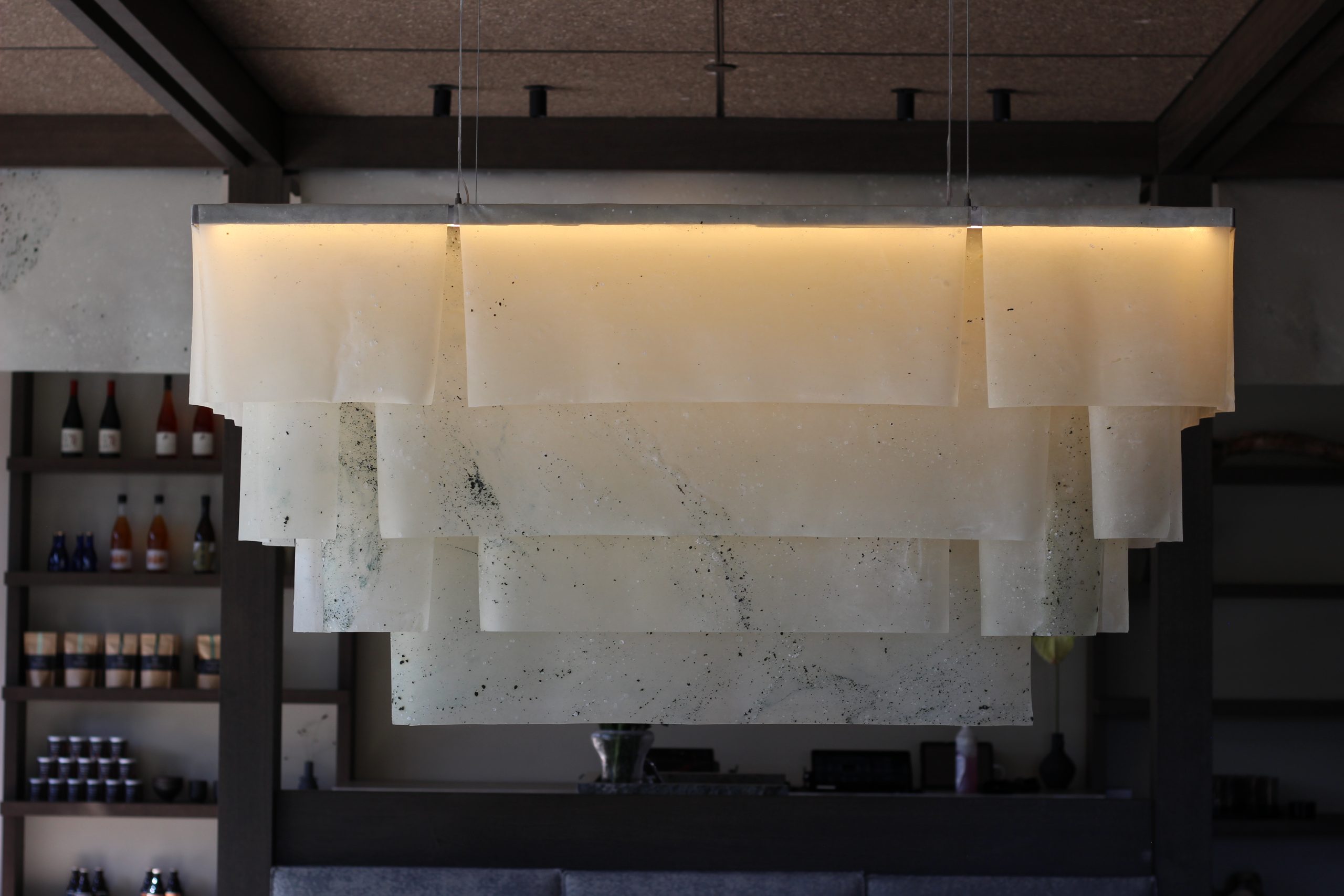
At Sticks’n’Sushi in Lyngby, Denmark, Natural Material Studio has brought an unexpected restaurant by-product into the interior: seaweed and algae recovered from the kitchen’s waste stream. The studio used these ingredients to develop a bespoke bio-textile for a suspended light and a series of noren-like panels.
Semi-translucent seaweed and algae bio-textile panels inside Sticks’n’Sushi in Lyngby
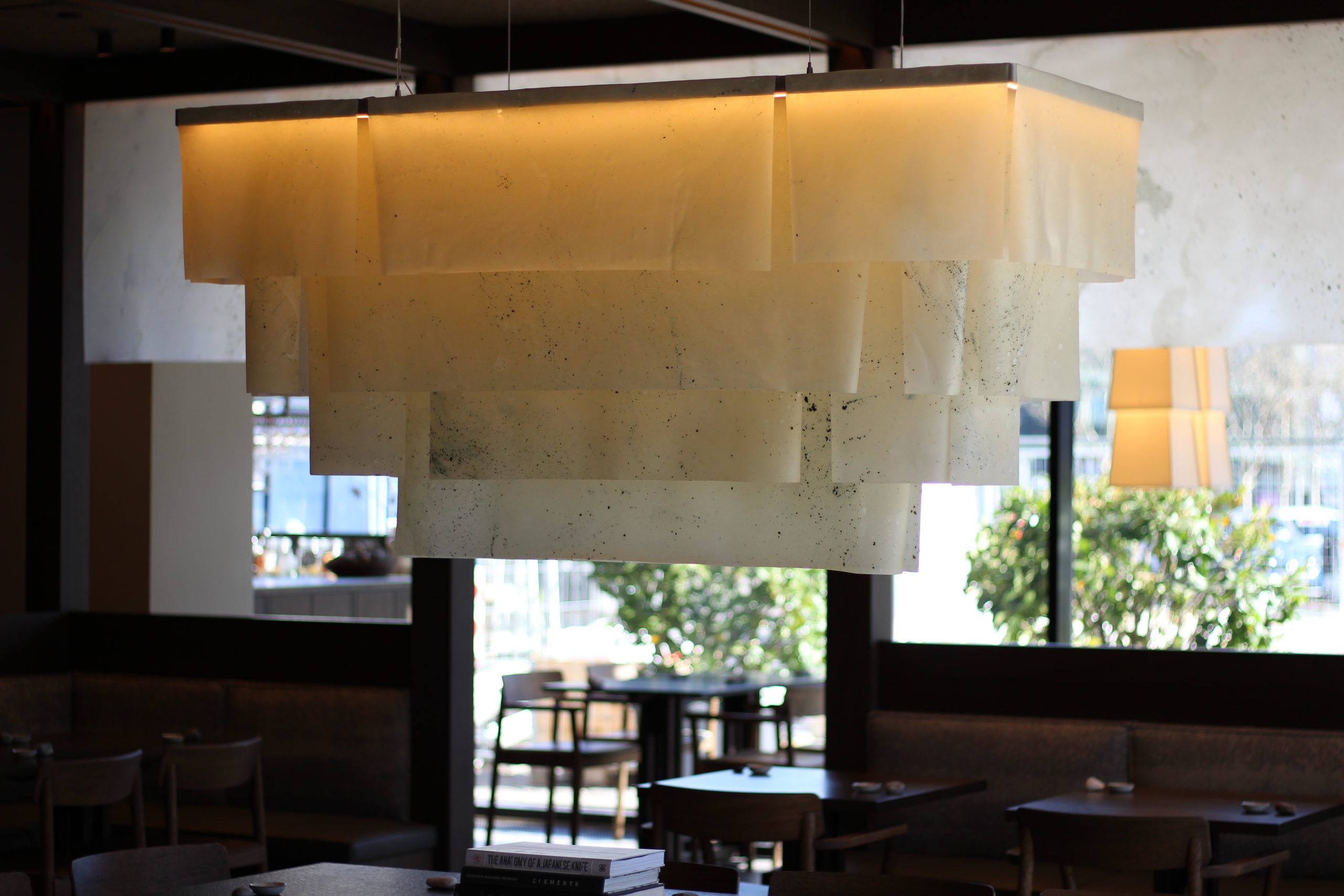
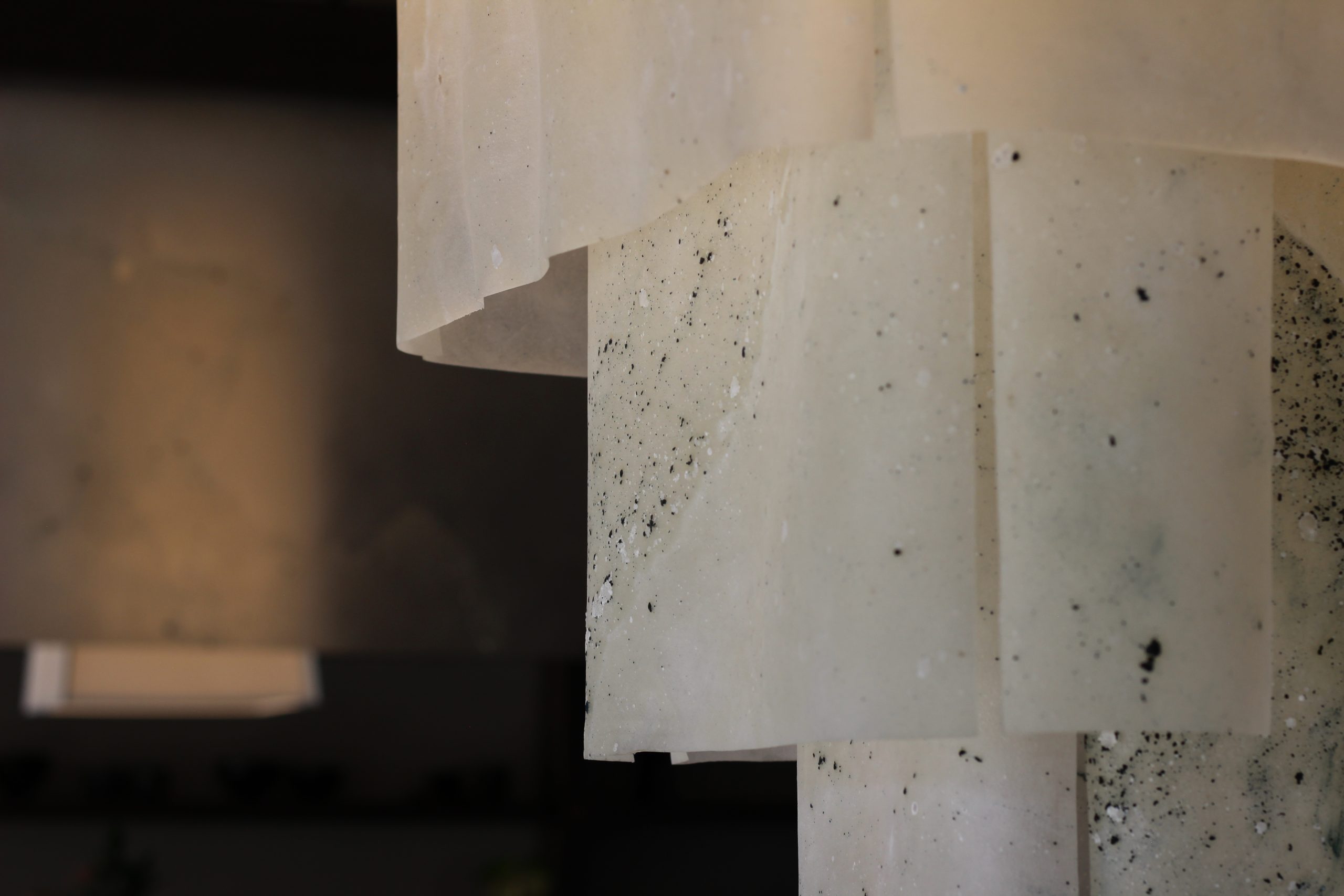
A layered bio-textile pendant hangs above the restaurant’s bar, its translucent panels glowing from within.
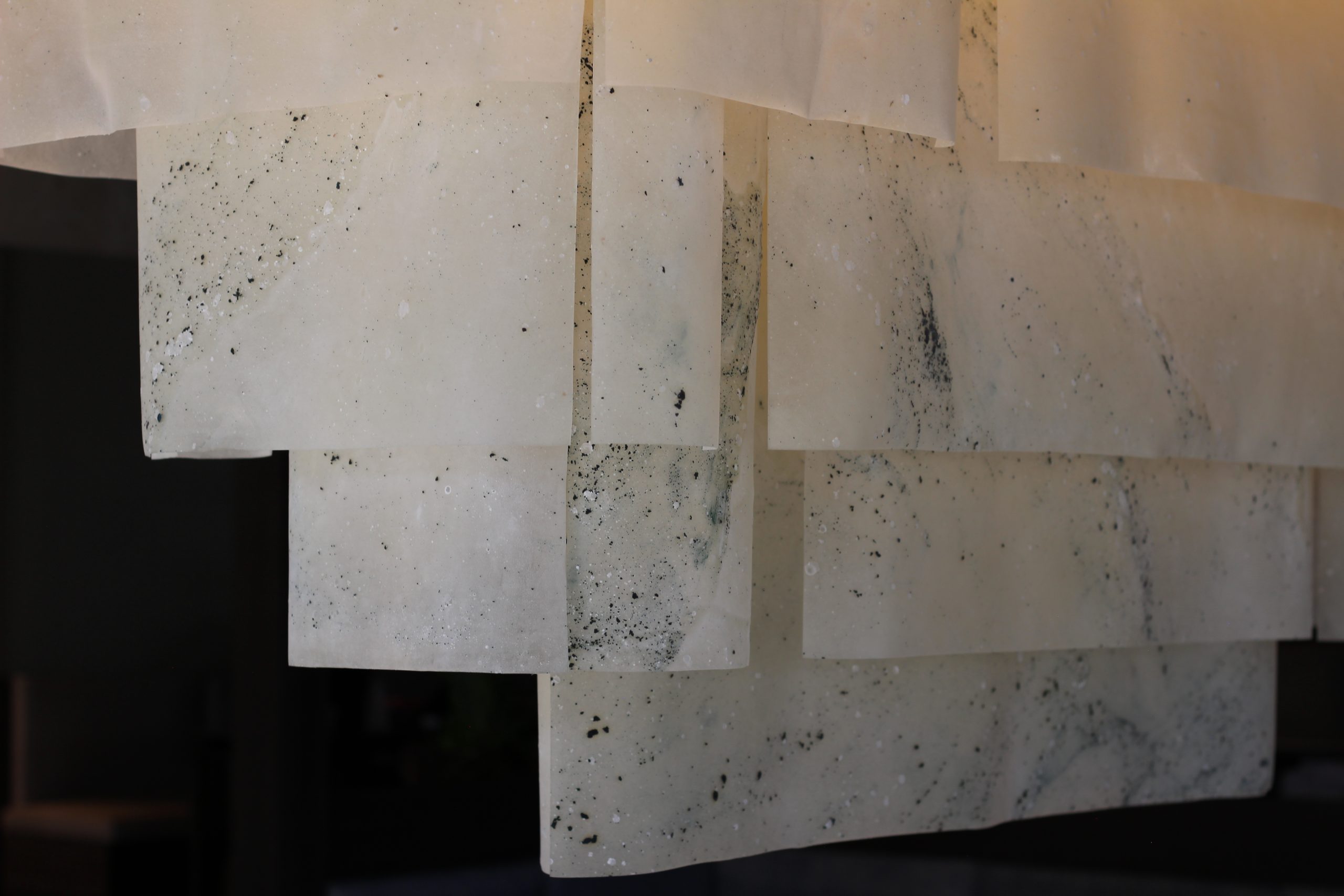
Close view of bespoke bio-textile surfaces by Natural Material Studio
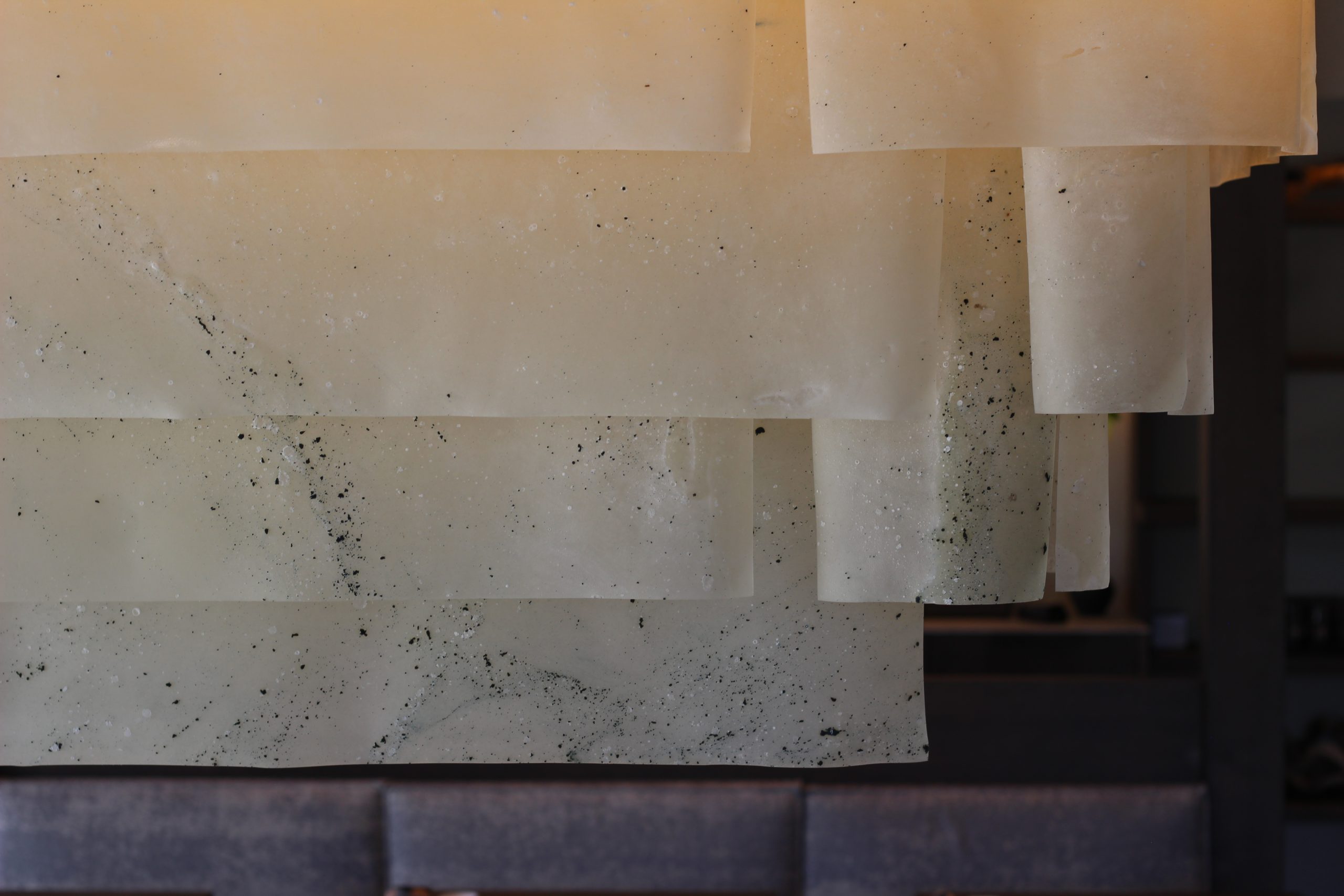
Close view of the suspended textile reveals overlapping layers and the material’s scattered natural inclusions.
Hand-cast bio-textile noren panels designed for the Sticks’n’Sushi restaurant
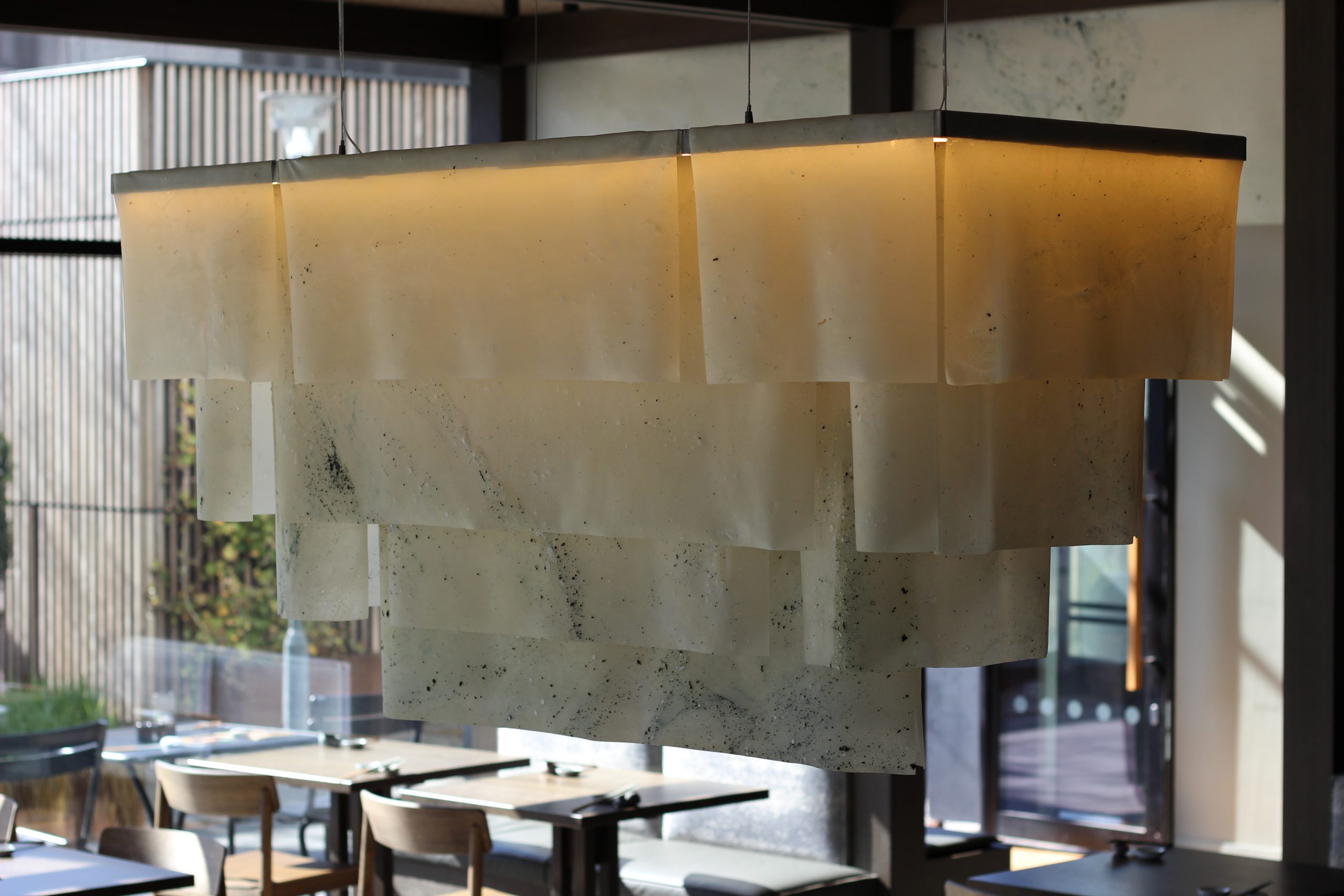
The pendant’s staggered lower edges show how the cast sheets form a soft, irregular silhouette.

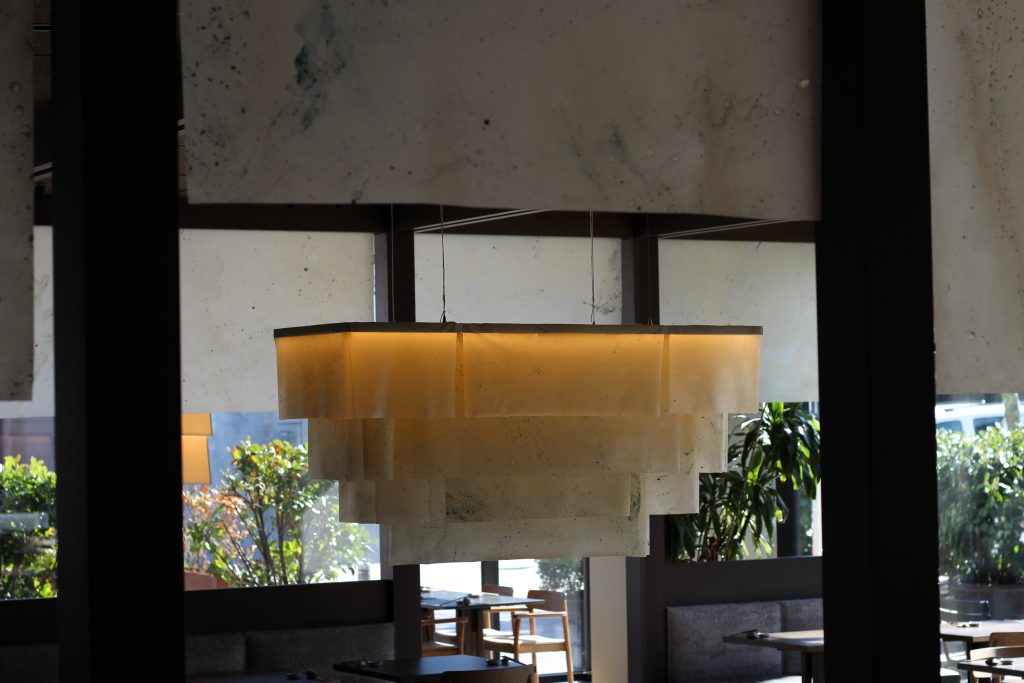
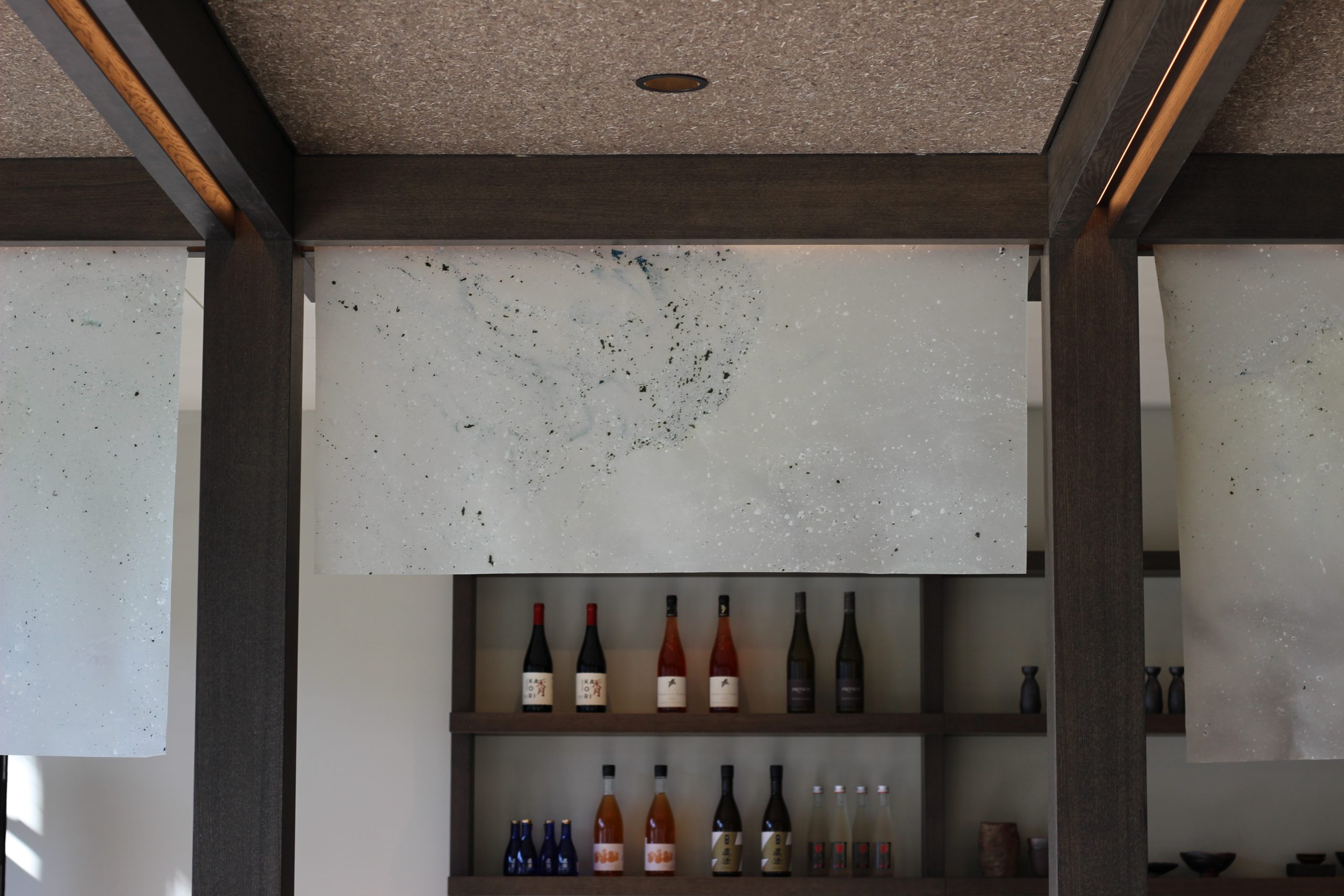
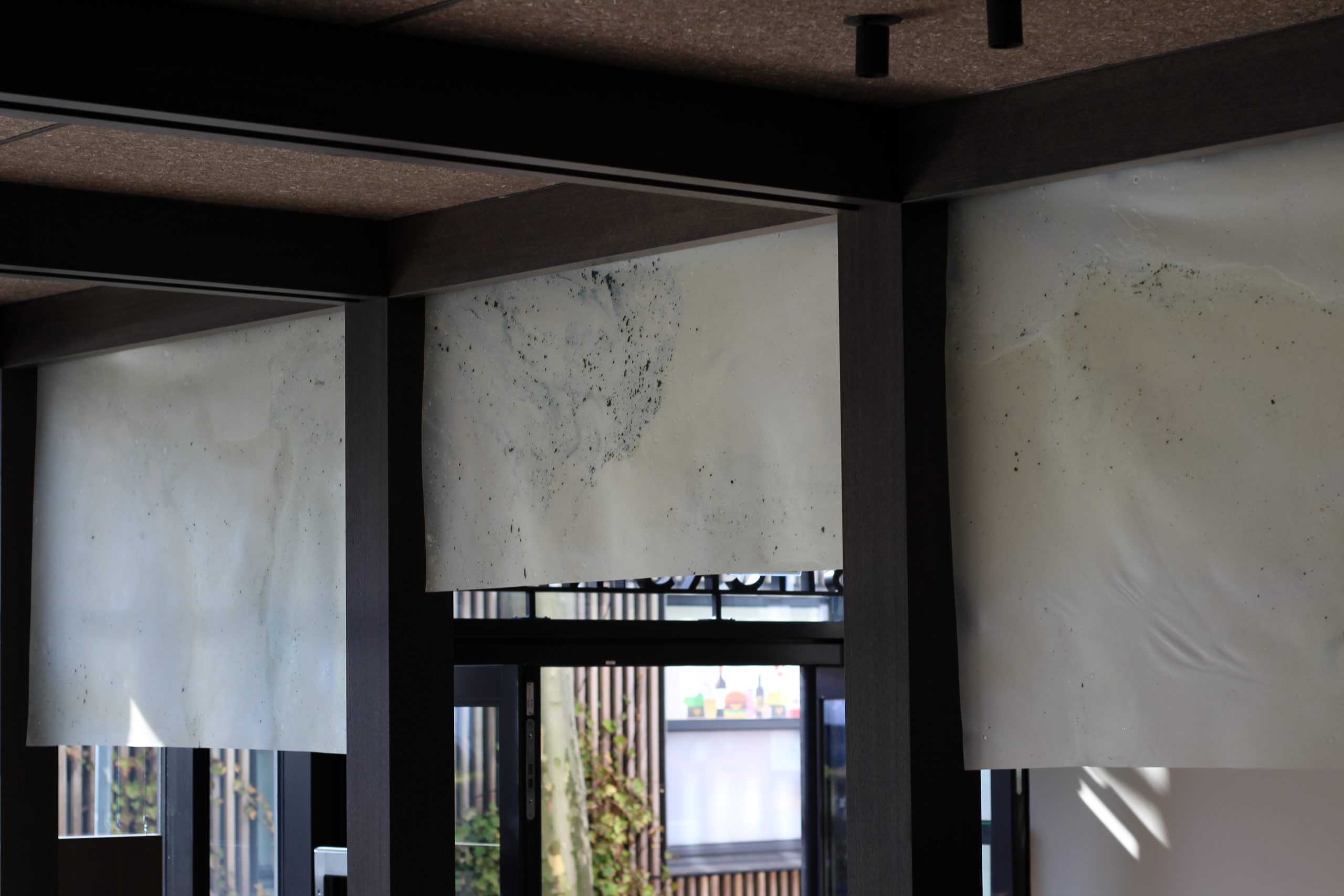
The panels run along two parallel structural features, giving the dining room a softer sense of division and intimacy. Between them, a layered lightwork appears to float around a discreet stainless-steel support. Its semi-translucent surfaces diffuse the integrated LED, while areas of varying density reveal the material’s flowing, hand-cast character.
Layered bio-textile forms diffuse light in the restaurant interior
A run of translucent noren panels screens the service counter while keeping the shelving visible behind it.
Bespoke material and lighting installation at Sticks’n’Sushi, Lyngby
The hanging panels divide the dining area from the windows without closing off the room.

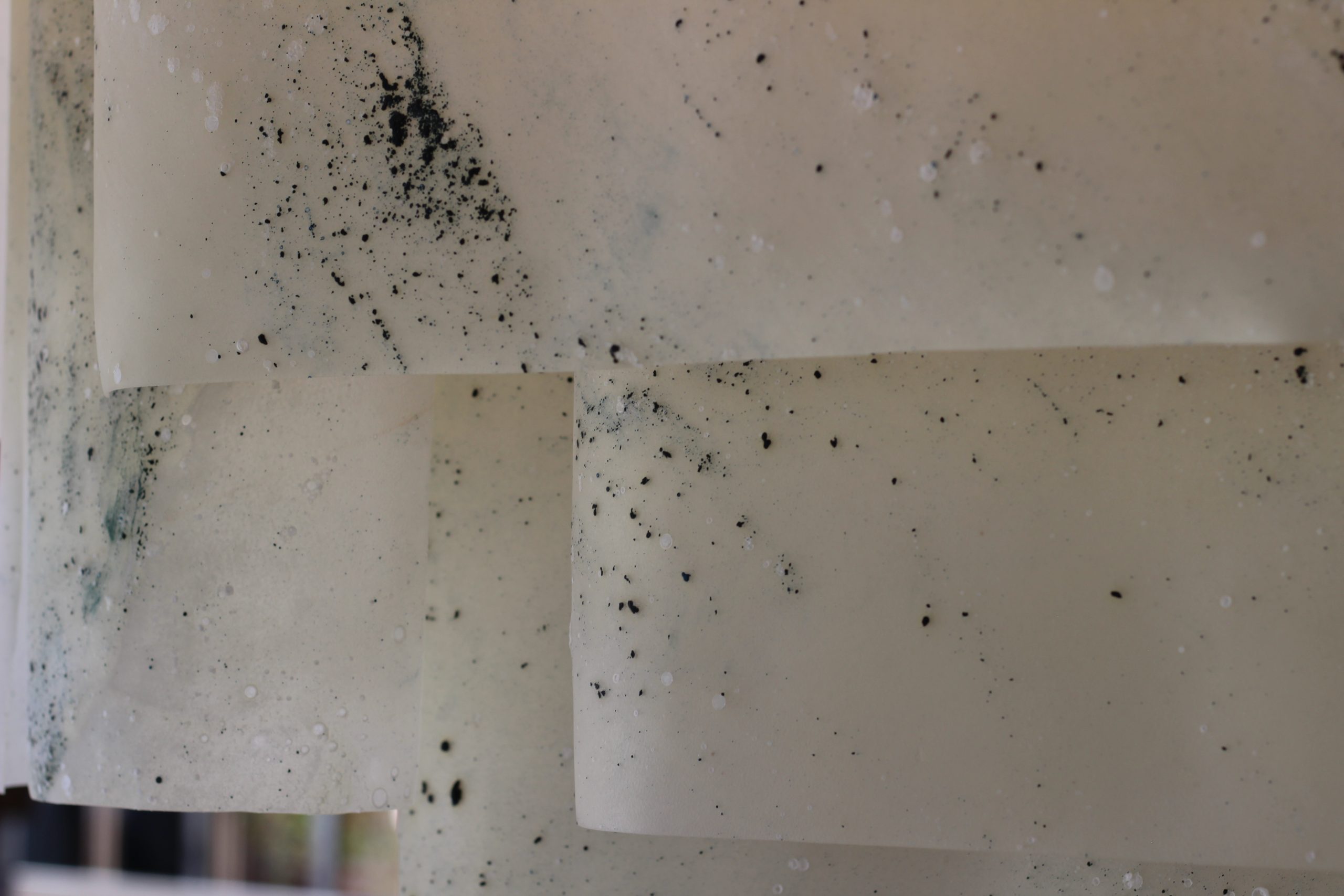
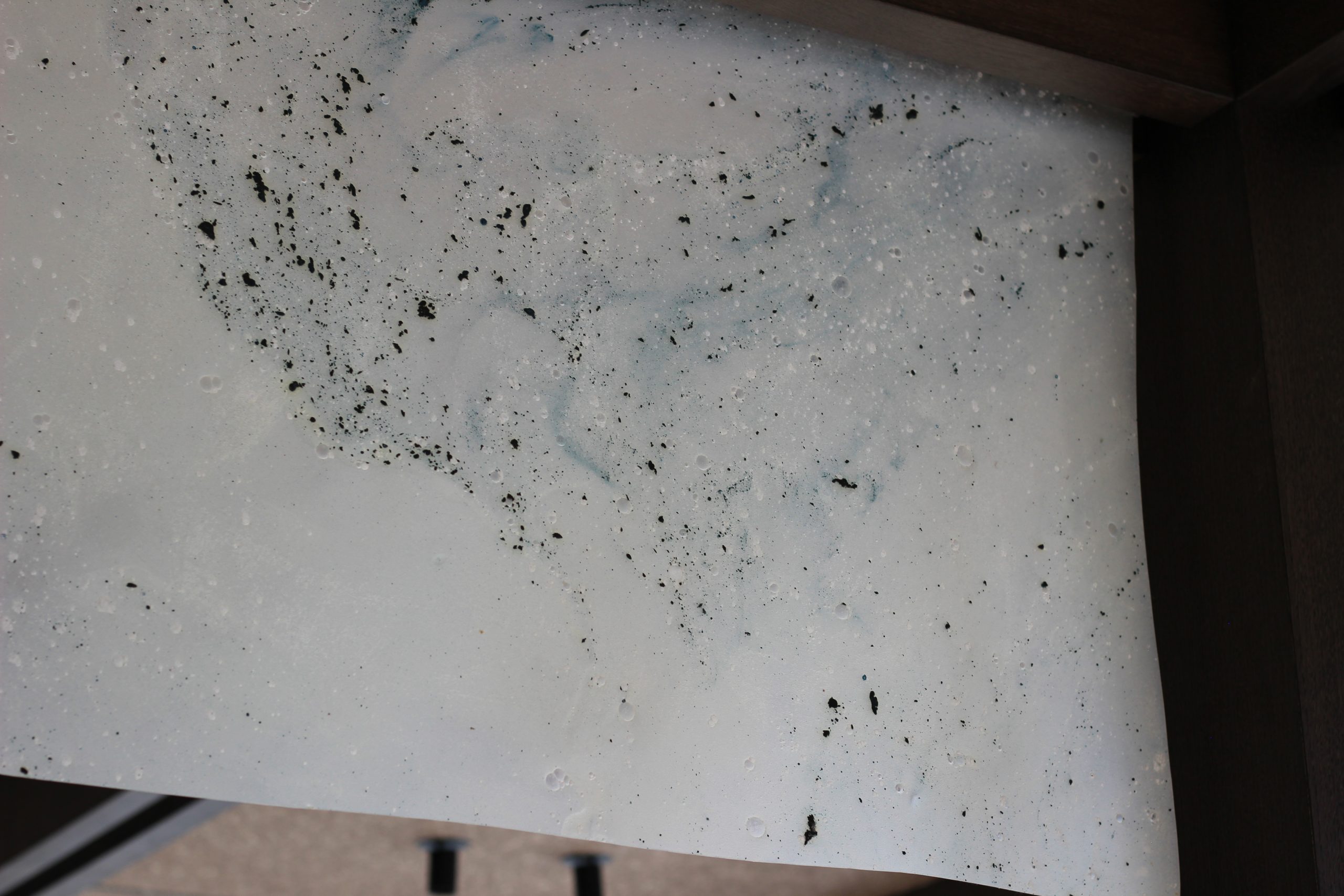
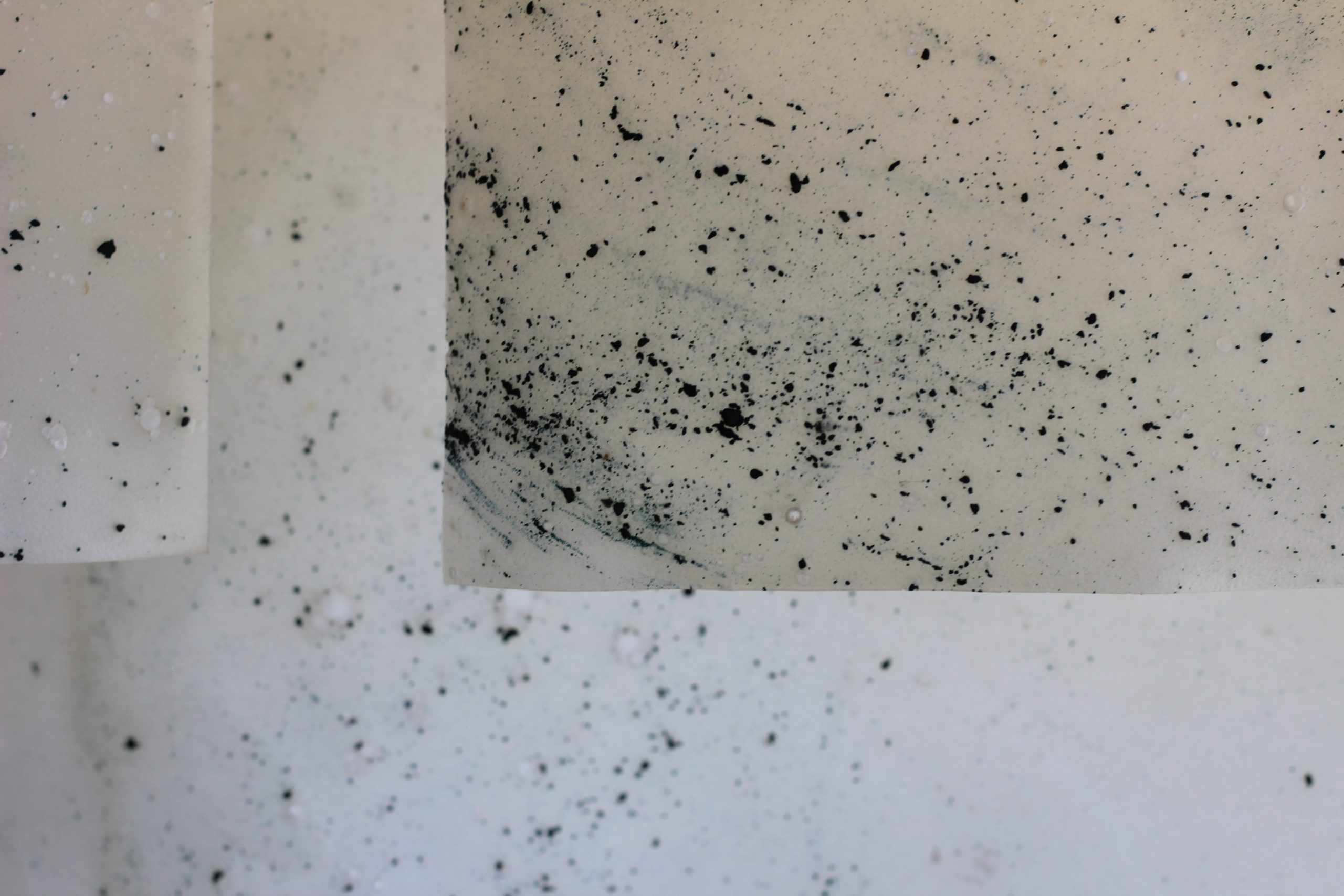
Natural Material Studio developed the project’s Procel material from natural polymers based on proteins, a natural softener, seaweed, algae and chalk. Hand-casting leaves swirls and small bubbles within the surface, making each panel subtly distinct. The studio describes the material as natural, biodegradable and compostable, and says it can be re-melted.
Suspended bio-textile lightwork by Natural Material Studio
At close range, the light passes through overlapping sheets, making their varying thicknesses visible.
Translucent bio-textile panels with organic swirls and bubbles
Dark flecks and pale bubbles are embedded across the surface of the hand-cast material.
Noren panels create a sense of intimacy in the restaurant
The illuminated pendant sits over the dining tables, bringing the bio-textile installation into the wider room.

The installation takes a cue from Japanese noren, traditionally used as fabric dividers, while adapting that idea to a contemporary restaurant setting. Rather than treating the partitions and light as separate objects, the design uses the same material language to shape the room and soften its illumination. Natural Material Studio worked with project-responsible architect Emily Jane Broom on the commission.
Detail of the custom seaweed and algae-based material
A detail of the panel surface shows dark organic inclusions dispersed through the pale Procel material.
Spatial textile panels divide the Sticks’n’Sushi interior
This close crop highlights the contrast between the panel’s smooth field and its clustered inclusions.

By incorporating seaweed and algae from the restaurant’s own waste flow, the project connects material experimentation to the place where it is experienced. The result is a carefully calibrated intervention: part spatial textile, part lighting, and part exploration of how discarded ingredients can take on a second life.
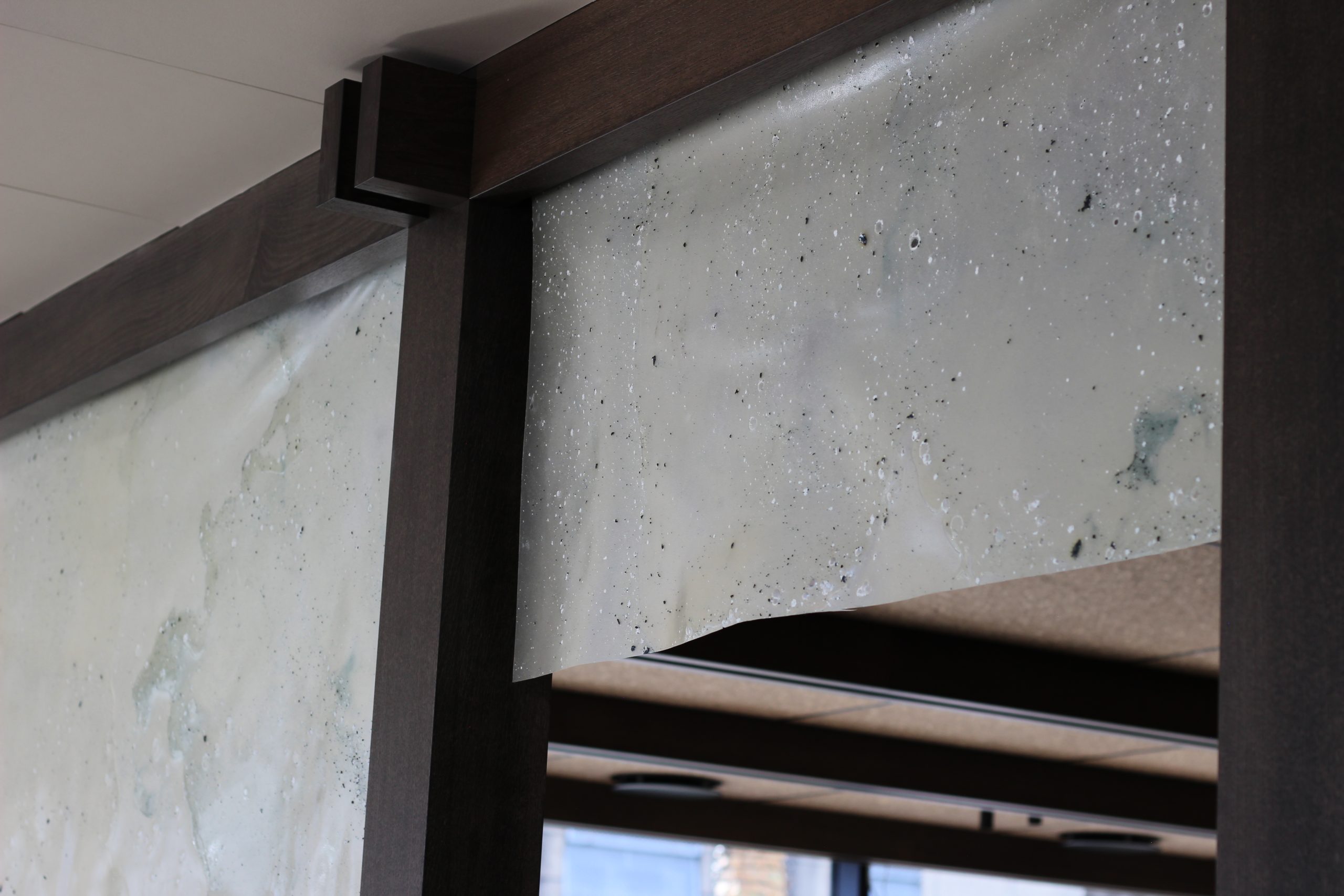
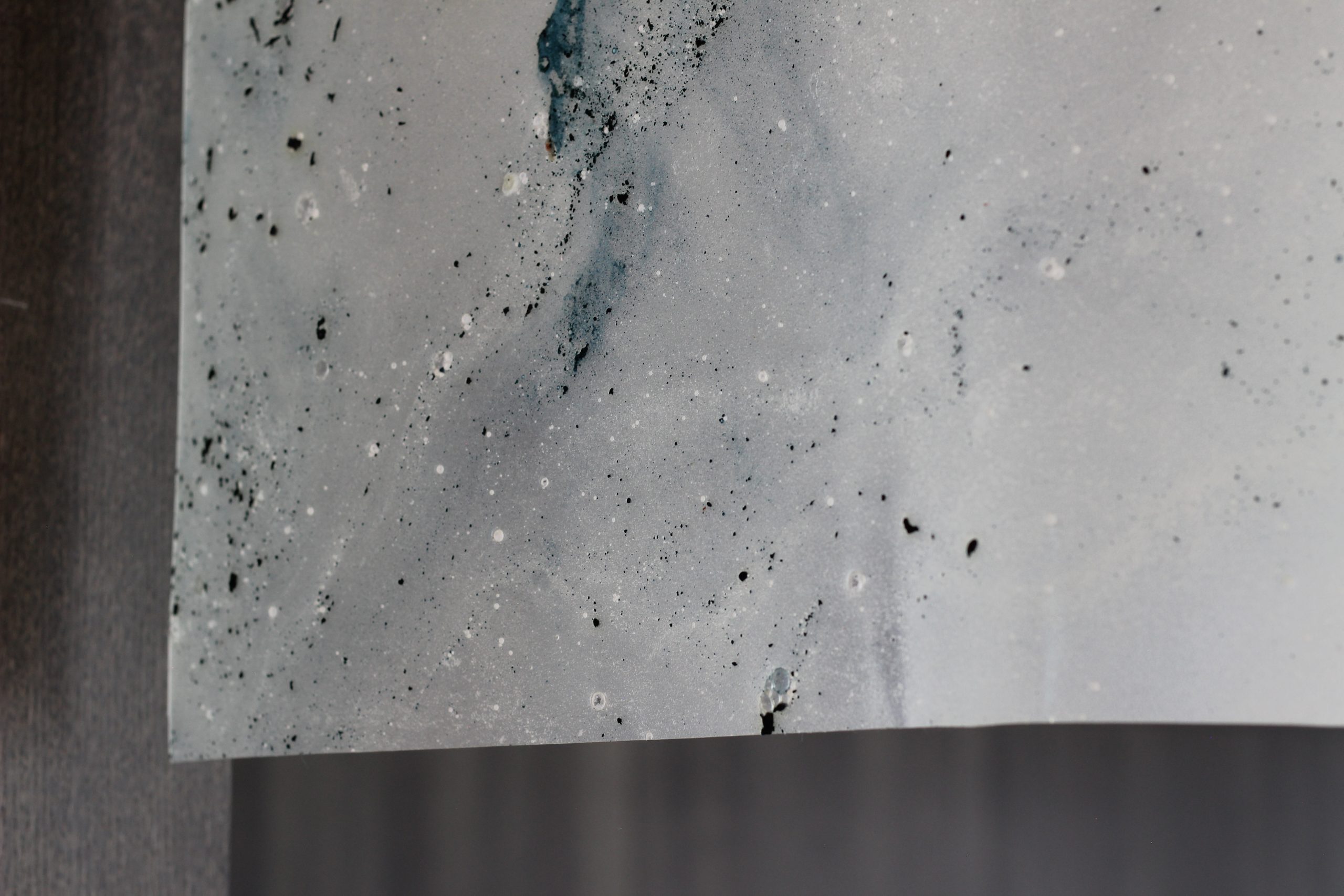
Natural Material Studio’s bespoke lightwork and noren installation
The textile panel meets the restaurant’s dark timber structure, showing how the installation is integrated into the interior.
Close detail of hand-cast Procel bio-textile
A blue-green trace runs through the pale cast surface, revealing variation within the material.
Bio-textile installation designed for Sticks’n’Sushi in Lyngby
Seen from across the dining room, the layered pendant reads as a softly glowing volume above the tables.

Project: Sticks’n’Sushi, Lyngby, Denmark
Design & material development: Natural Material Studio / @natural.material.studio
Project architect: Studio emily broom_
Client: Sticks’n’Sushi / @sticksnsushi.dk
Images: Natural Material Studio / @natural.material.studio
Don't Miss