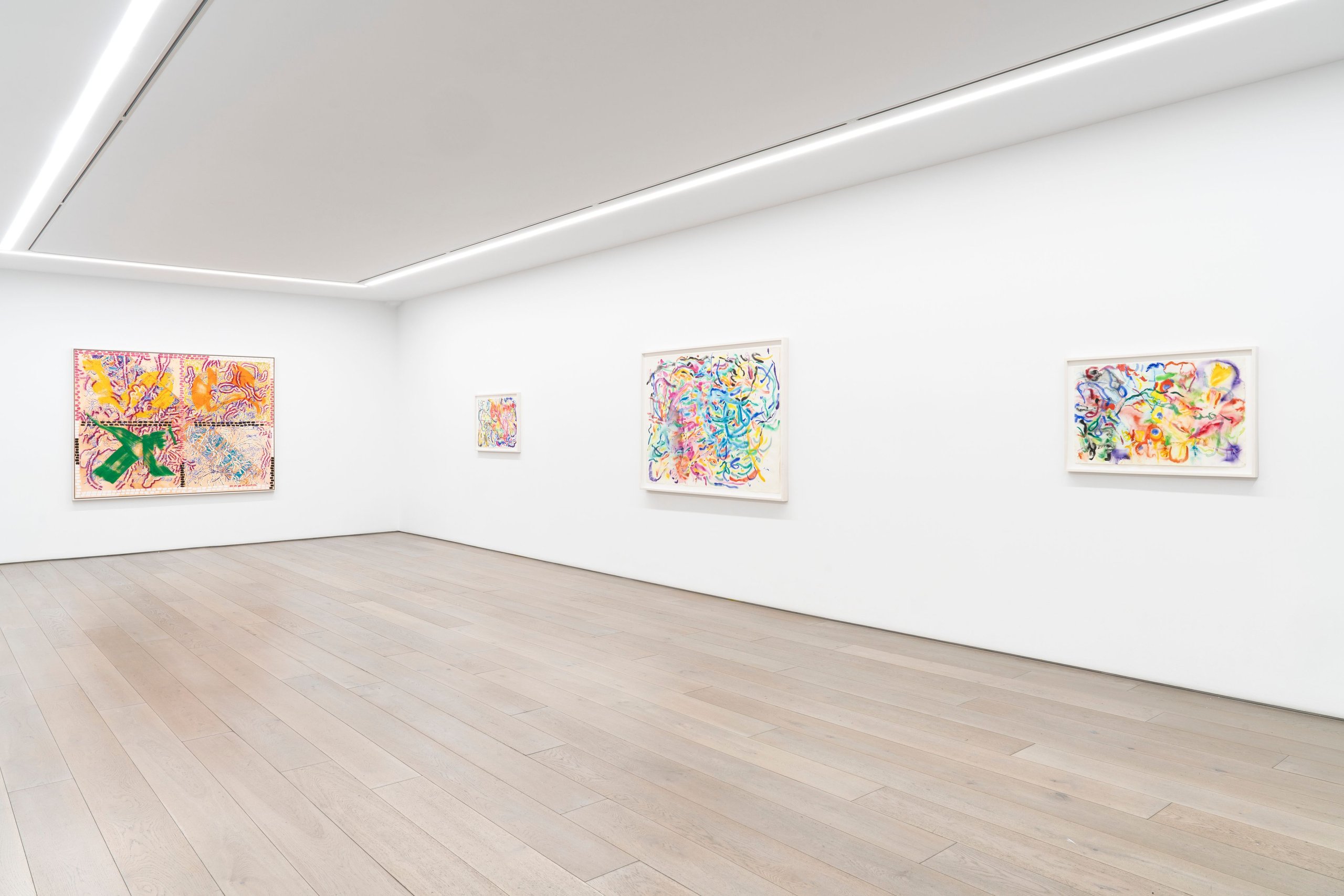
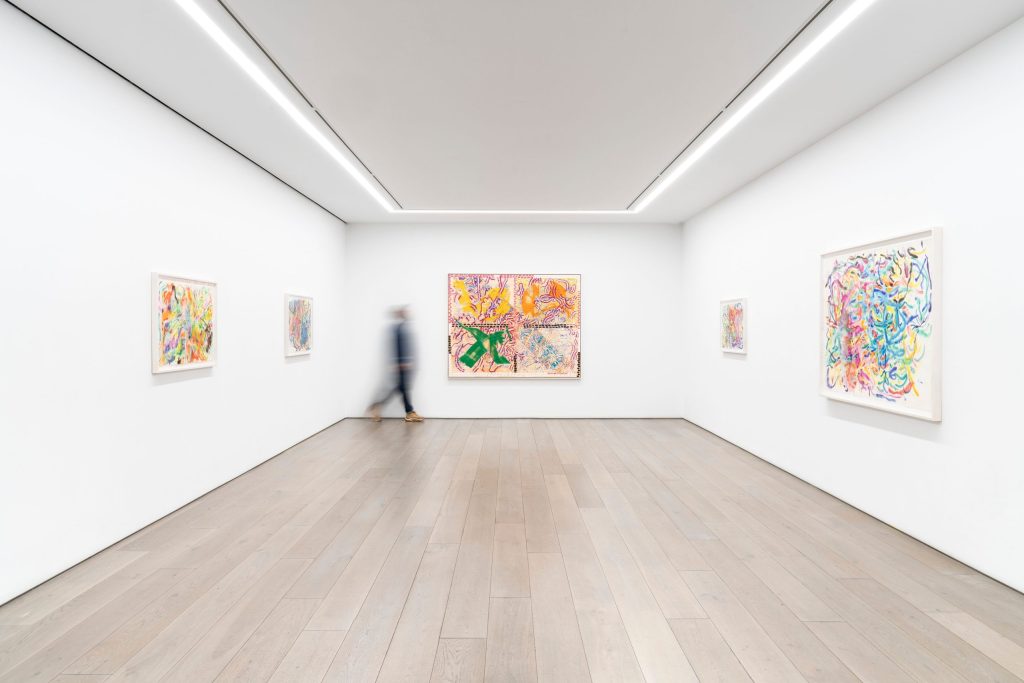
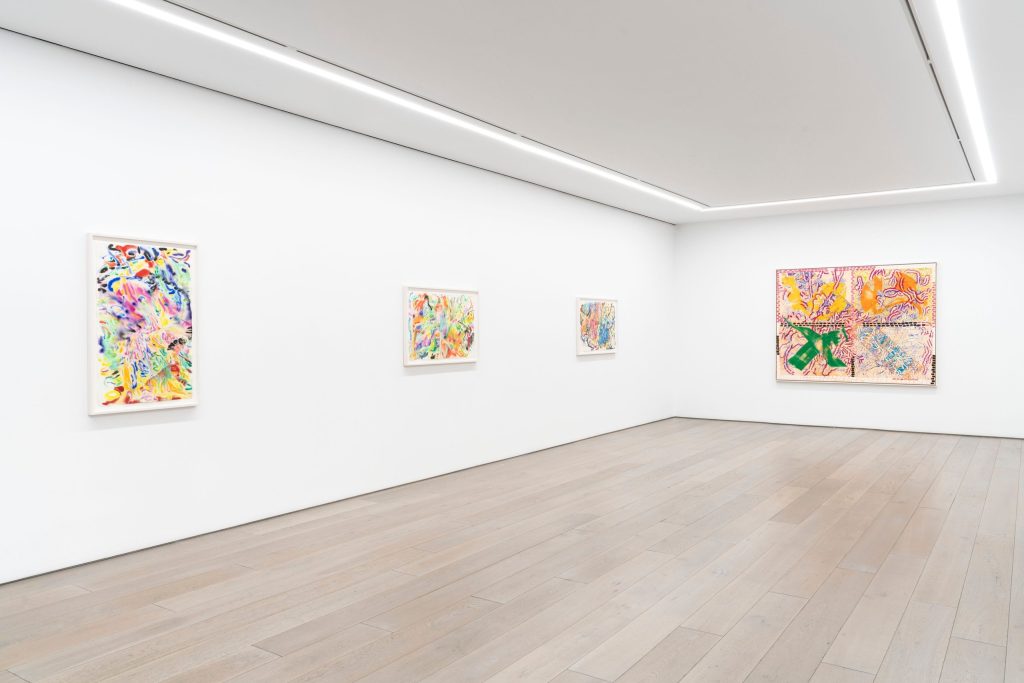
Moonwater, at Perrotin New York, 130 Orchard Street, from 28 October to 19 December 2026, is the first focused overview of the watercolours Nancy Graves made between 1977 and 1982. It takes its title from one of the series.
Graves (1939–1995) is best known for her paintings and sculpture, most famously the Camel sculptures of 1969. She later turned to maps, satellite imagery and bathymetric studies of the ocean floor, and painted landscapes drawn from recordings of the Earth, the Moon and Mars.
Eight hours on wet paper
The watercolours are among the most abstract works of her career. Vood (1978) combines translucent washes, dry brushwork and drips, while Owlo (1978), Strabo (1979) and Hide and Seek (1982) layer weather data, plant forms, prehistoric cup-and-ring carvings and abstracted snakes over shifting fields of colour. Titles such as Glint sit beside invented words like Xycl.
Graves worked on paper wet on both sides, which gave her a short window. “Within about eight hours I have to make all the statements I’m going to be able to do,” she said in a 1981 interview. Each sheet records a run of decisions made in real time, one gesture changing the conditions for the next.
In the 1980s and ’90s she also designed sets and costumes for the Trisha Brown Dance Company. The exhibition text links the two: Brown’s choreography made movement visible in space, and the watercolours keep movement on the page as a trace. Her watercolours had never been surveyed before this show, curated by Ylinka Barotto.
Artist: Nancy Graves / @nancygravesfoundation
Location: Perrotin New York, United States