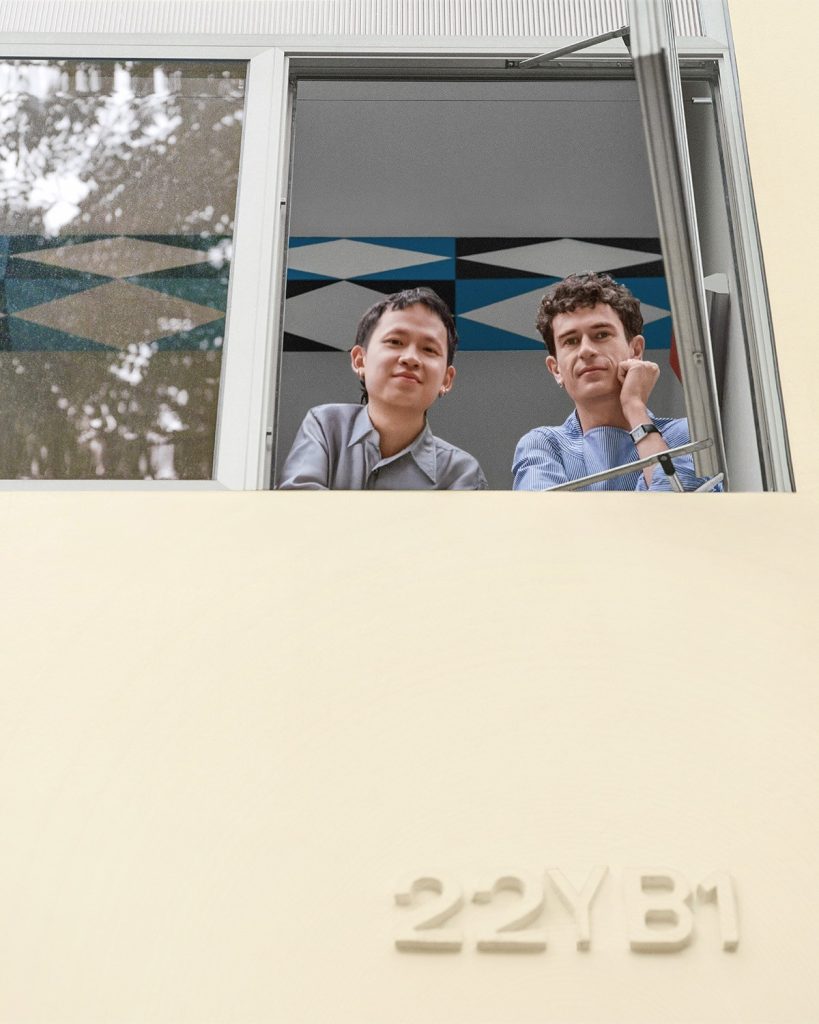
As architecture is drawn ever further into the orbit of speed, efficiency and closed systems of production, Exutoire has chosen a different position. Rather than standing at the centre of professional practice, the studio has moved deliberately to its edge, where architecture is understood less as building and more as a tool for thinking, dialogue and questioning. Through publications, exhibitions, workshops and research, its work keeps widening the definition of architecture and reopens the question of the architect’s role in a fast-changing world, one in which social, environmental and community values are growing more urgent.
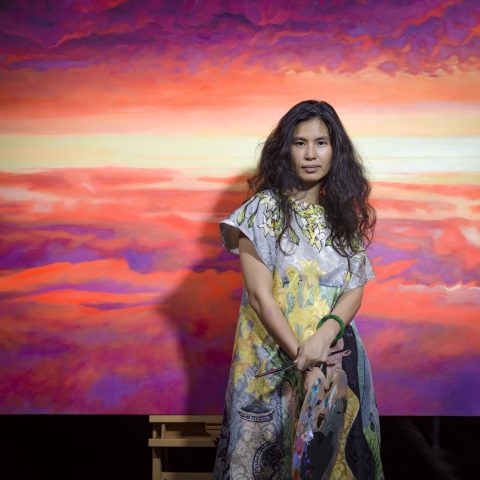
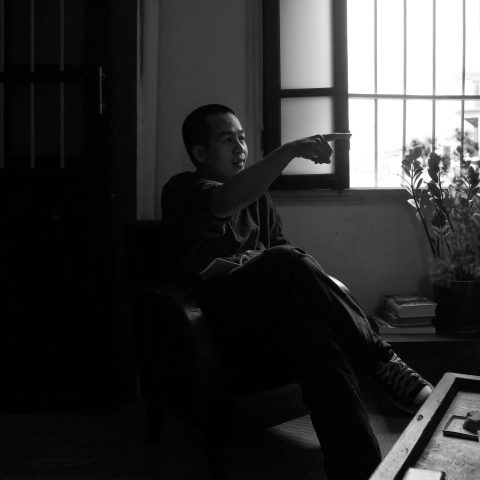
Founded in 2019 by Bùi Quý Sơn and Paul-Antoine Lucas, @exutoire_ works as an “outlet” from the familiar frameworks of the profession. Instead of starting from a brief, they start from a question. Instead of looking for a final answer, they put their trust in an open process in which research, design and dialogue are interwoven. Working where architecture, art and research meet, Exutoire pursues a critical practice in which each project produces form and also prompts awareness, opening other ways of understanding space, community and the role of architecture in contemporary life.
Exutoire’s website places the studio where architecture, art and research overlap. At a time when disciplines are increasingly specialised, what opportunities and limits come with choosing a position “in between”?
Exutoire (Bùi Quý Sơn and Paul-Antoine Lucas): Standing in this overlap came first from a personal need. We both come from architecture, but we also have broad interests in sociology, graphic design, fashion and other creative forms. Architectural practice alone was not enough to answer all of them.
The position “in between” gives us a certain freedom. Every field has its own limits. When we do not fully belong to any single frame of reference, we can treat those limits as relative, and so bend or redefine them. After a period working in conventional design offices, we realised that the existing frameworks no longer met our own needs. Personal projects began as a way of actively making room for a practice of our own.
This process keeps forcing us to question our direction. At the centre of a field it is easy to be pulled along an existing trajectory and miss what lies in the shadows. Standing at the edge, by contrast, allows a clearer and sharper view. After almost seven years, we no longer feel the need to return to the centre in the strict sense. Our current choice feels more satisfying and more consistent with how we want to practise architecture.

Which question weighed most heavily on the decision to stand in this overlap?
Paul-Antoine: In Europe, where most large projects are controlled by investors, the power to decide rarely lies with the architect. What troubled us most was the gap between the design process and the real needs of future users. Economics cannot be avoided, but key decisions are often driven by profit, budget, schedule and operational requirements. In many cases clients put these ahead of the user’s experience, and conflicts of interest between stakeholders also play a part. Meanwhile, architects have very little ability to influence the decisions that set the direction.
From that reality, the core question for us became: how do we bring users’ needs back to the centre of the design process? And “users” are not only the people who live and work in a building, but also the community, the local context and, more broadly, the social values a project can contribute to.
Sơn: For me, the fundamental question is what the architect’s role in society is today. While I was studying in France, architectural theory and philosophy suggested a strong belief that architecture could bring about social change. Once I entered practice, that belief quickly ran into reality: the architect is often just a small link in a large system.
From there we realised that, even if the scale of our contribution may be limited, architects can still actively define how they take part. Building is no longer the only goal. Whether through design, drawing, writing, teaching or research, what matters is creating meaningful value within the scope we can control.
Is the name Exutoire (“outlet”) directly tied to these concerns?
Exutoire: The name reflects our choice directly. Exutoire was founded in 2019, while we were both still working in architecture offices. We saw it as a way of deliberately putting distance between ourselves and conventional practice, so that we could redefine how we wanted to do architecture.


In the early years, the idea of an “outlet” led us in many directions: entering competitions, experimenting with different kinds of projects, and turning to teaching and research as parallel ways of working. That spirit still shapes our practice today.


We see our architectural practice as a critical one, constantly questioning and reflecting. “Critique” and “outlet” exist side by side: one identifies the problem, the other looks for a way out of it. Architecture, then, is not only about making form. It is a process of thinking, questioning and searching for meaning.

Rather than designing buildings in the conventional sense, Exutoire often approaches design as a research tool (research through design). How does a typical project take shape?
Exutoire: Most of our projects begin with a critical question rather than a given brief. With OUTLET, for example, the question was whether there are “other” ways of practising architecture in Vietnam.
As outside observers, we began with in-depth conversations with architects, which we recorded, translated and published. From there the project developed through an open process: from dialogue to print, exhibition, fundraising and co-design with collaborators. We believe in that process itself, one where the outcome is not decided in advance.


For projects that combine publication and exhibition, such as OUTLET, in what sense does Exutoire see them as a form of architecture?
Exutoire: For us, architecture is not limited to physical space. It is a form of spatial culture, in which space is created, acted upon and critiqued in relation to its cultural context.
OUTLET can be seen as a non-physical space where exchanges and critiques of architectural practice take place. This approach comes from French architectural education, where architecture is treated as a liberal profession, like medicine or law, with a responsibility to serve the common good.
So in every project we start by asking what we can contribute to society, and only then think about the forms it might take, such as building, writing, exhibitions or research.


When the production of space is driven by speed and efficiency, how does Exutoire understand “slowness”?
Exutoire: “Slow” is at once a position, a method and a strategy. It is first a political choice, a response to today’s pace of production. It also becomes a concrete method of practice.
The construction industry accounts for about 40 per cent of global CO₂ emissions. In that context, “slow” can mean building less and smaller, focusing on renovation and using fewer resources, while investing more in thinking and quality. The idea grew out of the conversations in OUTLET and was tested in 22YB1 as a prototype of “slow” practice.
What role does Vietnam play in Exutoire’s thinking?
Exutoire: Vietnam offers a sharp contrast. “Slow” shows up in non-architectural processes such as negotiating with communities, authorities and neighbours, which call for social skills more than technical expertise. “Fast”, by contrast, shows up in construction, where everything can change in a very short time.


The spontaneity with which people build and renovate their homes is also an important source of inspiration, showing how closely architecture is bound to social life.
Being both inside and outside is an advantage, because it allows a sharper view, and a limit, because it makes it hard to enter the professional community deeply. It is also a privilege, and one we are well aware of.


How does Exutoire understand “intervening” in social issues?
Exutoire: We favour modest interventions that carry real meaning. Rather than large-scale manifestos, we believe that small things, an object or a space, can still have an effect.
More importantly, each intervention should be questioning: it should make users pause, think and step out of everyday inertia. Here, “slow” is also a tool for raising awareness.


How does Exutoire assess the impact of its practice?
Exutoire: Impact is hard to measure. For us it usually lies in the conversations a project sparks: responses from audiences and students, or the exchanges in workshops and exhibitions. Even this interview is a kind of impact, a sign that what we do is creating connections.


How do you imagine architectural practice changing over the next 10 to 20 years?
Exutoire: We don’t expect sudden shifts, but we believe in gradual change. There may be more genuine collaboration, fairer sharing, and a move from building new to renovating.
More importantly, the younger generation of architects needs to actively redefine its practice: with a stronger critical spirit, attention to small details and the user’s experience, and a priority on use value over formal expression.
Finally, it is essential to build a more open architectural community, one that can share knowledge, research and experience widely.

Text: Dương Hà
Time: 04.2026
Photography: Nilo Hartman, Maxime Delvaux / @maxdelv, Napat Pattrayanond, Cao Việt Nga, LUCA – Luxembourg Center for Architecture | Pancake! Photographie / @pancake_photographie, Exutoire
Location: Hanoi, Vietnam
Shared with permission by Notesbook Magazine