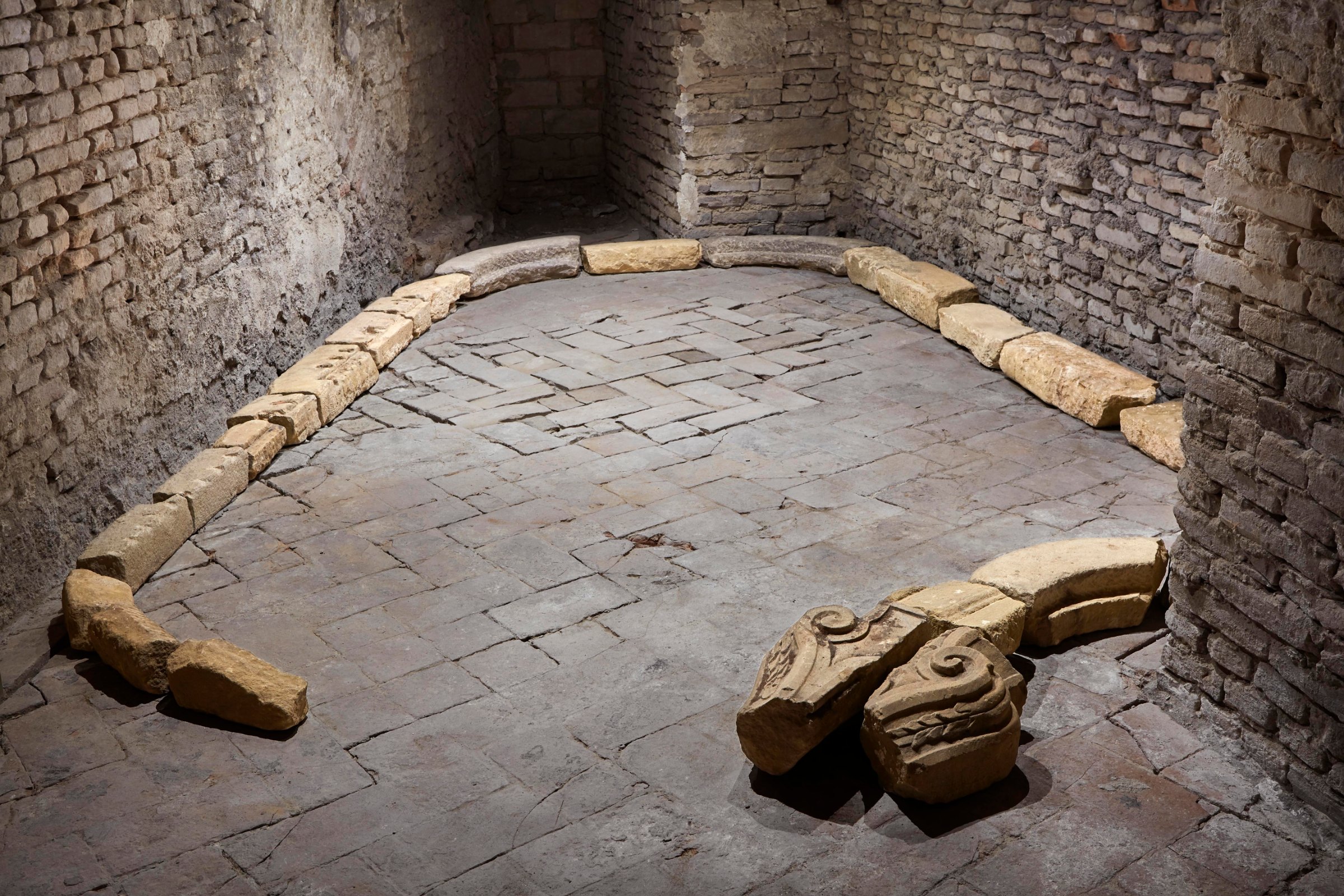
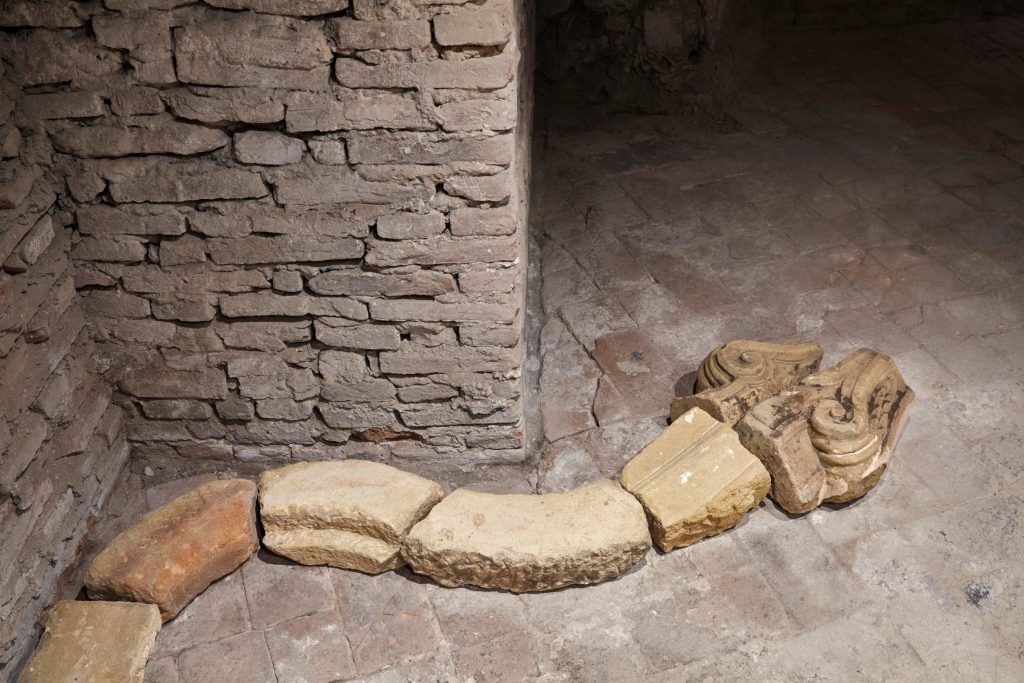
Ipogea is a permanent work by Chiara Camoni in the cellars of Palazzo Bentivoglio in Bologna. Camoni received the commission in 2020, and the work first opened in 2021. It began with a chance find. In the most secluded room of the cellars lay a heap of stones. They came from the building site of the palace, which dates from the sixteenth and seventeenth centuries.
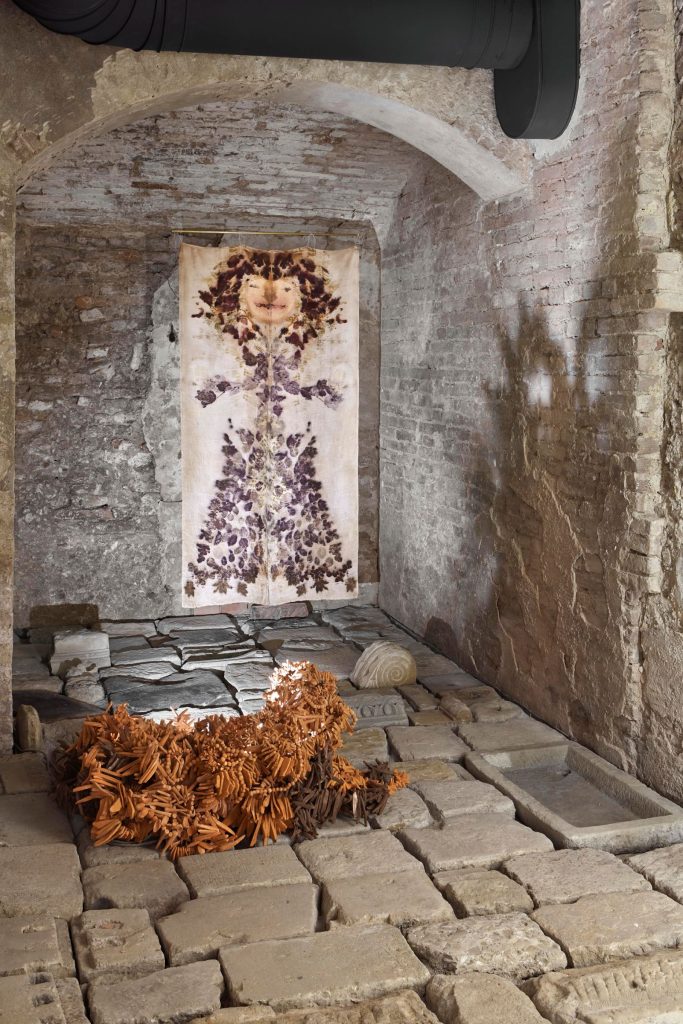
The heap held semi-finished decorative elements, chipped paving stones and worn fragments of mouldings. At some point someone had judged them useless, and they had probably come out during maintenance work. Born in Piacenza in 1974, Camoni has long worked with residual material. Other works, for example, start from marble fragments that quarrying leaves behind in the Apuan Alps, where she lives.
Four rooms
Over a long period underground, Camoni arranged the stones into walkable floors. She also shaped them into the presences that inhabit four successive rooms. The art historian Tommaso Pasquali returned to the work several years after it opened. Pasquali calls the rooms stanze. The same word names the parts of a garden and the sections of a Petrarchan song.
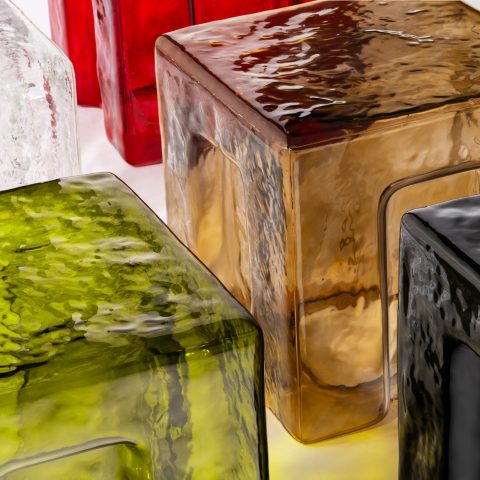
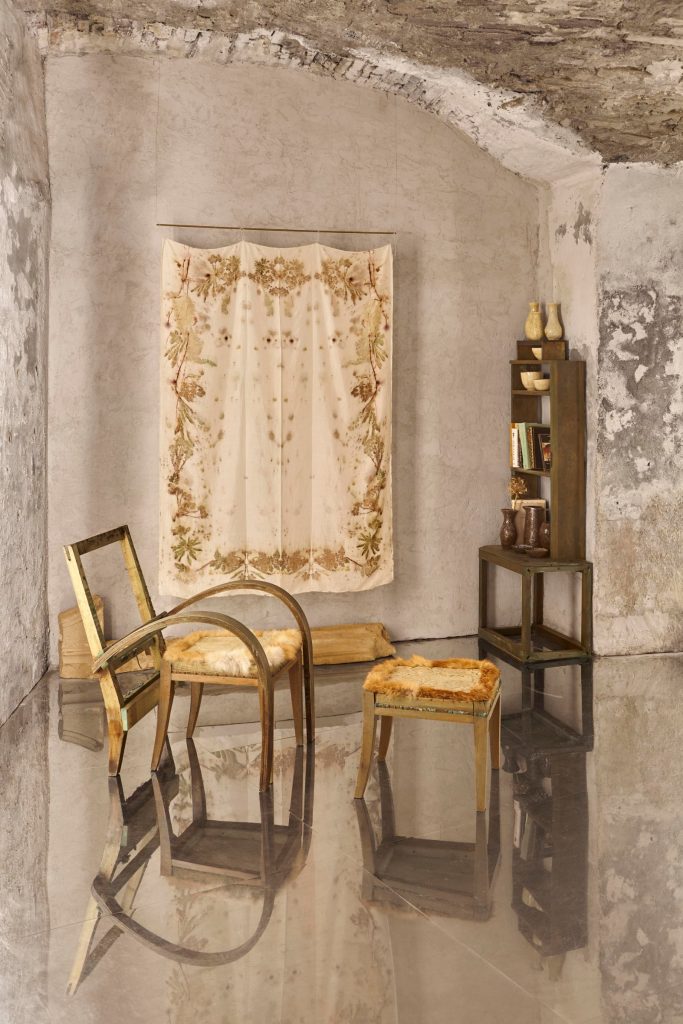
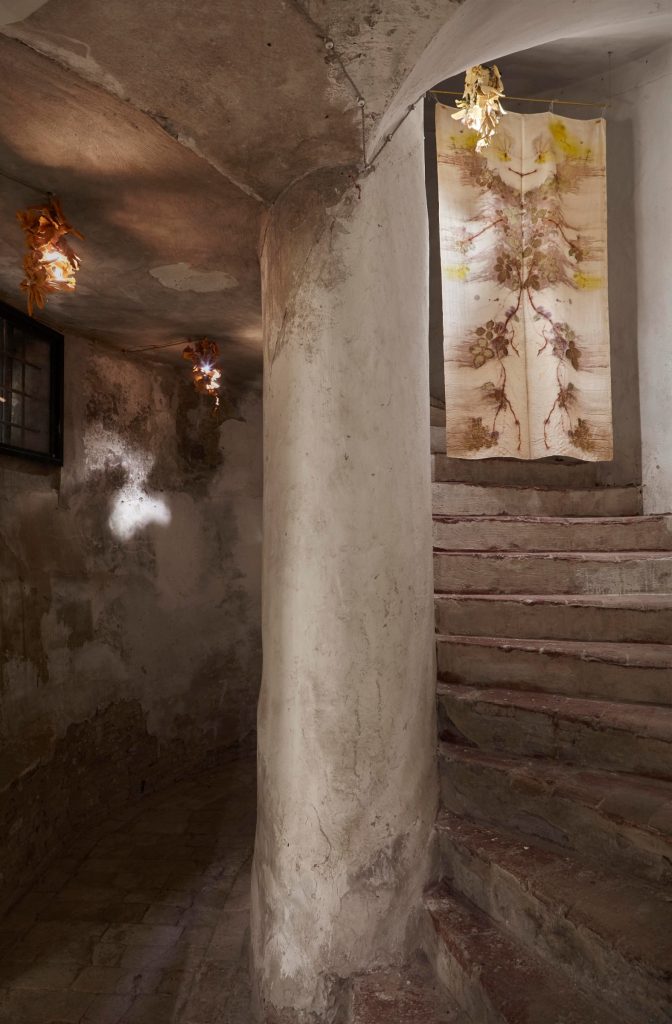
Everything in the rooms comes from the site. For a series of silk banners, Camoni pressed leaves, flowers, branches and soil from the palace garden into the fabric. The prints show ghostly figures, perhaps deities or spirits of the earth. She also burned plants from the same garden into ash. That ash glazes the stoneware vases, bowls and blooms that light the path. On the ground lies a necklace of red and black terracotta. It is a shapeless, animal-like presence, bound to the earth.
A confessional, now a shelving unit, holds a small library. On its shelves, Riegl sits between Piranesi and Dostoevsky. From there the path leads into the fourth room, where the stones first turned up.
The Serpentessa
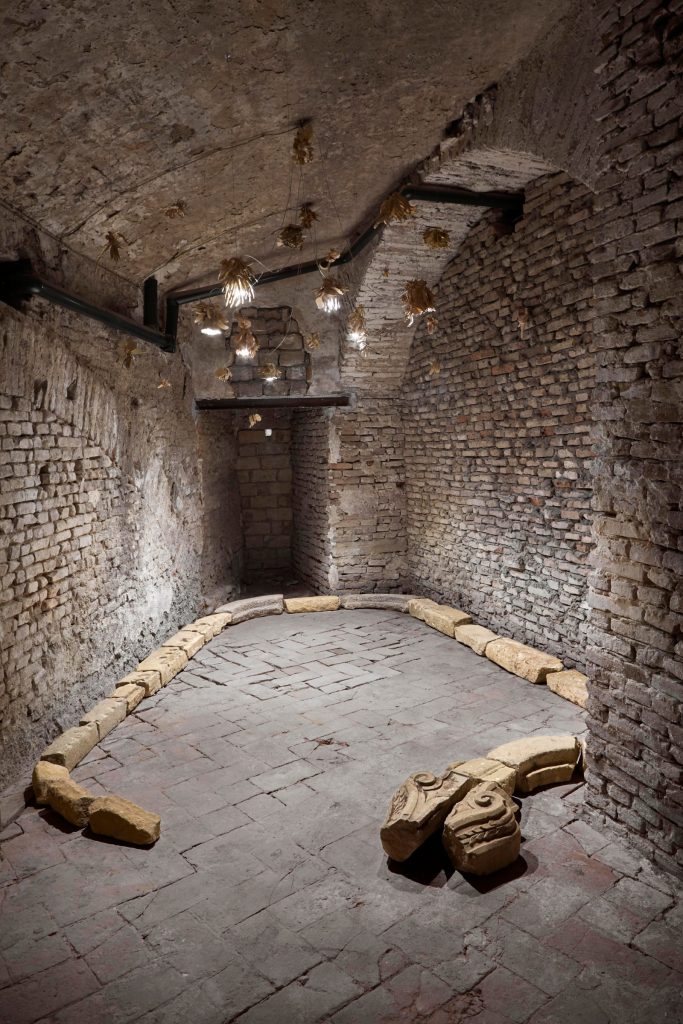
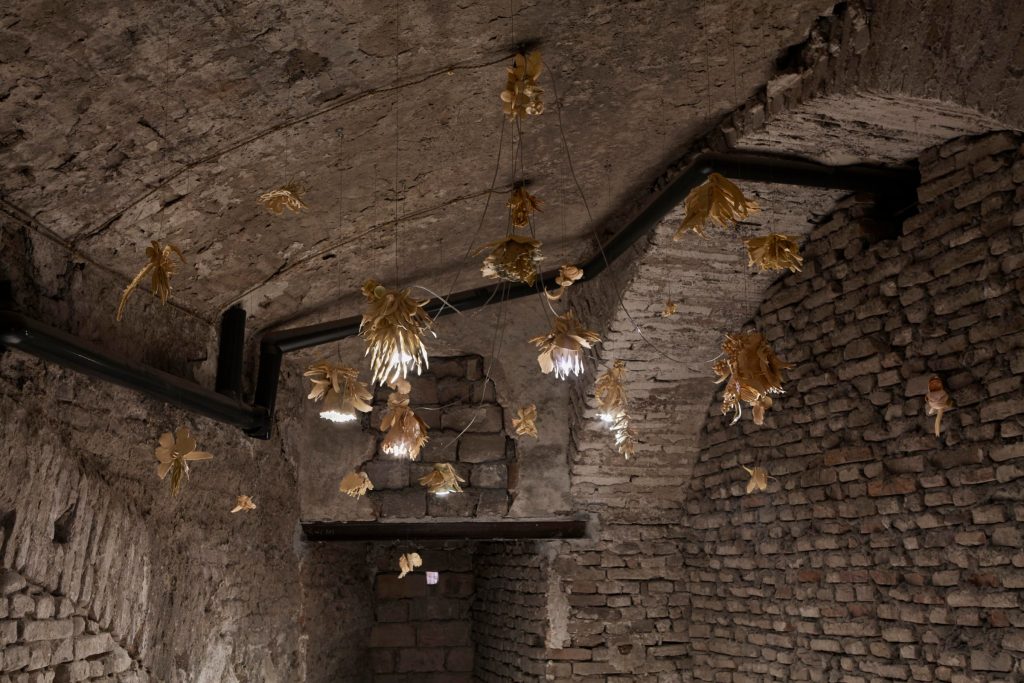
In that last room, a ceiling of luminous blooms hangs overhead. Below it, the stones run along the walls and trace the spiral of a vast Serpentessa. Two blocks carved with volutes form her head, which turns towards the visitor. “One can enter,” Camoni told the curator Elena Volpato, “but it does not necessarily follow that one can truly get out.”
For Pasquali, the work holds the personal and the collective together. Camoni gives clay, wood and stone part of the responsibility for form. She then tests her intentions against what the material allows. In 2024 her solo exhibition at Pirelli HangarBicocca in Milan carried the title Chiamare a raduno, calling to gather. This year she represents Italy at the Venice Biennale with Con te con tutto. Cecilia Canziani is the curator. Camoni’s Sisters figures stay on view until 22 November.
Artist: Chiara Camoni
Photography: Courtesy of the artist and Palazzo Bentivoglio
Location: Palazzo Bentivoglio / @palazzobentivoglio, Via del Borgo di San Pietro 1, Bologna, Italy