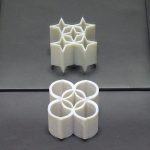
Beyond the faded archive photographs and models, Expo ’70 in Osaka still appears as a temporary city with a far-reaching vision. It was born of Japan’s post-war ambition, of faith in technology, and of the dream of “Progress and Harmony for Mankind”, the official theme of the first world exposition held in Asia (1).
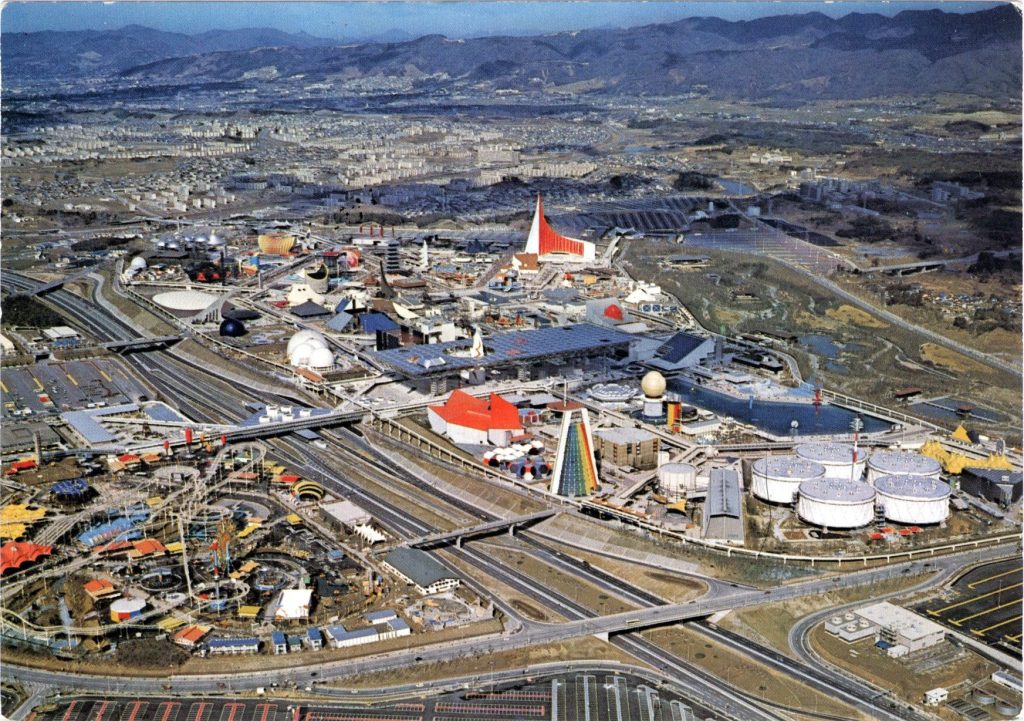
Kenzo Tange, the Expo’s chief architect, drew up a master plan with a biological structure. The Symbol Zone ran north to south like a spine, leading to the Festival Plaza, the centre of all activity, covered by a space frame roof: a vast steel structure, light yet steadfast (2). The whole Expo worked like a body, with the national pavilions as its cells and the moving walkways as its blood vessels. Tange did not build a single landmark. He built an experimental city, where architecture, engineering, art and people took part together in a dance of the future.
Within that immense structural rhythm, Isamu Noguchi arrived as a poet of space. He had first been invited to design the U.S. Pavilion: a sphere representing the Earth, suspended above a sunken garden, through which visitors could pass underground to experience the unity of nature and technology (3). When that project did not go ahead, Kenzo Tange asked him to take on another part of the site, the fountains for the central ponds. Here Noguchi found the material he pursued all his life: water, a substance that can express time, breath and the rhythm of life.
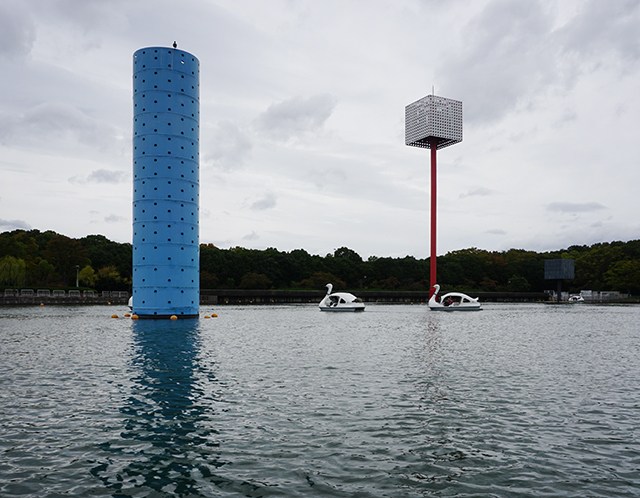
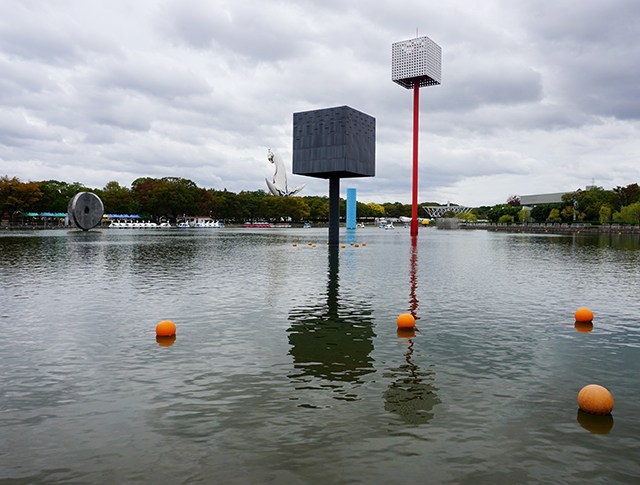
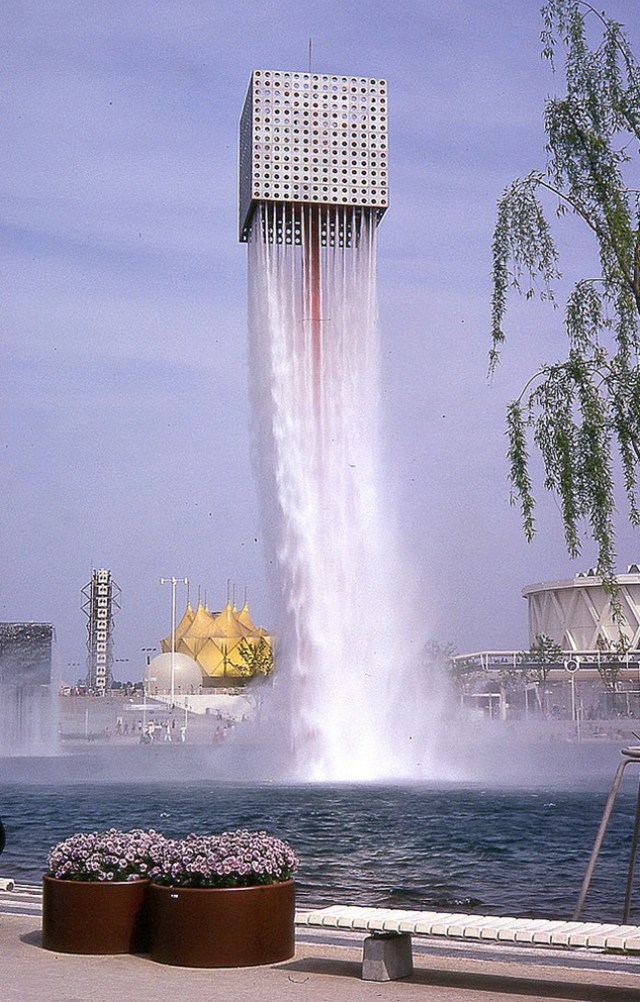
Noguchi’s fountains were not a row of decorative jets. They were kinetic sculptures, experiments in how water can take shape, dissolve and disappear. The system comprised six different forms in the Dream Pond, with further fountains in the Heaven Pond and the Good Earth Pond (4). When running, jets rose high and broke into mist, whirlpools appeared and vanished, and the surface of the pond steamed softly under reflected light. This was sculpture that did not stay but changed by the second, an art that existed only for a moment before dissolving into the air.
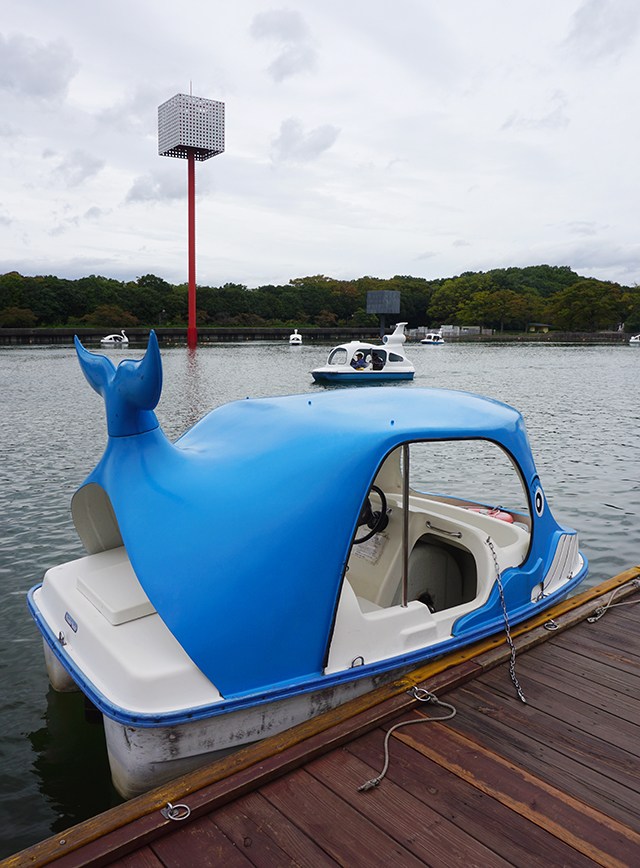
Noguchi worked with the Japan Fountain Engineering Association, using suction and pressure to create many different trajectories of water: at times shooting straight into the sky, at times drawn downward, at times spreading as mist, sometimes leaving only moisture on the ground (4). At night, light from beneath the pond revealed glittering columns of vapour, a natural performance staged by engineering. Noguchi said he wanted to challenge the usual idea of a fountain: water need not simply rise and fall, but can vanish, swirl and be reborn.
In this way Noguchi turned an engineering problem into a meditative experience. In the middle of the Symbol Zone, among mechanical sounds and artificial light, visitors could still feel coolness, the scent of moisture and the oscillation of nature. The fountains did more than cool the air. They restored a sense of lived time and of impermanence, a core idea of Japanese culture that he carried into a modern language.
Within the overall rhythm of the Expo, Noguchi’s work was never out of step. On the contrary, it was the soft breath between hard architectural masses. While Tange set up the framework of axes, roofs and urban structure, Noguchi filled that framework with liquid and light.
This combination expressed what Expo ’70 most wanted to say: that people and technology can live in harmony. On one side was the order of structure, on the other the freedom of flow, and between them a shared language of architecture as sensory experience.
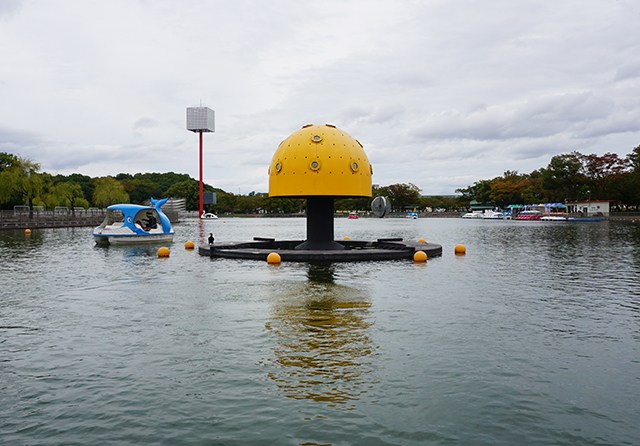
When the exposition ended, most of the pavilions were dismantled, and over time the fountains also stopped running. As Noguchi put it, when a work disappears, the memory remains, and memory is also a form of matter. Today the site is the Expo ’70 Commemorative Park, where the Dream Pond and its fountain, along with traces of the fountain system, are preserved as part of its heritage (5).
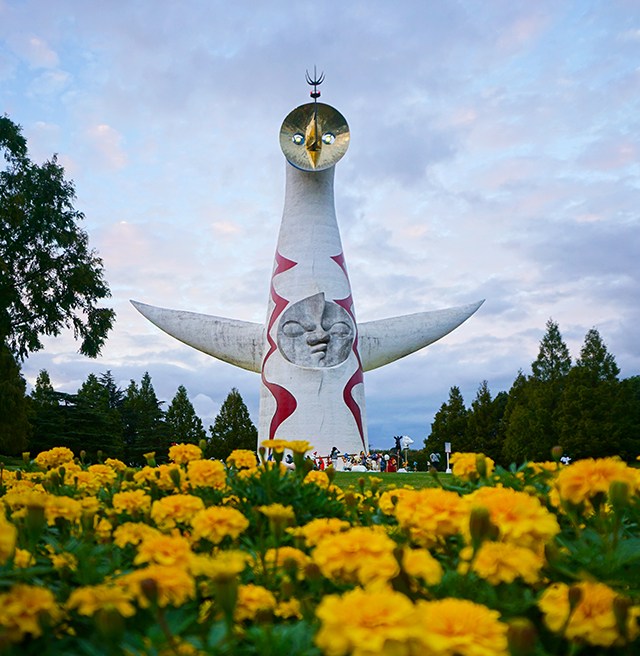
Taro Okamoto’s Tower of the Sun still stands, rising through the space frame roof as a visual landmark. But what endures more strongly is the spirit. Expo ’70 was where Japan, recovering from war and eager to join the world, affirmed that architecture could be a vehicle for peace, for creativity, and for a society able to dream with reason.
Looking back, one sees two mountains meeting: Tange, who turned modern architecture into urban infrastructure, and Noguchi, who brought art into daily life like air. One built the frame, the other gave it a soul. Together they showed that the line between engineering and poetry, between concrete and water, can dissolve if we see architecture as a living form.
In today’s world, where cities are programmed with data and LED light, Expo ’70 remains a mirror. It reminds us that progress is not only about running faster but about understanding the rhythms of nature more deeply, and that harmony is not sameness but the ability to coexist across difference. Kenzo Tange and Isamu Noguchi left that lesson in the very materials of their time: steel, light and water.
If anything still moves us about Expo ’70 more than half a century later, it is the moment of standing by the Dream Pond, hearing a distant pump, seeing the water swell gently like a breath, and then a jet rising suddenly and breaking into a mist that touches the skin. In that instant, engineering and nature, people and space, art and architecture became one.
Sources
(1) Bureau International des Expositions (BIE). Expo 1970 Osaka – The Story of Japan’s First World Expo. Paris, 2020.
(2) Kenzo Tange, Uzo Nishiyama. Master Plan of Expo ’70 Osaka. Japan Association for the 1970 World Exposition, 1970.
(3) The Noguchi Museum. U.S. Pavilion Proposal, Expo ’70 (1968). Collection Archive, New York.
(4) Art Platform Japan. Nakaya, Air and Water: Documentation of Expo ’70 Dream Pond Fountains. Tokyo, 1970.
(5) Expo ’70 Commemorative Park Official Website. Facilities – Dream Pond / Fountain. Suita City, Osaka Prefecture.
Images: 1970 Osaka World Expo
Location: Osaka, Japan