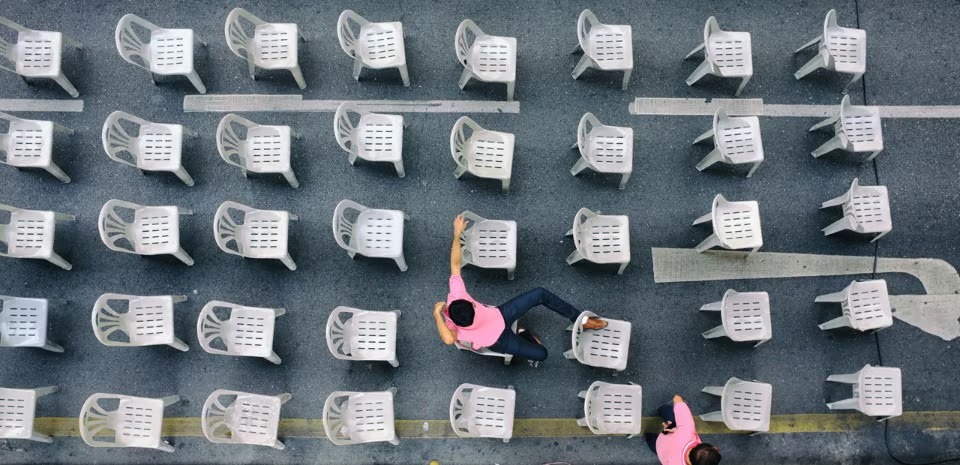
Few objects are as easy to overlook as the white plastic chair. It turns up outside cafés, at weddings and funerals, on beaches and in schoolyards, usually without anyone asking who designed it. The monobloc chair, moulded in a single piece of polypropylene, may be the most widely used seat in the world, and its history runs through some of the most ambitious furniture experiments of the 1960s.
A chair in one piece
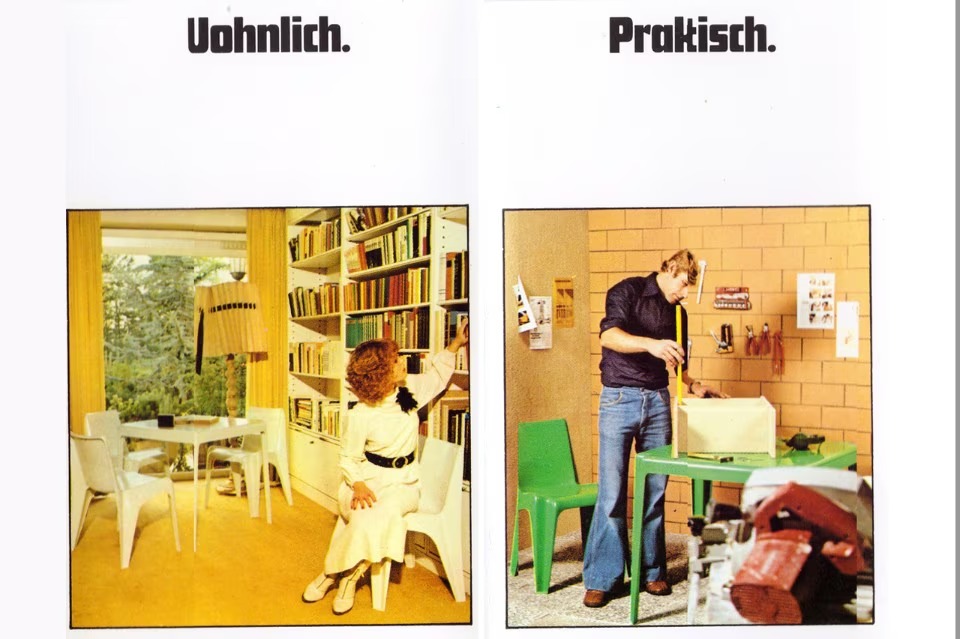
The idea of a chair formed from a single piece of plastic belongs to the 1960s, when designers began testing new materials and production methods. Verner Panton’s cantilevered chair, first drawn around 1960, is often named as the first of its kind, but its fibreglass-reinforced polyester made it costly, a design object more than an everyday one.
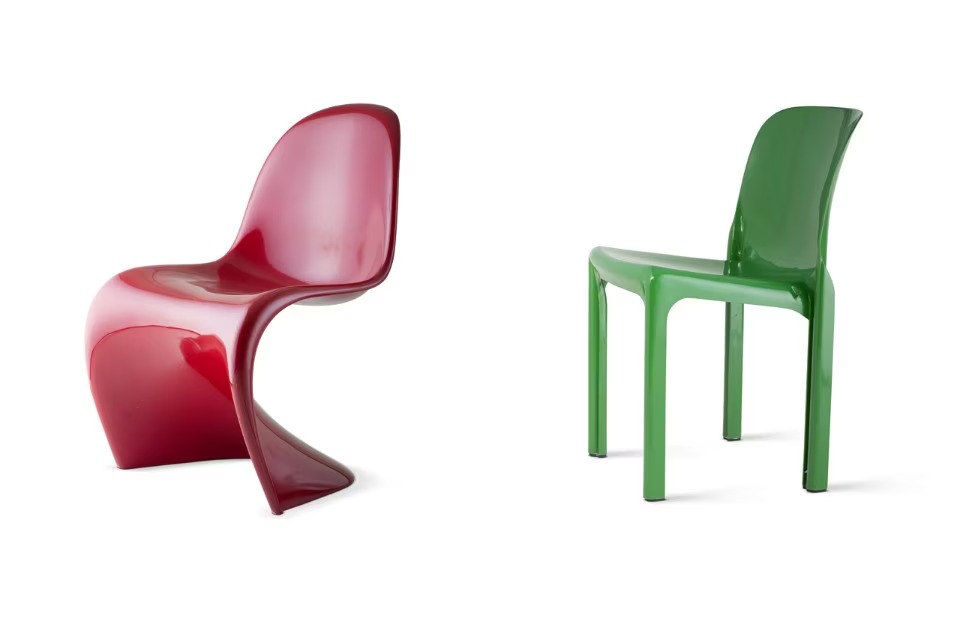
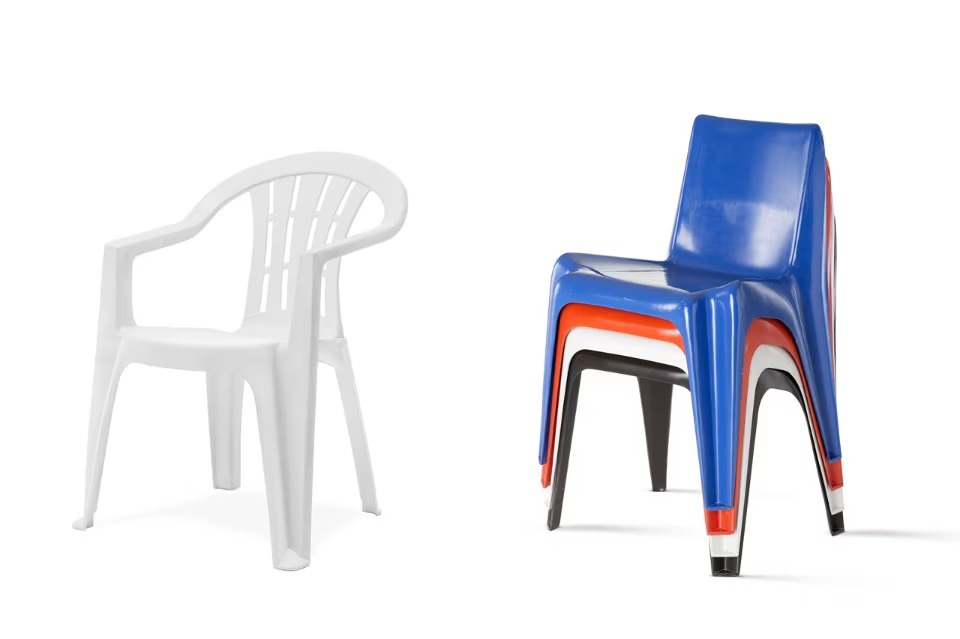
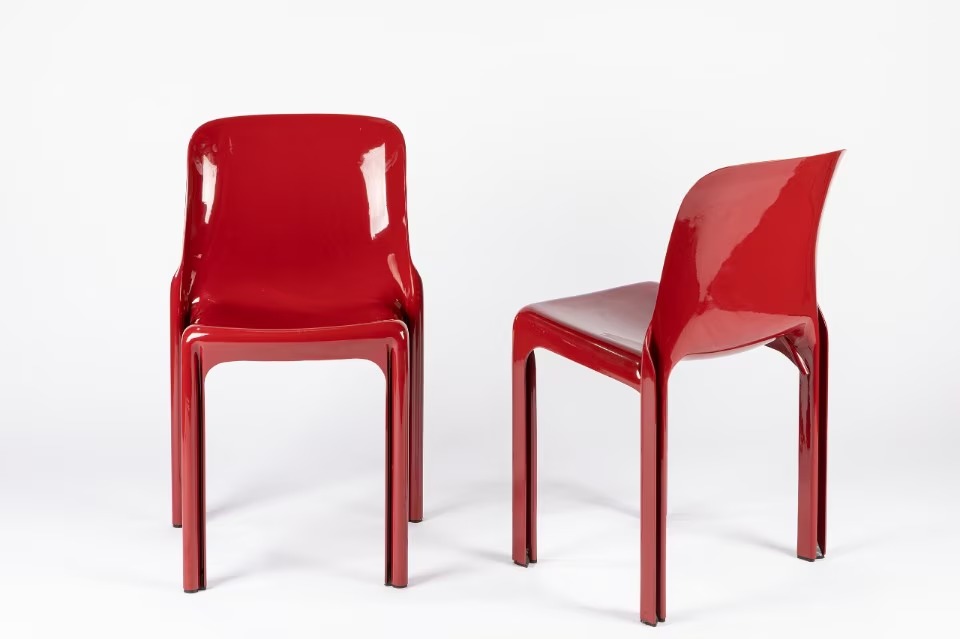
Other attempts followed. Helmut Bätzner’s Bofinger chair, developed between 1964 and 1966, could be pressed in a single operation. Vico Magistretti’s Selene, worked on through the second half of the decade, also used reinforced plastic and pointed towards a light chair that could be stacked and shipped cheaply.
From Fauteuil 300 to the garden chair
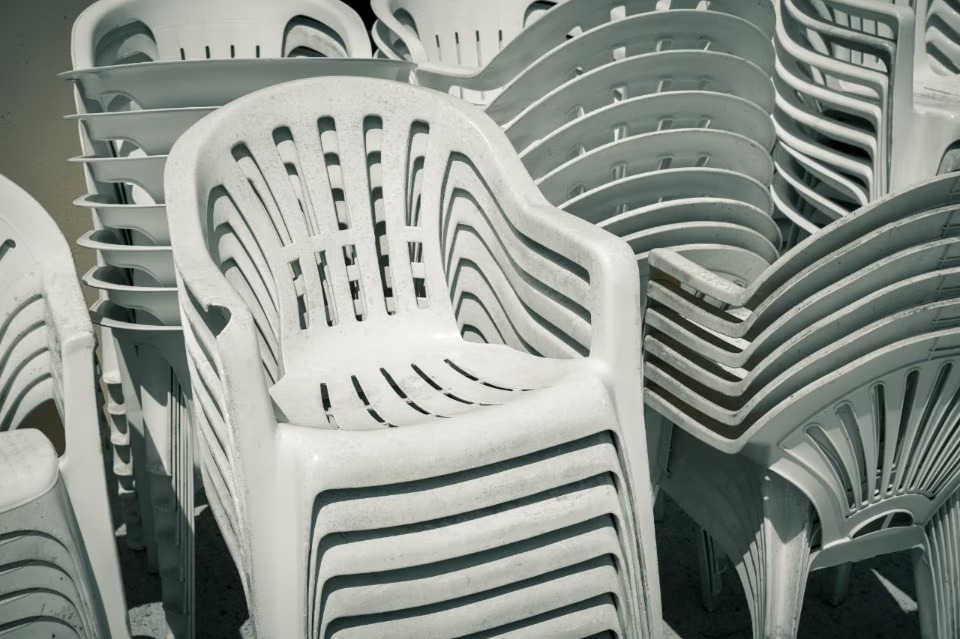
The shift towards the monobloc chair as we know it came in 1972, when Henry Massonnet, founder of the French company Stamp, introduced the Fauteuil 300. By refining the mould and the injection process, he brought the time needed to make one chair down to under two minutes. Polypropylene is heated to around 220°C and forced into a steel mould, and the chair comes out whole.
In the 1980s the type spread widely, helped by the French manufacturer Grosfillex and its low-priced resin garden chair. Countless producers then copied and adjusted the design. The details vary from factory to factory, but the process has barely changed.

A chair for the world
In 2017 the Vitra Design Museum gave the monobloc chair an exhibition of its own, Monobloc – A Chair for the World, tracing its path from the plastics experiments of the mid-century to its place as a global commodity. Hauke Wendler’s documentary Monobloc followed the chair across several continents, to wedding halls in India and to Uganda, where it has been adapted into wheelchairs.
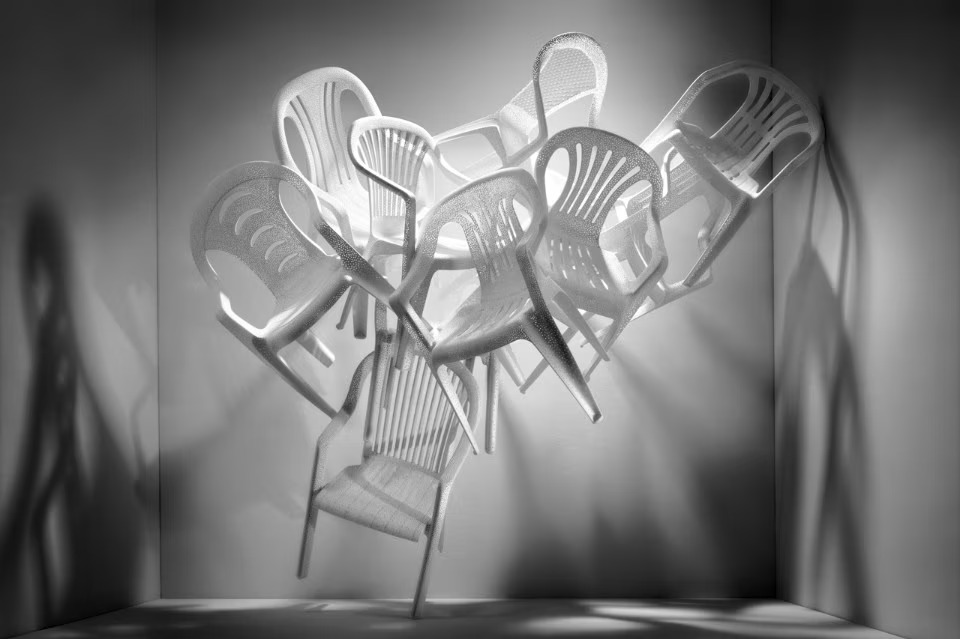

Part of the chair’s reach comes from what it does not ask for. It is light, it stacks, it can stay out in the rain, and it costs little. Those same qualities have made it a symbol of throwaway plastic. Both readings hold, which may be why designers and critics keep coming back to it.
Design: Henry Massonnet
Photography: Vitra Design Museum, Stephan Pramme