Haogang Village in Dongguan is short of public space, and much of what it once had has been given over to parking. This summer, the IARA Urban-Rural Revitalization Program spent thirty days in the village studying how residents live, work and gather. Haogang Ji · In Progress shows that work where it took place: in an ancestral hall, under banyan trees, beside a temple and in the middle of a market.
Haogang sits in the Pearl River Delta and covers about 0.44 square kilometres of dense housing and crossing alleys. Around 26,400 people live there, and only 7 per cent of them are local; most are migrant workers from other parts of China. IARA’s programme puts what it calls urban diagnosis ahead of renewal. Instead of starting from drawings, the team visited households and ran co-creation workshops to learn what different groups expect from housing, business and public space.
Haogang Ji is laid out as one main venue and five satellites along the village’s east–west axis. Each satellite occupies a place residents already hold in memory: the Old Academy, the Old Sports Ground, the Earth God Temple, the market and a barber’s corner beneath a banyan tree. The structures are built from removable scaffolding that leaves the sites undamaged, with transparent polycarbonate panels for enclosure and display, and each venue takes its colour from its surroundings.
A cross in the ancestral hall
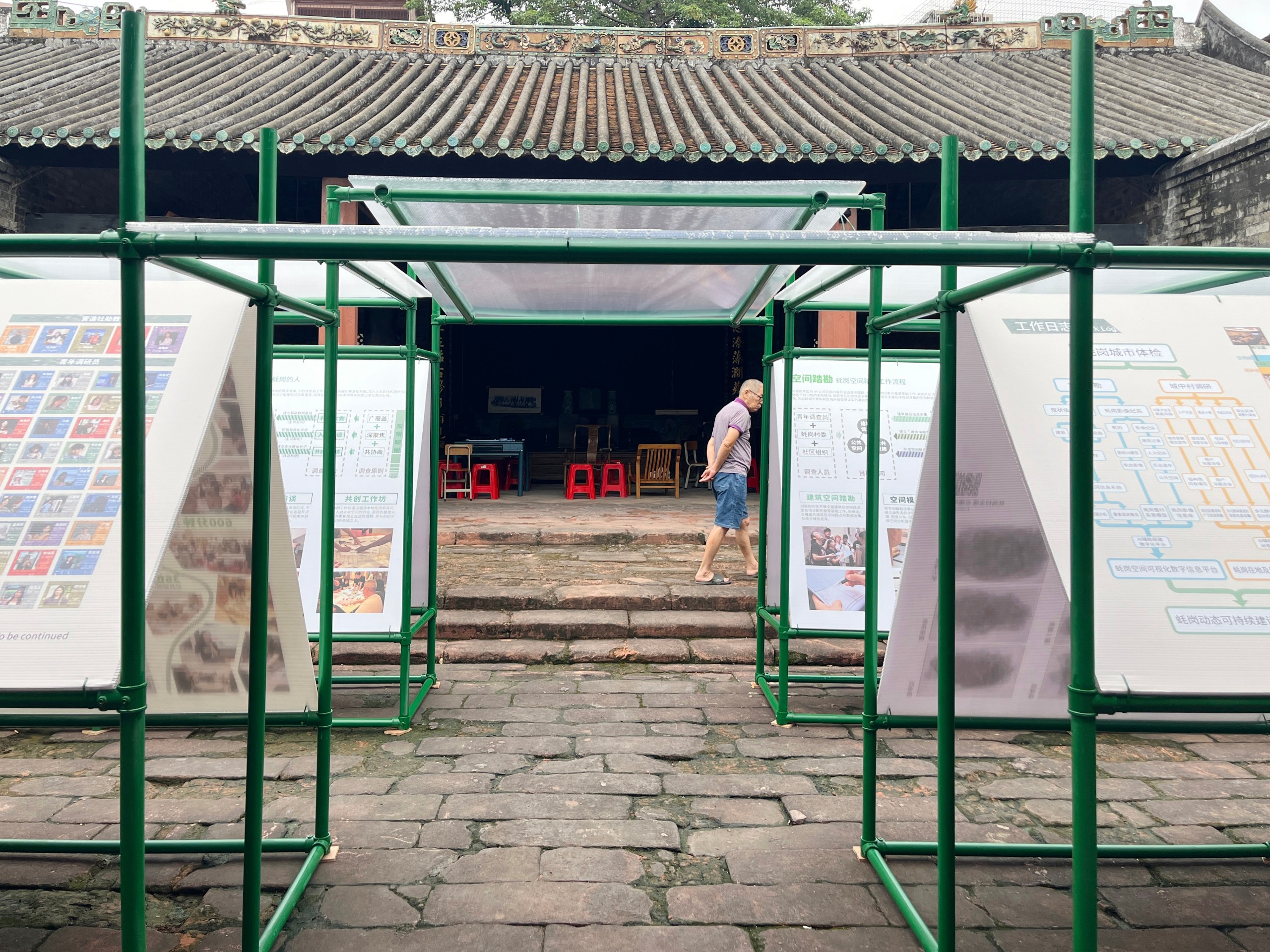
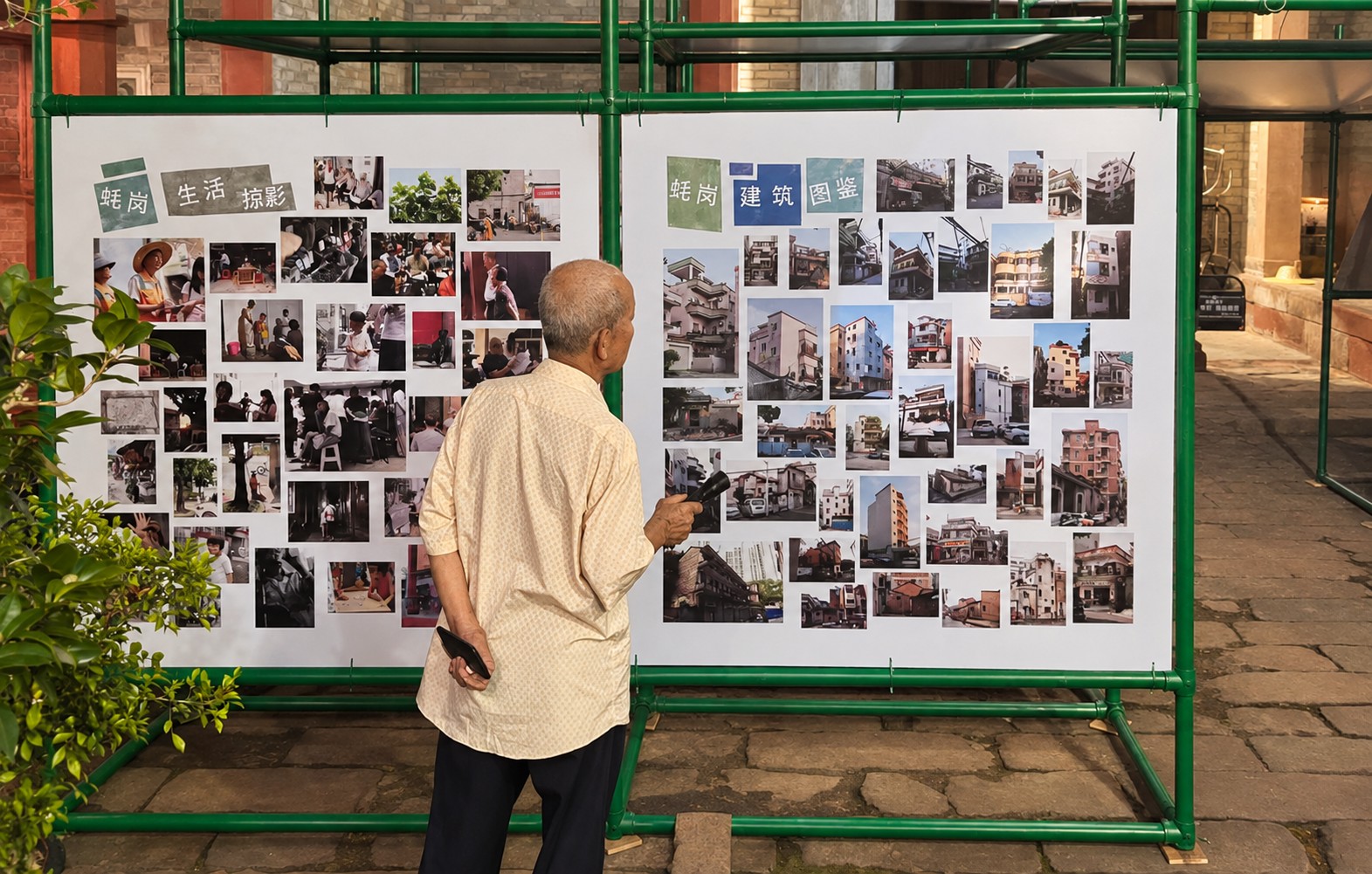
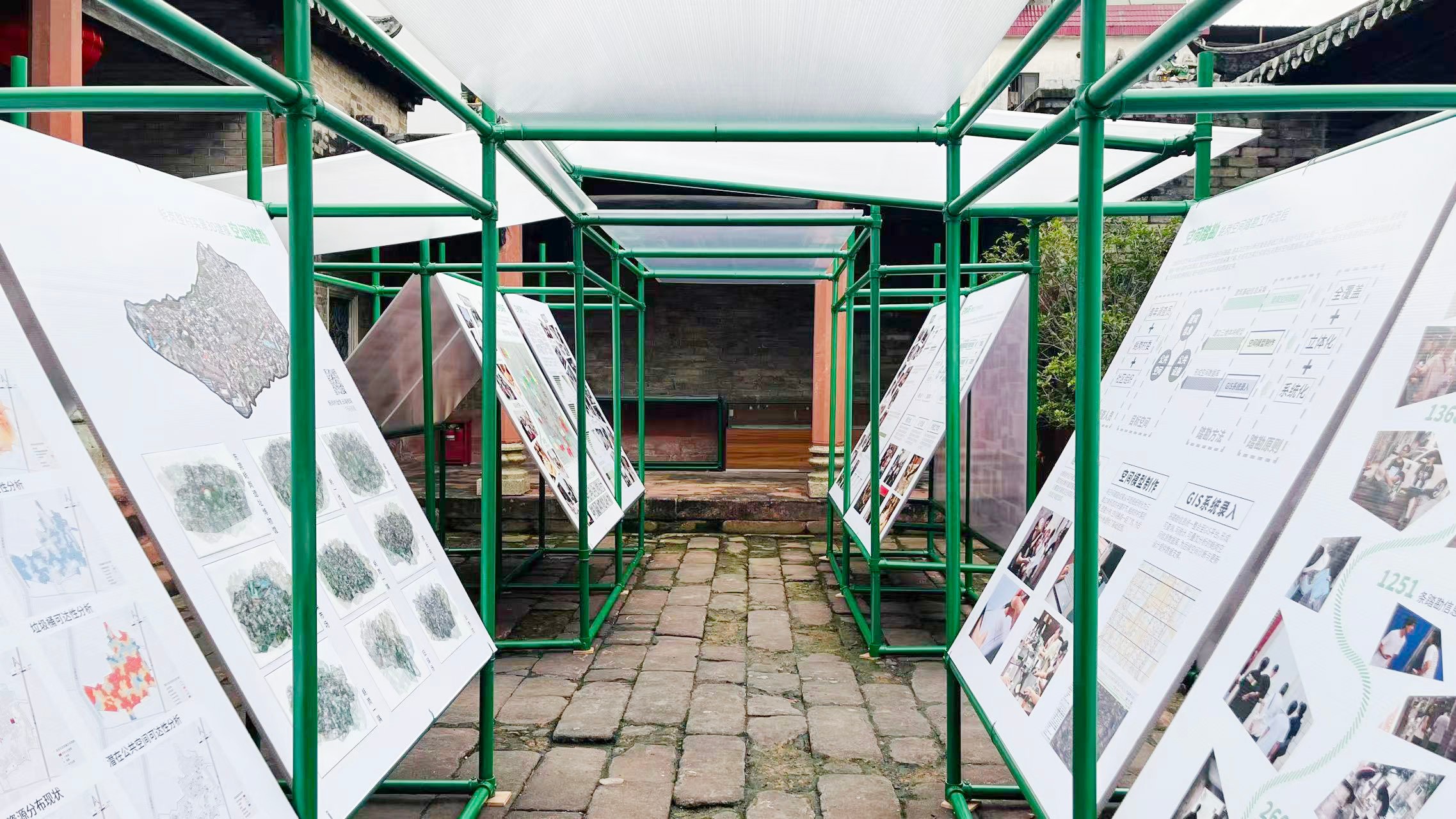
The main venue of Haogang Ji is the Su Clan Ancestral Hall, which is more than 500 years old. Villagers cross its inner courtyard to reach the main hall, where they meet and play mahjong. Rather than block that route, the team followed it, setting out panels, maps and data in a cross that runs along the paths people already walk. Moving through it, visitors retrace the thirty days of research, from spatial exploration to interviews and workshops.
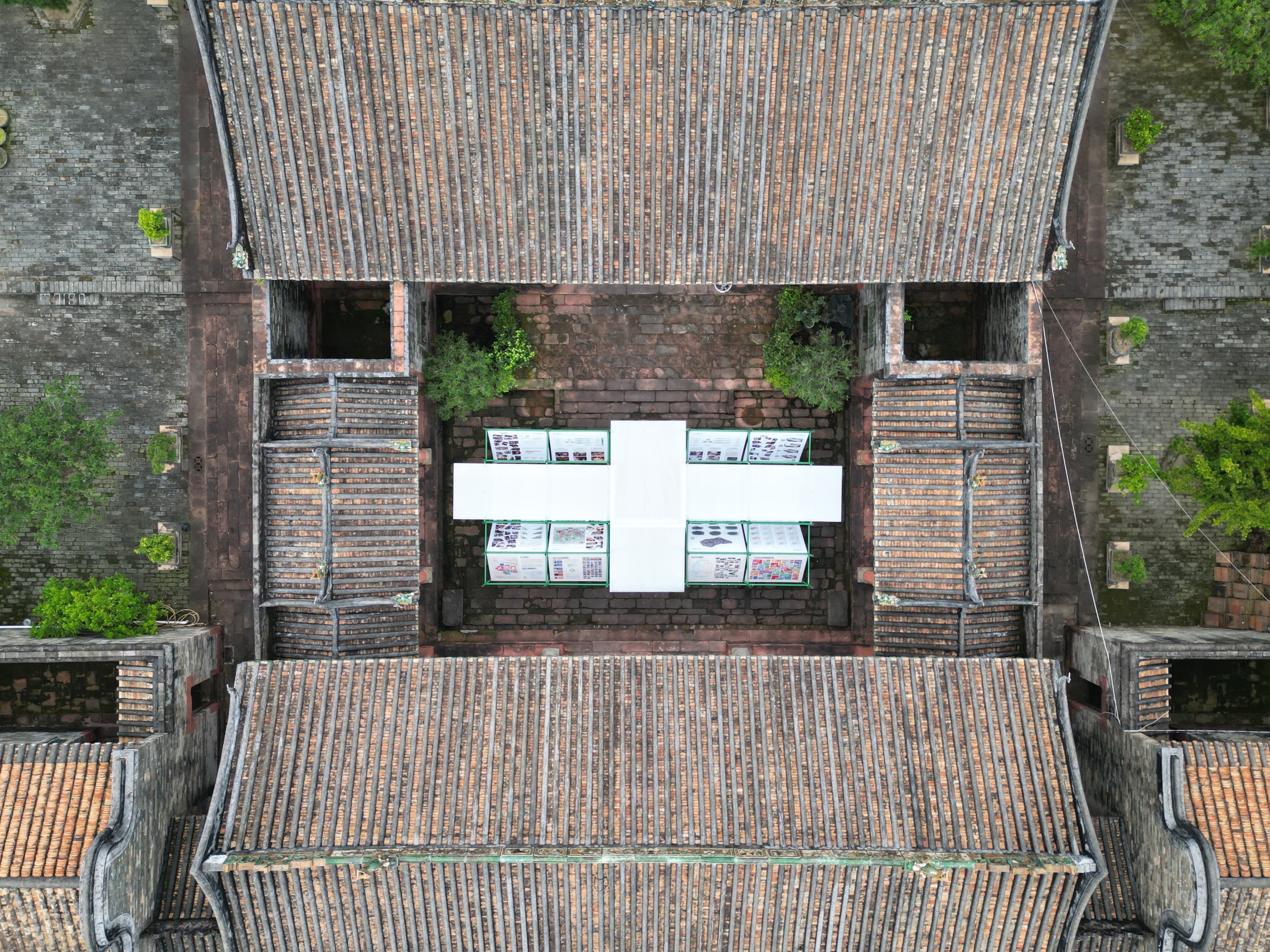
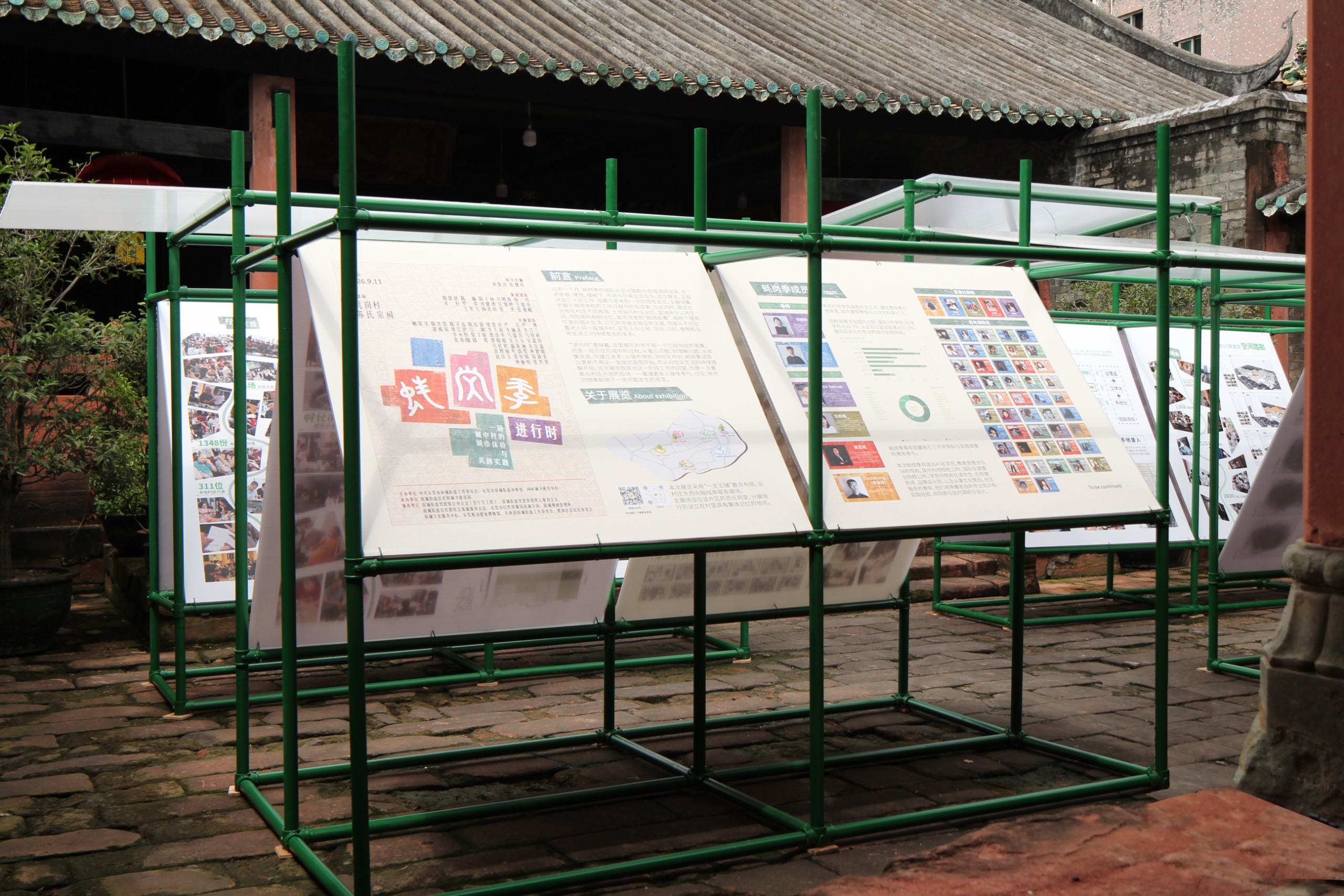
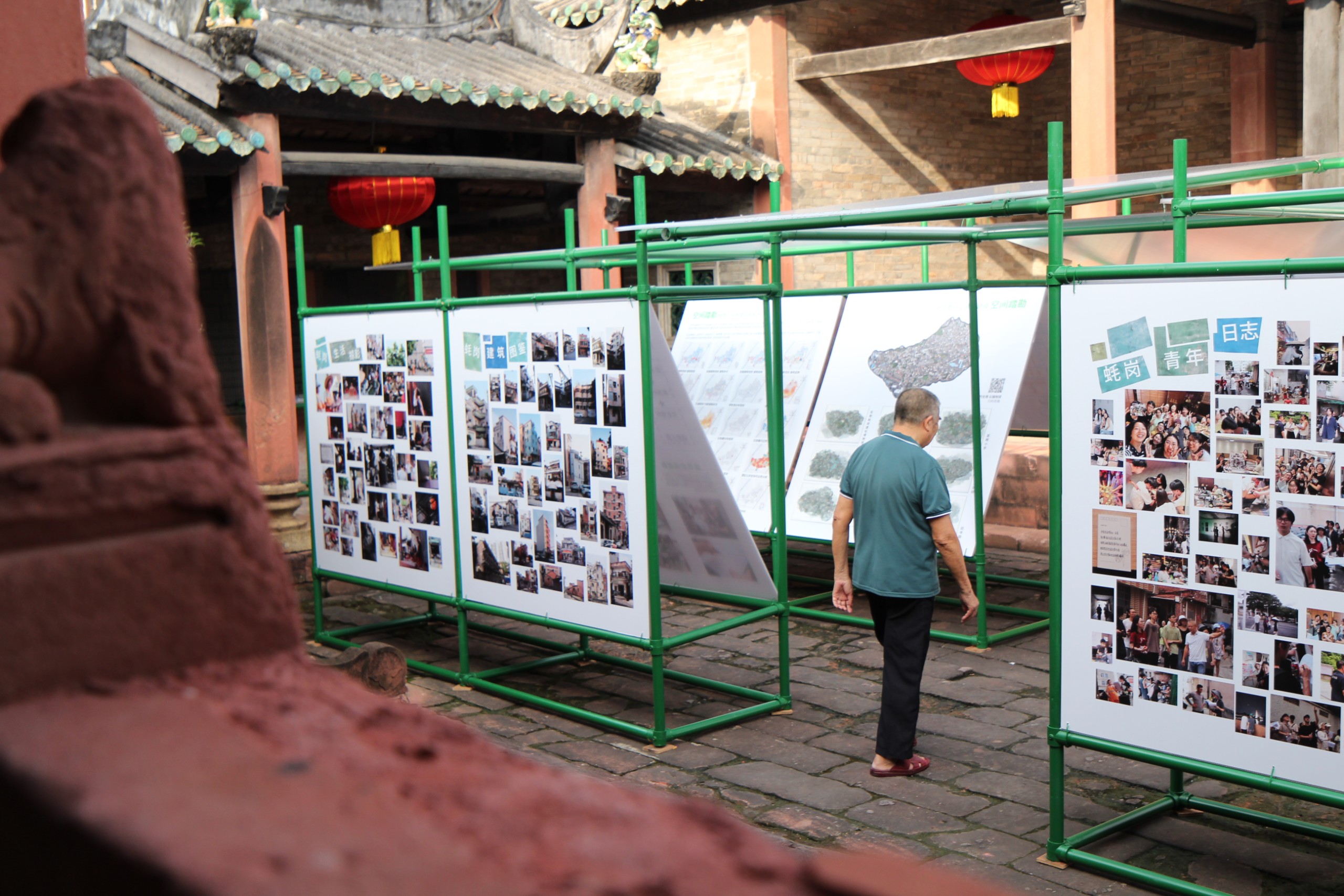
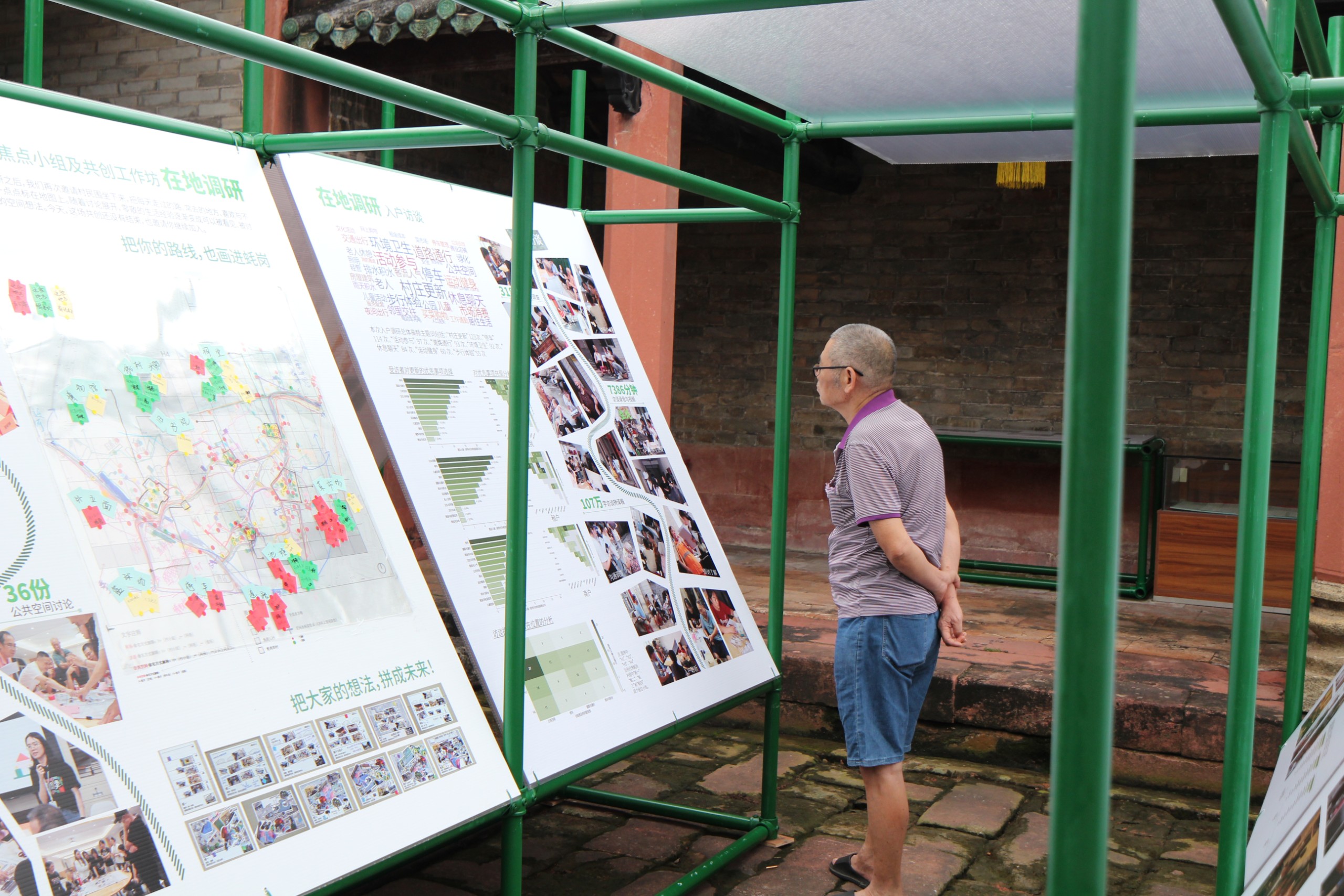
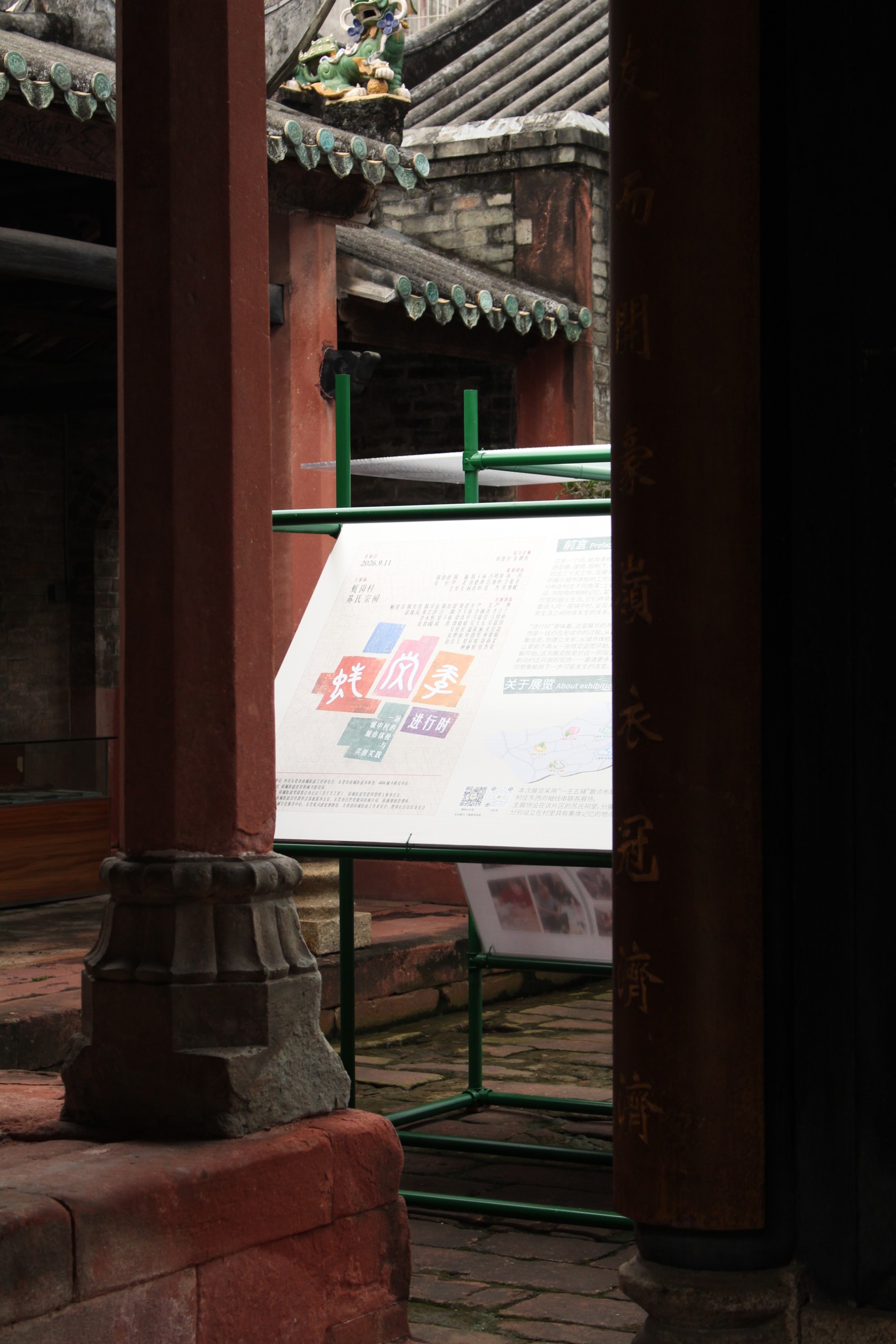
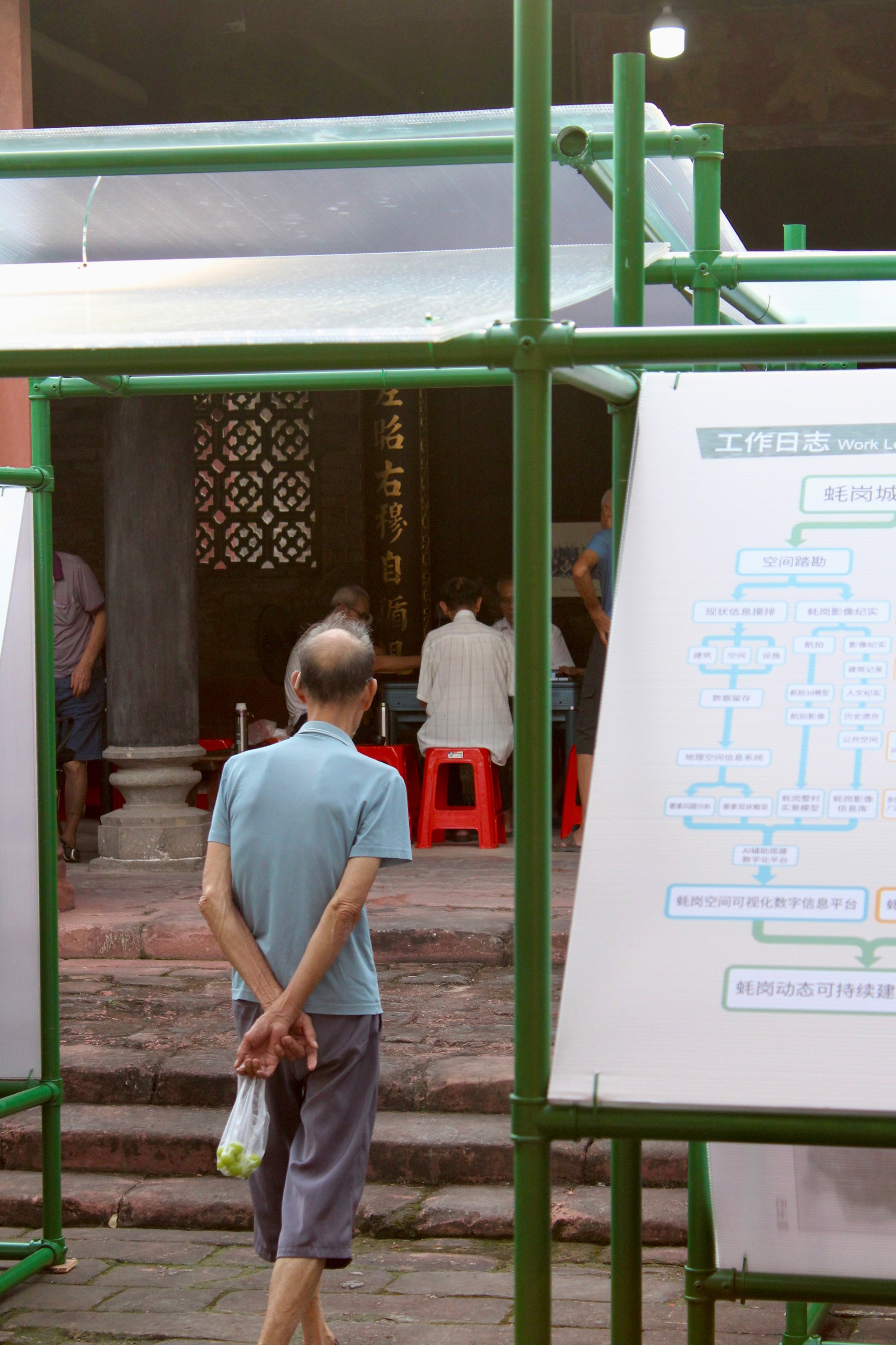
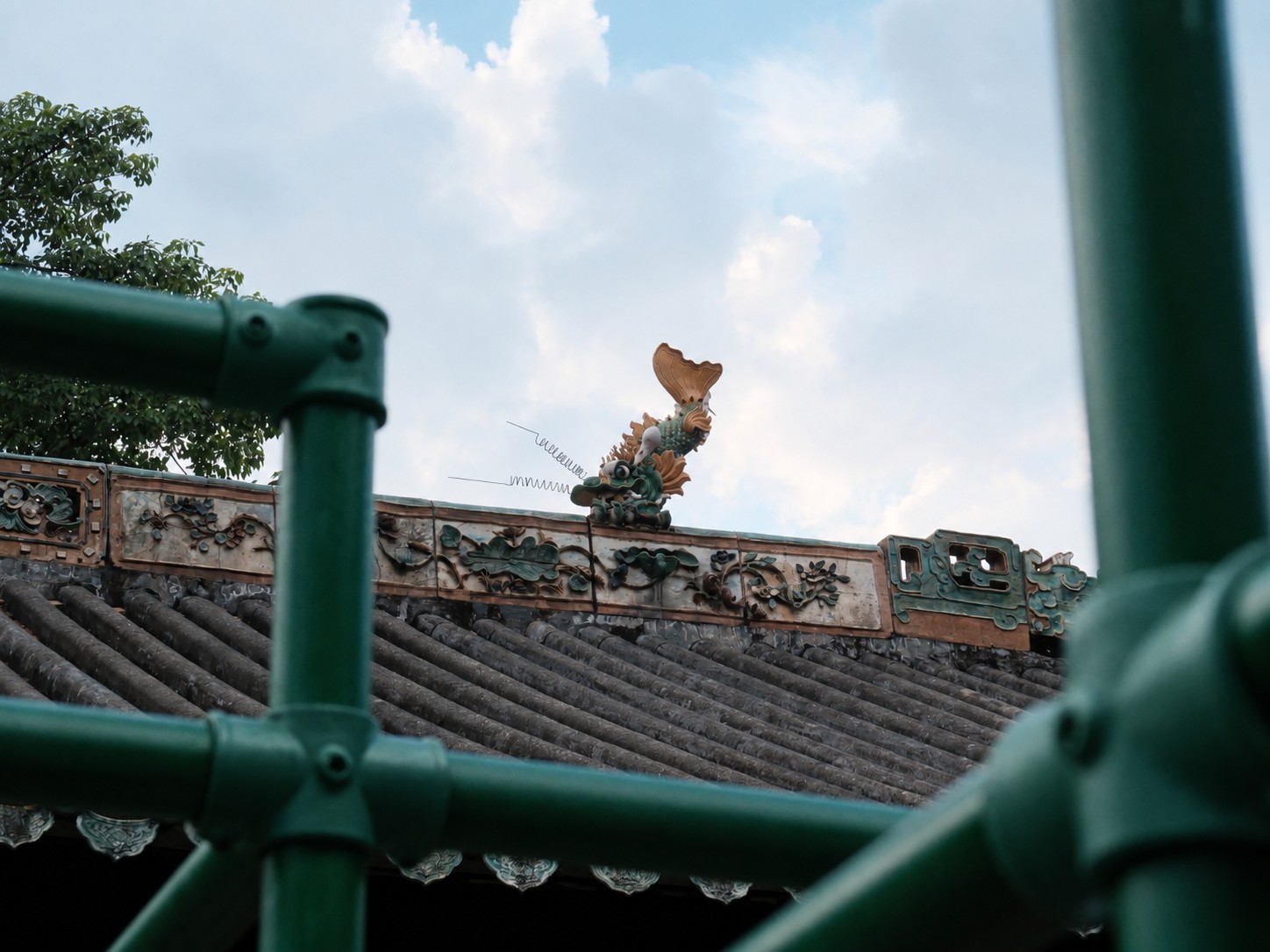
The green of the frames comes from the hall’s roof tiles and window lattices, and it stands out against the red sandstone of the courtyard.
A pavilion for the barber
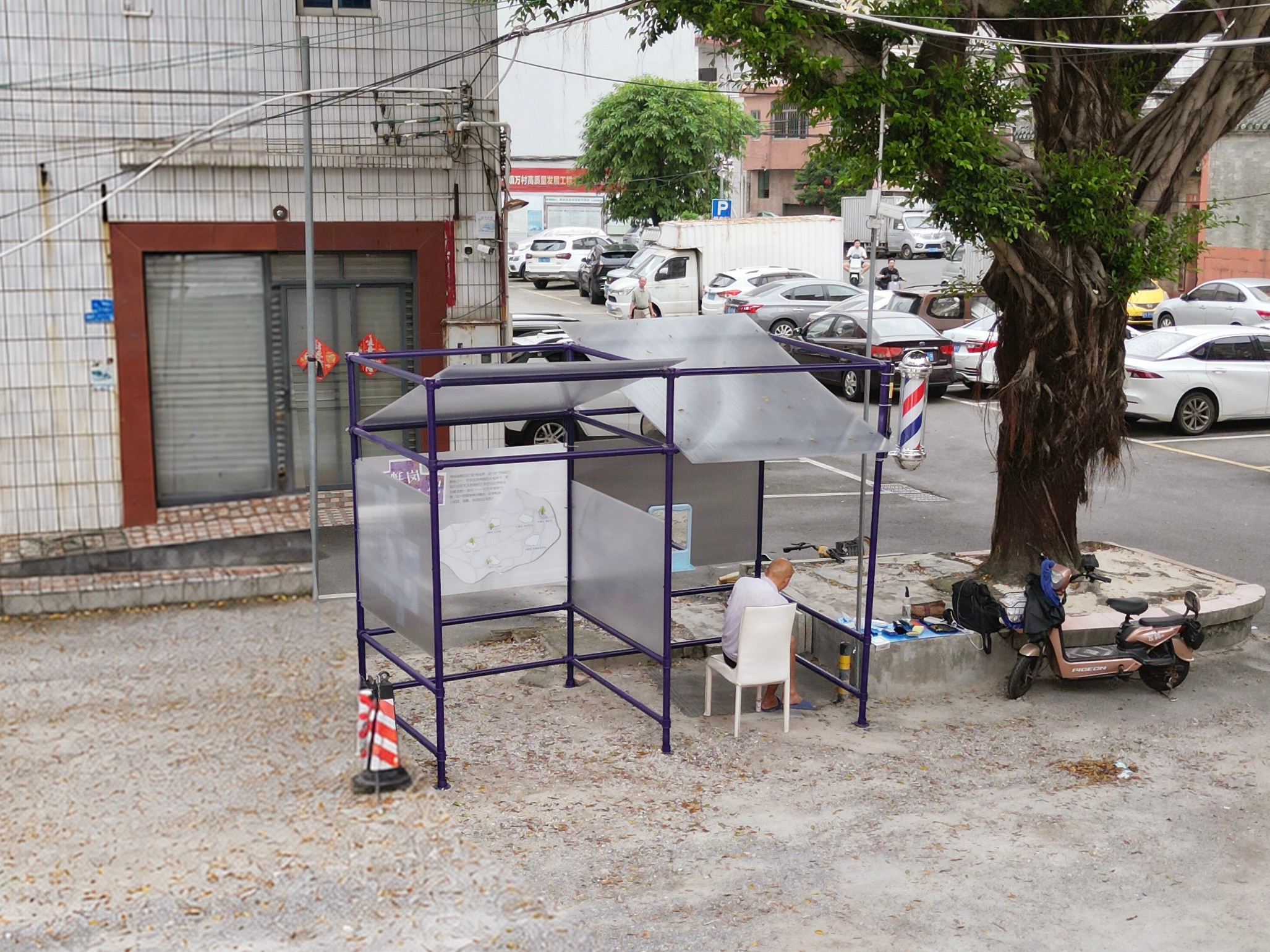
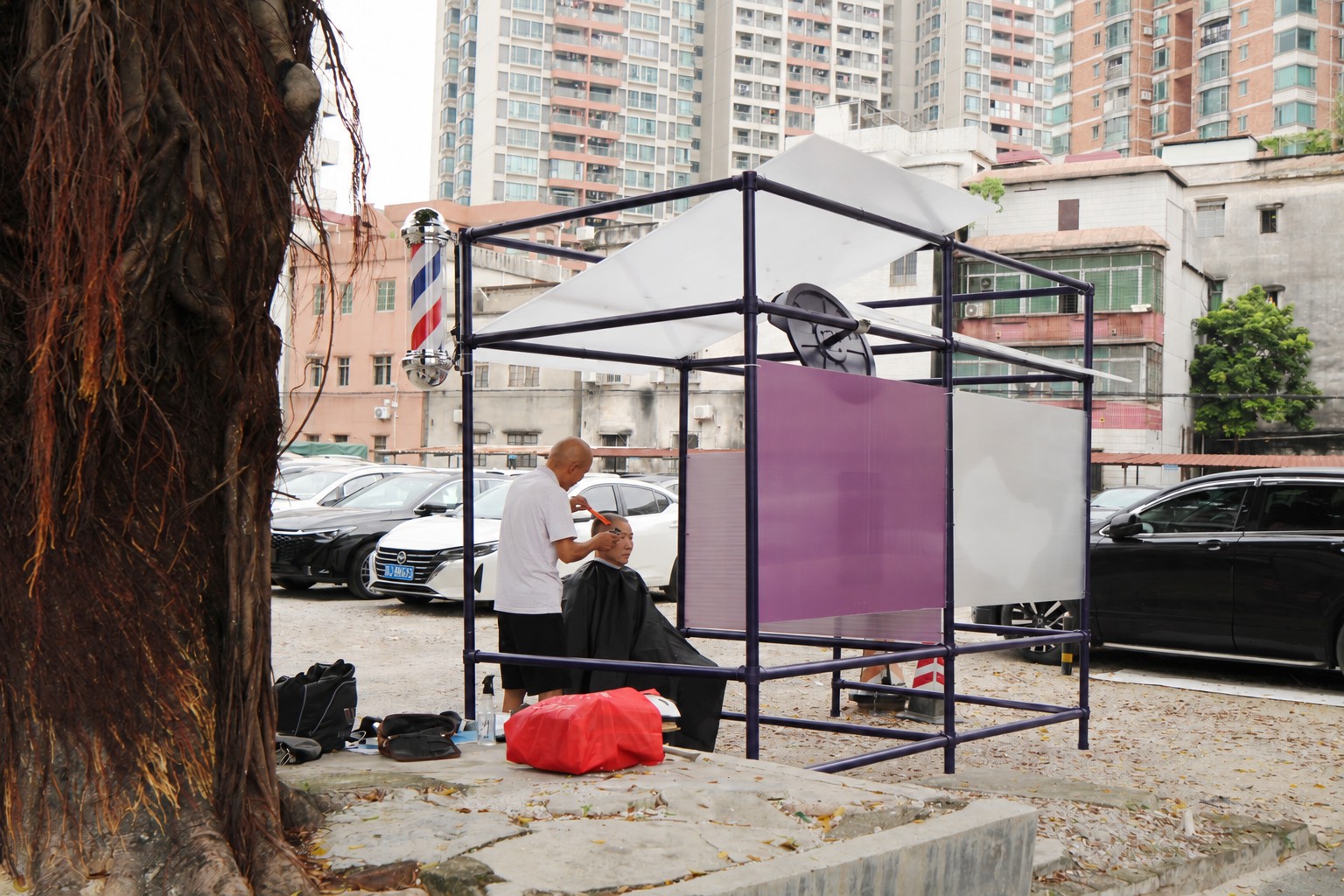
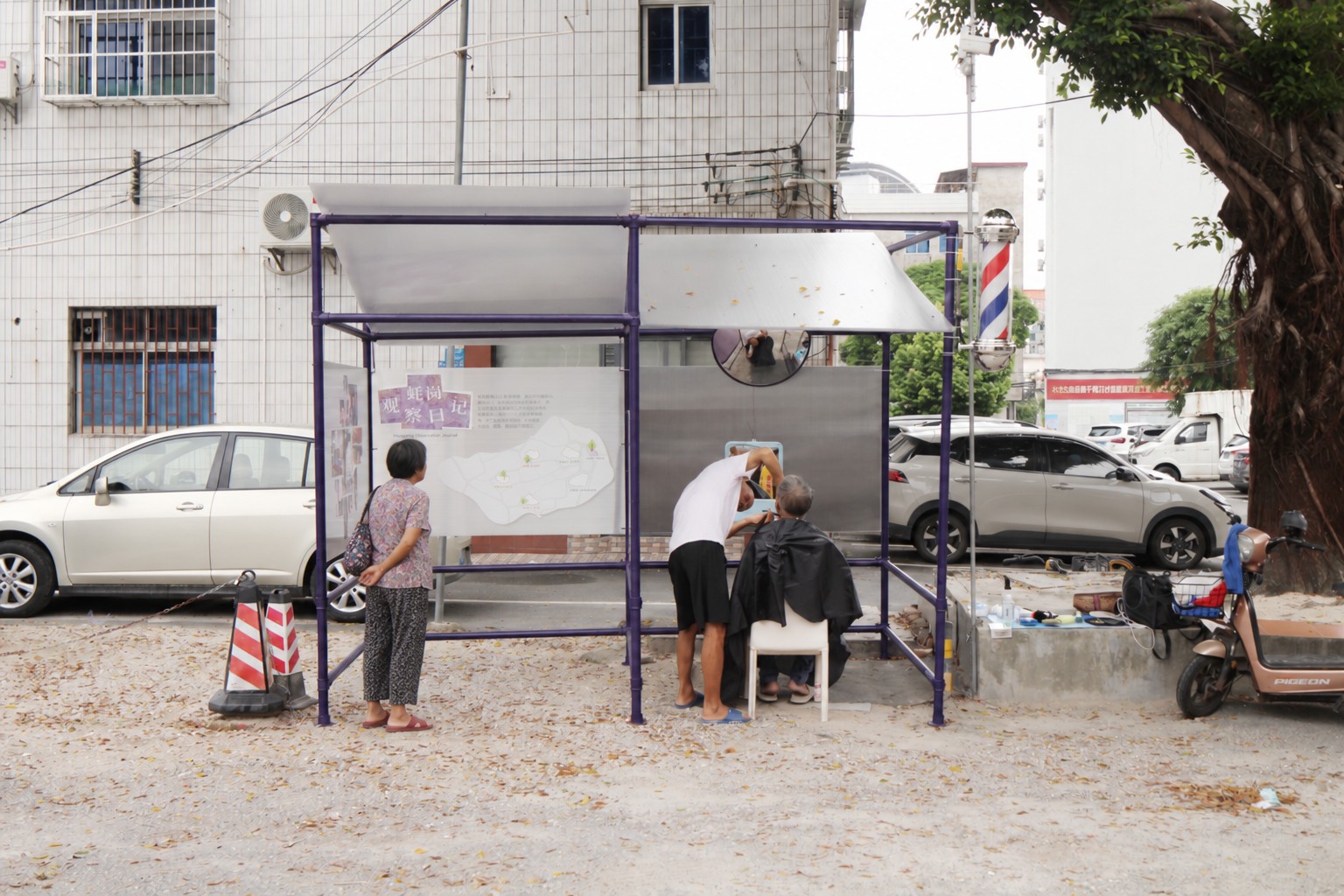
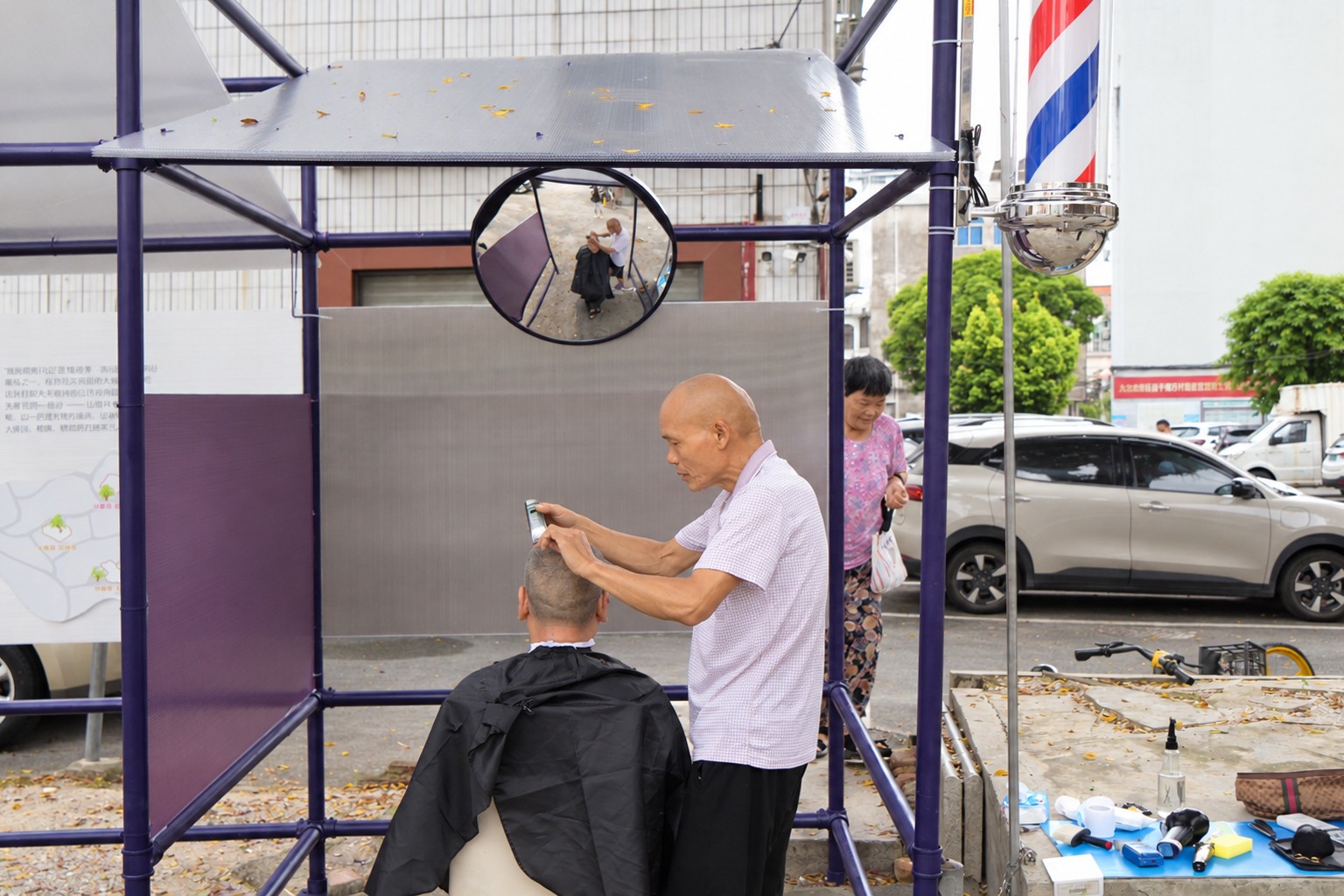
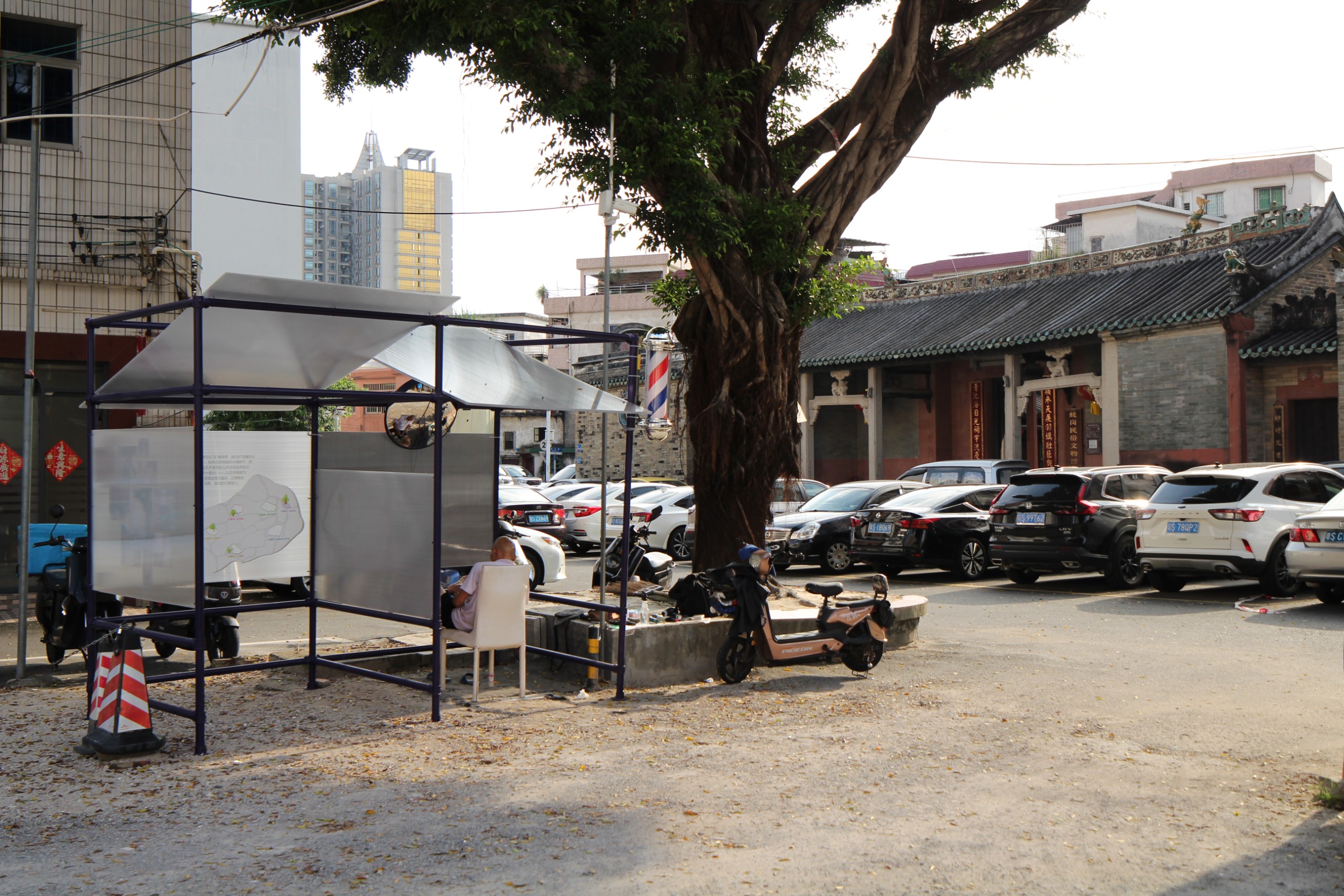
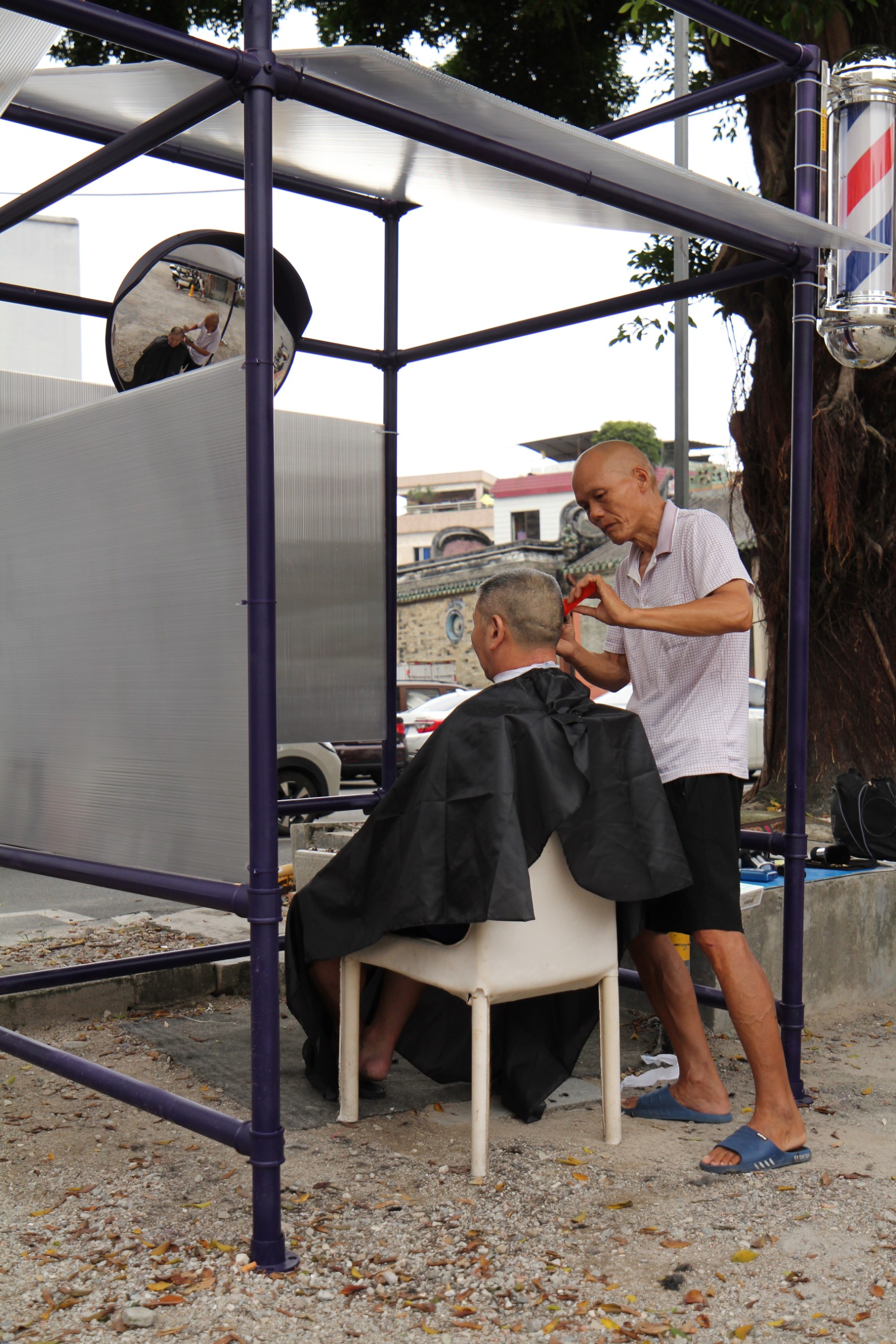
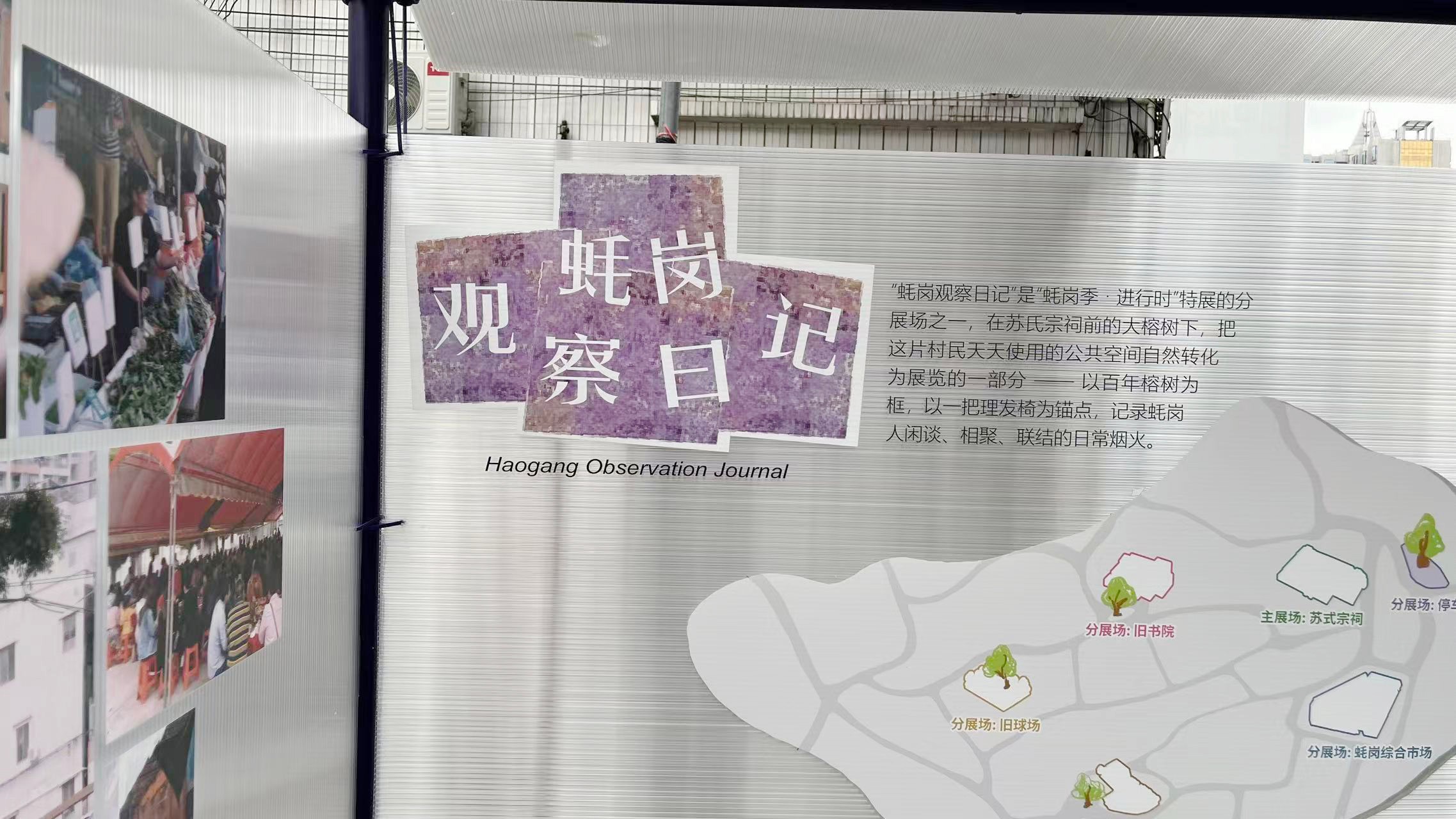
During fieldwork, the team kept seeing a local barber cutting hair at an outdoor stall under a banyan tree beside a car park in the Hao’er Residents’ Group. So they built him a pavilion. One side faces the tree and shelters his chair from sun and rain, marked by a three-colour rotating light, with a small traffic mirror hung above the station to serve as his mirror. The other side holds the Haogang Observation Journal, a record of the conversations and small gatherings that shape life in the village.
Memories beneath the banyan tree
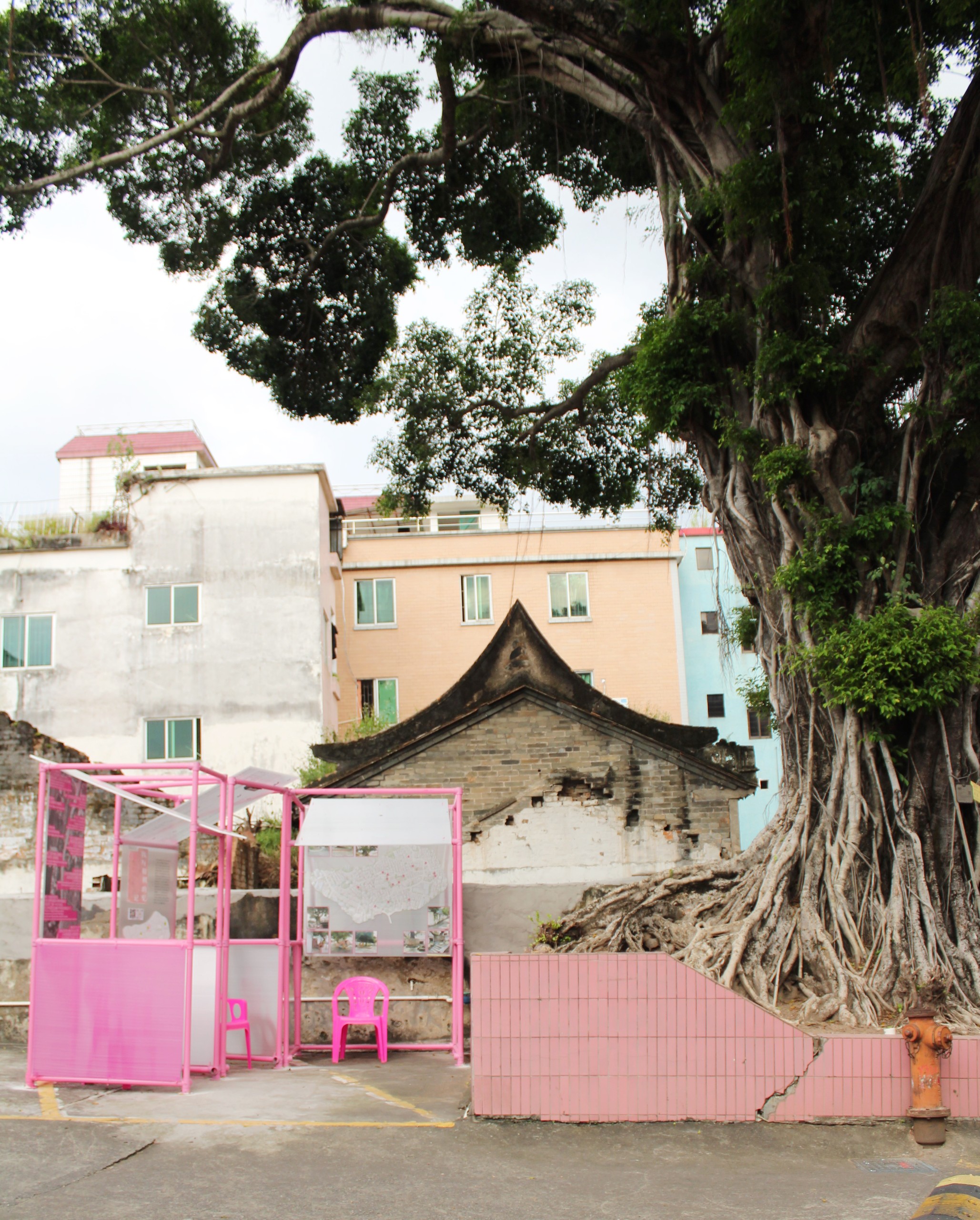
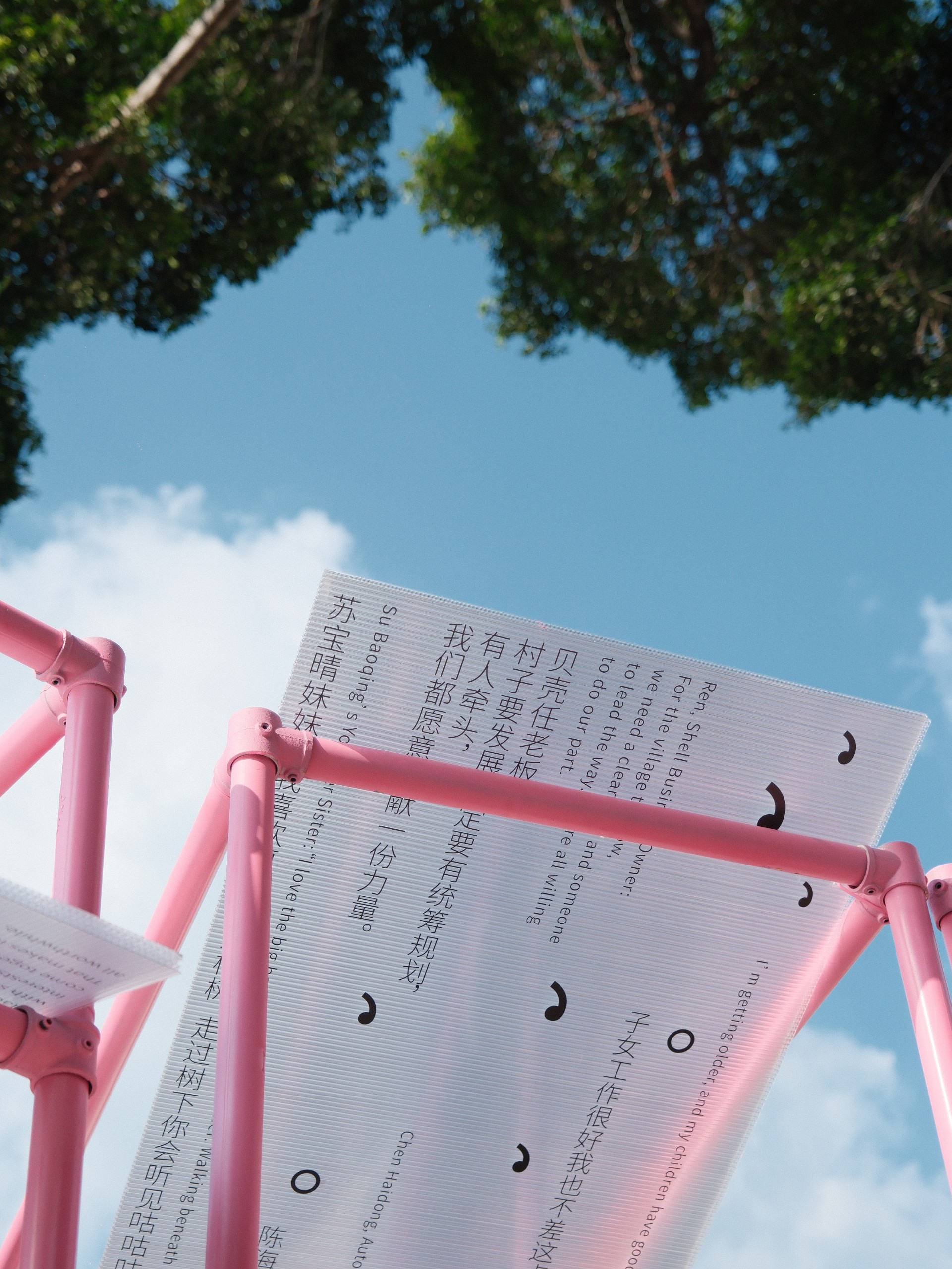
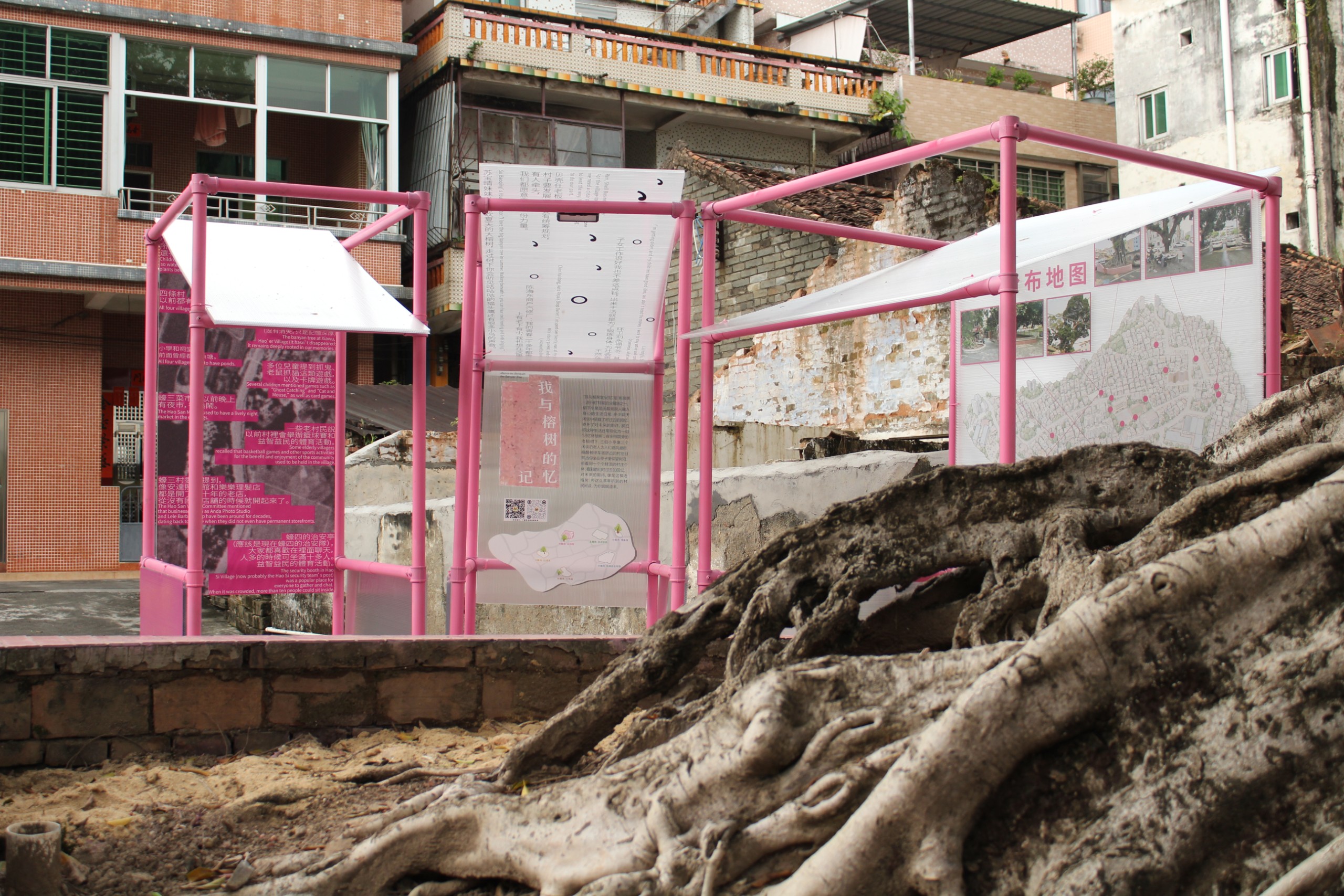
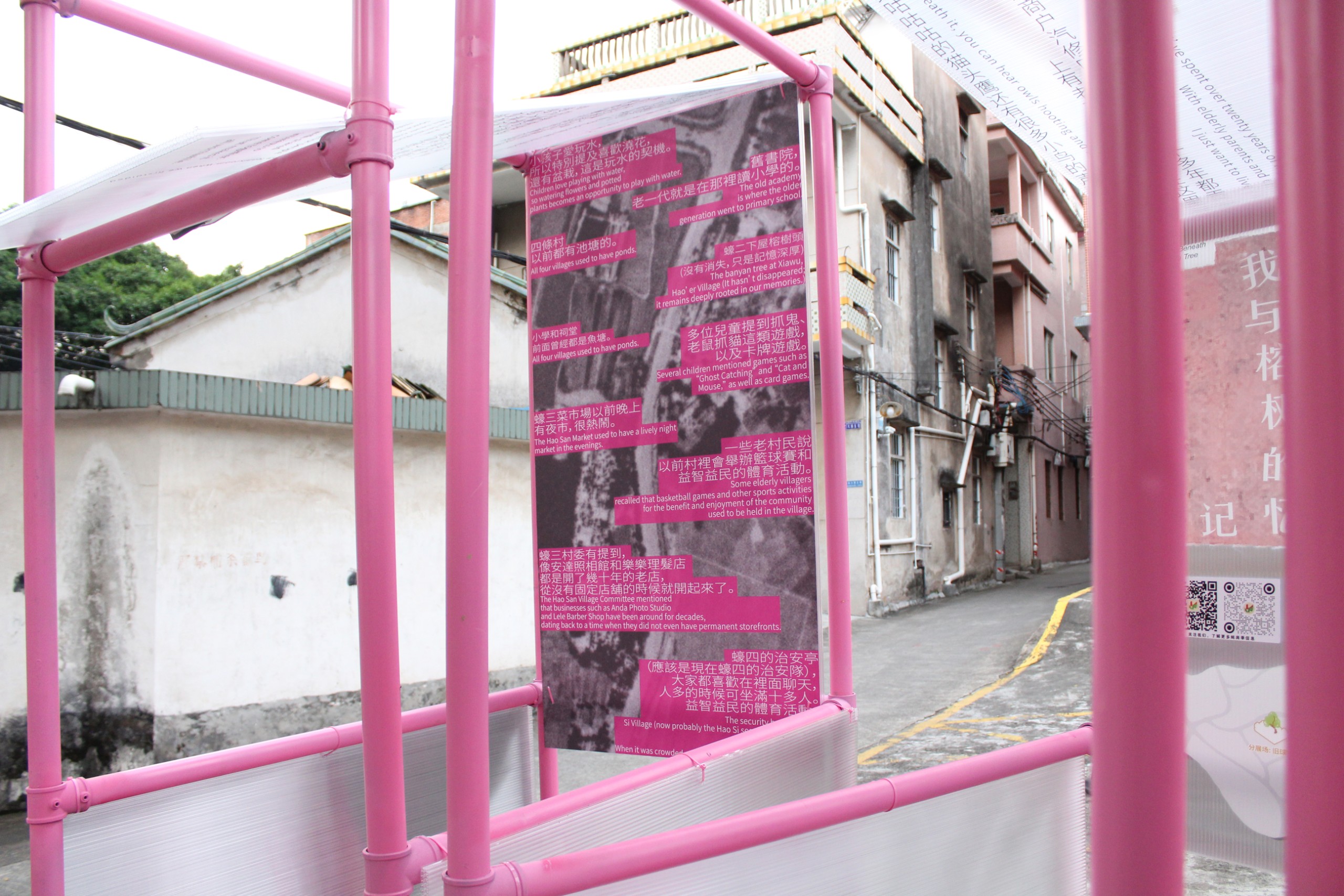
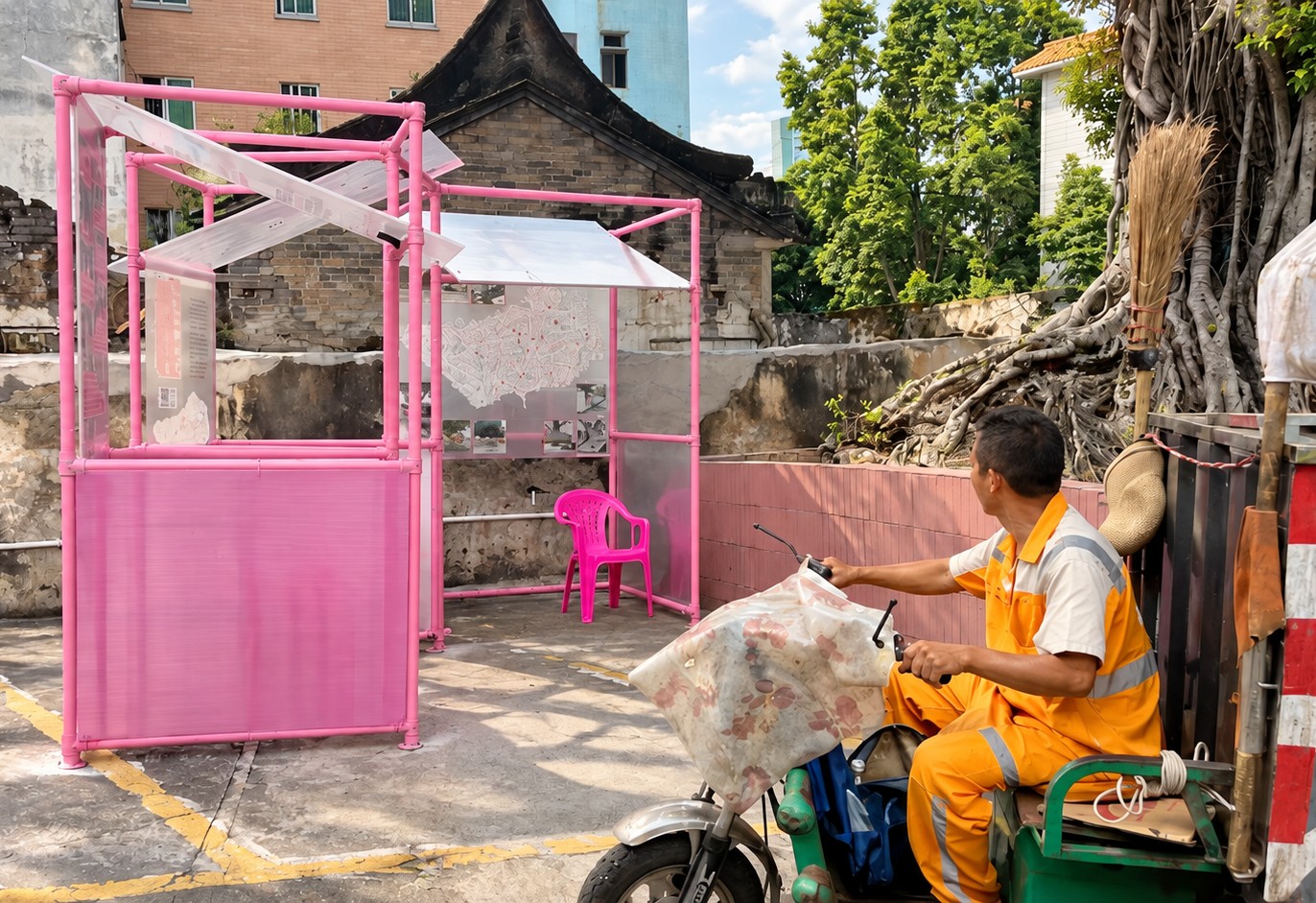
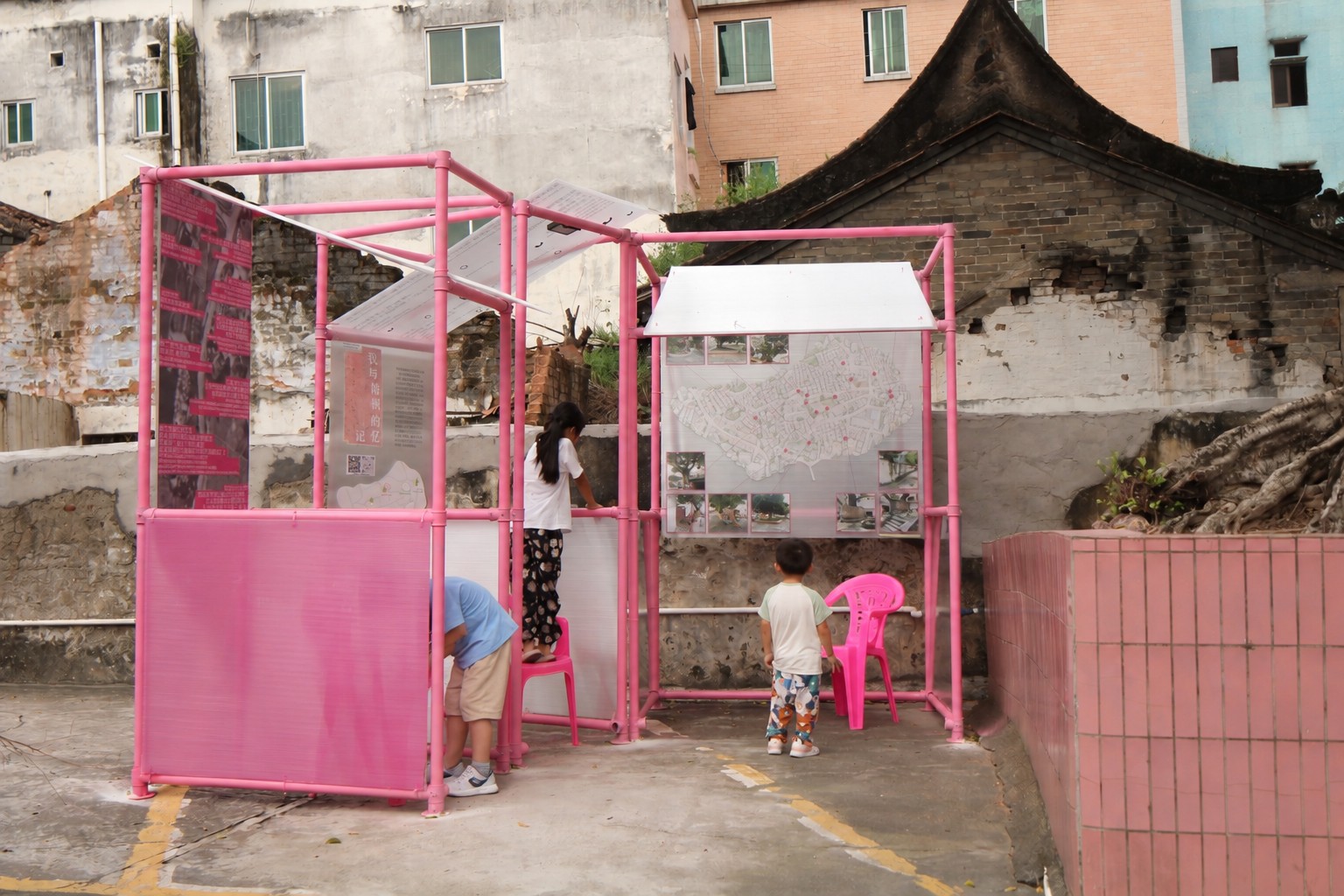
The Old Academy was a primary school for generations of Haogang residents and now stands empty. Beside it grows a century-old banyan, one of the village’s shared landmarks. Here Haogang Ji places three small pavilions next to the tree, their pink taken from the tiles around its base. Stories collected during household visits, along with residents’ own messages, are printed on translucent polycarbonate roof panels, where they catch the moving shadows of the leaves.

Haogang Ji on the old sports ground
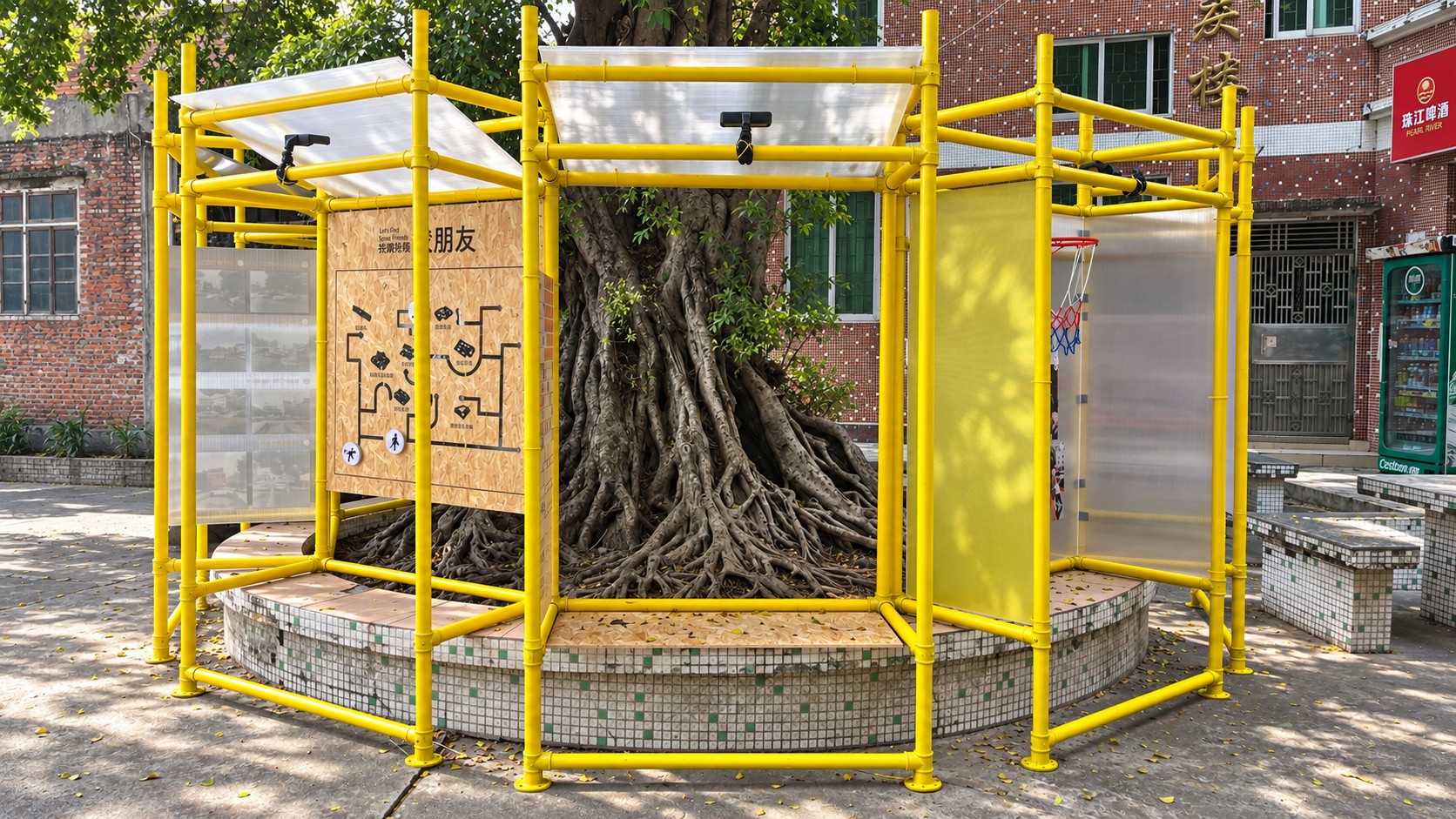
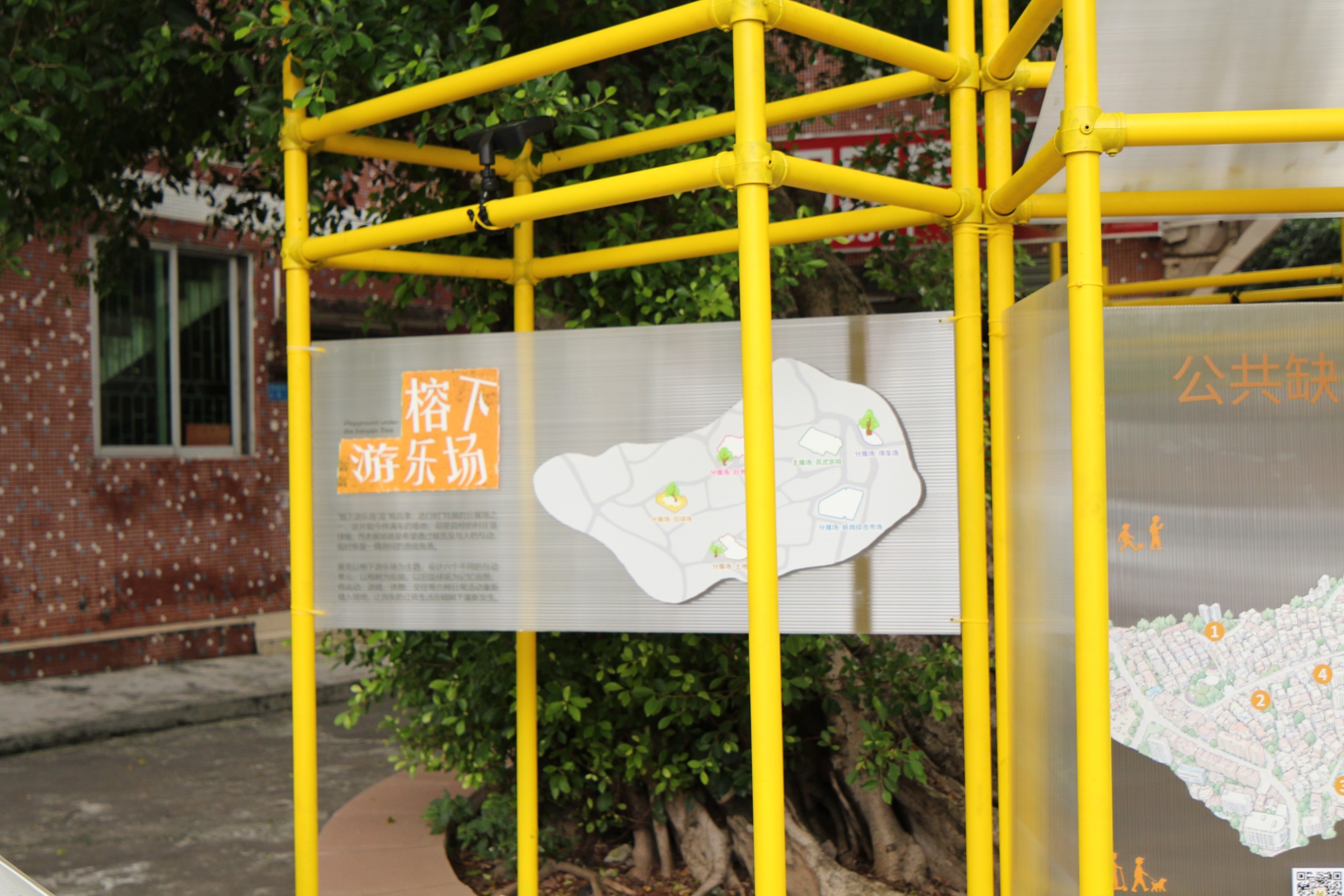
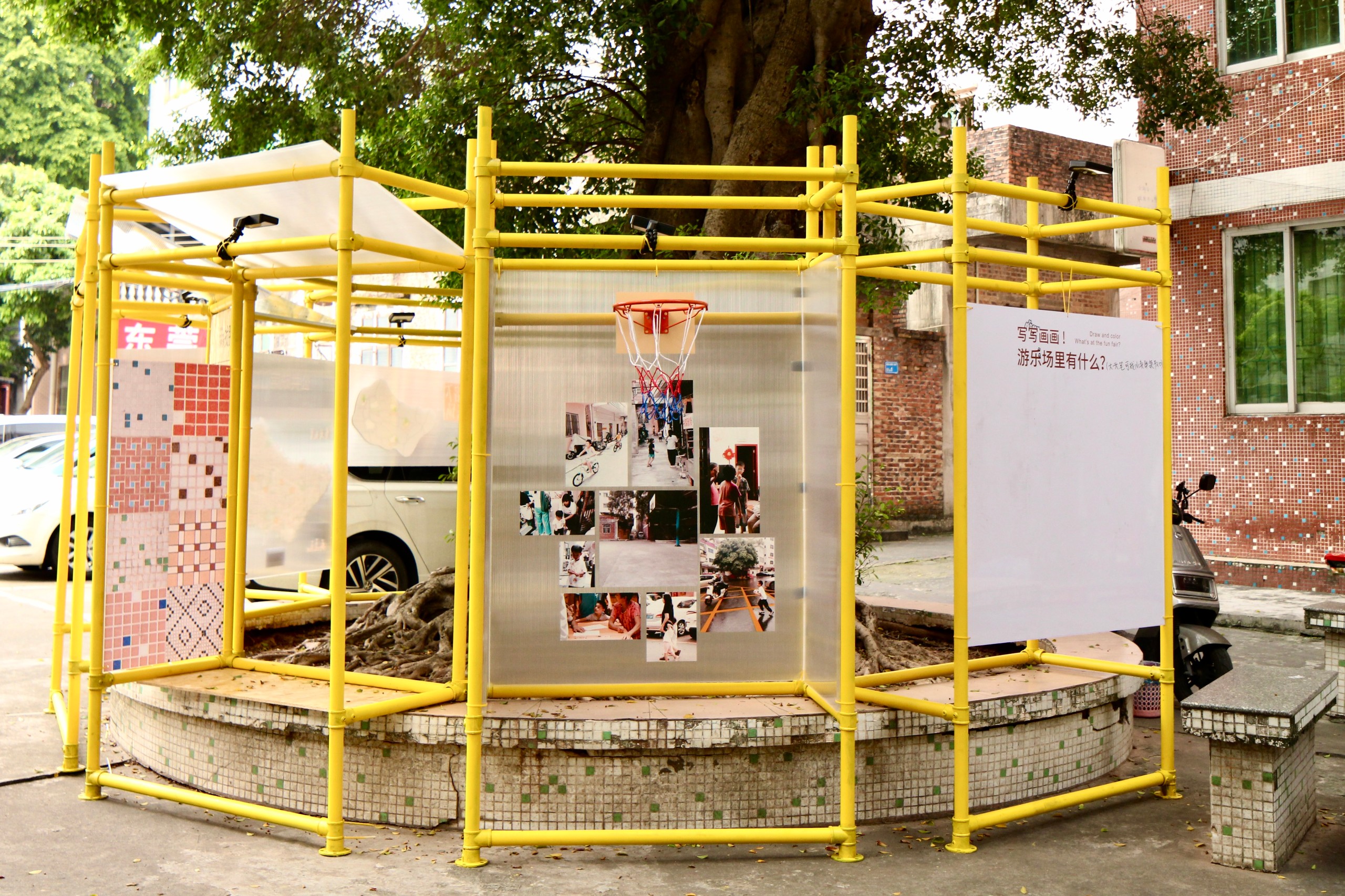
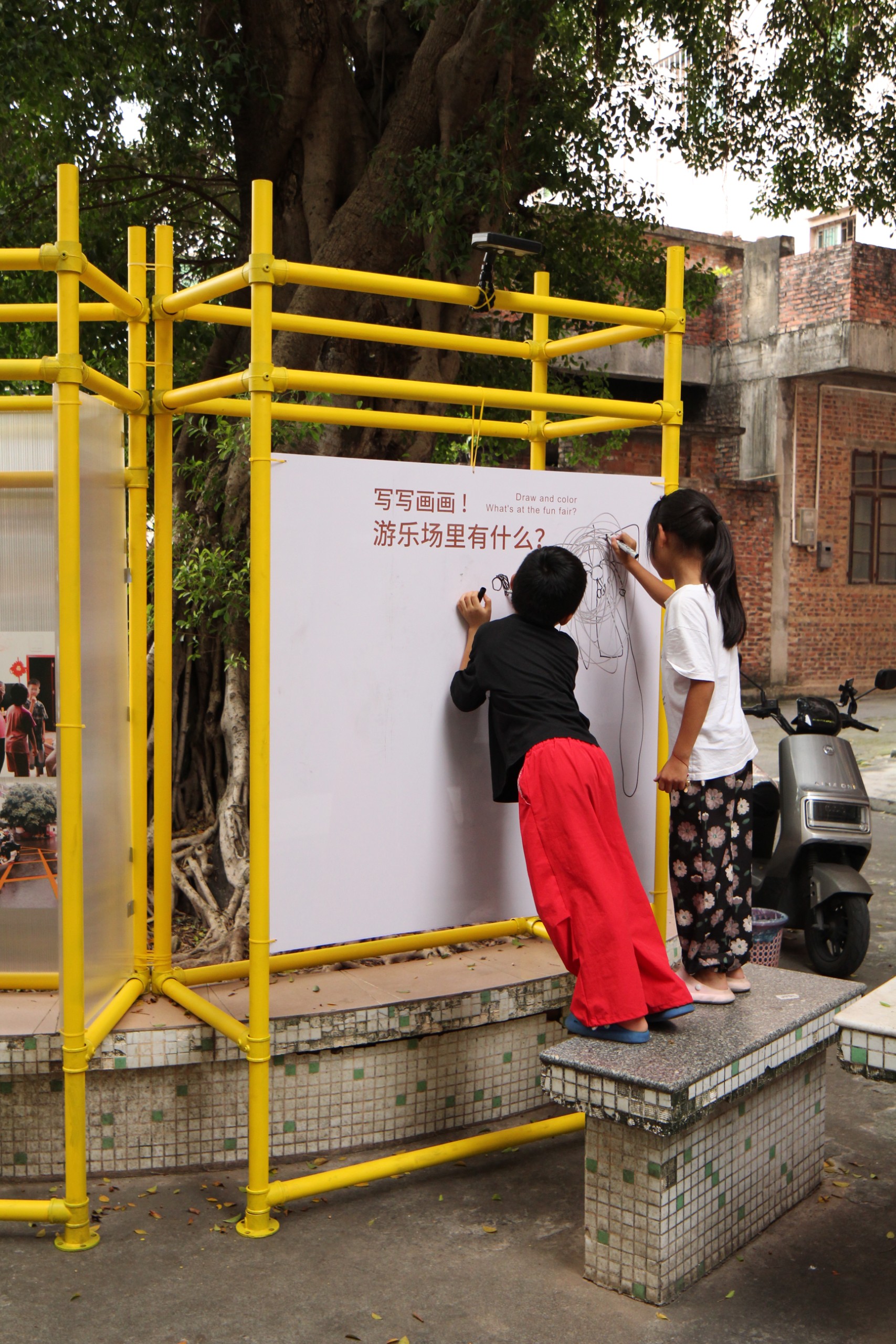
Villagers often brought up the Old Sports Ground when they talked about their childhood. It is now a car park, and the same thing has happened across Haogang, where public space has steadily given way to parking. Here the team set six bright yellow interactive units of a standard size around a banyan tree, fanning outward.
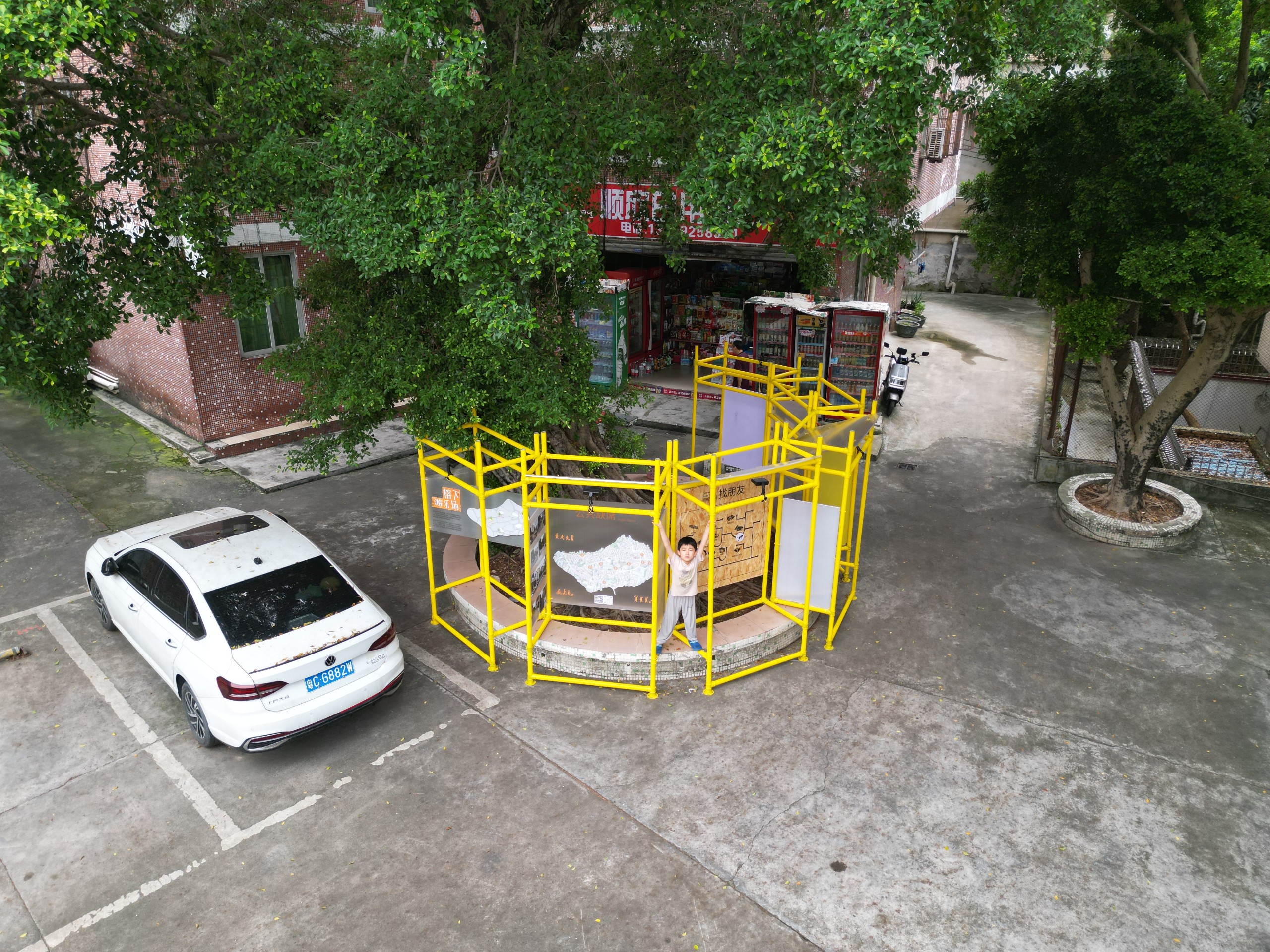
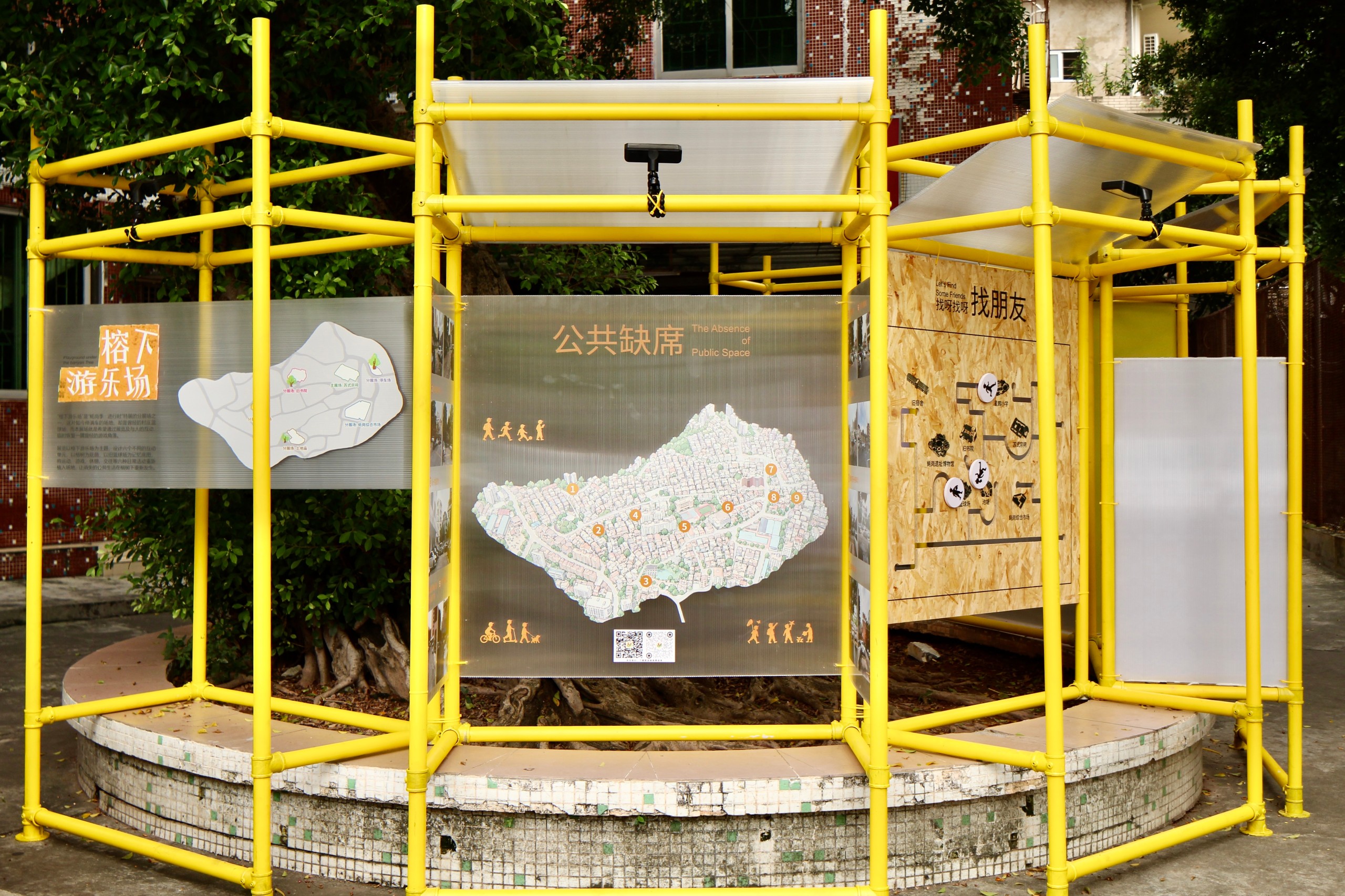

Public Absence marks former public spaces that have become car parks. Find a Friend turns the village’s main public spaces into points on a walkable maze for children. Banyan Tree Frame asks residents to look again at surroundings they take for granted. Air Basketball brings back a hoop where the court used to be, though there is no game to play. The Graffiti Wall, covered in whiteboard film, lets visitors draw their own idea of a playground.
Speaking to the land
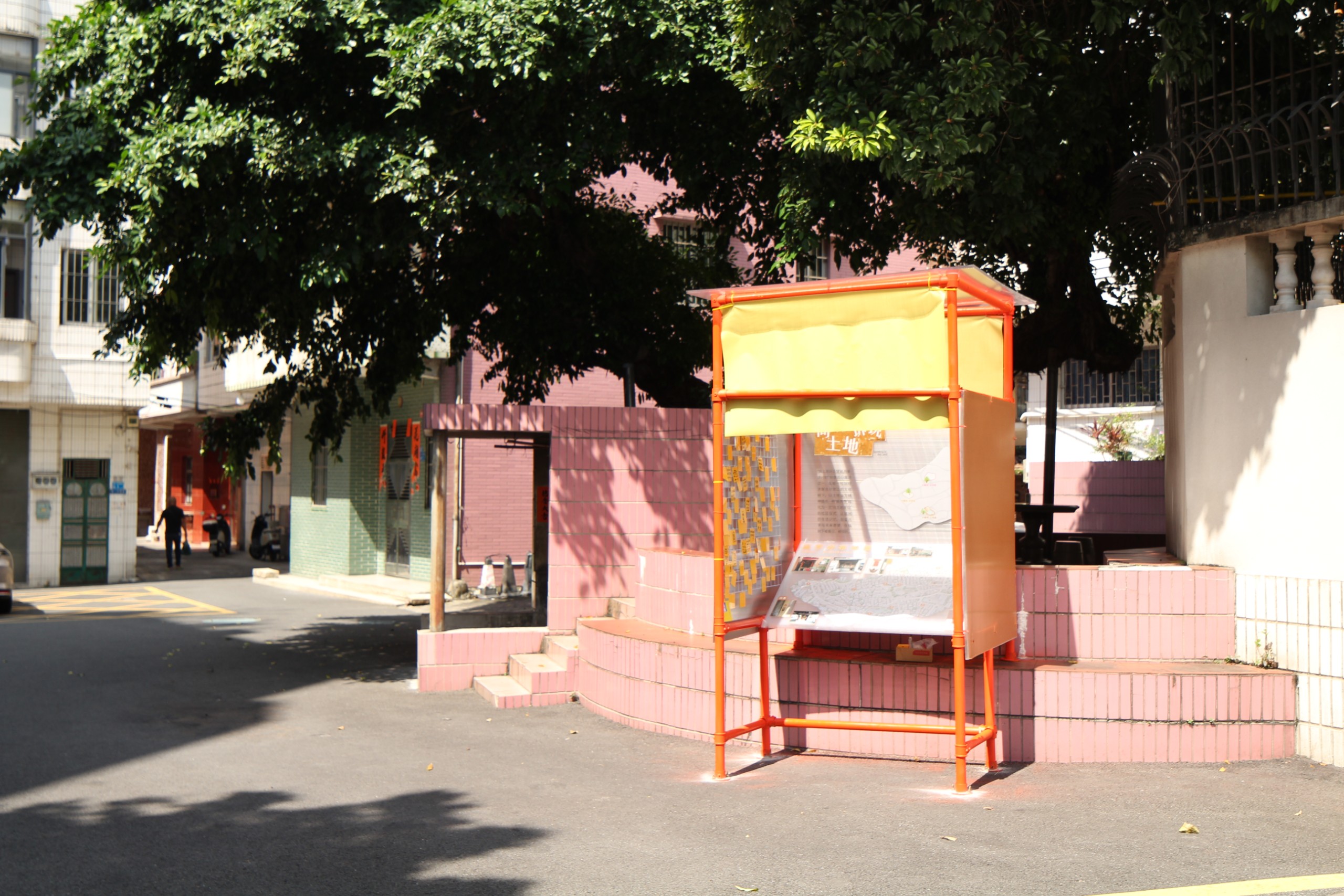
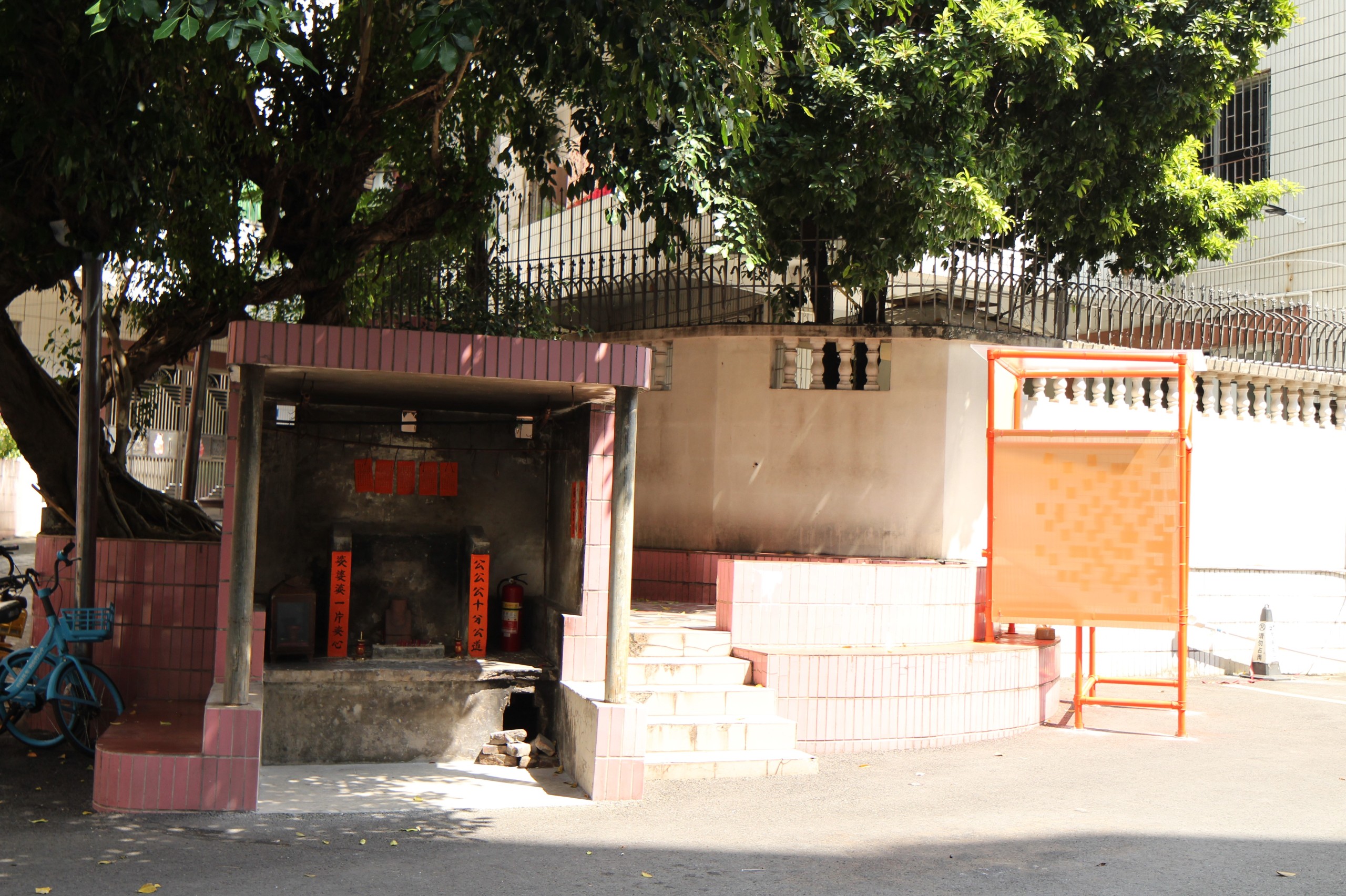
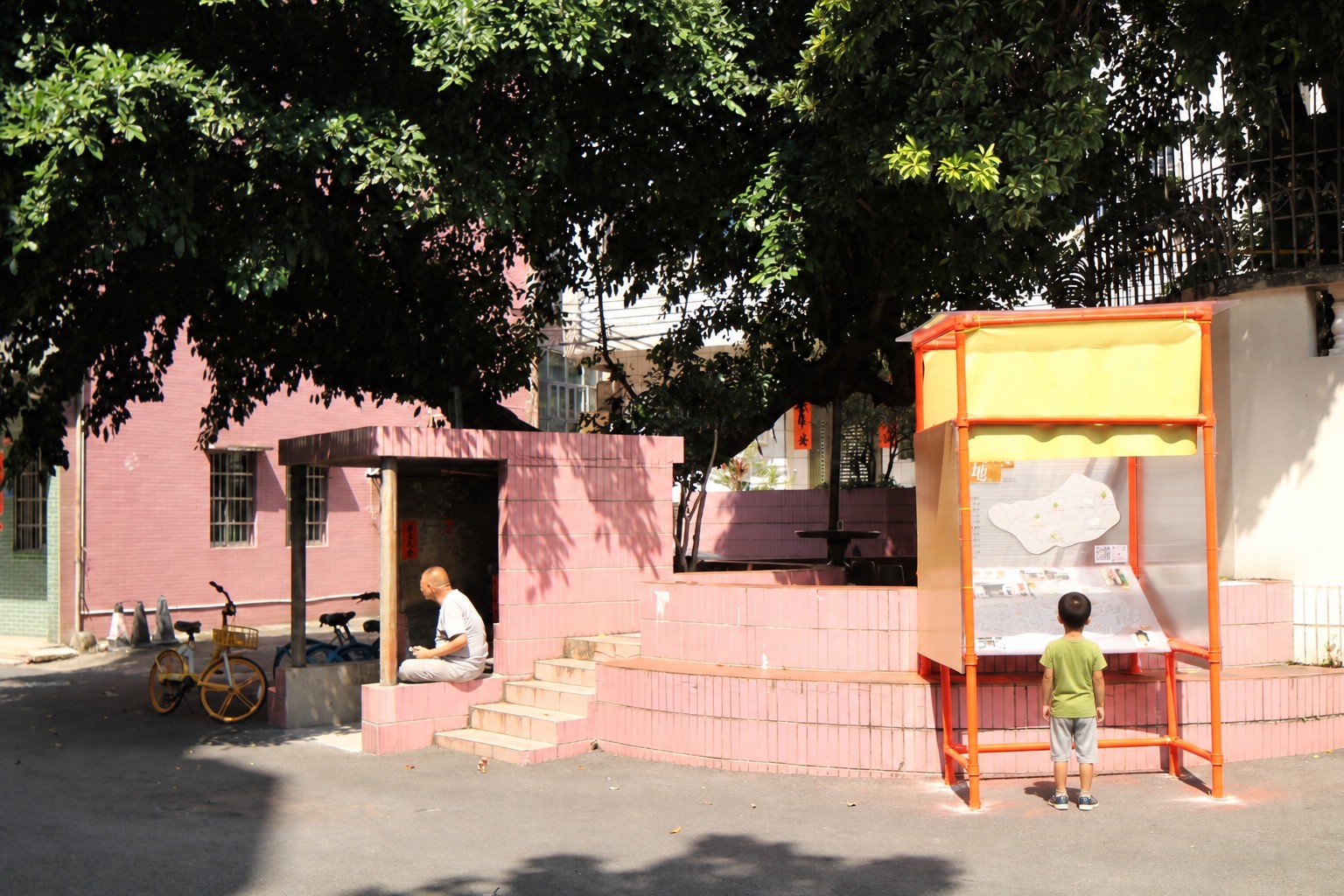
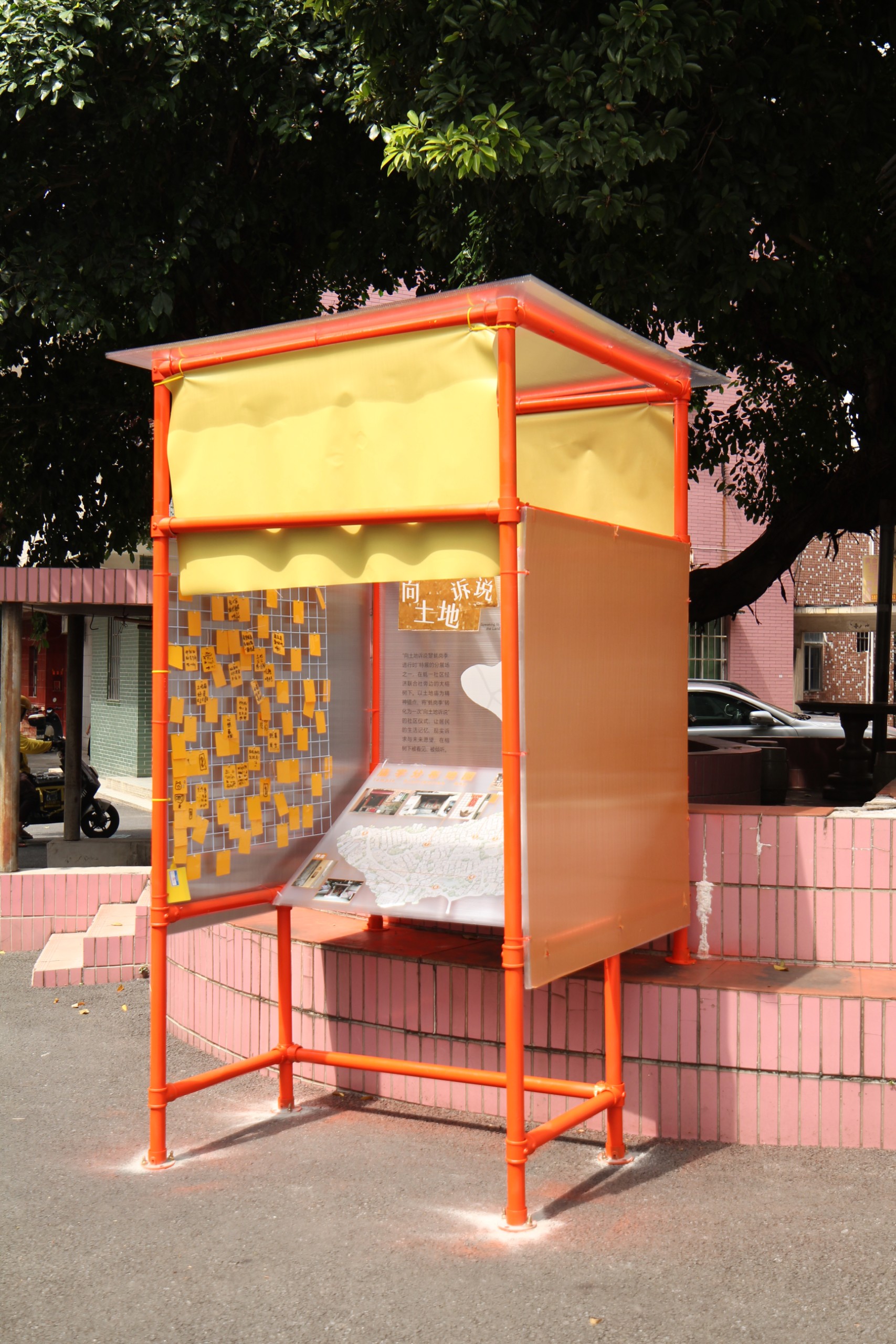
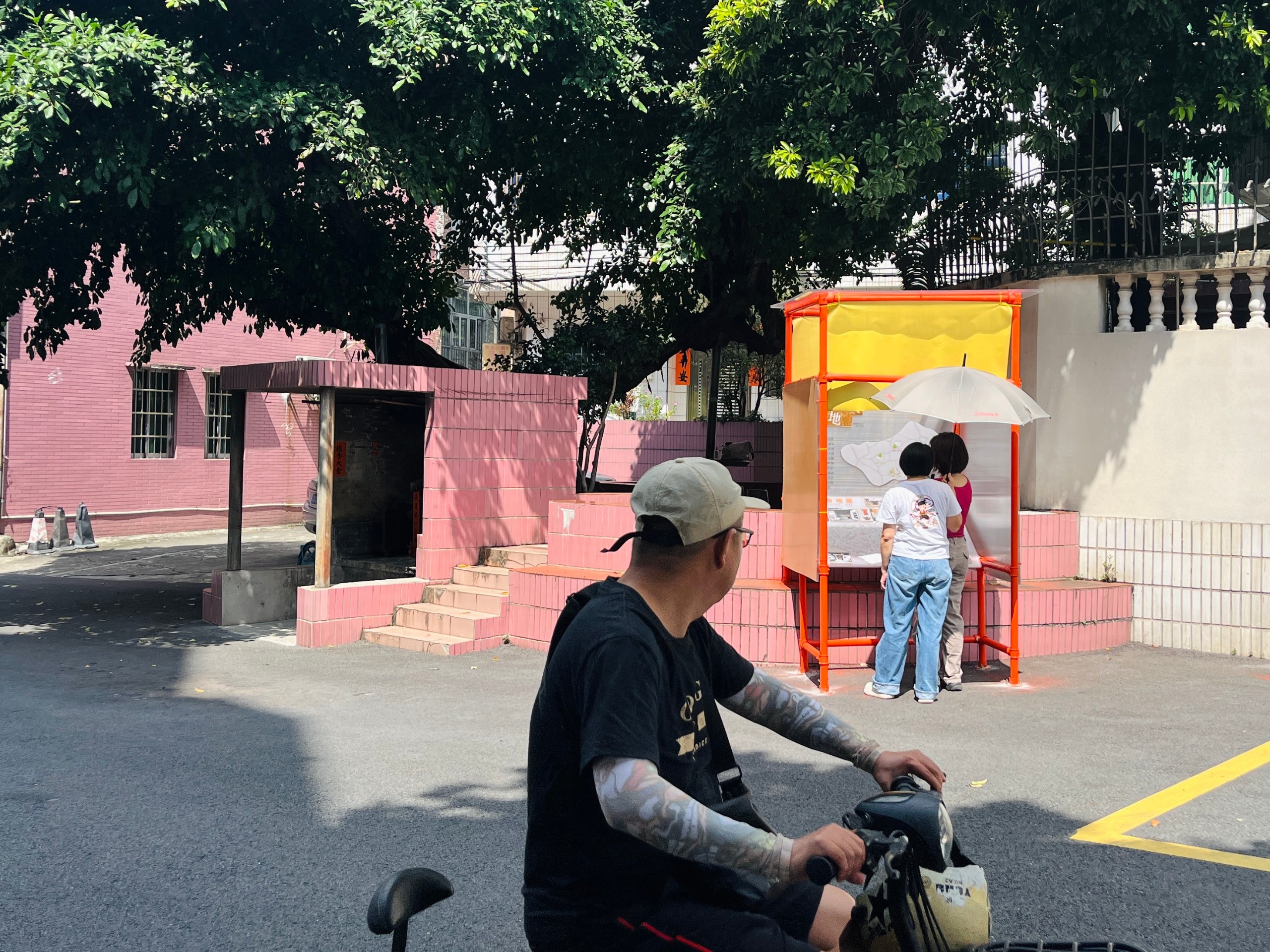
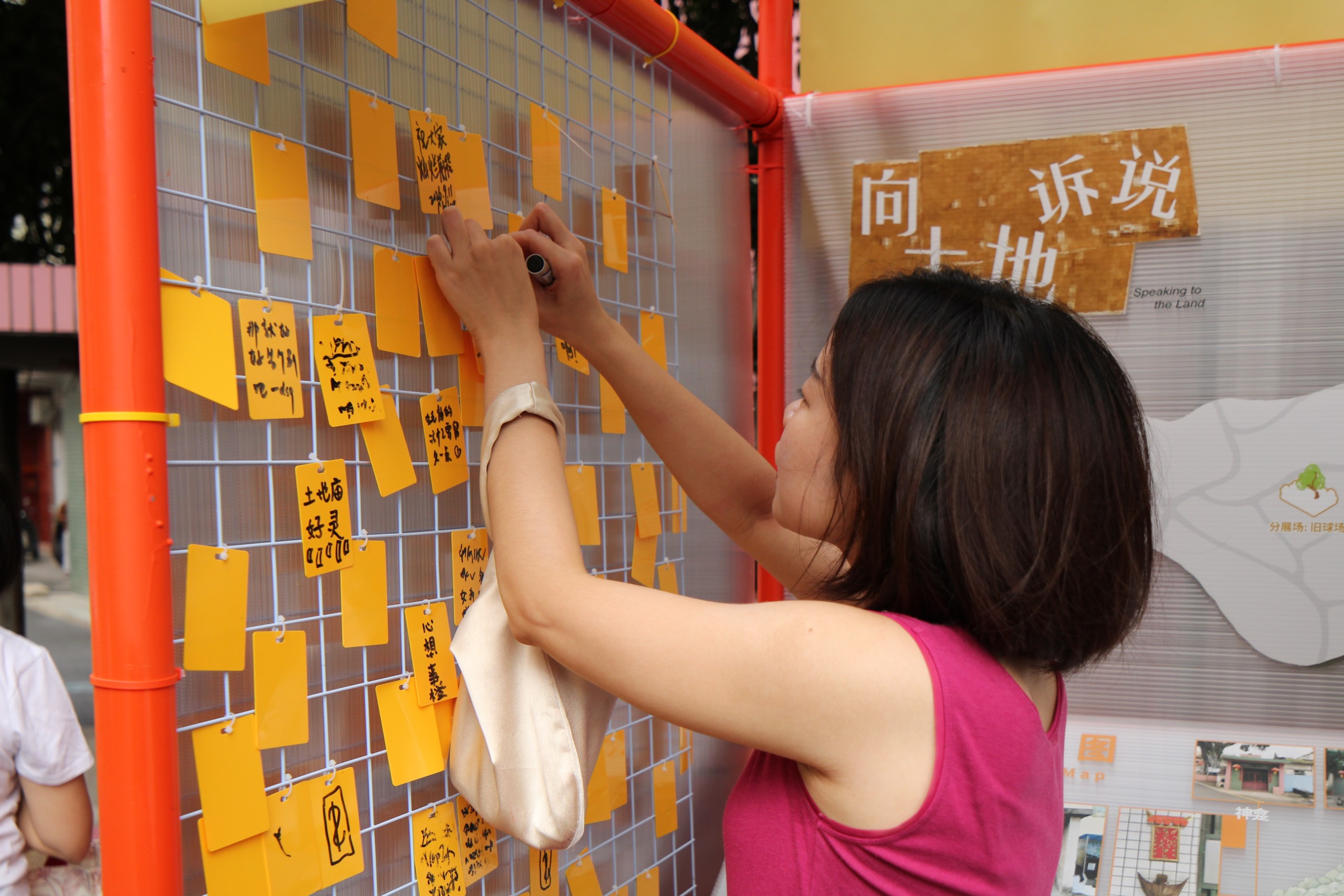
Beneath another large banyan, next to the Earth God Temple and the Hao Yi Community Economic Cooperative, Haogang Ji turns the research into an act of making wishes. A map marks eight shrines and temples across the village, with photographs of each site. The Wish Wall borrows the form of the Earth God shrine and gathers residents’ memories, present needs and hopes on handwritten notes. The structures are orange, a colour tied to the earth and, in folk belief, to wishes coming true.

Haogang Ji at the market
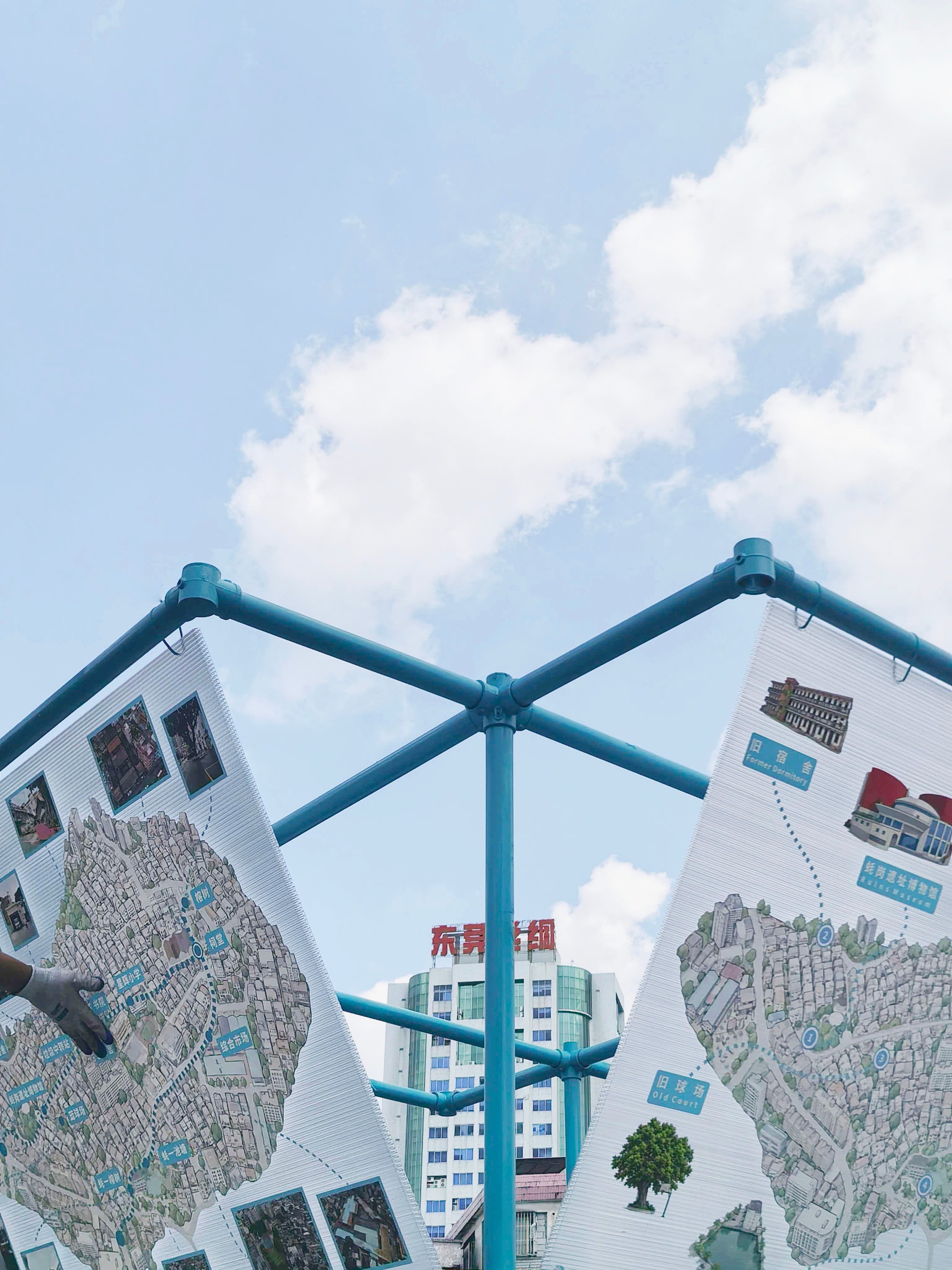
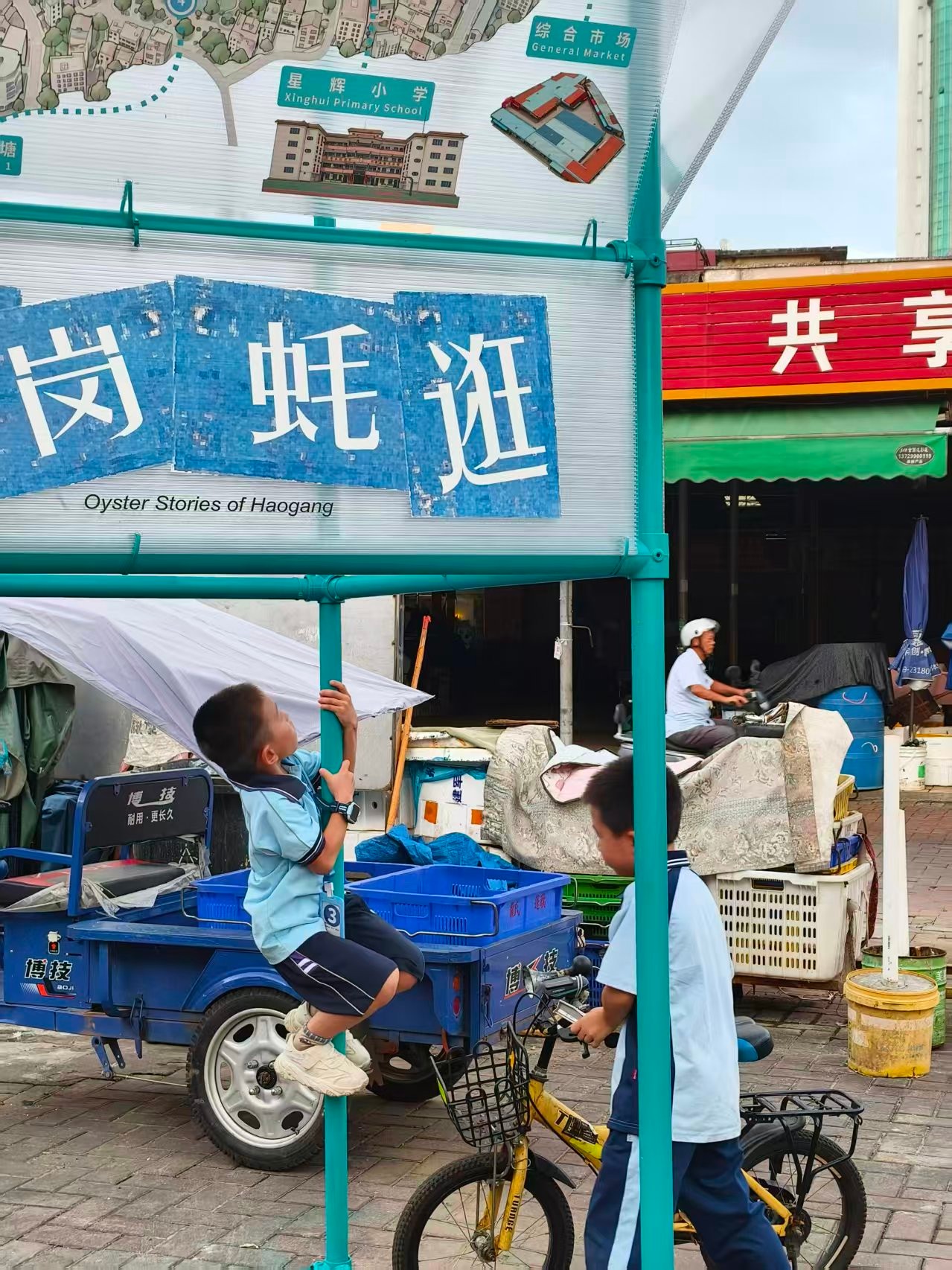
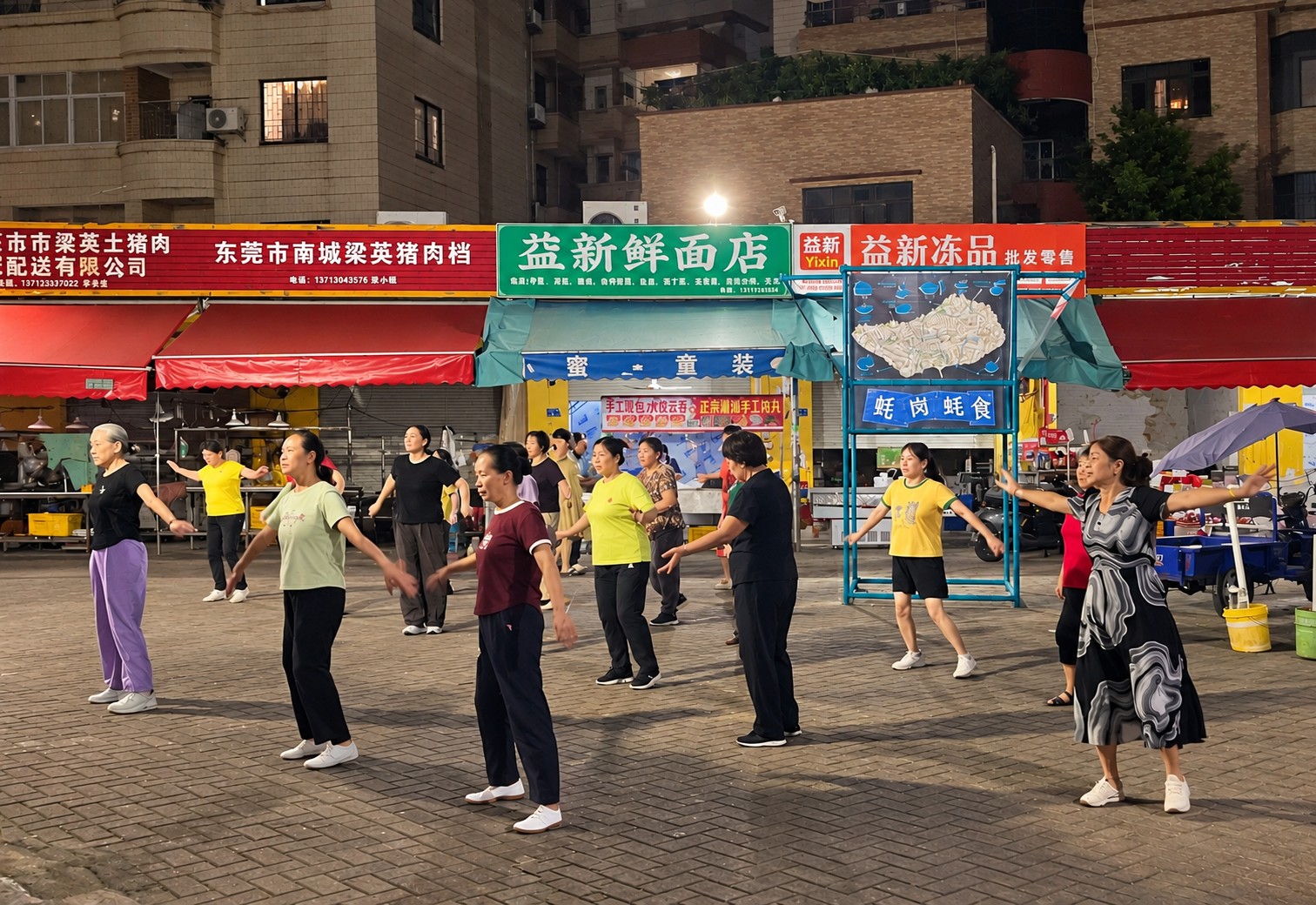
Haogang Comprehensive Market sells groceries and daily goods by day. At night it becomes one of the few open spaces in the village, where residents dance and children play. The Haogang Ji installation stands at its centre as a three-metre-high bulletin board, visible from the entrance and open to the flow of shoppers. Three illustrated maps, Haogang Play, Haogang Walk and Haogang Food, set out the village’s public spaces, routes, food and memories. The panels tilt downward to meet the eye, and their blue matches the market canopy.
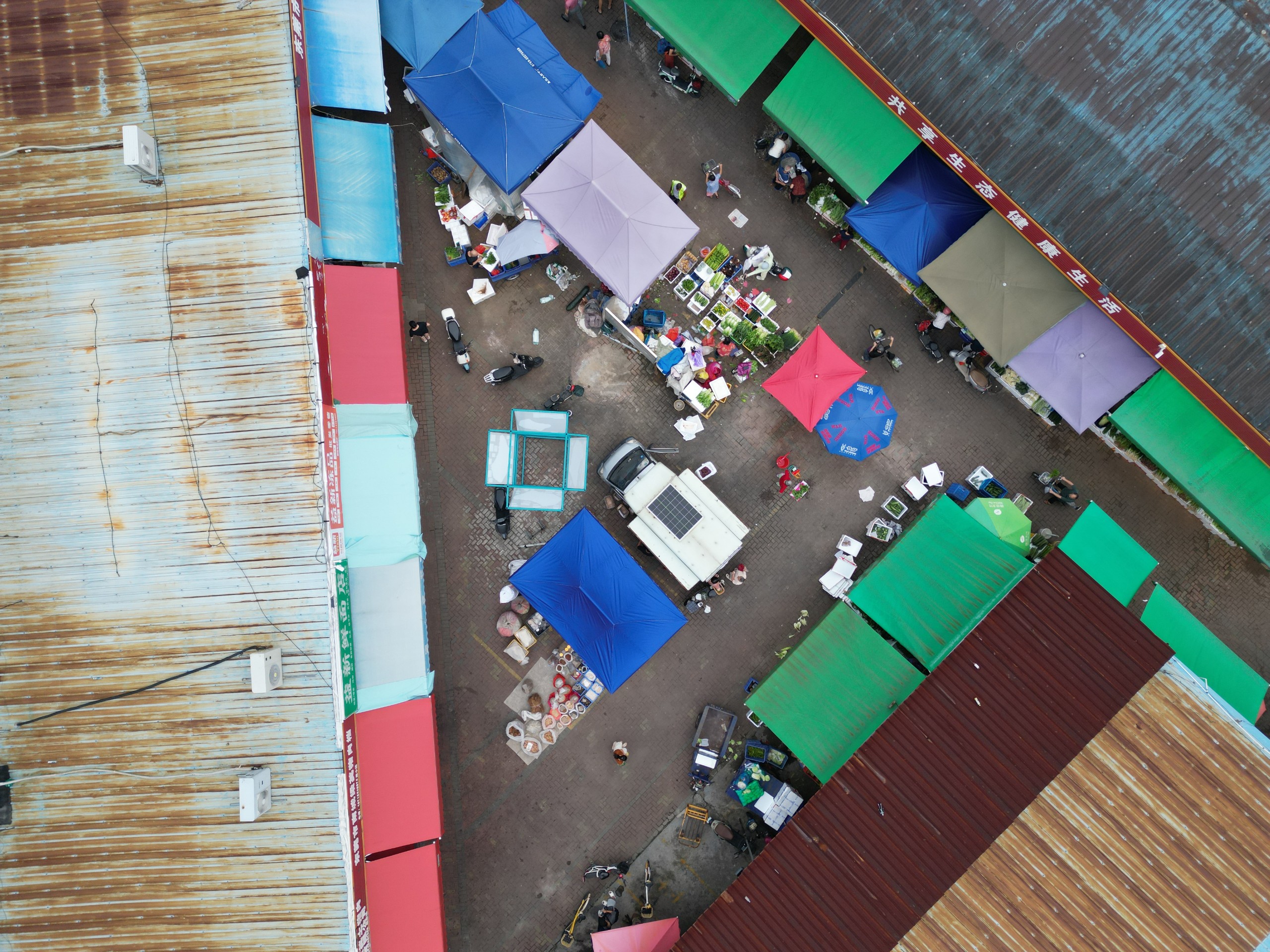
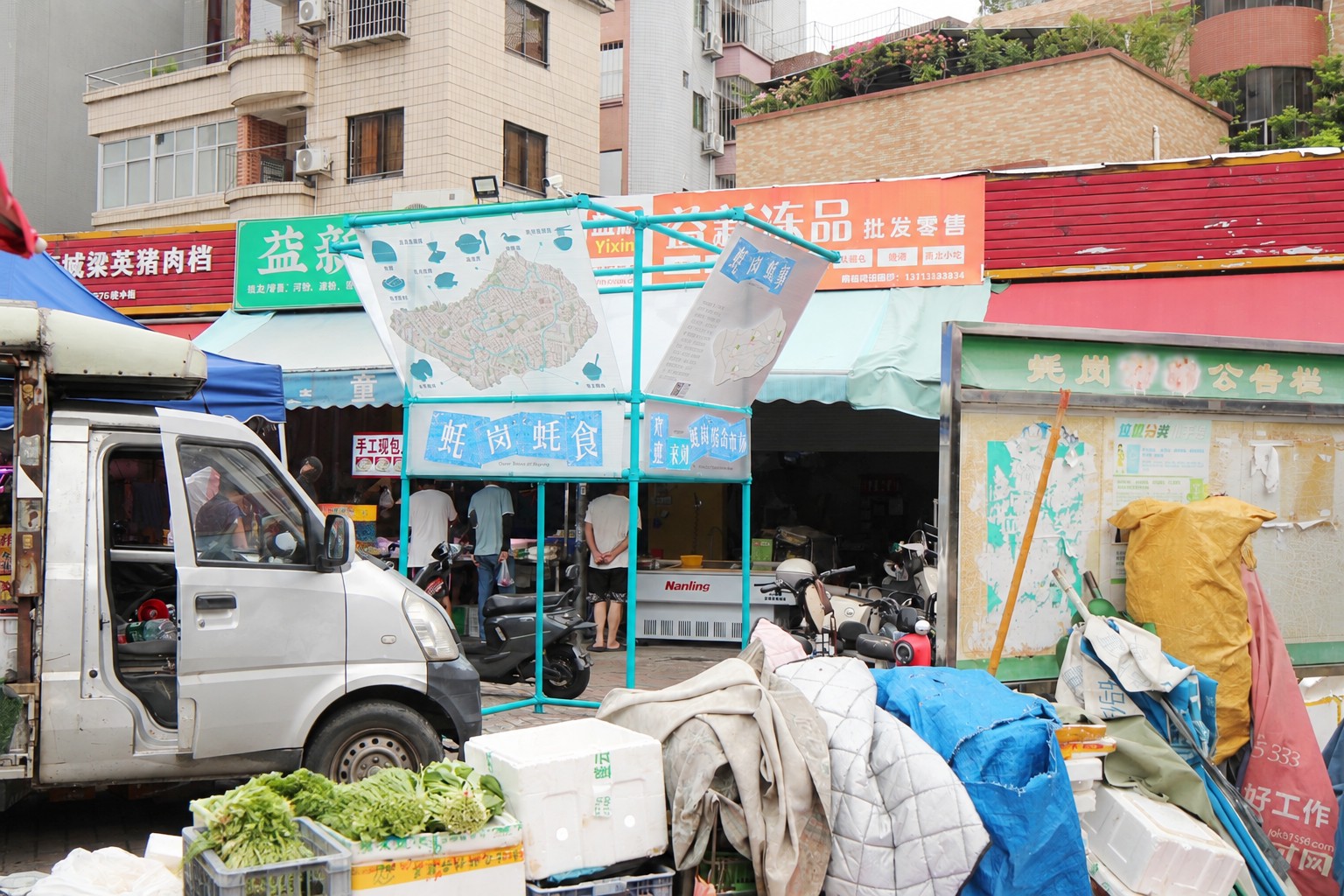
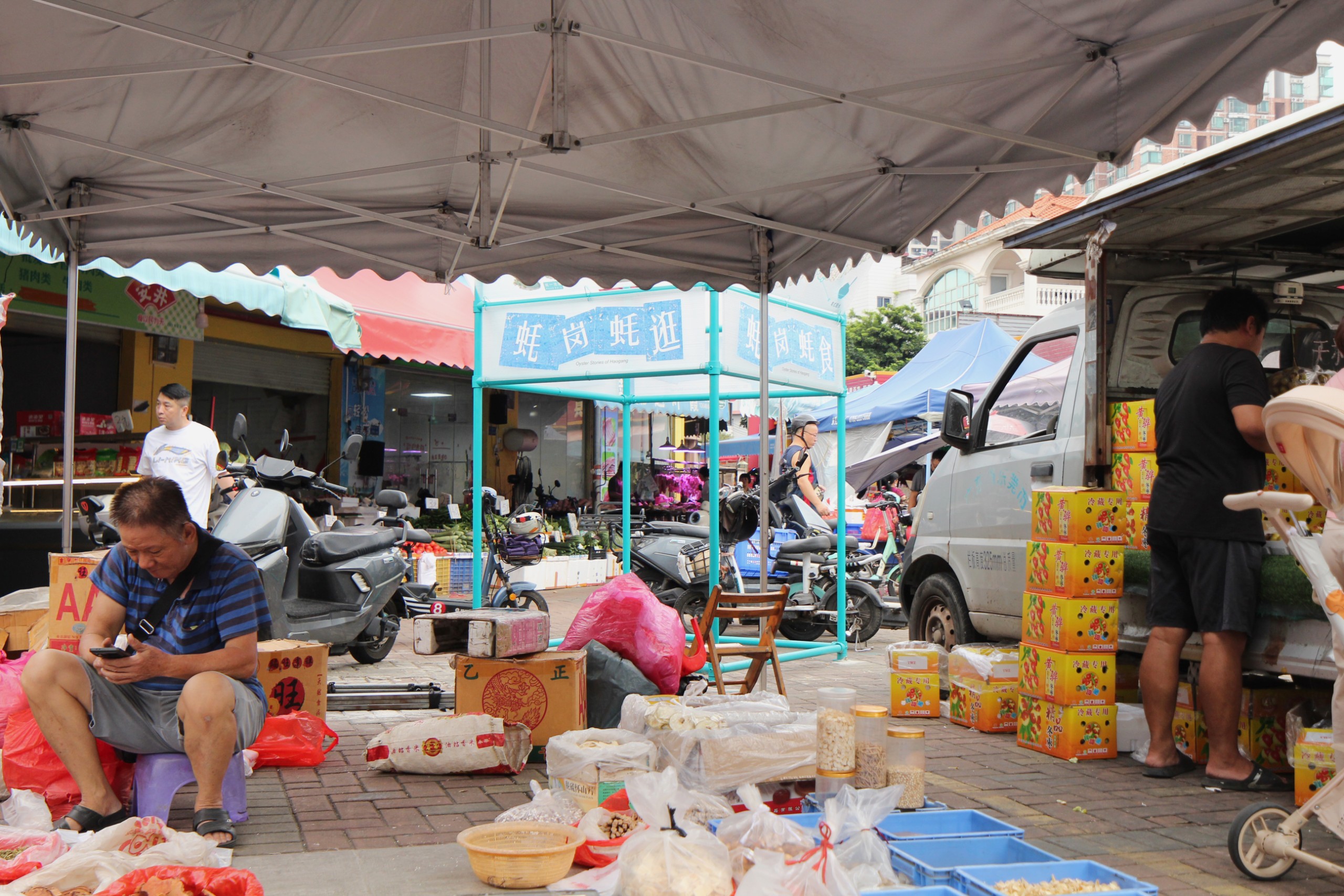
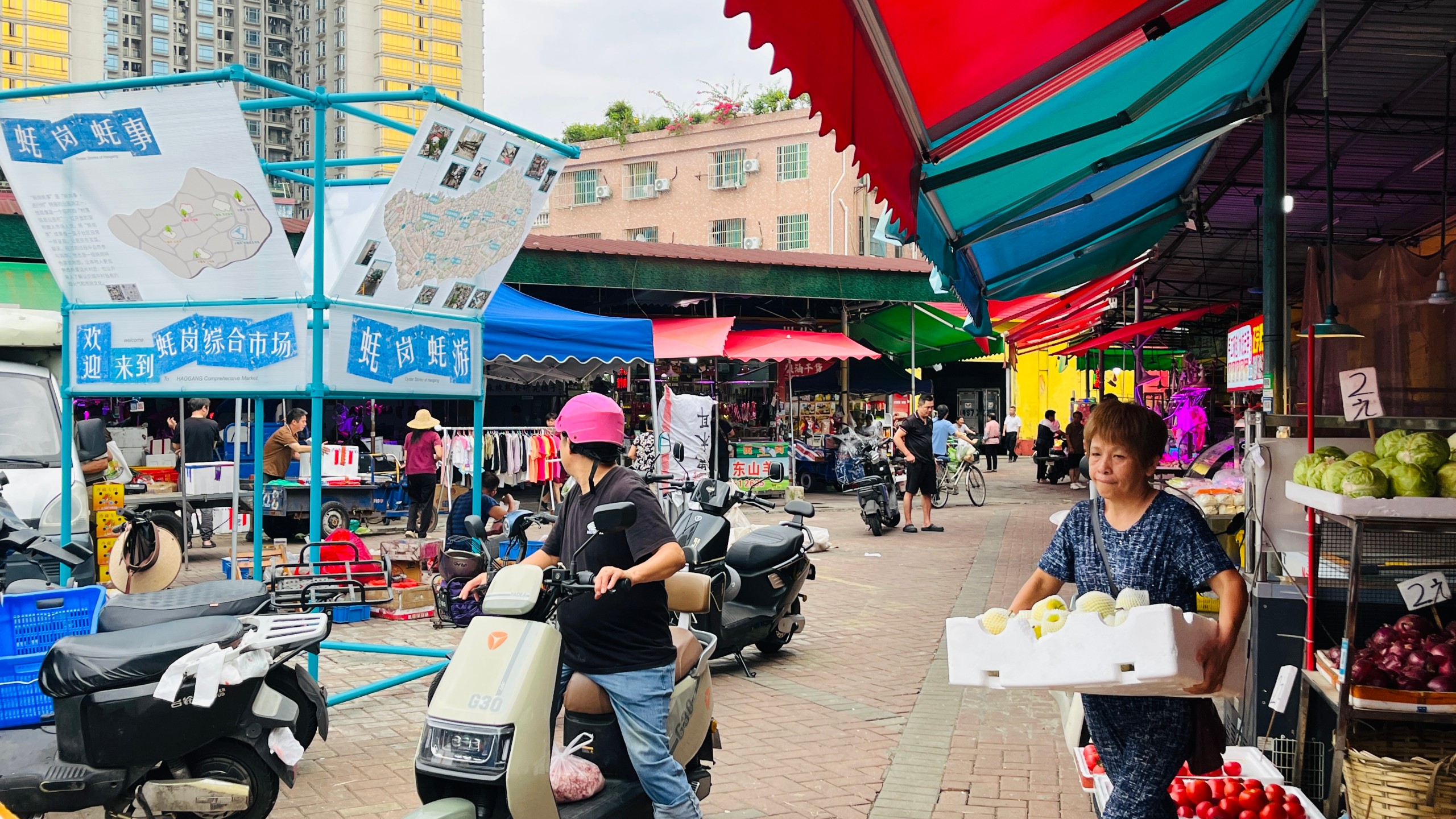
No one has to make a special trip to see Haogang Ji. It turns up on the way to buy groceries, in the shade of a tree or on an evening out with the children. Together, the six colours make a palette drawn from the village itself. The exhibition is temporary, and its case is a modest one: that renewal in an urban village can begin with listening, recording and imagining together, before anything is torn down.
Design: IARA
Photography: Bohong Zhang, Jingqiu Zhang, Shanshi Yang, Tianle Wu
Location: Haogang Village, Dongguan, Guangdong, China